On 19th May 1305 [her father] William of Avesnes I Count Hainaut III Count Avesnes III Count Holland II Count Zeeland and [her mother] Joan Valois Countess Zeeland Holland Avesnes and Hainaut were married. She by marriage Countess Zeeland, Countess Holland, Countess Avesnes, Countess Hainaut. She the daughter of [her grandfather] Charles Valois I Count Valois and [her grandmother] Margaret Capet Countess Valois. He the son of John of Avesnes II Count Hainaut II Count Holland and Philippa Luxembourg Countess Hainaut and Holland.
On 24th June 13101 Philippa of Hainaut Queen Consort England was born to William of Avesnes I Count Hainaut III Count Avesnes III Count Holland II Count Zeeland and Joan Valois Countess Zeeland Holland Avesnes and Hainaut.
Note 1. The date from the Register of Walter Stapledon who in 1319 writes: "And the young lady will be of the age of nine years at the Feast of the Nativity of Saint John [24th June] next to come".
In 1320 [her step-father] Robert III Artois and [her mother] Joan Valois Countess Zeeland Holland Avesnes and Hainaut were married. She the daughter of [her grandfather] Charles Valois I Count Valois and [her grandmother] Margaret Capet Countess Valois.
In 1324 [her brother-in-law] Louis Wittelsbach IV Holy Roman Emperor and [her sister] Margaret Hainaut Holy Roman Empress were married. She by marriage Holy Roman Empress. The difference in their ages was 29 years. She the daughter of [her father] William of Avesnes I Count Hainaut III Count Avesnes III Count Holland II Count Zeeland and [her mother] Joan Valois Countess Zeeland Holland Avesnes and Hainaut. He the son of Louis "Strict" Wittelsbach II Duke Upper Bavaria and Matilda Habsburg Duchess Bavaria.
On 26th February 1324 [her brother-in-law] William Jülich I Duke Jülich and [her sister] Joanna Hainaut Duchess Guelders were married. She the daughter of [her father] William of Avesnes I Count Hainaut III Count Avesnes III Count Holland II Count Zeeland and [her mother] Joan Valois Countess Zeeland Holland Avesnes and Hainaut. He the son of Gerhard Jülich V Count Jülich and Elisabeth Brabant Countess Jülich.
On 25th January 1327 King Edward II of England abdicated King of England. [her future husband] King Edward III of England succeeded III King of England.
On 24th January 1328 King Edward III of England and Philippa of Hainaut were married at York Minster by Archbishop William Melton. She by marriage Queen Consort England. She was crowned the same day. She the daughter of William of Avesnes I Count Hainaut III Count Avesnes III Count Holland II Count Zeeland and Joan Valois Countess Zeeland Holland Avesnes and Hainaut. He the son of King Edward II of England and Isabella of France Queen Consort England.
The marriage was the quid pro quo for her father William of Avesnes I Count Hainaut III Count Avesnes III Count Holland II Count Zeeland having supported his mother Isabella of France Queen Consort England and Roger Mortimer 1st Earl March returning to England to usurp the throne of Edward's father King Edward II of England.
On 17th July 1328 King David II of Scotland and [her sister-in-law] Joan of the Tower Queen Consort Scotland were married at Berwick-upon-Tweed, Northumberland. She the daughter of King Edward II of England and [her mother-in-law] Isabella of France Queen Consort England. He the son of King Robert the Bruce I of Scotland and Elizabeth Burgh Queen Consort Scotland.
On 7th June 1329 King Robert the Bruce I of Scotland died at Cardross Manor, Argyll. He was buried at Dunfermline Abbey. King David II of Scotland succeeded II King Scotland. [her sister-in-law] Joan of the Tower Queen Consort Scotland by marriage Queen Consort Scotland.
In 1330 [her brother-in-law] John of Eltham 1st Earl Cornwall was created 1st Earl Cornwall.
On 19th March 1330 the King's uncle Edmund of Woodstock 1st Earl Kent was beheaded at Winchester Castle. Earl Kent forfeit. Edmund had been convicted of plotting against the court believing his brother King Edward II was still alive. It later emerged the plot had been created by Roger Mortimer 1st Earl March to entrap Edmund. [her husband] King Edward III of England was unable to show leniency risking complicity in the plot. He was buried at Westminster Abbey.
See Parliament Rolls, 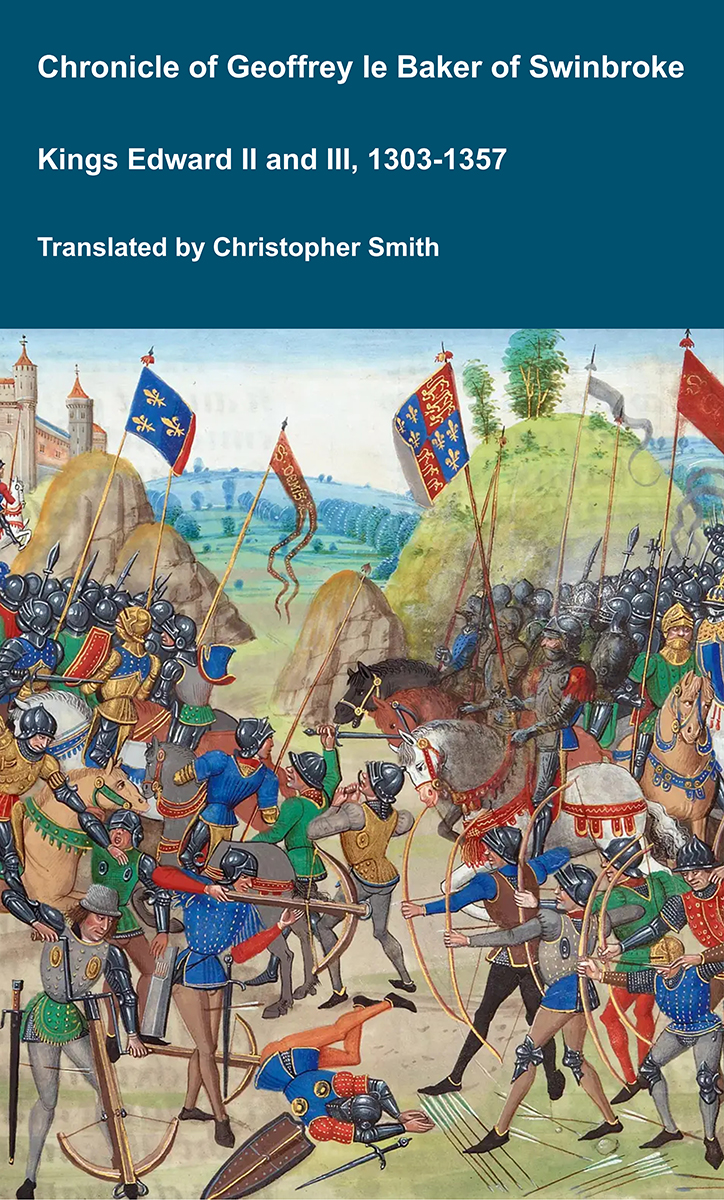 Chronicle of Geoffrey le Baker of Swinbroke,
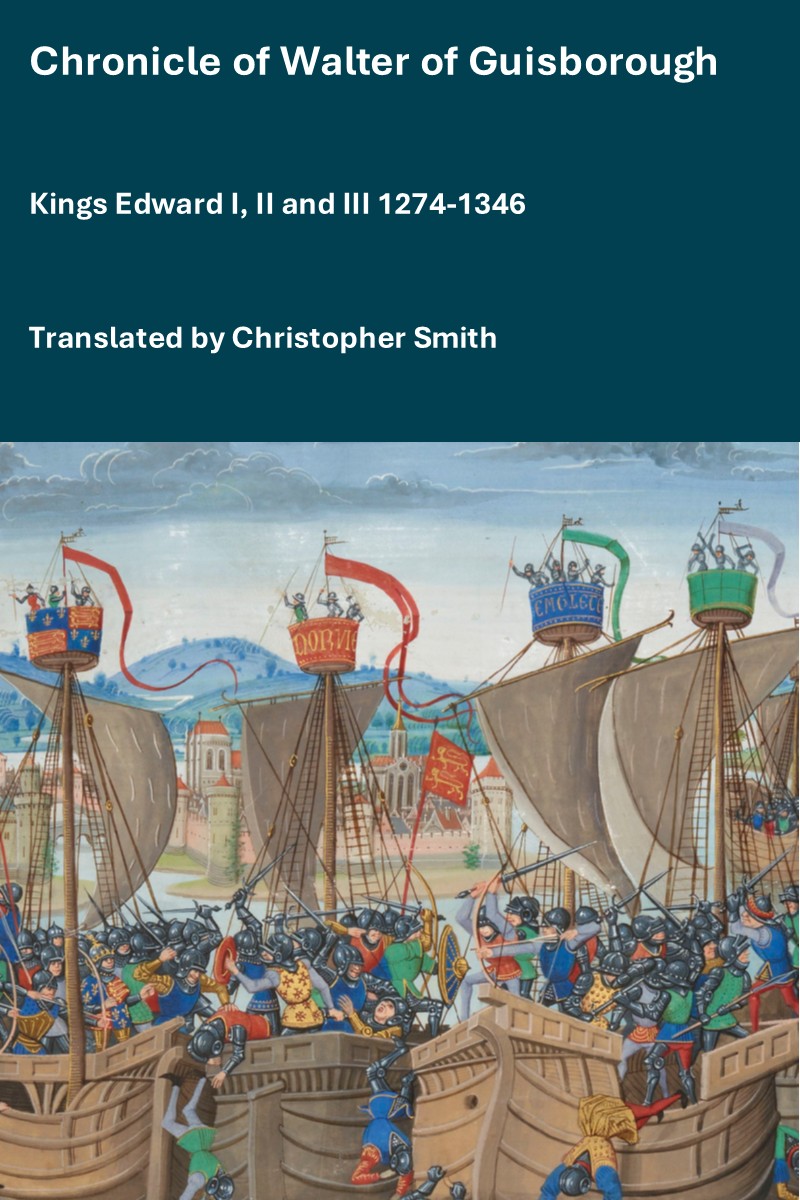 Chronicle of Walter of Guisborough,
Knighton 2555, and
On 15th June 1330 [her son] Edward "Black Prince" was born to [her husband] King Edward III of England and Philippa of Hainaut Queen Consort England at Woodstock Palace, Oxfordshire. He married 10th October 1361 Joan "Fair Maid of Kent" Princess Wales, daughter of Edmund of Woodstock 1st Earl Kent and Margaret Wake Countess Kent, and had issue.
On 29th November 1330 Roger Mortimer 1st Earl March was hanged, drawn and quartered at Tyburn accused of assuming royal power and of various other high misdemeanours. His body hung at the gallows for two days and nights. He was buried at Christ Church, Greyfriars. [her mother-in-law] Isabella of France Queen Consort England subsequently requested his burial at Wigmore Abbey and, after firstly refusing, [her husband] King Edward III of England allowed his remains to be removed to Wigmore Abbey. Earl March, Baron Mortimer of Wigmore forfeit.
In May 1332 Reginald "Black" I Duke Guelders and [her sister-in-law] Eleanor of Woodstock Plantagenet were married at Nijmegen. She by marriage Countess Guelders. His second marriage; he had four daughters from his first marriage. He subsequently sent her from court to Deventer Abbey in 1336 under the pretext that she had leprosy. He subsequently tried to annul the marriage but she contested the annulment by proving she wasn't a leper. The difference in their ages was 23 years. She the daughter of King Edward II of England and [her mother-in-law] Isabella of France Queen Consort England. He the son of Reginald I Count Guelders and Margaret Dampierre Countess Guelders.
On 16th June 1332 [her daughter] Isabella Countess Bedford and Soissons was born to [her husband] King Edward III of England and Philippa of Hainaut Queen Consort England at Woodstock Palace, Oxfordshire. She married 27th July 1365 Enguerrand de Coucy 1st Earl Bedford 1st Count Soissons and had issue.
On 19th July 1333 [her husband] King Edward III of England defeated the Scots army at the Battle of Halidon Hill near Berwick-upon-Tweed, Northumberland. [her brother-in-law] John of Eltham 1st Earl Cornwall commanded.
English archers, just as at the Battle of Dupplin Moor one year previously, had a significant impact on the massed ranks of Scottish schiltrons. Edward's army included: Thomas of Brotherton 1st Earl Norfolk, who commanded the right wing, Hugh Courtenay 1st or 9th Earl Devon, Robert Pierrepont, Hugh Courtenay 2nd or 10th Earl Devon, Henry Beaumont Earl Buchan and John Sully. One of the few English casualties was John Neville who was killed.
The Scottish army included King David II of Scotland. Alexander Bruce, Alan Stewart, James Stewart, John Stewart, William Douglas 1st Earl Atholl, Archibald Douglas who were all killed.
Hugh 4th Earl Ross was killed. William 5th Earl Ross succeeded 5th Earl Ross.
Malcolm Lennox 2nd Earl Lennox was killed. Domhnall Lennox Earl Lennox succeeded Earl Lennox.
Kenneth de Moravia Sutherland 4th Earl Sutherland was killed. William de Moravia Sutherland 5th Earl Sutherland succeeded 5th Earl Sutherland. Johanna Menteith Countess Sutherland by marriage Countess Sutherland.
On 19th December 1333 [her daughter] Joan Plantagenet was born to [her husband] King Edward III of England and Philippa of Hainaut Queen Consort England at Tower of London.
In 1334 [her brother] William Hainaut II Count Hainaut and [her sister-in-law] Joanna Reginar Duchess Brabant were married. She the daughter of John Brabant III Duke Brabant and Marie Évreux Duchess of Brabant. He the son of [her father] William of Avesnes I Count Hainaut III Count Avesnes III Count Holland II Count Zeeland and [her mother] Joan Valois Countess Zeeland Holland Avesnes and Hainaut.
On 30th September 1336 [her brother-in-law] John of Eltham 1st Earl Cornwall died at Perth. Earl Cornwall extinct. He was buried at the east side of the doorway to the Chapel of St Edmund, Westminster Abbey. His monument comprises a head of the statue encircled by a coronet of large and small leaves, remarkable for being the earliest specimen of the kind. The details of plate-armour, surcoat, gorget, coroneted helmet, with other accessories, give great antiquarian interest to this work. It was formerly surmounted by a canopy, of which, however, no traces are now visible.
In January 1337 [her husband] King Edward III of England created a number of new Earldom's probably in preparation for his forthcoming war against France...
William Montagu 1st Earl Salisbury was created 1st Earl Salisbury. Catherine Grandison Countess of Salisbury by marriage Countess Salisbury.
William Bohun 1st Earl of Northampton was created 1st Earl of Northampton. Elizabeth Badlesmere Countess Northampton by marriage Countess of Northampton.
Hugh Audley 1st Earl Gloucester was created 1st Earl Gloucester probably as compensation for his daughter Margaret Audley Countess Stafford having been abducted by Ralph Stafford 1st Earl Stafford.
Robert Ufford 1st Earl Suffolk was created 1st Earl Suffolk. Margaret Norwich Countess Suffolk by marriage Countess Suffolk.
On 16th February 1337 [her son] William of Hatfield was born to [her husband] King Edward III of England and Philippa of Hainaut Queen Consort England at Hatfield. He died shortly afterwards around 3rd March 1337. He was buried at York Minster where there is a monument to him in the north aisle.
On 7th June 1337 [her father] William of Avesnes I Count Hainaut III Count Avesnes III Count Holland II Count Zeeland died. [her brother] William Hainaut II Count Hainaut succeeded II Count Hainaut. [her sister-in-law] Joanna Reginar Duchess Brabant by marriage Countess Hainaut.
On 29th November 1338 [her son] Lionel of Antwerp 1st Duke of Clarence was born to [her husband] King Edward III of England and Philippa of Hainaut Queen Consort England at Antwerp. He married 1. 1352 Elizabeth Burgh Duchess of Clarence, daughter of William Donn Burgh 3rd Earl of Ulster and Maud Plantagenet Countess Ulster, and had issue 2. June 1368 Violante Visconti.
In 1340 [her daughter] Blanche of the Tower was born to [her husband] King Edward III of England and Philippa of Hainaut Queen Consort England at the Tower of London. she died the same year and was buried at the east side of the door to the Chapel of St Edmund, Westminster Abbey.
On 6th March 1340 [her son] John of Gaunt 1st Duke Lancaster was born to [her husband] King Edward III of England and Philippa of Hainaut Queen Consort England at the Prinsenhof Palace in Ghent aka Gaunt. He married 1. Blanche Duchess of Lancaster, daughter of Henry of Grosmont 1st Duke Lancaster and Isabel Beaumont Duchess Lancaster, and had issue 2. 21st September 1371 Constance of Castile Duchess of Lancaster and had issue 3. on or after 13th January 1396 Katherine Swynford aka Roet Duchess Lancaster and had issue.
On 24th June 1340 [her husband] King Edward III of England attacked the French fleet at anchor during the Battle of Sluys capturing more than 200 ships, killing around 18000 French. The English force included John Beauchamp 1st Baron Beauchamp Warwick, William Bohun 1st Earl of Northampton, Henry Scrope 1st Baron Scrope of Masham, William Latimer 4th Baron Latimer of Corby, John Lisle 2nd Baron Lisle, Ralph Stafford 1st Earl Stafford, Henry of Grosmont 1st Duke Lancaster, Walter Manny 1st Baron Manny, Hugh Despencer 1st Baron Despencer and Richard Pembridge.
Thomas Monthermer 2nd Baron Monthermer died from wounds. Margaret Monthermer Baroness Montagu 3rd Baroness Monthermer succeeded 3rd Baroness Monthermer.
On 5th June 1341 [her son] Edmund of Langley 1st Duke of York was born to [her husband] King Edward III of England and Philippa of Hainaut Queen Consort England at King's Langley, Hertfordshire. He married 1. 11th July 1372 Isabella of Castile Duchess York and had issue 2. 4th November 1393 Joan Holland Duchess York, daughter of Thomas Holland 2nd Earl Kent and Alice Fitzalan Countess Kent.
On 10th October 1344 [her daughter] Mary Plantagenet Duchess Brittany was born to [her husband] King Edward III of England and Philippa of Hainaut Queen Consort England at Bishop Waltham's Palace, Hampshire. She married 3rd July 1361 John Montfort V Duke Brittany.
After 22nd September 1345 Henry Plantagenet 3rd Earl of Leicester 3rd Earl Lancaster was buried at Church of the Annunciation of our Lady of the Newark, or possibly the Hospital Chapel, at a ceremony attended by [her husband] King Edward III of England and his wife Philippa of Hainaut Queen Consort England. His son Henry of Grosmont 1st Duke Lancaster subsequently had his remains moved to St Mary de Castro Leicester, Leicestershire.
On 26th September 1345 [her brother] William Hainaut II Count Hainaut was killed at the Battle of Warns. [her sister] Margaret Hainaut Holy Roman Empress succeeded II Countess Hainaut. [her brother-in-law] Louis Wittelsbach IV Holy Roman Emperor by marriage Count Hainaut.
On 20th July 1346 [her daughter] Margaret Plantagenet Countess of Pembroke was born to [her husband] King Edward III of England and Philippa of Hainaut Queen Consort England at Windsor Castle. She married John Hastings 2nd Earl Pembroke, son of Laurence Hastings 1st Earl Pembroke and Agnes Mortimer Countess of Pembroke.
On 26th August 1346 the army of [her husband] King Edward III of England defeated the French army at the Battle of Crécy. The English army was commanded by King Edward III of England, his son Edward "Black Prince", Thomas Beauchamp 11th Earl Warwick, William Bohun 1st Earl of Northampton and John Beauchamp 1st Baron Beauchamp Warwick.
The English army was included: Bishop Thomas of Hatfield, Hugh Despencer 1st Baron Despencer, Bernard Brocas, Thomas Felton, James Audley, Robert Bourchier 1st Baron Bourchier, Bartholomew "The Elder" Burghesh 1st Baron Burghesh, Bartholomew "The Younger" Burghesh 2nd Baron Burghesh, Reginald Cobham 1st Baron Cobham, John Darcy 1st Baron Darcy of Knayth, Robert Ferrers 3rd Baron Ferrers of Chartley, Richard Scrope 1st Baron Scrope of Bolton, William Scrope, Stephen Scrope, William Latimer 4th Baron Latimer of Corby, John Lisle 2nd Baron Lisle, Gerard Lisle 1st Baron Lisle, Nicholas Longford, Edward Montagu 1st Baron Montagu, Walter Paveley 4th Baron Burghesh, Michael Poynings 1st Baron Poynings, Robert Ufford 1st Earl Suffolk, John de Vere 7th Earl of Oxford, Thomas West, John Willoughby 2nd Baron Willoughby, John Wingfield, Henry Percy 11th and 3rd Baron Percy, Hugh Courtenay 2nd or 10th Earl Devon (possibly), Walter "Elder" Devereux, John Devereux, Enion Sais Brecon, John Chandos, Richard Pembridge and John Sully.
The French army suffered significant casualties. King Philip "Fortunate" VI of France was wounded. William de Coucy and his son Enguerrand 6th Lord de Coucy and were killed.
Charles II Count Alençon was killed. Archbishop Charles Valois succeeded Count Alençon.
Louis Chatillon II Count Blois I Count Chatillon was killed. Louis Chatillon III Count Blois Count Soissons succeeded III Count Blois.
Louis Dampierre II Count Nevers I Count Flanders was killed. Louis of Male III Count Nevers II Count Flanders succeeded III Count Nevers, II Count Flanders.
King John I of Bohemia was killed. Charles IV King Bohemia Holy Roman Emperor Luxembourg succeeded IV King Bohemia, Holy Roman Emperor Luxemburg. Blanche Valois Holy Roman Empress Luxembourg by marriage Holy Roman Empress Luxemburg.
Rudolph "Valiant" Metz I Duke Lorraine was killed. John Metz I Duke Lorraine succeeded I Duke Lorraine.
Jean IV de Harcourt was killed.
In 1347 [her son] Thomas of Windsor was born to [her husband] King Edward III of England and Philippa of Hainaut Queen Consort England. In 1348 he died.
On 22nd February 1347 John Graham Earl Menteith was condemned to be executed as a traitor. The sentence was carried out on the 28th February 1347 when John Graham Earl Menteith was hanged, drawn and quartered by direct orders of [her husband] King Edward I to whom he had previously sworn fealty.
 Bourgeois de Valenciennes. It happened that while the King of England was holding the siege before Calais, Louis, Count of Flanders, by the counsel and with the consent of his good towns, came into Flanders as lord of the country. He was received on condition that he should govern and rule them according to the usages and customs of the good Count Guy, his predecessor. The great and the small did him great honour, as was fitting, and as to their rightful and true lord. He remained in the land graciously and courteously, and followed the counsel of his people and of his good towns, who instructed him in sound policies. He remained in this state from Martinmas through the winter until after Easter, when the good men of Flanders, wishing to secure the best outcome, proposed and arranged the marriage between him and the eldest daughter of the King of England, so that they might be stronger in the land. They worked so effectively that they brought him to the King of England before Calais, and all ill will was pardoned on both sides. By the will of the said count, the marriage was agreed between Count Louis of Flanders and Isabel, eldest daughter of King Edward of England, and they were betrothed without any deceit. The betrothal was performed by the Abbot of the Dunes at Bergues in Flanders, in the church of the abbey of Saint-Winoc. Present at the betrothal were the king and queen, the Marquis of Jülich, the Earl of Warwick, the Duke of Guelders and the duchess, and many others, on the Wednesday after Mid-Lent, in the year of grace 13461. The agreements on both sides were settled, and a great feast was held. Afterwards, the Count of Flanders returned to the town of Male in Flanders. Meanwhile, while the King of England was at Bergues-Saint-Winoc, twenty ships laden with supplies came into the harbour of Calais, which greatly pleased those within the town.
Il advint qu'entandis que le roy d'Engleterre tenoit siège devant Callais, que Loys, conte de Flandres, par le conseil de ses bonnes villes et leur volenté, vint dedens Flandres, comme seigneur du pays, et fut rechups par ainsy qu'il les debvoit tenir et mener aux us et aux coustumes du bon conte Guion, son antécesseur. Sy luy firent grant honneur les grans et les petis, sycomme droit estoit, et comme à leur droiturier et vrai seigneur, et demeura au pays bellement et courtoisement, et crut le conseil de ses gens et de ses bonnes villes qui luy ensaingnoient les bons poins. Et fut en cel estât de le Saint-Martin en yver jusques après Pasques, que les bonnes gens de Flandres, pour le mieulx fait que laissiet, luy acointèrent et pourcachèrent le mariage de luy et de l'aisnée fille du roy d'Engleterre, par quoy ils fussent plus fors au pays. Et tant fisrent qu'ils l'emmenèrent au roy d'Engleterre devant Callais, et tous mautalens fussent pardonnes les ungs aux aultres, et que, par la volenté dudit conte, mariage se fist entre le conte Loys de Flandres et de Ysabel, aisnëe fille du roy Édouart d'Engleterre, et furent fianchiés sans nulle maise fraude. Sy les fiança l'abbé des Dunes à Bergues en Flandres, en l'église de l'abbaye Saint-Winoch, et furent au fianchier le roy et la royne, le marquis de Jullers, le conte de Wervich, le duc de Guéries et la ducesse et pluseurs aultres, le merquedy après le my-quaresme, l'an de grâce mil CCC et XLVI et furent les convenances de l'une partye et de l'autre prinses, et y fist-on grant feste; puis s'en râla le conte de Flandres en la ville de Malle en Flandres. Et entandis que le roy d'Engleterre estoit à Bergues-Saint-Winoch, vindrent au havre de Callais XX nefs chargies de pourvéances, dont ceulx de Callais furent moult aises.
Note 1. The betrothal of the Count of Flanders was celebrated on 13th March 1347. The marriage contract had been signed at Dunkirk ten days earlier. Edward III granted as dowry to his daughter the county of Ponthieu and the town of Montreuil, or twenty-five thousand livres in land revenue. Numerous documents relating to the negotiations that took place at that time between the King of England and the Count of Flanders have been preserved. The marriage didn't take place. He fled to France where he quickly married, on 1st July 1347, Margaret of Brabant, daughter of the French King's ally John, Duke of Brabant; see next History.
On 30th November 1347 Ivo Fitzwarin was born to William Fitzwarin. He was baptised at St Leonards Church, Blunsdon. His wardship was originally granted to Philippa of Hainaut Queen Consort England but she sold it in the following year for 1100 marks. He married 20th January 1372 Maud Argentine and had issue.
In 1348 [her son] William of Windsor was born to [her husband] King Edward III of England and Philippa of Hainaut Queen Consort England. In 1348 he died. He was buried at the east side of the door to the Chapel of St Edmund, Westminster Abbey.
On 2nd September 1348 [her daughter] Joan Plantagenet died on her way to marry Peter of Castile. She was buried at Bayonne Cathedral.
In 1351 Henry of Grosmont 1st Duke Lancaster was created 1st Duke Lancaster by [her husband] King Edward III of England. Isabel Beaumont Duchess Lancaster by marriage Duchess Lancaster.
[her son] Lionel of Antwerp 1st Duke of Clarence was created 1st Earl of Ulster.
John of Gaunt 1st Duke Lancaster was created 1st Earl Richmond.
Ralph Stafford 1st Earl Stafford was created 1st Earl Stafford.
In 1352 Lionel of Antwerp 1st Duke of Clarence and Elizabeth Burgh Duchess of Clarence were married. He by marriage Earl of Ulster. She was the sole heir of her father and brought the de Burgh inheritance of the lands of Ulster to the marriage. As a consequence of their earlier betrothal he had been called Earl Ulster since 1347. She the daughter of William Donn Burgh 3rd Earl of Ulster and Maud Plantagenet Countess Ulster. He the son of King Edward III of England and Philippa of Hainaut Queen Consort England.
In 1352 [her half-brother] John "Sans Terre" Artois 1st Count of Eu was created 1st Count Eu.
On 7th March 1352 [her mother] Joan Valois Countess Zeeland Holland Avesnes and Hainaut died.
On 11th July 1352 [her half-brother] John "Sans Terre" Artois 1st Count of Eu and [her sister-in-law] Isabeau Melun Countess Eu were married. She by marriage Countess Eu. She the daughter of John Melun 1st Count Tancarville. He the son of [her step-father] Robert III Artois and [her mother] Joan Valois Countess Zeeland Holland Avesnes and Hainaut.
Letters. 14th May 1354. Letter XXIV. Philippa of Hainaut Queen of Edward III to Sir John de Edington her Attorney.
Philippa, by the grace of God queen of England, lady of Ireland, and duchess of Aquitaine, to our dear clerk Sir John de Edington, our attorney in the exchequer of our very dear lord the king, sends greeting.
We command you, that you cause all the writs which have been filed from the search lately made by Sir Richard de Cressevill to be postponed until the octaves of Easter next ensuing; to the end that, in the meantime, we and our council may be able to be advised which of the said writs are to be put in execution for our profit, and which of them are to cease to the relief of our people, to save our conscience. And we will that this letter be your warrant therefore.
Given under our privy seal, at Westminster, the 14th day of May, in the year of the reign of our very dear lord the king of England the twenty-eighth.
On 7th January 1355 [her son] Thomas of Woodstock 1st Duke of Gloucester was born to [her husband] King Edward III of England and Philippa of Hainaut Queen Consort England at Woodstock Palace, Oxfordshire. He married 1374 Eleanor Bohun Duchess Gloucester, daughter of Humphrey Bohun 7th Earl Hereford 6th Earl Essex 2nd Earl of Northampton and Joan Fitzalan Countess Essex, Hereford and Northampton, and had issue.
On 22nd April 1355 [her sister-in-law] Eleanor of Woodstock Plantagenet died. She was buried at Deventer Abbey.
In 1357 [her brother-in-law] William Jülich I Duke Jülich was created I Duke Guelders. [her sister] Joanna Hainaut Duchess Guelders by marriage Duchess Guelders.
Archaeologia Volume 35 1853 XXXIII. The following visits, during her [[her mother-in-law] Isabella of France Queen Consort England] stay in London, are recorded. On the 30th of April, the Countess of Warren to supper. On the 1st of May, the Countess of Pembroke to dinner; and the King after dinner. On the 2nd of May, the Countesses of Warren and Pembroke to dinner; and the [her husband] King, the [her son] Prince of Wales, the Earl of March, and others, after dinner. On the 3rd of May, the Countess of Pembroke and the Maréchal D'Audenham to dinner; and the Earl of Arundel, "et plures magnates Franciæ1," after dinner. On the 4th, the Count of Tancarville to dinner. On the 5th, the Countesses of Warren and Pembroke and the Maréchal D'Audenham again to dinner; and the Chancellor of England and many French noblemen after dinner. On the 6th the Chief Justice and the Barons of the Exchequer to dinner. On the four following days, the Countesses of Warren, Kent, and Pembroke dine with the Queen; and on the last of the four Sir John de Wynewyk comes to supper. On the 11th, Queen Philippa appears to have dined with Isabella, but the entry is partially obliterated; the Earl Marshal and other noblemen came after dinner. On the 12th, the Countess of Pembroke dined, and the Cardinals ( of Périgord and St. Vitalis ), the Archbishop of Sens, and some French noblemen came after dinner. On Sunday the 13th, the Countess of Warren and others from London, as it is expressed, dined; and the King of France, the Chancellor of England, and others, visited the Queen after dinner.
Note 1. and several magnates of France.
On 19th May 1359, or thereabouts, a double-royal wedding celebration took place at Reading Abbey, Berkshire whereby two children of [her husband] King Edward III of England were married:
John of Gaunt 1st Duke Lancaster and Blanche Duchess of Lancaster were married. She by marriage Countess Richmond. She the daughter of Henry of Grosmont 1st Duke Lancaster and Isabel Beaumont Duchess Lancaster. He the son of King Edward III of England and Philippa of Hainaut Queen Consort England.
John Hastings 2nd Earl Pembroke and Margaret Plantagenet Countess of Pembroke were married. At the time John Hastings 2nd Earl Pembroke was a ward of King Edward III of England who would enjoy the benefit of the substantial revenue of the Earldom of Pembroke until John came of age nine years later in 1368. She died two or so years later probably of plague. She the daughter of King Edward III of England and Philippa of Hainaut Queen Consort England. He the son of Laurence Hastings 1st Earl Pembroke and Agnes Mortimer Countess of Pembroke.
On 13th April 1360 a freak weather event known as Black Monday Hailstorm occurred as the army of [her husband] King Edward III of England were camped outside Chartres. Thomas Beauchamp 11th Earl Warwick, William Bohun 1st Earl of Northampton, Henry of Grosmont 1st Duke Lancaster, [her son] Edward "Black Prince" and Walter Mauny were present. Around one thousand English were killed, with up to six thousand horses. King Edward III of England believed the event to be an Act of God and proceeded to negotiate with the French resulting in the Treaty of Brétigny.
On 28th April 1360 Guy Beauchamp died from injuries received during the Black Monday Hailstorm.
On 30th June 1360 King John "The Good" II of France left the Tower of London and proceeded to Eltham Palace, Kent where Queen Philippa had prepared a great farewell entertainment. Passing the night at Dartford, Kent, he continued towards Dover, Kent, stopping at the Maison Dieu of St Mary at Ospringe, and paying homage at the shrine of St Thomas Becket at Canterbury on 4th July 1360. He dined with the [her son] Black Prince at Dover Castle, and reached English-held Calais on 8th July 1360.
Around 3rd July 1361 [her son-in-law] John Montfort V Duke Brittany and Mary Plantagenet Duchess Brittany were married. She the daughter of King Edward III of England and Philippa of Hainaut Queen Consort England.
In September 1361 [her daughter] Mary Plantagenet Duchess Brittany died.
On 10th October 1361 Edward "Black Prince" and Joan "Fair Maid of Kent" Princess Wales were married at Windsor Castle. She by marriage Princess of Wales. His first wife, her second (or third depending on how you count them) husband. She had four children already. They had known each other since childhood. Thirty-one and thirty-three respectively. A curious choice for the heir to the throne; foreign princesses were usual. They were married nearly fifteen years and had two children. She the daughter of Edmund of Woodstock 1st Earl Kent and Margaret Wake Countess Kent. He the son of King Edward III of England and Philippa of Hainaut Queen Consort England.
On 25th December 1361 [her daughter] Margaret Plantagenet Countess of Pembroke died probably of plague. She was buried at Abingdon Abbey.
On 7th September 1362 [her sister-in-law] Joan of the Tower Queen Consort Scotland died of plague at Hertford Castle. She was buried at either Christ Church, Greyfriars or Greyfriars Church Farringdon Within.
On 13th November 1362, his fiftieth birthday, [her husband] King Edward III of England created two sons as Dukes...
Lionel of Antwerp 1st Duke of Clarence was created 1st Duke Clarence. Elizabeth Burgh Duchess of Clarence by marriage Duchess Clarence.
John of Gaunt 1st Duke Lancaster was created 1st Duke Lancaster. Blanche Duchess of Lancaster by marriage Duchess Lancaster.
On 28th May 1363 John Harrington 2nd Baron Harington died at Gleaston Castle. Robert Harrington 3rd Baron Harington succeeded 3rd Baron Harington. Given his young age Robert Harrington 3rd Baron Harington became a ward of King Edward III of England who granted his wardship to his daughter Isabella Countess Bedford and Soissons and her husband Enguerrand de Coucy 1st Earl Bedford 1st Count Soissons.
On 27th July 1365 [her son-in-law] Enguerrand de Coucy 1st Earl Bedford 1st Count Soissons and Isabella Countess Bedford and Soissons were married at Windsor Castle. She the daughter of King Edward III of England and Philippa of Hainaut Queen Consort England.
In June 1368 Lionel of Antwerp 1st Duke of Clarence and Violante Visconti were married in the Church of Santa Maria Maggiore, Milan. The wedding festivities were lavish and ostentatious. The banquet, held outside, included 30 courses of meat and fish presented fully gilded. Between the courses the guests were given gifts such as suits of armour, bolts of cloth, war horses, arms, and hunting dogs. Among the guests were Geoffrey Chaucer, Petrarch, Jean Froissart and John Hawkwood. He the son of King Edward III of England and Philippa of Hainaut Queen Consort England.
On 7th October 1368 [her son] Lionel of Antwerp 1st Duke of Clarence died from poisoning at Alba. Duke Clarence extinct. [her granddaughter] Philippa Plantagenet Countess March 2nd Countess Ulster succeeded 2nd Countess of Ulster. He was buried at the St Pietro Ciel d'Oro Church, Pavia.
There was strong speculation he had been poisoned by his [her daughter-in-law] wife's father.
In 1369 [her sister] Margaret Hainaut Holy Roman Empress died.
On 15th August 1369 Philippa of Hainaut Queen Consort England died at Windsor Castle. Her husband King Edward III of England and youngest son Thomas of Woodstock 1st Duke of Gloucester were present. She was given a state funeral six months later on 9th January 1370 at which she was interred at on the northeast side of the Chapel of St Edward the Confessor, Westminster Abbey. Her alabaster effigy was executed by sculptor Jean de Liège.

Monumental Effigies. Philippa of Hainaut Queen of [her former husband] King Edward III (Died 1369) in Westminster Abbey.
On 21st June 1377 [her former husband] King Edward III of England died of a stroke at Sheen Palace. He was buried in the Chapel of St Edward the Confessor, Westminster Abbey. [her grandson] King Richard II of England succeeded II King of England.


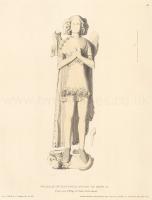
Effigy of William of Hatfield. William of Hatfield
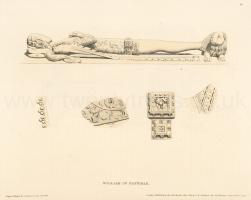
WAS the second son of Edward III by his Queen Philippa, and was born at Hatfield, in Yorkshire, in 1335. He was christened after his maternal grandfather, William Earl of Hainaut, died in his childhood, and was buried in the cathedral at York. The effigy is nearly four feet six inches in height, and may therefore be supposed that of a child about eleven years of age. This is a good example of the domestic attire of a noble youth of the day. On his head is a circlet surmounted by pearls. A rich juste-au-corps (probably embroidered cloth of golda) covers his figure. A mantle, the edge of which is indented into the form of a running pattern of ornamental foliage, falls over his breast and shoulders, and depends behind to the ancles. His shoes are divided into fretwork compartments, filled up with quatrefoils. His head is supported by angels, and his feet rest on a couchant lion. He wears a rich jewelled girdle round his hips; a characteristic mark of the monuments of this, and of many of the following century. It is not easy to imagine how a cincture thus placed sustained itself.
Details. Plate II. Profile. 1. Portion of the circlet and pearls. 9. Ornament on the juste-au-corps, or body coat. 3. Ornament on the shoes.
Note a. Thus Chaucer, describing the attire of a gallant youth:
"Embrouded was he, as it were a mede.
All full of freshe Bom es white and rede.
--- Short was his goune" ----
William of Hatfield: On 16th February 1337 he was born to King Edward III of England and Philippa of Hainaut Queen Consort England at Hatfield. He died shortly afterwards around 3rd March 1337. He was buried at York Minster where there is a monument to him in the north aisle.
Archaeologia Volume 29 Section III. The volume of Monumental Effigies, drawn and engraved by Mr. Charles Alfred Stothard, F.S.A. the late draughtsman to the Society, is so generally known and so highly appreciated wherever known, that it is only necessary, in order to introduce the subject of the following remarks, to remind the reader that it was left imperfect, in consequence of the author's sudden death, from a lamentable accident which occurred in the pursuit of his congenial profession. It was a part of Mr. Stothard's plan to have included in his work a complete series of the effigies of the Kings and Queens of this country; and for that purpose he visited France, and brought from Fontevraud his drawings of the statues of Henry the Second and his Queen, of Richard the First, and of Isabella Queen of John; and from the Abbey of L'Espan, near le Mans, the effigy of Berengaria, Queen of Richard I., as well as the figure of Geoffrey, Comte of Anjou, from an enamelled Plate in the church of St. Julien at le Mans. There were others, however, and those by no means inferior to any in beauty or interest, which had been left, perhaps from the very reason of their being within immediate reach, until some convenient opportunity, which was frustrated by the premature close of the artist's career. I allude particularly to thosea of Queen Philippa, [her grandson] King Richard the Second, and his [her granddaughter-in-law] Queen Anne of Bohemia, all in Westminster Abbey.
Note a. Mr. Stothard also intended to have included in his work all the knightly effigies in the Temple church. Those he omitted will be given by the Messrs. Hollis.