

Berwick-upon-Tweed, Northumberland is in Berwick-upon-Tweed Region.
1328 Marriage of King David II of Scotland and Princess Joan
The Devil's Causeway is a Roman Road from the Portgate, Northumberland [Map], where it crossed Dere Street, to Berwick-upon-Tweed, Northumberland [Map]. It passes through Great Whittingham, Northumberland [Map], Hartburn, Northumberland [Map], where it crosses the Hart Burn, Netherwitton, Northumberland [Map], Longhorsley, Northumberland [Map], Brinkburn Priory, Northumberland [Map], whereit crosses the River Coquet, north of North End [Map], Edlingham, Northumberland [Map] to Learchild Roman Fort [Map] where another road headed west to meet Dere Street at Bremenium [Map] aka High Rochester. The road then continues north passing Glanton, Northumberland [Map], Powburn, Northumberland [Map], where it crosses the River Till aka Breamish, the site of the Battle of Hedgeley Moor [Map], Newtown, Northumberland [Map], East Horton, Northumberland [Map], Lowick, Northumberland [Map], Berrington, Northumberland [Map] before reaching Berwick-upon-Tweed, Northumberland [Map].
Flowers of History. 1071. In the same year, king William [aged 43] invaded Scotland with a great army, and Malcolm, king of Scotland [aged 39], came peaceably to Berwick [Map] to meet him, and became his subject. At this time, count Ranulph of Micenis governed the earldom of Carlisle, who had given efficacious assistance to king William in his conquest of England. He began to build the city of Carlisle [Map], and to strengthen the citizens with many privileges. But when king William was returning from Scotland through Cumberland, seeing so royal a city, he took it from count Ranulph, and gave him instead of it the earldom of Chester, which was endowed with many honours and privileges. And king William commanded Carlisle to be fortified with very strong towers and ramparts. Moreover, king William the Conqueror, on his return from Scotland, built a new castle at Durham [Map], to serve as a protection against the irruptions of the Scots.
On 1st August 1235 Gilbert Marshal 4th Earl Pembroke [aged 38] and Marjorie Dunkeld Countess Pembroke [aged 35] were married at Berwick-upon-Tweed, Northumberland [Map]. She by marriage Countess Pembroke. She the daughter of King William I of Scotland and Ermengarde Beaumont Sarthe Queen Consort Scotland. He the son of William Marshal 1st Earl Pembroke and Isabel Clare Countess Pembroke. They were half second cousin once removed. She a great x 2 granddaughter of King Henry I "Beauclerc" England.
On 25th October 1292 Bishop Robert Burnell [aged 53] died at Berwick-upon-Tweed, Northumberland [Map].
On 30th March 1296 the army of King Edward I captured Berwick-upon-Tweed, Northumberland [Map] from William "Hardy" Douglas 2nd Lord Douglas [aged 56]. Richard Cornwall [aged 44] was killed during the course of the siege. Robert Clifford 1st Baron Clifford [aged 21] fought.
See 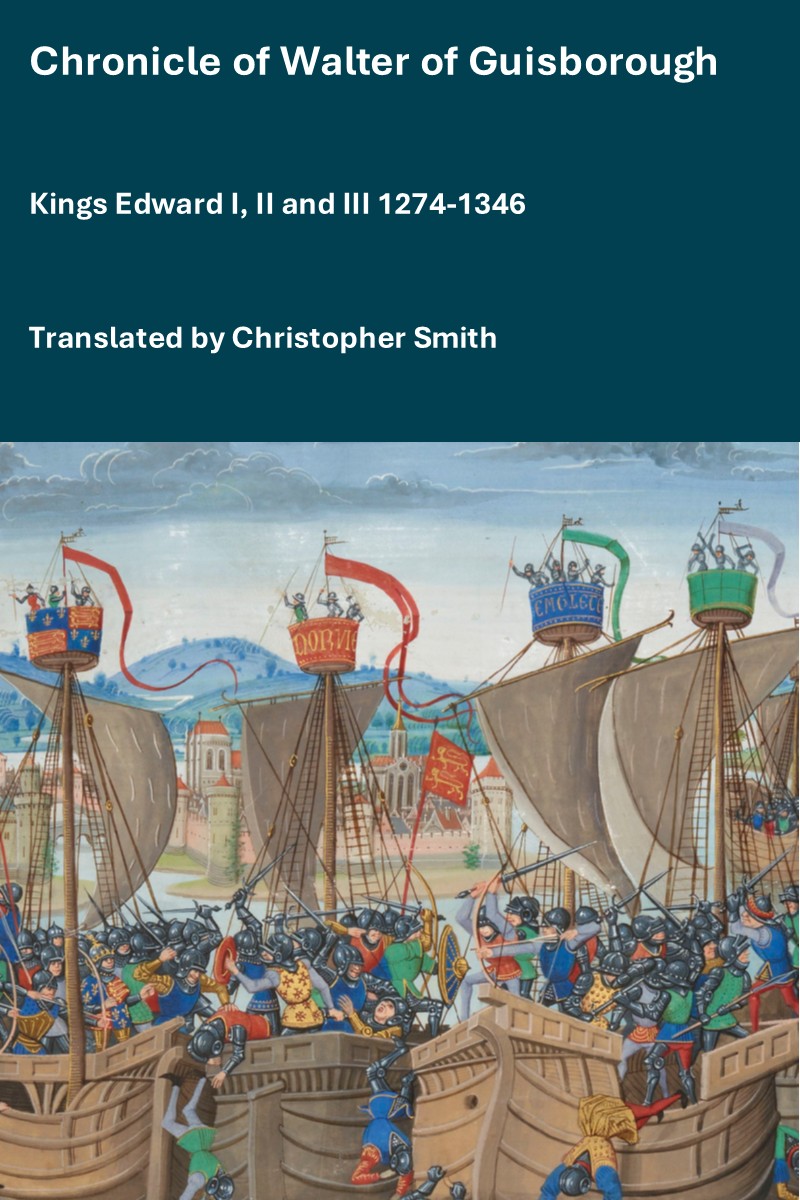 Walter of Guisborough, Scotichronicon, Chronicle of William Rishanger and the Annals of Worcester.
On 20th September 1306 Nigel Bruce [aged 30] was hanged at Berwick-upon-Tweed, Northumberland [Map].
In June 1319 Ralph Neville 2nd Baron Neville of Raby [aged 28] was captured at Berwick-upon-Tweed, Northumberland [Map].
In June 1319 Robert "Peacock of the North" Neville [aged 32] was killed by James "Black" Douglas [aged 33] in single combat at Berwick-upon-Tweed, Northumberland [Map]. He was buried at St Brandon's Church, Brancepeth.
On 17th July 1328 King David II of Scotland [aged 4] and Joan of the Tower Queen Consort Scotland [aged 7] were married at Berwick-upon-Tweed, Northumberland [Map]. She the daughter of King Edward II of England and Isabella of France Queen Consort England [aged 33]. He the son of King Robert the Bruce I of Scotland [aged 54] and Elizabeth Burgh Queen Consort Scotland.
On 19th July 1333 King Edward III of England [aged 20] defeated the Scots army at the Battle of Halidon Hill near Berwick-upon-Tweed, Northumberland [Map]. John of Eltham 1st Earl Cornwall [aged 16] commanded.
English archers, just as at the Battle of Dupplin Moor one year previously, had a significant impact on the massed ranks of Scottish schiltrons. Edward's army included: Thomas of Brotherton 1st Earl Norfolk [aged 33], who commanded the right wing, Hugh Courtenay 1st or 9th Earl Devon [aged 56], Robert Pierrepont, Hugh Courtenay 2nd or 10th Earl Devon [aged 30], Henry Beaumont Earl Buchan [aged 54] and John Sully [aged 50]. One of the few English casualties was John Neville [aged 34] who was killed.
The Scottish army included King David II of Scotland [aged 9]. Alexander Bruce, Alan Stewart [aged 61], James Stewart [aged 57], John Stewart, William Douglas 1st Earl Atholl, Archibald Douglas [aged 35] who were all killed.
Hugh 4th Earl Ross [aged 36] was killed. His son William succeeded 5th Earl Ross.
Malcolm Lennox 2nd Earl Lennox was killed. His son Domhnall succeeded Earl Lennox.
Kenneth de Moravia Sutherland 4th Earl Sutherland was killed. His son William succeeded 5th Earl Sutherland. Johanna Menteith Countess Sutherland by marriage Countess Sutherland.
Patent Rolls. 12th July 1408. Berwick-upon-Tweed, Northumberland [Map]. Mandate to the mayor of Newcastle upon Tyne to receive the head of Henry Boynton, "chivaler," and to place it on the bridge of the town to stay there as long as it can last. By K.
The like to the keepers or governors of the city of York and their lieutenant to receive the heads of Richard de Ask and Ranulph del See, and place them on the gate called "Bothom Barre" of the city. By K.
In 1419 William Clifford [aged 44] died at Berwick-upon-Tweed, Northumberland [Map].
Around June 1462 a Scottish and Lancastrian force, including King James III of Scotland [aged 10], his mother Mary of Guelders Queen Consort Scotland [aged 28], King Henry VI of England and II of France [aged 40] and his wife Margaret of Anjou Queen Consort England [aged 32], laid siege to Norham Castle [Map]. They held Norham for eighteen days until a force led by Richard "Kingmaker" Neville Earl Warwick, 6th Earl Salisbury [aged 33] and his brother John Neville 1st Marquess Montagu [aged 31] advanced to Norham Castle [Map] at which time the Scottish and Lancastrian force fled in panic pursued by the Yorkist army. Margaret of Anjou Queen Consort England and her son Edward of Westminster Prince of Wales [aged 8] escaped to Berwick-upon-Tweed, Northumberland [Map] and then to the continent. King Henry VI of England and II of France remained in Scotland he and his wife never saw each other again.
On 24th August 1482 Edward Stanley 1st Baron Monteagle [aged 20] was knighted by King Richard III of England [aged 29] at Berwick-upon-Tweed, Northumberland [Map] during the Capture of Berwick.

On 1st August 1503 Margaret Tudor Queen Scotland [aged 13] crossed the border into Scotland at Berwick-upon-Tweed, Northumberland [Map].
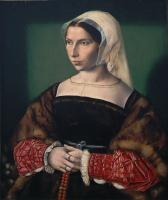
Around 1514 Mary Hastings was born to George Hastings 1st Earl Huntingdon [aged 27] and Anne Stafford Countess Huntingdon [aged 31] at Berwick-upon-Tweed, Northumberland [Map]. She married 1526 her third cousin Thomas Berkeley 6th Baron Berkeley, son of Thomas Berkeley 5th Baron Berkeley and Eleanor Constable Baroness Berkeley.
On 7th November 1523 Thomas Gerard [aged 35] was killed during the Battle of Berwick at Berwick-upon-Tweed, Northumberland [Map].
Henry Machyn's Diary. 3rd August 1557. [The iij day of August, in the afternoon, came from the Exchequer about seventeen horses laden with money towards Berwick [Map], and divers men riding with it with javelins and pole-axes, on horseback, and] bowes and sheyffes of arowes, be-twyn viij and [ix of the clock.]
Before 10th September 1559 James Hamilton 3rd Earl Arran [aged 27] travelled to France at Berwick-upon-Tweed, Northumberland [Map].
In 1560 Arthur Grey 14th Baron Grey of Wilton [aged 24] was knighted at Berwick-upon-Tweed, Northumberland [Map].
In 1572 Valentine Browne was elected MP Berwick on Tweed.
On 25th June 1601 Peregrine Bertie 13th Baron Willoughby [aged 45] died at Berwick-upon-Tweed, Northumberland [Map] where he was Governor. His son Robert [aged 18] succeeded 14th Baron Willoughby de Eresby. He was buried at St James' Church, Spilsby [Map].
On 15th February 1610 Catherine Bertie [aged 15] died in childbirth. She was buried at St James' Church, Spilsby [Map].
Monument Elizabethan Period. Tall Sideboard Tomb with reclining hooded figure of Lady Katherine, daughter of Peregrine, with Chrisom Child in the crib at her feet. Above a standing figure of Peregrine Bertie 13th Baron Willoughby in a niche, with strapwork embellishments, all supported on composite columns with a dentilated cornice. Possibly the work of Samuel Baldwin.
Catherine Bertie: Around 1595 she was born to Peregrine Bertie 13th Baron Willoughby and Mary Vere Baroness Willoughby of Eresby. Sources are confused about her birth year stating she was born in 1610 and that she married in 1609. Date adjusted to around 1595 on the assumption she was married around twenty years of age. Her son died at six days old on 09 Feb 1610. Her father died in 1601. Sources also refer to her as Baroness Rockingham whereas she died some eleven years before her husband was created Baron Rockingham. In 1609 Lewis Watson 1st Baron Rockingham and she were married.



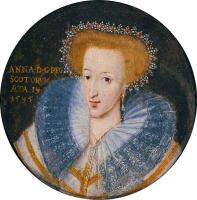
On 3rd June 1603 a number of English noble ladies selected by the Privy Council greeted Anne of Denmark Queen Consort Scotland England and Ireland [aged 28] at Berwick-upon-Tweed, Northumberland [Map] with two-hundred horse including...
Frances Howard Countess Kildare
Elizabeth Hastings Countess of Worcester [aged 57]
Philadelphia Carey Baroness Scrope Bolton
Penelope Devereux Countess Devonshire [aged 40].
Anne Lady Herbert [aged 20]
Audrey Shelton Lady Walsingham [aged 34].
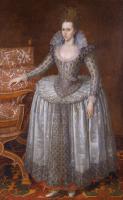
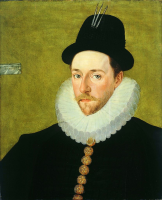
In 1638 John Berkeley 1st Baron Berkeley [aged 36] was knighted at Berwick-upon-Tweed, Northumberland [Map].
On 27th July 1639 Vivian Molyneux [aged 43] was knighted by King Charles I of England, Scotland and Ireland [aged 38] at Berwick-upon-Tweed, Northumberland [Map].
In 1679 Ralph Grey 4th Baronet Grey of Werke [aged 18] was elected MP Berwick on Tweed which seat he held until 1681.
On 23rd June 1679 James Thynne was knighted at Berwick-upon-Tweed, Northumberland [Map].
In 1695 Ralph Grey 4th Baronet Grey of Werke [aged 34] was elected MP Berwick on Tweed which seat he held until 1698.
In 1715 John Shute aka Barrington 1st Viscount Barrington [aged 37] was elected MP Berwick on Tweed.
In 1722 John Shute aka Barrington 1st Viscount Barrington [aged 44] was elected MP Berwick on Tweed.
On 11th March 1723 Henry Neville aka Grey [aged 39] was elected MP Berwick on Tweed which seat he held until 1727.
In 1727 General Joseph Sabine [aged 66] was elected MP Berwick on Tweed.
In 1740 William Wildman Barrington 2nd Viscount Barrington [aged 22] was elected MP Berwick on Tweed.
In 1740 John Barrington [aged 18] was elected MP Berwick on Tweed.
In 1754 John Delaval 1st Baron Delaval [aged 25] was elected MP Berwick on Tweed.
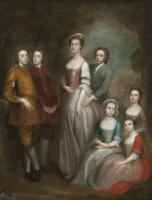

In 1765 John Delaval 1st Baron Delaval [aged 36] was elected MP Berwick on Tweed.
In 1780 John Delaval 1st Baron Delaval [aged 51] was elected MP Berwick on Tweed.
In 1796 George Carpenter 2nd Earl Tyrconnel [aged 46] was elected MP Berwick on Tweed.
In 1820 Charles Augustus Bennet 5th Earl Tankerville [aged 43] was elected MP Berwick on Tweed.
In 1880 Frederick Lambton [aged 24] unsuccessfully contested MP Berwick on Tweed.