

Paternal Family Tree: Douglas
James "Black" Douglas and Joan Lovel were married.
Around 1286 James "Black" Douglas was born to William "Hardy" Douglas 2nd Lord Douglas [aged 46] and Elizabeth Stewart Baroness Douglas [aged 38] at Douglas Castle, Douglas.
Before 1288 [his mother] Elizabeth Stewart Baroness Douglas [aged 39] died.
Before 1290 [his father] William "Hardy" Douglas 2nd Lord Douglas [aged 49] and Eleanor Louvain Baroness Douglas were married. She by marriage Lord Douglas.
On 30th March 1296 the army of King Edward I captured Berwick-upon-Tweed, Northumberland [Map] from [his father] William "Hardy" Douglas 2nd Lord Douglas [aged 56]. Richard Cornwall [aged 44] was killed during the course of the siege. Robert Clifford 1st Baron Clifford [aged 21] fought.
See 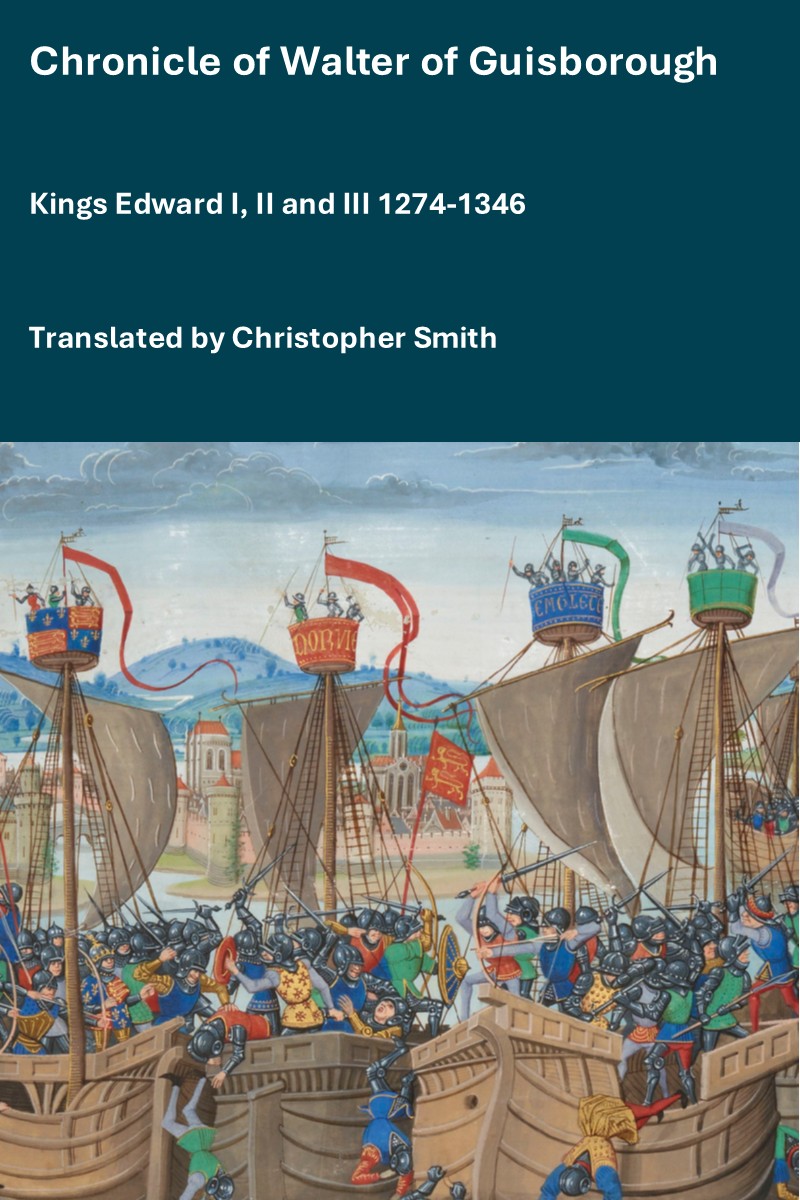 Chronicle of Walter of Guisborough, Scotichronicon, Chronicle of William Rishanger and the Annals of Worcester.
In 1298 [his father] William "Hardy" Douglas 2nd Lord Douglas [aged 58] died at Tower of London [Map].
In 1303 [his son] John Douglas was born to James "Black" Douglas [aged 17] and Joan Lovel at Douglas Castle, Douglas. He married Agnes Fraham and had issue.
On 24th June 1314 the Scottish army of King Robert the Bruce I of Scotland [aged 39] including, James "Black" Douglas [aged 28], heavily defeated the English army led by King Edward II of England [aged 30] at the Battle of Bannockburn.
Gilbert de Clare 8th Earl Gloucester 7th Earl Hertford [aged 23] was killed. Earl Gloucester, Earl Hertford extinct.
John Comyn 4th Lord Baddenoch [aged 20], Robert Felton 1st Baron Felton [aged 44] and William Vesci were killed.
William Marshal 1st Baron Marshal [aged 36] was killed. His son John [aged 22] succeeded 2nd Baron Marshal.
Robert Clifford 1st Baron Clifford [aged 40] was killed. His son Roger [aged 14] succeeded 2nd Baron de Clifford.
John Lovell 2nd Baron Lovel [aged 25] was killed. His son John succeeded 3rd Baron Lovel of Titchmarsh.
Henry de Bohun was killed by King Robert the Bruce I of Scotland. He was buried in Llanthony Secunda Priory, Gloucestershire [Map].
Walter Fauconberg 2nd Baron Fauconberg [aged 50] possilby died although his death is also reported as being on 31 Dec 1318.
Bartholomew Badlesmere 1st Baron Badlesmere [aged 38], Humphrey Bohun 4th Earl Hereford 3rd Earl Essex [aged 38], Goronwy ap Tudur Hen Tudor, Henry Beaumont Earl Buchan [aged 35], Aymer de Valence 2nd Earl Pembroke [aged 39] and Robert Umfraville 8th Earl Angus [aged 37] fought.
Pain Tiptoft 1st Baron Tibetot [aged 34] was killed. His son John succeeded 2nd Baron Tibetot.
John Montfort 2nd Baron Montfort [aged 23] was killed. Peter Montfort 3rd Baron Montfort [aged 23] succeeded 3rd Baron Montfort.
Thomas Grey [aged 34] undertook a suicidal charge that contributed to the English defeat and subsequently blemished his career.
William Latimer 2nd Baron Latimer of Corby [aged 38] was captured.
Michael Poynings [aged 44] was killed.
In June 1319 Robert "Peacock of the North" Neville [aged 32] was killed by James "Black" Douglas [aged 33] in single combat at Berwick-upon-Tweed, Northumberland [Map]. He was buried at St Brandon's Church, Brancepeth.
On 4th August 1327, during the night, James "Black" Douglas [aged 41] ambushed Edward III's [aged 14] camp at Stanhope Park Weardale [Map]. Douglas reached Edward III's collapsed tent nearly capturing the English King.
 Chronicle of Jean le Bel Volume 1. When spring came and the fair season for those who wished to cross the high sea, and when the noble knight Sir James Douglas1 was as well provided as befitted him, according to the command laid upon him, he embarked in Scotland and sailed to Flanders, straight to Sluys, to hear news whether anyone from these parts was preparing to go overseas toward the Holy Land of Jerusalem, so that he might have better company. He stayed at Sluys for fully twelve days before departing; yet during all that time he would never set foot on land, but remained always aboard his ship, and maintained his state honourably with trumpets and kettledrums, as though he were the King of Scotland. In his company he had a knight banneret and six other of the most valiant knights of the country, and some twenty fine and young squires, the most capable he could choose from his land, besides the rest of his household. He had with him so many vessels of silver: pots, basins, dishes, cups, bottles, bowls, barrels, and other such things, and all who wished to go there, provided they were men of rank, were entertained with two kinds of wine and two kinds of spices.
Quant le printemps vient et la bonne saison pour mouvoir qui veult passer la haulte mer, et le gentil chevalier messire Guillaume Douglas? fut si pourveu, comme à luy appartenoïit, selonc ce que commandé luy estoit, il monta sur mer en Escoce et vint en Flandres droit à l'Escluse pour ouir nouvelles, se nul de par deça la mer s'apareilloit pour y aler vers la saincte terre de Jherusalem, affin qu'il pœut avoir meilleure compaignie. Et sejourna bien à l'Escluse XII jours ainchoys qu'il s'en partist; maiz oncques ne voulut là endroit mettre le pié à terre tout le terme des XII jours, ains demoura toudis sur sa nave et tenoit toudis son tynel honnourablement à trompes et à nakaires, comment se ce fust le roy d'Escoce; et avoit en sa compaignie ung chevalier banneret et VI aultres des plus prœux du pays, et bien XX escuiers beaulx et jœunes, les plus souffisans qu'il voult eslire en son pays sans l'aultre maisnie. Et avoit tant de vaisselles d'argent, pos, bachins, escuelles, hanaps, bouteilles, bachins, barilz et aultres telles chose; et estoient festiez de II manieres de vin, de II manieres d'espices tous ceulx qui vouloient aler là, mais que ce fussent gens d'estat.
Note 1. On 1st September 1329, Edward III of England issued to James Douglas [aged 43], who was setting out for the Holy Land to aid the Christians, 'cum corde domini R. regis Scotiæ nuper defuncti' i.e. 'with the heart of the lord R., late King of Scotland', letters of safe-conduct valid for him and his companions for seven weeks. (Rymer 2.770.) On the same date, he also wrote to Alfonso XI of Castile, recommending James Douglas and those accompanying him, and requesting a safe-conduct for them.
1. Le 1er septembre 1329, Édouard IE délivra à Jacques de Douglas, allant en Terre Sainte au secours des chrétiens, cum corde domini R. regis Scotiæ nuper defuncti, des lettres de sauf-conduit valables, pour lui et ses compagnons, pendant sept semaines. (Rymer op. cit., t. II, IIe partie, p. 770.) Il écrivit des lettres à la même date à Alphonse, roi de Castille, pour lui recommander Jacques de Douglas et ceux qui l'accompagneraient et lui demander un sauf-conduit pour eux. (Ibid p. 771.)
Before 1330 [his son] Archibald "Grim" Douglas 3rd Earl Douglas was born to James "Black" Douglas [aged 43]. He married 1362 Joanna Strathearn Countess Douglas, daughter of Maurice de Moravia Strathearn 1st Earl Strathearn, and had issue.
On 25th August 1330 James "Black" Douglas [aged 44] was killed during the Battle of Teba at Teba whilst en route to the Holy Land with the heart of King Robert the Bruce I of Scotland.
Froissart Book 1: 1307-1340. [41] It happened, soon after [25th August 1330] Sir William [James] Douglas [aged 44] had arrived there, that the King of Spain came out from the camps to move closer to his enemies. The King of Granada also came out on his side, so that one king could see the other with all his banners. And they began to draw up their battle lines, one against the other. Sir William Douglas withdrew to one of the flanks with all his company, to better carry out his task and to better show his valor. When he saw all the battle lines arranged on both sides, and saw the royal battle line stir a little, he believed they were about to engage. He, who preferred to be among the first rather than the last, spurred his horse forward and all his company with him, straight to the battle line of the King of Granada, and went to engage the enemy. He believed that the King of Spain and all his battle lines would follow him, but they did not, by which he was shamefully deceived, for they did not move at all that day. There, the noble knight Sir William Douglas and all his company were surrounded by the enemy. They performed feats of great valor, but in the end, they could not hold out, and not a single man escaped on foot, all were slain in great misfortune. This was a sorrowful and grievous loss and a great shame for the Spaniards, and they were much blamed by all who heard of it, for they could well have rescued the knight and part of his men, had they wished. Such was the fate of the adventure and journey of Sir William Douglas.
[41] Avint, assés tost apriès çou que li di messires Guillaumes de Douglas fu là venus, que li rois d'Espagne issi hors as camps, pour plus approcier ses ennemis. Li rois de Grenate issi hors ossi d'autre part, si ques li uns rois veoit l'autre à tout ses banières. Et se commencièrent à rengier leurs batailles, li un contre l'autre. Li dis messires Guillaumes de Douglas se traist à l'un des costés, à toute se route, pour miex faire se besongne, et pour miex moustrer son effort. Quant il vei toutes les batailles rengies d'une part et d'autre, et vei la bataille le roy un petit esmouvoir, il cuida que elle alast assambler. Il, qui miex voloit estre des premiers que des daarrains, feri des esporons, et toute se compagnie avoech lui, jusques à le bataille le roy de Grenate, et ala as ennemis assambler. Et pensoit ensi que li rois d'Espagne et toutes ses batailles le sievissent, mès non fisent, dont il en fu laidement deceus, car onques celi jour ne s'en esmurent. Là fu li gentilz chevaliers, messires Guillaumes de Douglas enclos, et toute se route, des ennemis. Et y fisent merveilles d'armes, mès finablement il ne peurent durer, ne onques piés n'en escapa, que tout ne fuissent occis à grant meschief. De quoi ce fu pités et damages et grant lasqueté pour les Espagnolz, et moult en furent blasmet de tous chiaus qui en oïrent parler, car bien ewissent rescous le chevalier et une partie des siens, s'il vosissent. Ensi ala de ceste aventure et dou voiage monsigneur Guillaume de Douglas.
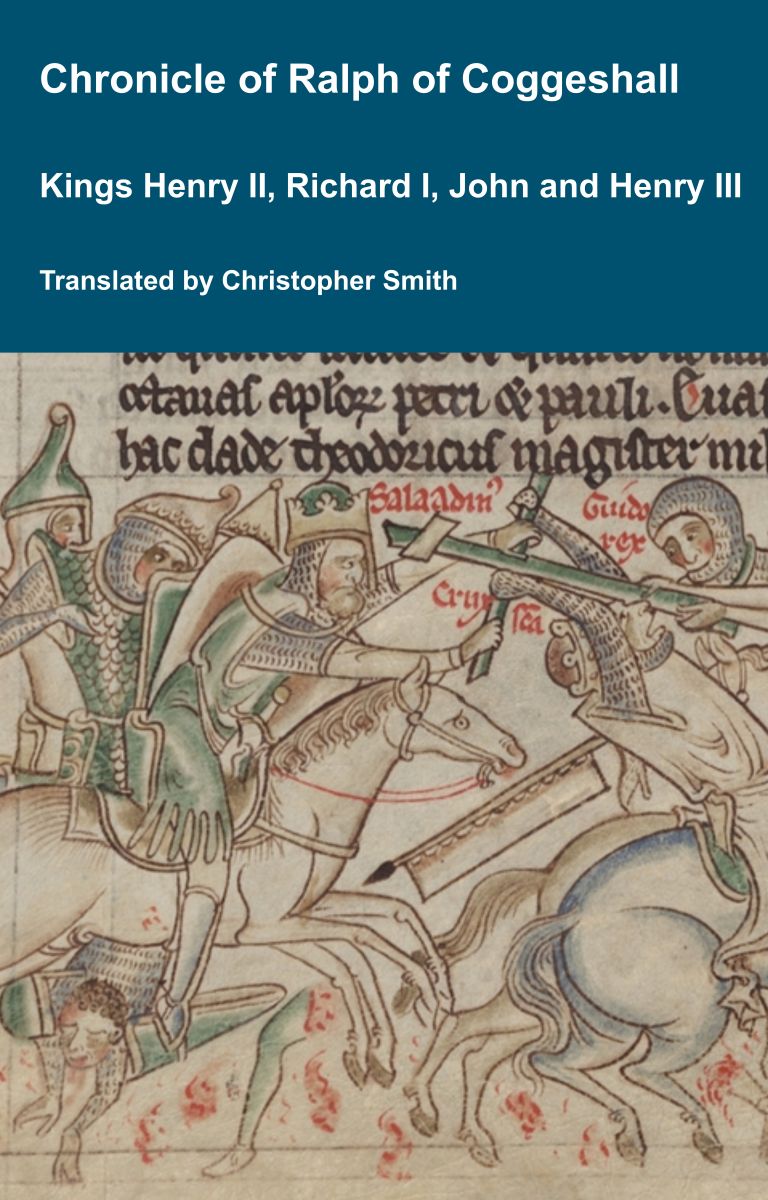
Chronicle of Abbot Ralph of Coggeshall
The Chronicle of Abbot Ralph of Coggeshall (Chronicon Anglicanum) is an indispensable medieval history that brings to life centuries of English and European affairs through the eyes of a learned Cistercian monk. Ralph of Coggeshall, abbot of the Abbey of Coggeshall in Essex in the early 13th century, continued and expanded his community’s chronicle, documenting events from the Norman Conquest of 1066 into the tumultuous reign of King Henry III. Blending eyewitness testimony, careful compilation, and the monastic commitment to record-keeping, this chronicle offers a rare narrative of political intrigue, royal power struggles, and social upheaval in England and beyond. Ralph’s work captures the reigns of pivotal figures such as Richard I and King John, providing invaluable insights into their characters, decisions, and the forces that shaped medieval rule. More than a simple annal, Chronicon Anglicanum conveys the texture of medieval life and governance, making it a rich source for scholars and readers fascinated by English history, monastic authorship, and the shaping of the medieval world.
Available at Amazon in eBook and Paperback format.
Chronicle of Jean le Bel Volume 1. One day, after Sir James Douglas [aged 44] had arrived there, it happened that the King of Spain rode out into the open country to draw nearer to his enemies. The King of Granada also came forth on his side, so that one king could see the other with all his banners, and they began to draw up their divisions against one another. The said Sir James placed himself on one side, the better to accomplish his purpose and to show his prowess. When he saw all the divisions drawn up and perceived that the king's battle moved forward a little, he believed that it was about to engage. He, who preferred always to be among the foremost rather than the last, spurred on with all his company and rode straight into the battle of the King of Granada, thinking that the king and all his divisions would follow him. But he was grievously deceived; for that day they did not advance at all. Thus Sir James and all his company were surrounded by the enemy, and not one escaped, they were all slain1, which was a great loss and grievous misfortune for the Spaniards.
Ung jours, aprez ce que messire Guillaume Douglas fut là venu, avint que le roy d'Espaigne issi hors aux champs pour plus aprocher de ses anemis. Le roy de Guernade issi d'aultre part, siques l'ung roy veist l'aultre à tout ses banieres, et si commencerrent à renger les batailles les unes contre les aultres. Ledit messire Guillaume se trahy à ung des costez pour miclx faire sa besongne et mielx monstrer son effort. Quant il vist toutes les batailles rengier et vist celle du roy ung poy esmouvoir, il cuida qu'elle alast assembler. Il qui mielx amoit estre des premiers que des derrains, feri des esperons à toute sa compaignie et ala jusques à la bataille du roy de Guernade, et pensoit bien que le roy et toutes ses batailles le syewissent, maiz il en fut lourdement decheus, car oncques ce jour ne s'esmurent; ains fut ledit messire Guillaume et toute sa compaignie enclos des anemis que oncques ung seul n'en eschappa qu'ilz ne fussent tous tuez, de quoy ce fut grand dommage et grand deffault pour les Espaignolz.
Note 1. James Douglas was killed at the Battle of Teba on 25th August 1330.
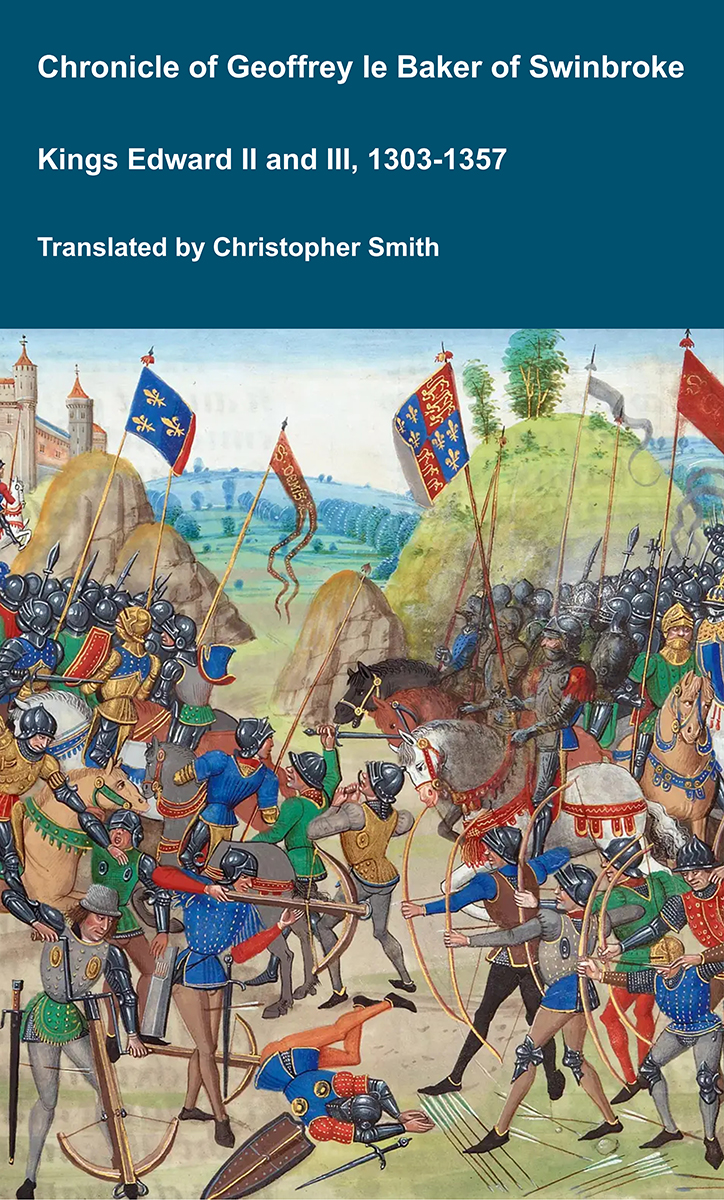 Chronicle of Geoffrey le Baker of Swinbroke. After the coronation and the aforementioned marriage had been celebrated at Berwick, the said William [James] Douglas journeyed to the frontiers of Spain,1 toward Granada, where he, as a noble knight, most commendably displayed his valour against the Moorish Saracens. And after many victories, which God granted to the Christians under his leadership, he fought alone against five Saracens, and though he was slain by them with five mortal wounds, he also slew them, as testified by Brother Thomas of Lavington, a Carmelite who was then still a layman and served under his command in the Christian army to the best of his ability. He [James Douglas] had a pious and twofold motive. For when Robert the Bruce was dying, he entrusted him with this charge in the following words: "I have vowed to God," he said, "that I would fight in person against the enemies of Christ. But since I will not be able to do so while alive, I implore you, the most proven man of the Scots, whom I love dearly, to carry my heart against the enemies of Christ's name, to the frontier of Granada." To which James replied: "By the invoked heart of Jesus Christ, I will, as you ask, carry your heart, and I will die fighting against the damned foes."
Celebratis apud Berewicum coronacione et nupciis predictis, predictus Jacobus Dowglas adivit fronterium Ispanie versus Grenatum, ubi miles strefluus suam probitatem contra Mauros Saracenos laudabiliter ostendebat, et post multasvictorias, quas ipso duce Christianis Deus commisit, simul contra v Saracenos solus dimicans, v letalibus wineribus ab ipsis est occisus, set et ipsos occidit, teste fratre Thoma de Lavyngtone Carmelita, qui pro tunc secularis sub suo ducatu in exercitu Christianorum ut potuit laboravit. Habuit occasionem piam duplicem. Moriens nempe Robertus le Bruys ipsum honeravit sub tali forma: 'Vovi, inquit, 'Deo, quod contra inimicos Christi forem corporaliter militaturus, quod, quia vivus non potero, te, tamquam Scotorum, quos summe diligo, virum probatissimum, exoro, ut cor meum contra inimicos nominis Christi deportes ad fronterium Granardianum. Cui Iacobus: 'Turo, inquiens, 'per invocatum cor Christi Iesu, cor tuum, ut rogasti, me delaturum, et contra predamnatos hostes moriturum.
Note 1. The romantic story of the delivery of Bruce's heart to the keeping of Douglas and of Douglas's death is well known from the pages of Froissart who follows Jehan le Bel, and from Barbour's Brus. The closing scene may be quoted from Froissart 41.
It will be noticed that Froissart persistently gives Douglas the Christian name of William, a blunder which he adopts from le Bel.
[his father] William "Hardy" Douglas 2nd Lord Douglas and [his mother] Elizabeth Stewart Baroness Douglas were married. She by marriage Lord Douglas.
[his son] William Douglas 1st Earl Atholl was born to James "Black" Douglas.
Kings Wessex: Great x 7 Grand Son of King Edmund "Ironside" I of England
Kings Scotland: Great x 4 Grand Son of King David I of Scotland
Kings France: Great x 8 Grand Son of Hugh I King of the Franks
Kings Duke Aquitaine: Great x 12 Grand Son of Ranulf I Duke Aquitaine
Great x 2 Grandfather: William Douglas 1st Lord Douglas
Great x 1 Grandfather: Archibald Douglas
Great x 2 Grandmother: Margaret Kerdal
Grandfather: William "Longleg" Douglas
Great x 2 Grandfather: John Crawford
Great x 1 Grandmother: Margaret Crawford
Father: William "Hardy" Douglas 2nd Lord Douglas
Grandmother: Constance Battail Battail
James "Black" Douglas 4 x Great Grandson of King David I of Scotland
Great x 3 Grandfather: Walter Fitzalan 1st High Steward 
Great x 2 Grandfather: Alan Fitzwalter 2nd High Steward 
Great x 1 Grandfather: Walter Stewart 3rd High Steward
Grandfather: Alexander Stewart 4th High Steward 2 x Great Grandson of King David I of Scotland
Great x 2 Grandfather: Gille Críst Angus 4th Earl Angus
Great x 1 Grandmother: Bethóc Angus Great Granddaughter of King David I of Scotland
Great x 4 Grandfather: King David I of Scotland  son of King Malcolm III of Scotland
Great x 3 Grandfather: Henry Dunkeld 3rd Earl Huntingdon 1st Earl of Northumbria son of King David I of Scotland
Great x 4 Grandmother: Maud Queen Consort Scotland 6 x Great Granddaughter of King Edward "Elder" of the Anglo Saxons
Great x 2 Grandmother: Marjorie Dunkeld Countess Angus Granddaughter of King David I of Scotland
Great x 4 Grandfather: William Warenne 2nd Earl of Surrey 
Great x 3 Grandmother: Ada Warenne Countess Huntingdon and Northumbria 3 x Great Granddaughter of Hugh I King of the Franks
Great x 4 Grandmother: Elizabeth Capet Countess Leicester, Meulan and Surrey  2 x Great Granddaughter of Hugh I King of the Franks
Mother: Elizabeth Stewart Baroness Douglas 3 x Great Granddaughter of King David I of Scotland