

 Berrington, Northumberland
 Berwick-upon-Tweed, Northumberland
 Branxton, Northumberland
 Carter Bar Boundary Marker
 Catcleugh, Northamptonshire
 Chew Green, Northumberland
 Cornhill on Tweed, Northumberland
 Cottonshopeburnfoot, Northumberland
 Elishaw, Northumberland
 Etal, Northumberland
 Featherwood Roman Camps
 Ford Castle
 Fourlaws Roman Camp
 St Michael's and All Angels Church, Ford
Berwick-upon-Tweed Region is in Northumberland.
The Devil's Causeway is a Roman Road from the Portgate, Northumberland [Map], where it crossed Dere Street, to Berwick-upon-Tweed, Northumberland [Map]. It passes through Great Whittingham, Northumberland [Map], Hartburn, Northumberland [Map], where it crosses the Hart Burn, Netherwitton, Northumberland [Map], Longhorsley, Northumberland [Map], Brinkburn Priory, Northumberland [Map], whereit crosses the River Coquet, north of North End [Map], Edlingham, Northumberland [Map] to Learchild Roman Fort [Map] where another road headed west to meet Dere Street at Bremenium [Map] aka High Rochester. The road then continues north passing Glanton, Northumberland [Map], Powburn, Northumberland [Map], where it crosses the River Till aka Breamish, the site of the Battle of Hedgeley Moor [Map], Newtown, Northumberland [Map], East Horton, Northumberland [Map], Lowick, Northumberland [Map], Berrington, Northumberland [Map] before reaching Berwick-upon-Tweed, Northumberland [Map].

On 9th September 1513 at the Battle of Flodden was fought at the Branxton, Northumberland [Map]. the English army was commanded by Thomas Howard 2nd Duke of Norfolk [aged 70], Thomas Howard 3rd Duke of Norfolk [aged 40], Edmund Howard [aged 35], Thomas Dacre 2nd Baron Dacre Gilsland [aged 45], Edward Stanley 1st Baron Monteagle [aged 51] and Marmaduke Constable [aged 56].
The English army included: Henry "Shepherd Lord" Clifford 10th Baron Clifford [aged 59], William Conyers 1st Baron Conyers [aged 44], Thomas Berkeley 5th Baron Berkeley [aged 41] and Richard Neville 2nd Baron Latimer of Snape [aged 45].
Father and son Ralph ellerker of risby in yorkshire and Ralph Ellerker were knighted by Thomas Howard Earl of Surrey, as were Marmaduke Constable [aged 33], William Constable [aged 38], George Darcy 1st Baron Darcy Aston [aged 16], Edmund Walsingham [aged 33], Thomas Burgh 7th Baron Cobham 5th Baron Strabolgi 1st Baron Burgh [aged 25] and Walter Stonor [aged 36].
John Booth [aged 78], Randall Babington, John Bigod [aged 38] and Thomas Fitzwilliam [aged 39], Christopher Savage [aged 49], Thomas Venables [aged 44] and Brian Tunstall [aged 33] were killed.
Bryan Stapleton of Wighill [aged 55] was killed. (Some reports have him dying in 1518).
The Scottish army suffered heavy casualties:
King James IV of Scotland [aged 40] was killed. His body was taken to London, then to Sheen Priory, Richmond [Map]; thereafter it disappeared. His son James [aged 1] succeeded V King Scotland.
Archbishop Alexander Stewart [aged 20] was killed.
David Kennedy 1st Earl Cassilis [aged 43] was killed. His son Gilbert [aged 18] succeeded 2nd Earl Cassilis. Isabel Campbell Countess Cassilis by marriage Countess Cassilis.
William Sinclair 2nd Earl Caithness [aged 54] was killed. His son John succeeded 3rd Earl Caithness.
Matthew Stewart 2nd Earl Lennox was killed. His son John [aged 23] succeeded 3rd Earl Lennox.
William Hay 4th Earl Erroll was killed. His son William [aged 18] succeeded 5th Earl Erroll.
John Douglas 2nd Earl Morton was killed. His son James succeeded 3rd Earl Morton, 6th Lord Dalkeith.
Adam Hepburn 2nd Earl Bothwell was killed. His son Patrick [aged 1] succeeded 3rd Earl Bothwell.
Alexander Stewart 4th of Garlies [aged 32] was killed. His son Alexander [aged 6] succeeded 5th Lord Garlies.
Alexander Elphinstone 1st Lord Elphinstone was killed. His son Alexander [aged 3] succeeded 2nd Lord Elphinstone.
Thomas Hay, George Hepburn Bishop Isles [aged 59], Adam Hepburn Master [aged 56], Thomas "Younger of Cushnie" Lumsden
William Douglas 6th Lord Drumlanrig was killed. William "Younger" Douglas 7th Lord Drumlanrig succeeded 7th Lord Drumlanrig.
George Seton 5th Lord Seton was killed. His son George succeeded 6th Lord Seton.
John Hay 2nd Lord Hay of Yester was killed. His son John [aged 23] succeeded 3rd Lord Hay of Yester. Elizabeth Douglas Lady Hay by marriage Lord Hay of Yester.
Henry Sinclair 3rd Lord Sinclair [aged 48] was killed. His son William succeeded 4th Lord Sinclair.
James Stewart 1st Lord of Traquair [aged 33] was killed. His son William [aged 7] succeeded 2nd Lord Traquair.
John Maxwell 4th Lord Maxwell [aged 57] was killed. His son Robert [aged 20] succeeded 5th Lord Maxwell.
George Home 4th Lord Home and John Stewart 2nd Earl Atholl [aged 38] fought.
William Graham 1st Earl Montrose [aged 49] was killed. His son William [aged 21] succeeded 2nd Earl Montrose.
Robert Erskine 4th Lord Erskine 16th Earl of Mar was killed. His son John [aged 26] de jure 17th Earl Mar, Lord Erskine.
Thomas Stewart 2nd Lord Innermeath [aged 52] was killed. His son Richard succeeded 3rd Lord Innermeath.
Robert Crichton 2nd Lord Crichton of Sanquhar [aged 41] was killed. His son Robert [aged 22] succeeded 3rd Lord Crichton of Sanquhar
Father and son William Rollo [aged 59] and Robert Rollo 5th of Duncrub [aged 34], brothers David Lyon of Cossins, William Lyon and George Lyon were killed. John Somerville 1st of Cambusnethan [aged 55], William Keith of Inverugie [aged 43], David Wemyss of Wemyss [aged 40], Robert Keith Master of Marischal [aged 30], Guiscard Harbottle [aged 28], John Erskine, David Home [aged 22], Andrew Stewart 1st Lord Avondale [aged 43], Archibald Campbell 2nd Earl Argyll [aged 64], Robert Douglas of Lochleven [aged 89] were killed. William Murray [aged 43], Colin Oliphant [aged 26], William Ruthven [aged 33], George Douglas [aged 44] and William Douglas [aged 42] were killed. Walter Lindsay of Arden and Walter Lindsay [aged 33] were killed.


The River Rede rises near the border of Scotland and England by the Carter Bar Boundary Marker [Map] from where it flows past Catcleugh, Northamptonshire [Map], Cottonshopeburnfoot, Northumberland [Map], Rochester, Northumberland [Map] near the Bremenium [Map] Roman Fort, past Horsley, Northumberland [Map], Elishaw, Northumberland [Map], past Percy's Cross at the Site of the Battle of Otterburn [Map], Otterburn, Northumberland [Map], East and West Woodburn [Map] to Redesmouth, Northumberland [Map] where it joins the River North Tyne.
The River Rede rises near the border of Scotland and England by the Carter Bar Boundary Marker [Map] from where it flows past Catcleugh, Northamptonshire [Map], Cottonshopeburnfoot, Northumberland [Map], Rochester, Northumberland [Map] near the Bremenium [Map] Roman Fort, past Horsley, Northumberland [Map], Elishaw, Northumberland [Map], past Percy's Cross at the Site of the Battle of Otterburn [Map], Otterburn, Northumberland [Map], East and West Woodburn [Map] to Redesmouth, Northumberland [Map] where it joins the River North Tyne.
The River Coquet rises around Chew Green, Northumberland [Map] from where it flows past Makendon Northumberland [Map], Blindburn, Northumberland [Map], Barrow Burn, Northumberland [Map], Shillmoor, Northumberland [Map], Linshiels, Northumberland [Map], Alwinton, Northumberland [Map], Harbottle Castle, Northumberland [Map], Sharperton, Northumberland [Map], Holystone, Northumberland [Map], Hepple, Northumberland [Map], Thropton, Northumberland [Map], Rothbury, Northumberland [Map], Pauperhaugh, Northumberland [Map], Brinkburn Priory, Northumberland [Map], Weldon Bridge, Northumberland [Map], Felton, Northumberland [Map], Guyzance, Northumberland [Map] before passing under the bridge at Warkworth Bridge, Northumberland [Map] and reaching the North Sea at Amble, Northumberland [Map].
From Chew Green Roman Camps [Map] Dere Street crosses the Kale Water at Tow Ford, Roxburghshire [Map] where there is Roman Camp, Pennymuir Roman Fort [Map], Whitton Edge, Roxburghshire [Map], Cappuck Roman Fort [Map], Mounthooly, Roxburghshire [Map] where it crosses the River Teviot. After crossing the River Teviot it reaches St Boswells, Roxburghshire [Map] then Trimontium aka Melrose Roman Fort [Map] where it meets the River Tweed.
From Corbridge Roman Fort, Northumberland [Map] Dere Street continues north through Hunnum aka Onnum Roman Fort [Map], where it crosses Hadrian's Wall, Little Whittington, Northumberland [Map], Beukley, Northumberland [Map], Great Swinburne, Northumberland [Map], Fourlaws Roman Camp [Map], Habitancum Roman Fort [Map], Blakehope Roman Fort [Map], High Rochester, Northumberland [Map], Featherwood Roman Camps [Map], Chew Green Roman Camps [Map] where it crosses the River Coquet and into Scotland.
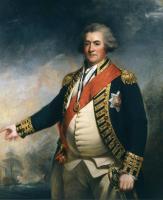
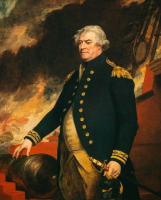
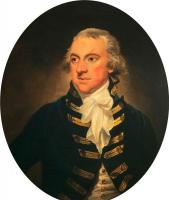
On 4th August 1804 Adam Duncan 1st Viscount Duncan [aged 73] died suddenty at an inn Cornhill on Tweed, Northumberland [Map] on his way to Edinburgh. His son Robert Haldane-Duncan [aged 19] succeeded 2nd Viscount Duncan of Camperdowne.

The River Rede rises near the border of Scotland and England by the Carter Bar Boundary Marker [Map] from where it flows past Catcleugh, Northamptonshire [Map], Cottonshopeburnfoot, Northumberland [Map], Rochester, Northumberland [Map] near the Bremenium [Map] Roman Fort, past Horsley, Northumberland [Map], Elishaw, Northumberland [Map], past Percy's Cross at the Site of the Battle of Otterburn [Map], Otterburn, Northumberland [Map], East and West Woodburn [Map] to Redesmouth, Northumberland [Map] where it joins the River North Tyne.
The River Rede rises near the border of Scotland and England by the Carter Bar Boundary Marker [Map] from where it flows past Catcleugh, Northamptonshire [Map], Cottonshopeburnfoot, Northumberland [Map], Rochester, Northumberland [Map] near the Bremenium [Map] Roman Fort, past Horsley, Northumberland [Map], Elishaw, Northumberland [Map], past Percy's Cross at the Site of the Battle of Otterburn [Map], Otterburn, Northumberland [Map], East and West Woodburn [Map] to Redesmouth, Northumberland [Map] where it joins the River North Tyne.
Around 1447 Robert Manners was born to Robert Manners [aged 39] and Joan Ogle [aged 37] at Etal, Northumberland [Map]. He married in or before 1460 his fifth cousin Eleanor Ros, daughter of Thomas Ros 9th Baron Ros Helmsley and Philippa Tiptoft Baroness Ros of Helmsley, and had issue.
On 14th June 1993 Michael Edward Joicey 4th Baron Joicey [aged 68] died at Etal, Northumberland [Map]. His son James [aged 39] succeeded 5th Baron Joicey of Chester le Street in County Durham, 5th Baronet Joicey of Longhurst and Ulgham in Northumberland.

In 1856 Augusta Boyle [aged 54] commissioned the building of Etal Chapel, Northumberland [Map]. It was consecrated for worship in 1859.
On 28th July 1876 Augusta Boyle [aged 74] died. She was buried at Etal Chapel, Northumberland [Map]. The remains of her husband Frederick Fitz-Clarence, their daughter Augusta Fitz-Clarence [aged 51] were disinterred and buried next to her. Her son-in-law Captain Theodore Williams was subsequently buried at Etal Chapel, Northumberland [Map].
Augusta Boyle: On 14th August 1801 she was born to George Boyle 4th Earl Glasgow. On 19th May 1821 Frederick Fitz-Clarence and she were married. He the illegitmate son of King William IV of the United Kingdom and Dorothea Bland aka "Mrs Jordan". In 1856 Augusta Boyle commissioned the building of Etal Chapel, Northumberland [Map]. It was consecrated for worship in 1859. On 28th April 1898 Charles Lindsay Orr-Ewing and she were married. The difference in their ages was 59 years; she, unusually, being older than him.
Frederick Fitz-Clarence: On 9th December 1799 he was born illegitimately to King William IV of the United Kingdom and Dorothea Bland aka "Mrs Jordan". On 30th October 1854 he died.
Augusta Fitz-Clarence: In December 1824 she was born to Frederick Fitz-Clarence and Augusta Boyle. She a granddaughter of King William IV of the United Kingdom. On 18th October 1885 she died.


From Corbridge Roman Fort, Northumberland [Map] Dere Street continues north through Hunnum aka Onnum Roman Fort [Map], where it crosses Hadrian's Wall, Little Whittington, Northumberland [Map], Beukley, Northumberland [Map], Great Swinburne, Northumberland [Map], Fourlaws Roman Camp [Map], Habitancum Roman Fort [Map], Blakehope Roman Fort [Map], High Rochester, Northumberland [Map], Featherwood Roman Camps [Map], Chew Green Roman Camps [Map] where it crosses the River Coquet and into Scotland.
Ford Castle [Map] is located at a ford across the River Till aka Breamish.
In 1338 William Heron was licensed to crenellate Ford Castle [Map].
Chronicle of Scotland by Robert Lindesay Volume 1 Book 20 Chapter 18. [September 1513] Hou the king passit to the feild of floudane. Hou the king cuist doun werk [Map]1 and norem [Map]2 and fuird [Map]3 and atill [Map]4. Hou the king mellit with the lady furd. Hou the men of weiris wictuallis wer spendit. Hou the lady of fuird askit licence at the king to wisie hir freindis. Hou the lady fuird schowit the Erle of Surrie all the king of Scotlandis secreittis.
Note 1. Wark Castle, Northumberland [Map].
Note 2. Norham Castle [Map].
Note 3. Ford Castle [Map].
Note 4. Etal Castle, Northumberland [Map].
Before 9th September 1513 King James IV of Scotland [aged 40] based himself at Ford Castle [Map] before the Battle of Flodden.
In 1549 Ford Castle [Map] passed from the Heron family to the Carr family.
In 1906 James Joicey 1st Baron Joicey [aged 59] bought Ford Castle [Map] and its estates.
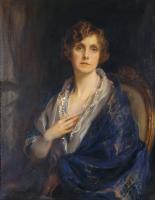
On 21st November 1936 James Joicey 1st Baron Joicey [aged 90] died at Ford Castle [Map]. He was buried at St Michael's and All Angels Church, Ford [Map]. His son James [aged 56] succeeded 2nd Baron Joicey of Chester le Street in County Durham and 2nd Baronet Joicey of Longhurst and Ulgham in Northumberland. Georgiana Wharton Burdon Baroness Joicey [aged 56] by marriage Lady Joicey of Longhurst and Ulgham in Northumberland.
On 24th July 1940 James Arthur Joicey 2nd Baron Joicey [aged 60] died at Ford Castle [Map]. His brother Hugh [aged 59] succeeded 3rd Baron Joicey of Chester le Street in County Durham and 3rd Baronet Joicey of Longhurst and Ulgham in Northumberland. Joan Katherine Lambton Baroness Joicey [aged 46] by marriage Baroness Joicey of Chester le Street in County Durham.
From Corbridge Roman Fort, Northumberland [Map] Dere Street continues north through Hunnum aka Onnum Roman Fort [Map], where it crosses Hadrian's Wall, Little Whittington, Northumberland [Map], Beukley, Northumberland [Map], Great Swinburne, Northumberland [Map], Fourlaws Roman Camp [Map], Habitancum Roman Fort [Map], Blakehope Roman Fort [Map], High Rochester, Northumberland [Map], Featherwood Roman Camps [Map], Chew Green Roman Camps [Map] where it crosses the River Coquet and into Scotland.
On 21st November 1936 James Joicey 1st Baron Joicey [aged 90] died at Ford Castle [Map]. He was buried at St Michael's and All Angels Church, Ford [Map]. His son James [aged 56] succeeded 2nd Baron Joicey of Chester le Street in County Durham and 2nd Baronet Joicey of Longhurst and Ulgham in Northumberland. Georgiana Wharton Burdon Baroness Joicey [aged 56] by marriage Lady Joicey of Longhurst and Ulgham in Northumberland.