

Lincoln's Inn is in Holborn Camden.
See: Lincoln's Inn Chapel.
In February 1311 Henry Lacy 4th Earl Lincoln, Earl Salisbury [aged 60] died at Lincoln's Inn. His daughter Alice [aged 29] succeeded 5th Countess Salisbury, 5th Countess Lincoln, 10th Baroness Pontefract, 11th Baroness Halton. Thomas Plantagenet 2nd Earl of Leicester, 2nd Earl Lancaster, Earl of Salisbury and Lincoln [aged 33] by marriage Earl Salisbury, Earl Lincoln.
In June 1486 James Ormond admitted at Lincoln's Inn.
On 12th May 1490 George Manners 11th Baron Ros Helmsley [aged 20] enrolled at Lincoln's Inn.
In 1515 Robert Townshend admitted at Lincoln's Inn.
On 31st July 1524 Richard Morgan was admitted to Lincoln's Inn.

On 6th February 1545 Christopher Wray [aged 21] admitted at Lincoln's Inn.
Around January 1550 Christopher Wray [aged 26] called to the bar at Lincoln's Inn.
On 10th April 1559 John Puckering [aged 15] entered Lincoln's Inn.
In 1562 Christopher Wray [aged 38] was appointed Reader at Lincoln's Inn at Lincoln's Inn.
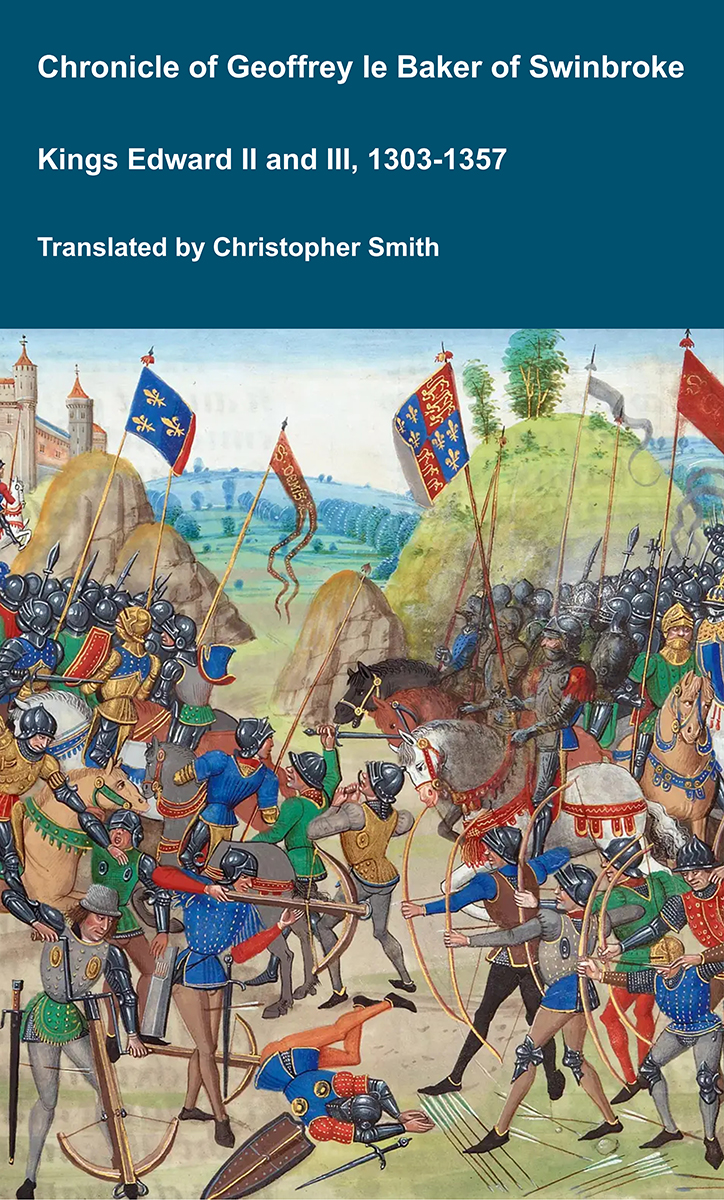
Chronicle of Geoffrey le Baker of Swinbroke
Baker was a secular clerk from Swinbroke, now Swinbrook, an Oxfordshire village two miles east of Burford. His Chronicle describes the events of the period 1303-1356: Gaveston, Bannockburn, Boroughbridge, the murder of King Edward II, the Scottish Wars, Sluys, Crécy, the Black Death, Winchelsea and Poitiers. To quote Herbert Bruce 'it possesses a vigorous and characteristic style, and its value for particular events between 1303 and 1356 has been recognised by its editor and by subsequent writers'. The book provides remarkable detail about the events it describes. Baker's text has been augmented with hundreds of notes, including extracts from other contemporary chronicles, such as the Annales Londonienses, Annales Paulini, Murimuth, Lanercost, Avesbury, Guisborough and Froissart to enrich the reader's understanding. The translation takes as its source the 'Chronicon Galfridi le Baker de Swynebroke' published in 1889, edited by Edward Maunde Thompson.
Available at Amazon in eBook and Paperback format.
In 1566 Christopher Wray [aged 42] was appointed Treasurer of Lincoln's Inn at Lincoln's Inn.
In 1567 John Glanville [aged 25] educated at Lincoln's Inn.
Around March 1567 Christopher Wray [aged 43] was appointed Reader at Lincoln's Inn at Lincoln's Inn.
On 18th June 1567 Christopher Wray [aged 43] was appointed Serjeant at Law at Lincoln's Inn.
On 8th October 1572 Philip Bassett [aged 15] entered Lincoln's Inn from which he was later expelled for recusancy.
In 1575 Thomas Harries aka Harris 1st Baronet [aged 25] educated at Lincoln's Inn.
In 1580 George St Paul 1st Baronet [aged 18] entered at Lincoln's Inn.
On 29th January 1587 William Godolphin [aged 20] admitted at Lincoln's Inn.
Before 1589 William Ravenscroft [aged 27] was a barrister at Lincoln's Inn. He was called to the bar in 1589.
On 19th November 1597 George Fane of Burston [aged 16] admitted at Lincoln's Inn.

In 1604 John St John 1st Baronet [aged 18] admitted at Lincoln's Inn.
In 1605 Walter Mansel 2nd Baronet [aged 17] was admitted to Lincoln's Inn.
On 8th August 1615 William Cope 2nd Baronet [aged 38] admitted at Lincoln's Inn.
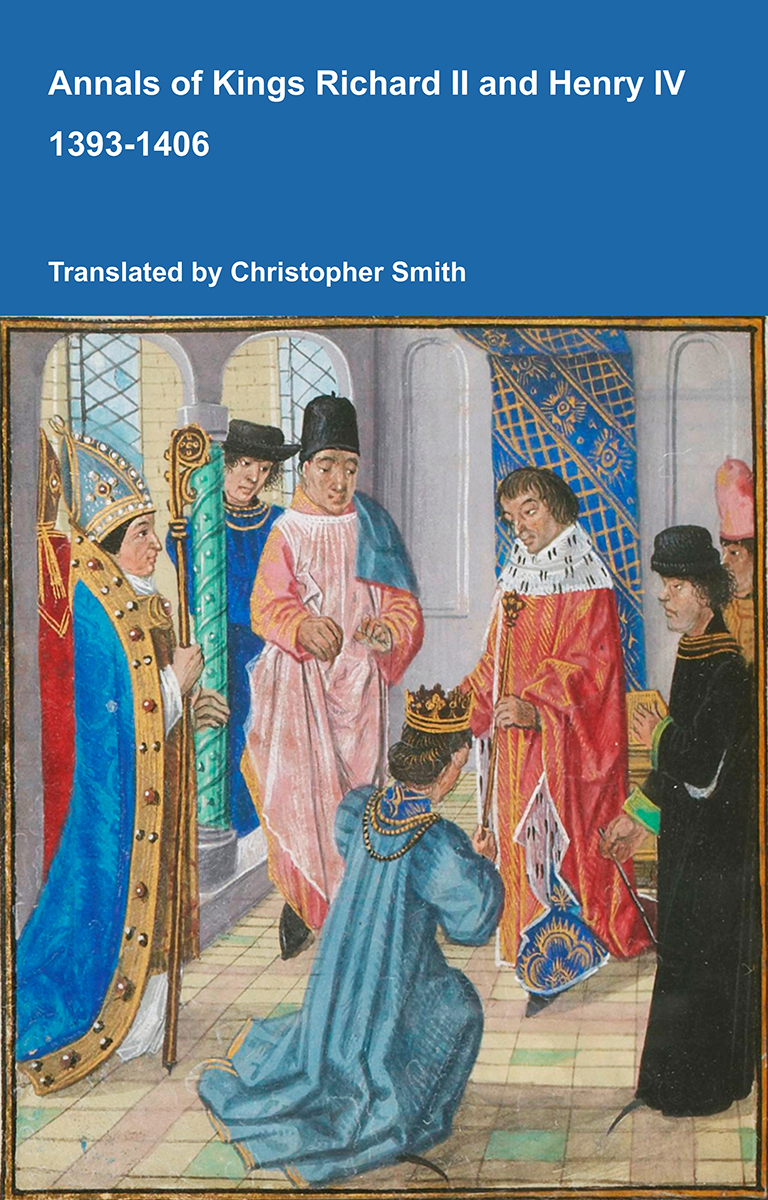
Annals of Kings Richard II and Henry IV 1393-1406
The Annals of Kings Richard II and Henry IV offers a vivid contemporary account of one of the most turbulent periods in late medieval England. Covering the reigns of Richard II and Henry IV, the chronicle records royal ceremonies, political conflict, rebellion, war, taxation, religious controversy, executions, popular unrest and remarkable portents. Its pages include a detailed description of Richard II’s coronation, the fall and deposition of the king, Henry IV’s seizure of the throne, the Percy rebellion, the execution of Archbishop Richard Scrope, the campaigns of Owain Glyndŵr, and England’s relations with Scotland, France, Portugal and Scandinavia. Alongside affairs of state, the annalist preserves reports of miracles, eclipses, prophecies, supernatural events and the experiences of ordinary townspeople, clergy, soldiers and travellers. Written from a monastic perspective, the work combines political observation with moral judgement, presenting victories and disasters as evidence of divine favour or punishment. At once a historical record and a reflection of medieval belief, the Annals provides an invaluable window into the challenges, ceremonies and conflicts of England at the turn of the fifteenth century.
Available at Amazon in eBook and Paperback format.
On 22nd April 1619 Oliver St John [aged 20] admitted at Lincoln's Inn.
On 27th January 1620 John Glynne [aged 18] entered at Lincoln's Inn.
On 19th March 1622 Hugh Wyndham Baron of the Exchequer [aged 20] was admitted to Lincoln's Inn.
On 13th October 1622 Ralph Delaval 1st Baronet was born to Robert Delaval of Seaton Delaval [aged 22] and Barbara Selby. He was baptised on 27th October 1622. He was educated at Queen's College, Oxford University; matriculated 15th June 1638. He was admitted to Lincoln's Inn on 28th November 1639. He married 2nd April 1646 Anne Leslie Lady Delaval, daughter of Alexander Leslie 1st Earl Leven, and had issue.

On 1st April 1627 William Pierrepont of Thoresby [aged 19] was admitted to Lincoln's Inn.
On 24th June 1628 John Glynne [aged 26] called to the bar at Lincoln's Inn.
On 16th June 1629 Hugh Wyndham Baron of the Exchequer [aged 27] was admitted to Lincoln's Inn.
On 22nd November 1637 John Burgoyne 2nd Baronet [aged 19] was admitted to Lincoln's Inn.
In 1638 Christoper Wray 4th Baronet [aged 16] admitted at Lincoln's Inn.
On 5th November 1638 William Wray 1st Baronet [aged 13] admitted at Lincoln's Inn.
On 29th January 1640 Charles Cheyne 1st Viscount Newhaven [aged 14] matriculated Brasenose College, Oxford University after which he studied at Lincoln's Inn.
In 1649 James Hayes [aged 12] admitted at Lincoln's Inn.
On 4th May 1650 John Temple [aged 18] admitted at Lincoln's Inn.
The Deeds of the Dukes of Normandy
The Gesta Normannorum Ducum [The Deeds of the Dukes of Normandy] is a landmark medieval chronicle tracing the rise and fall of the Norman dynasty from its early roots through the pivotal events surrounding the Norman Conquest of England. Originally penned in Latin by the monk William of Jumièges shortly before 1060 and later expanded at the behest of William the Conqueror, the work chronicles the deeds, politics, battles, and leadership of the Norman dukes, especially William’s own claim to the English throne. The narrative combines earlier historical sources with firsthand information and oral testimony to present an authoritative account of Normandy’s transformation from a Viking settlement into one of medieval Europe’s most powerful realms. William’s history emphasizes the legitimacy, military prowess, and governance of the Norman line, framing their expansion, including the conquest of England, as both divinely sanctioned and noble in purpose. Later chroniclers such as Orderic Vitalis and Robert of Torigni continued the history, extending the coverage into the 12th century, providing broader context on ducal rule and its impact. Today this classic work remains a foundational source for understanding Norman identity, medieval statesmanship, and the historical forces that reshaped England and Western Europe between 800AD and 1100AD.
Available at Amazon in eBook and Paperback format.
John Evelyn's Diary. 29th March 1652. I heard that excellent prelate, the primate of Ireland (Jacobus Usher [aged 71]) preach in Lincoln's Inn on Heb. iv. 16, encouraging of penitent sinners.
In 1658 John Strangeways [aged 21] educated at Lincoln's Inn.
Samuel Pepys' Diary. 1st February 1660. Wednesday. In the morning went to my office where afterwards the old man brought me my letters from the carrier. At noon I went home and dined with my wife on pease porridge and nothing else. After that I went to the Hall [Map] and there met with Mr. Swan and went with him to Mr Downing's [aged 35] Counsellor, who did put me in very little hopes about the business between Mr Downing and Squib, and told me that Squib would carry it against him, at which I was much troubled, and with him went to Lincoln's Inn and there spoke with his attorney, who told me the day that was appointed for the trial. From thence I went to Sir Harry Wright's [aged 23] and got him to give me his hand for the £60 which I am to-morrow to receive from Mr. Calthrop [aged 36] and from thence to Mrs. Jem and spoke with Madam Scott and her husband who did promise to have the thing for her neck done this week. Thence home and took Gammer East, and James the porter, a soldier, to my Lord's lodgings, who told me how they were drawn into the field to-day, and that they were ordered to march away to-morrow to make room for General Monk [aged 51]; but they did shut their Colonel Fitch, and the rest of the officers out of the field, and swore they would not go without their money, and if they would not give it them, they would go where they might have it, and that was the City. So the Colonel went to the Parliament, and commanded what money could be got, to be got against to-morrow for them, and all the rest of the soldiers in town, who in all places made a mutiny this day, and do agree together. Here I took some bedding to send to Mrs. Ann for her to lie in now she hath her fits of the ague. Thence I went to Will's and staid like a fool there and played at cards till 9 o'clock and so came home, where I found Mr. Hunt's and his wife who staid and sat with me till 10 and so good night.


Samuel Pepys' Diary. 4th February 1660. Saturday. In the morning at my lute an hour, and so to my office, where I staid expecting to have Mr. Squib come to me, but he did not. At noon walking in the Hall I found Mr. Swan and got him and Captain Stone together, and there advised about Mr Downing's [aged 35] business. So to Will's, and sat there till three o'clock and then to Mr. Swan's, where I found his wife in very genteel mourning for her father, and took him out by water to the Counsellor at the Temple [Map], Mr. Stephens, and from thence to Gray's Inn, thinking to speak with Sotherton Ellis [Note. Probably Solicitor Ellis], but found him not, so we met with an acquaintance of his in the walks, and went and drank, where I ate some bread and butter, having ate nothing all day, while they were by chance discoursing of Marriot, the great eater, so that I was, I remember, ashamed to eat what I would have done. Here Swan shewed us a ballad to the tune of Mardike which was most incomparably wrote in a printed hand, which I borrowed of him, but the song proved but silly, and so I did not write it out. Thence we went and leaving Swan at his master's, my Lord Widdrington [aged 60], I met with Spicer, Washington, and D. Vines in Lincoln's Inn Court, and they were buying of a hanging jack to roast birds on of a fellow that was there selling of some. I was fain to slip from there and went to Mrs. Crew's [aged 58] to her and advised about a maid to come and be with Mrs. Jem while her maid is sick, but she could spare none. Thence to Sir Harry Wright's [aged 23], but my lady not being within I spoke to Mrs. Carter about it, who will get one against Monday. So with a link boy [Note. Links were torches of tow or pitch to light the way. Ed.] to Scott's, where Mrs. Ann was in a heat, but I spoke not to her, but told Mrs. Jem what I had done, and after that went home and wrote letters into the country by the post, and then played awhile on my lute, and so done, to supper and then to bed.
John Evelyn's Diary. 1st January 1662. I went to London, invited to the solemn foolery of the Prince de la Grange, at Lincoln's Inn, where came the King [aged 31], Duke, etc. It began with a grand masque, and a formal pleading before the mock Princes, Grandees, Nobles, and Knights of the Sun. He had his Lord Chancellor [aged 52], Chamberlain, Treasurer, and other Royal Officers, gloriously clad and attended. It ended in a magnificent banquet. One Mr. Lort was the young spark who maintained the pageantry.


Samuel Pepys' Diary. 3rd January 1662. So to dinner to my Lord Crew's [aged 64] with him and his Lady, and after dinner to Faithorne's [aged 46], and there bought some pictures of him; and while I was there, comes by the King life-guard, he being gone to Lincoln's Inn this afternoon to see the Revells there; there being, according to an old custom, a prince and all his nobles, and other matters of sport and charge.

John Evelyn's Diary. 22nd September 1671. After dinner, the Treasurer [aged 41] carried me to Lincoln's Inn, to one of the Parliament Clerks, to obtain of him, that I might carry home and peruse, some of the Journals, which were, accordingly, delivered to me to examine about the late Dutch War. Returning home, I went on shore to see the Custom House, now newly rebuilt since the dreadful conflagration.
On 21st July 1683 William Russell [aged 43] was beheaded by Jack Ketch at Lincoln's Inn for his involvement in the Rye House Plot. The executioner was so inept that he took four axe blows to separate the head from the body. After the first failed blow his victim looked up and said "You dog, did I give you 10 guineas to use me so inhumanely?".


On 11th July 1689 Samuel Edwin [aged 18] admitted at Lincoln's Inn.
On 30th May 1695 Thomas Foley 1st Baron Foley [aged 21] was admitted to Lincoln's Inn.
In 1705 Robert Bankes Jenkinson 4th Baronet [aged 17] was admitted to Lincoln's Inn and called to the bar in 1713.
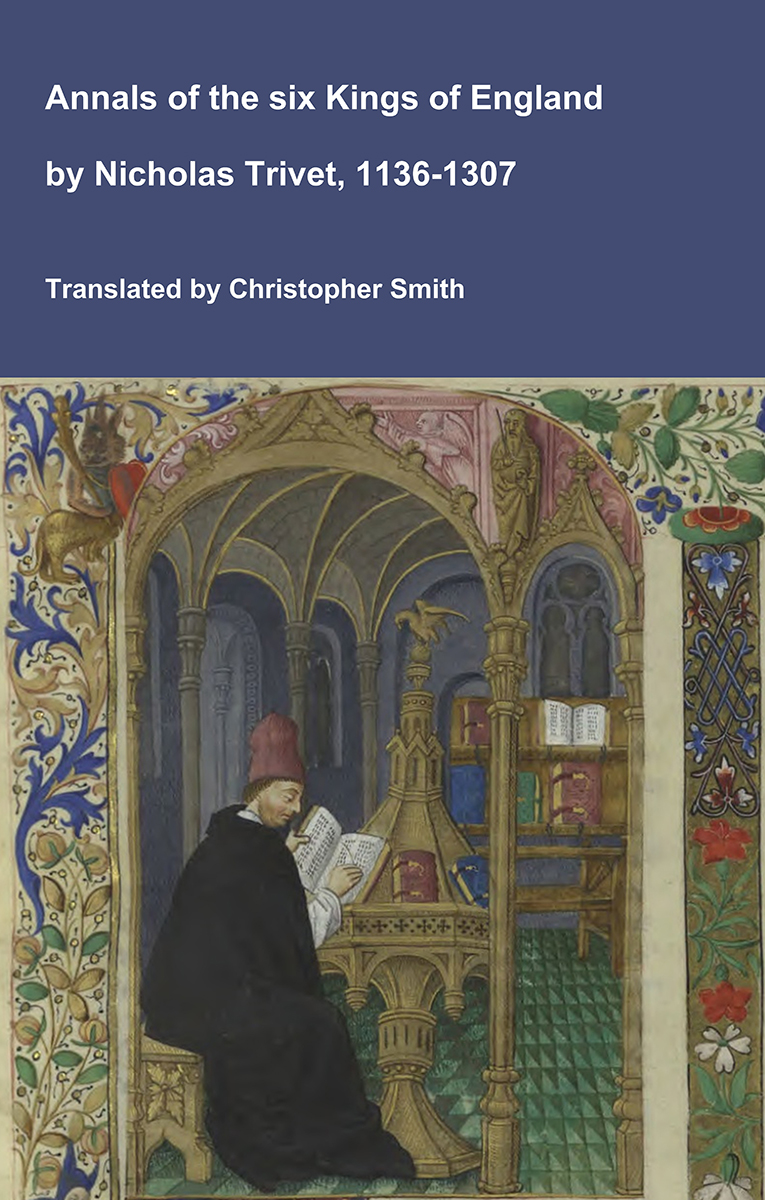
Annals of the six Kings of England by Nicholas Trivet
Translation of the Annals of the Six Kings of England by that traces the rise and rule of the Angevin aka Plantagenet dynasty from the mid-12th to early 14th century. Written by the Dominican scholar Nicholas Trivet, the work offers a vivid account of English history from the reign of King Stephen through to the death of King Edward I, blending political narrative with moral reflection. Covering the reigns of six monarchs—from Stephen to Edward I—the chronicle explores royal authority, rebellion, war, and the shifting balance between crown, church, and nobility. Trivet provides detailed insight into defining moments such as baronial conflicts, Anglo-French rivalry, and the consolidation of royal power under Edward I, whose reign he describes with particular immediacy. The Annals combines careful year-by-year reporting with thoughtful interpretation, presenting history not merely as a sequence of events but as a moral and political lesson. Ideal for readers interested in medieval history, kingship, and the origins of the English state, this chronicle remains a valuable and accessible window into the turbulent world of the Plantagenet kings.
Available at Amazon in eBook and Paperback format.
On 17th January 1706 Thomas Wyndham [aged 20] admitted at Lincoln's Inn.
On 17th February 1720 Thomas Hervey [aged 21] was admitted to Lincoln's Inn.


Letters of Horace Walpole. 27th July 1752. Arlington Street. To Horace Mann 1st Baronet [aged 45].
What will you say to me after a silence of two months? I should be ashamed, if I were answerable for the whole world, who will do nothing worth repeating. Newspapers have horse-races, and can invent casualties, but I can't have the confidence to stuff a letter with either. The only casualty that is of dignity enough to send you, is a great fire at Lincoln's Inn, which is likely to afford new work for the lawyers, in consequence of the number of deeds and writings it has consumed. The Duke of Kingston [aged 63] has lost many of his: he is unlucky with fires: Thoresby, his seat, was burnt a few years ago, and in it a whole room of valuable letters and manuscripts. There has been a Very considerable loss of that kind at this fire: Mr. Yorke, the Chancellor's son, had a great collection of Lord Somers's papers, many relating to the assassination plot; and by which, I am told, it appeared that the Duke of Marlborough was deep in the schemes of St. Germain's [Meaning the court of the exiled James II].


In 1777 John Henniker-Major 2nd Baron Henniker [aged 24] was called to the bar at Lincoln's Inn.

On 27th April 1782 William Talbot 1st Earl Talbot [aged 71] died at Lincoln's Inn. Earl Talbot extinct. His daughter Cecil [aged 46] succeeded 2nd Baroness Dynevor of Dynevor in Camarthenshire. His nephew John [aged 33] succeeded 3rd Baron Talbot of Hensol in Glamorganshire.
In 1799 William Courtenay 10th Earl Devon [aged 21] called to the bar at Lincoln's Inn.
John Evelyn's Diary. 25th March 1649. I heard the Common Prayer (a rare thing in these days) in St. Peter's, at Paul's Wharf [Map], London; and, in the morning, the Archbishop of Armagh, that pious person and learned man, Usher [aged 68], in Lincoln's Inn Chapel.

John Evelyn's Diary. 5th November 1686. I went to St. Martin's [Map] in the morning, where Dr. Birch preached very boldly against the Papists, from John xvi. 2. In the afternoon I heard Dr. Tillotson [aged 56] in Lincoln's Inn chapel, on the of same text, but more cautiously.
Adeline Horsey Recollections. My last recollection of Cassiobury was in 1849, when I stayed there after the announcement of my engagement to the Count Montemolin [aged 25]. The great Lord Brougham [aged 65] was included in the house-party, and one day when he was walking in the gardens, talking about my approaching marriage, he suddenly dropped on one knee, and taking my hand, kissed it, saying as he did so, "Let me be the first to kiss your hand as future Queen of Spain".
This somewhat theatrical behaviour was exactly what Lord Brougham delighted in. He was a very ugly man, and like most ugly people he was very vain. He was a wonderful speaker, and few cared to provoke his powers of sarcasm; Hazlitt describes him as "a man of inordinate ambition and little heart"; but he certainly possessed some heart, for he adored his daughter Eleanor, who died at Cannes when she was only nineteen. The poor girl was an invalid all her short life, and her father resided at Cannes solely on her account. He built the Villa Eleanor for her, and until Lord Brougham's death her bedroom was always known as "Eleanor's room", and kept exactly as it had been when she occupied it.
The Villa is now an hotel, and Cannes is very different to what it was when Lord Brougham settled there. He told me that the town had only one hotel and one street when he first saw it.
Eleanor Brougham's body was brought to England, and she was buried in the small graveyard which belongs to Lincoln's Inn Chapel. I do not think any other woman has ever been interred there. The Marquis of Wellesley wrote her epitaph, and I believe it is a very beautiful and touching one.

