

Paternal Family Tree: Glynne
Before 1602 [his father] William Glynne [aged 35] and [his mother] Jane Griffith were married.
In 1602 John Glynne was born to William Glynne [aged 36] and Jane Griffith at Glynllifon.
Around 1612 John Glynne [aged 10] educated at Westminster School [Map].
In 1620 [his father] William Glynne [aged 54] died.
On 27th January 1620 John Glynne [aged 18] entered at Lincoln's Inn.
On 9th November 1621 John Glynne [aged 19] was educated at Hart Hall Hertford College, Oxford University.
On 24th June 1628 John Glynne [aged 26] called to the bar at Lincoln's Inn.
Before 1630 Thomas Lawley 1st Baronet [aged 48] and [his future wife] Anne Manning Lady Lawley were married.
Before 20th January 1638 John Glynne [aged 36] and Frances Squib were married.
On 20th January 1638 [his son] William Glynne 1st Baronet was born to John Glynne [aged 36] and [his wife] Frances Squib. He married before 1663 Penelope Anderson Lady Bicester aka Bisseter and had issue.
In April 1640 John Glynne [aged 38] was elected MP Westminster during the Short Parliament.
In November 1640 Humphrey Coningsbury [aged 17] was elected MP Herefordshire in the Long Parliament.
William Heveningham [aged 36] was elected MP Stockbridge during the Long Parliament.
Robert Crane 1st Baronet [aged 54] was elected MP Sudbury in the Long Parliament holding the seat until his death in 1643.
John Jennings was elected MP St Albans during the Long Parliament.
John Glynne [aged 38] was elected MP Westminster during the Long Parliament.
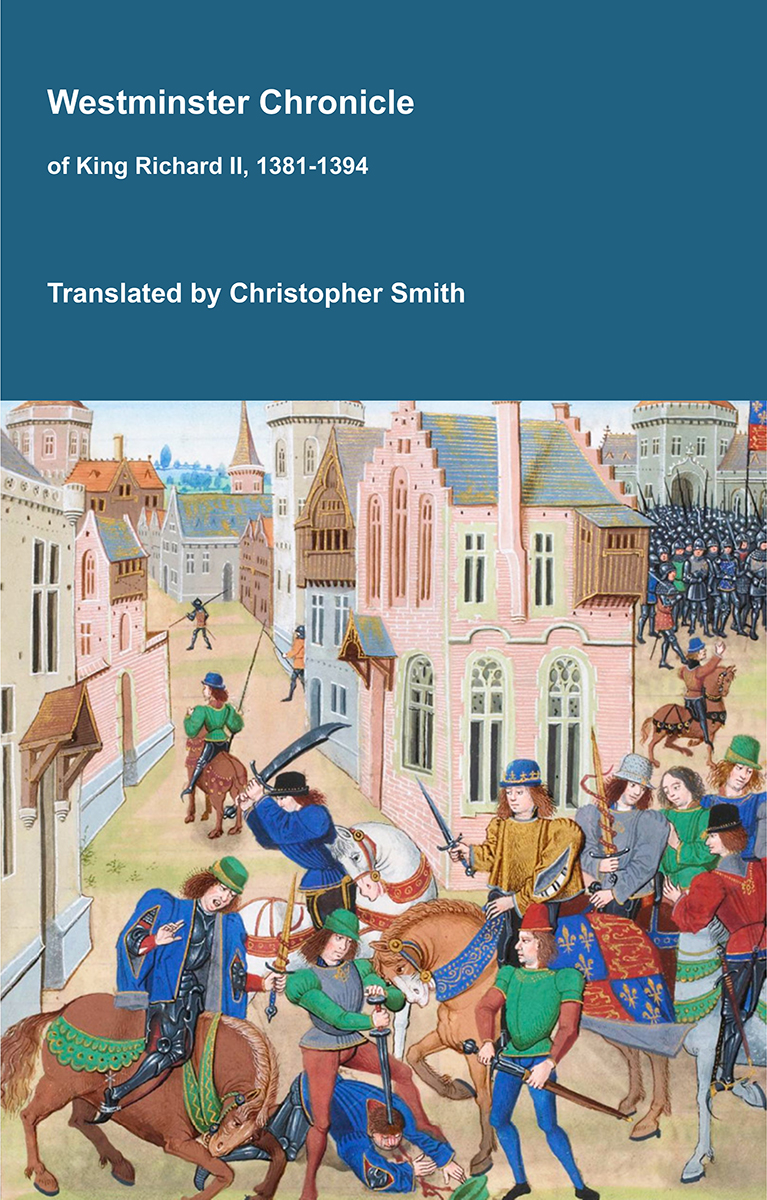
Westminster Chronicle of King Richard II, 1381-1394
The Westminster Chronicle is one of the most vivid and important narrative sources for the reign of Richard II. Written by an anonymous chronicler closely connected with Westminster Abbey, it covers the years 1381 to 1394, from the Peasants’ Revolt to the political tensions, court ceremonies, diplomatic negotiations, royal progresses, and public crises of Richard’s later reign. Rich in detail the chronicle records major events such as the conflicts between the King and Lords Appellant, King and the City of London, negotiations with France and Scotland, the death and funeral of Queen Anne of Bohemia, the illness of Charles VI of France, and the changing fortunes of leading nobles including John of Gaunt, Thomas of Gloucester, Robert de Vere, and the Earl of Arundel. The Chronicle offers readers a remarkable window into late fourteenth-century England, combining political observation, courtly spectacle, urban drama, ecclesiastical affairs, and moral judgement. It is an essential source for anyone interested in medieval monarchy, London, Westminster, and the troubled reign of Richard II.
Available at Amazon in eBook and Paperback format.
After 19th October 1646 John Glynne [aged 44] and Anne Manning Lady Lawley were married.
After 1647 John Glynne [aged 45] was imprisoned for his Presbyterianism.
Between 15th September 1648 and 27th November 1648 the Treaty of Newport attempted to reconcile King Charles I of England, Scotland and Ireland [aged 47] (who was imprisoned at nearby Carisbrooke Castle [Map]) with Parliament. Denzil Holles 1st Baron Holles [aged 48] and Henry Vane "The Younger" [aged 35] represented Parliament. James Butler 1st Duke Ormonde [aged 37] represented King Charles. The Treaty eventually came to nothing.
Parliament was also represented by John Crew 1st Baron Crew [aged 50], John Glynne [aged 46], Nathaniel Fiennes [aged 40], William Pierrepont of Thoresby [aged 40], Algernon Percy 10th Earl of Northumberland [aged 45], William Fiennes 1st Viscount Saye and Sele [aged 66], Philip Herbert 4th Earl Pembroke 1st Earl Montgomery [aged 63], William Cecil 2nd Earl Salisbury [aged 57], James Cranfield 2nd Earl Middlesex [aged 27] and Thomas Wenman 2nd Viscount Wenman [aged 52].
Around 1649 [his daughter] Mary Glynne Lady Anderson was born to John Glynne [aged 47] and [his wife] Anne Manning Lady Lawley. She married 2nd June 1664 Stephen Anderson 1st Baronet.
Before 1650 [his step-son] Francis Lawley 2nd Baronet [aged 19] and Anne Whitmore were married. They had three sons and six daughters.
In 1654 John Glynne [aged 52] was elected MP Caernarfonshire during the First Protectorate Parliament.
In 1656 John Glynne [aged 54] was elected MP Caernarfonshire.
In 1656 John Glynne [aged 54] was elected MP Flintshire.
On 25th April 1660...
Thomas Thynne [aged 50] was elected MP Hindon.
Henry Carey 4th Viscount Falkland [aged 26] was elected MP Oxfordshire.
Henry Cavendish 2nd Duke Newcastle upon Tyne [aged 29] was elected MP Derbyshire.
John Glynne [aged 58] was elected MP Caernarfonshire.
[his son] William Glynne 1st Baronet [aged 22] was elected MP Caernarfon.
Francis Godolphin [aged 54] was elected MP Heytesbury.
Richard Jennings [aged 41] was elected MP St Albans.


On 16th November 1660 John Glynne [aged 58] was knighted.
Before 1663 [his son] William Glynne 1st Baronet [aged 24] and [his daughter-in-law] Penelope Anderson Lady Bicester aka Bisseter were married. She by marriage Lady Glynne of Bicester aka Bisseter in Oxfordshire.
On 2nd June 1664 [his son-in-law] Stephen Anderson 1st Baronet [aged 20] and [his daughter] Mary Glynne Lady Anderson [aged 15] were married at St Giles' in the Fields Church [Map].
On 15th November 1666 John Glynne [aged 64] died. He was buried in his own vault under the alter at St Margaret's Church, Westminster [Map].
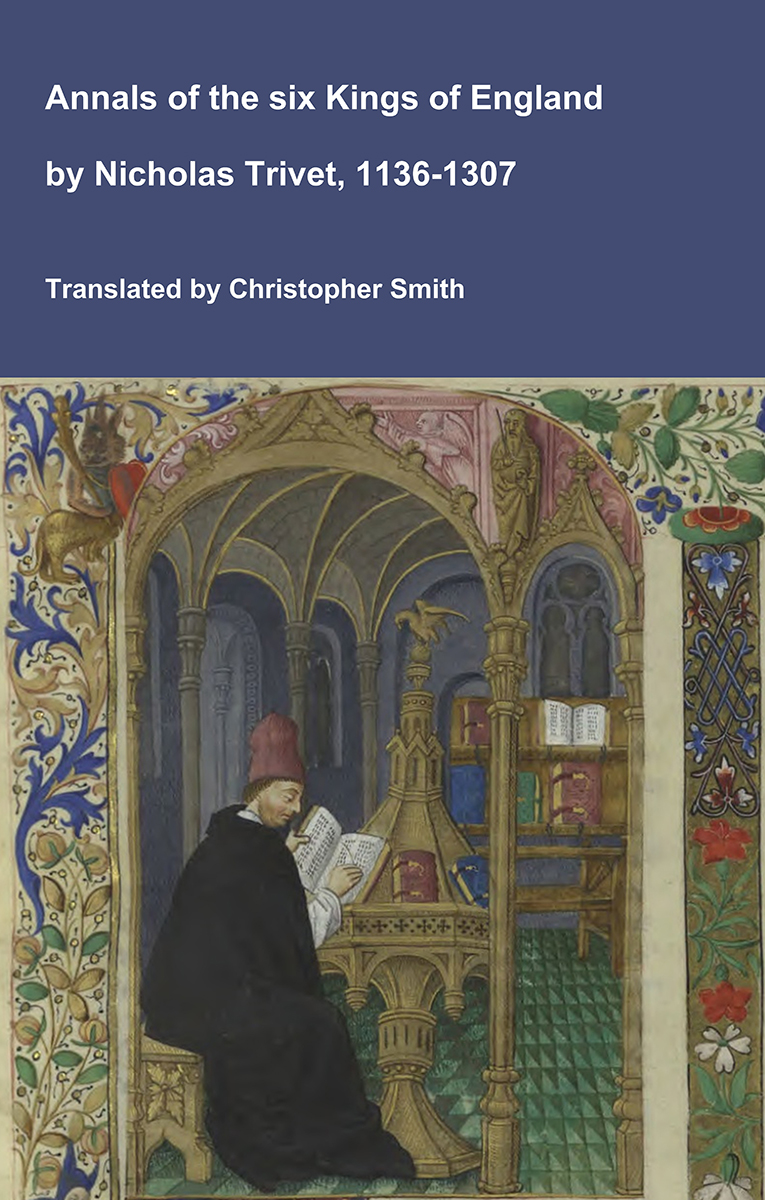
Annals of the six Kings of England by Nicholas Trivet
Translation of the Annals of the Six Kings of England by that traces the rise and rule of the Angevin aka Plantagenet dynasty from the mid-12th to early 14th century. Written by the Dominican scholar Nicholas Trivet, the work offers a vivid account of English history from the reign of King Stephen through to the death of King Edward I, blending political narrative with moral reflection. Covering the reigns of six monarchs—from Stephen to Edward I—the chronicle explores royal authority, rebellion, war, and the shifting balance between crown, church, and nobility. Trivet provides detailed insight into defining moments such as baronial conflicts, Anglo-French rivalry, and the consolidation of royal power under Edward I, whose reign he describes with particular immediacy. The Annals combines careful year-by-year reporting with thoughtful interpretation, presenting history not merely as a sequence of events but as a moral and political lesson. Ideal for readers interested in medieval history, kingship, and the origins of the English state, this chronicle remains a valuable and accessible window into the turbulent world of the Plantagenet kings.
Available at Amazon in eBook and Paperback format.
[his daughter] Frances Glynne was born to John Glynne and Frances Squib.
[his daughter] Anne Glynne was born to John Glynne and Frances Squib.
[his daughter] Margaret Glynne was born to John Glynne and Frances Squib.
[his daughter] Jane Glynne was born to John Glynne and Frances Squib.
[his daughter] Frances Glynne was born to John Glynne and Frances Squib.
[his son] Thomas Glynne was born to John Glynne and Frances Squib.
[his son] John Glynne was born to John Glynne and Anne Manning Lady Lawley. He married Dorothy Tylney and had issue.
Grandfather: Thomas Glynne
father: William Glynne
Great x 2 Grandfather: William Griffith Chamberlain
Great x 1 Grandfather: William Griffith
Grandfather: John Griffith
mother: Jane Griffith