

Nottingham Castle is in Nottingham, Nottinghamshire [Map], Castles in Nottinghamshire.
Chronicle of Roger de Hoveden. [Around March 1194] And Count David [aged 42], brother of the King of Scotland [aged 51], along with Ranulf [aged 24], Earl of Chester, and the William [aged 26], Earl of Ferrers, besieged the castle of Nottingham [Map] with a great army.
Et comes David, frater regis Scotiæ, et Ranulfus comes Cestrie, et comes de Fereres, cum magno exercitu obsedit castellum de Nothingham.
In September 1266 Roger Leybourne [aged 51] was knighted and was appointed Constable of Nottingham Castle.
On 16th March 1322 the rebel army led by Thomas Plantagenet 2nd Earl of Leicester, 2nd Earl Lancaster, Earl of Salisbury and Lincoln [aged 44] attempted to cross the bridge over the River Ure (between Ripon and York) at Boroughbridge Bridge [Map]. Their path was blocked by forces loyal to the King led by Andrew Harclay 1st Earl Carlisle [aged 52]. Bartholomew Badlesmere 1st Baron Badlesmere [aged 46], Roger Mortimer 1st Earl March [aged 34], John Botetort 1st Baron Botetort [aged 57] and John Maltravers 1st Baron Maltravers [aged 32] fought for the rebels. Roger Clifford 2nd Baron Clifford [aged 22], Nicholas Longford [aged 37], Thomas Plantagenet 2nd Earl of Leicester, 2nd Earl Lancaster, Earl of Salisbury and Lincoln, John Mowbray 2nd Baron Mowbray [aged 35] were captured.
Warin Lisle [aged 51] was hanged after the battle at Pontefract [Map].
Following the battle Hugh Audley 1st Earl Gloucester [aged 31] and his wife Margaret Clare Countess Gloucester were both imprisoned. He in Nottingham Castle [Map] and she in Sempringham Priory [Map].
John Clinton 2nd Baron Clinton [aged 22], Ralph Greystoke 1st Baron Greystoke [aged 22], William Latimer 2nd Baron Latimer of Corby [aged 46], Robert Lisle 1st Baron Lisle [aged 34], Domhnall Mar II Earl of Mar [aged 29] and Peter Saltmarsh [aged 42] fought for the King.
Adam Everingham 1st Baron Everingham of Laxton [aged 43] was captured.
Humphrey Bohun 4th Earl Hereford 3rd Earl Essex [aged 46] was killed. His son John [aged 15] succeeded 5th Earl Hereford, 4th Earl Essex.
Piers Grandison 2nd Baron Grandison [aged 31] fough for the rebels, and was captured.
Hugh Audley 1st Baron Audley of Stratton Audley [aged 55] surrendered before the battle and was imprisoned in Wallingford Castle [Map] for the rest of his life
Roger Mortimer 1st Earl March was imprisoned at Tower of London [Map].


On 19th October 1330 John Neville 1299-1335, William Eland, William Bohun 1st Earl of Northampton [aged 20], William Clinton 1st Earl Huntingdon [aged 26] and William Montagu 1st Earl Salisbury [aged 29], friends of King Edward III of England [aged 17] secretly entered Nottingham Castle [Map] through tunnels, met with King Edward III of England, and arrested Roger Mortimer 1st Earl March [aged 43] and his son Geoffrey Mortimer [aged 21] in the presence of Isabella of France Queen Consort England [aged 35].
Chronicle of Robert Fabyan [-1512]. [17th October 1330]. In ye moneth of Octobre, upon the xvii. daye, and euyn of seynt Luke, syr Roger Mortymer [aged 43] before named, by means of syr Wyllyam Montaygne [aged 29], syr Rafe Staforde, syr lohn Neuyle, and other, by a compassyd meane was takyn in the castell of Notyngham [Map], notwithstandyrige that the keyes of the sayde eastell were dayly and nyghtlye under his warde and kepynge; the kynge, the quene, the olde quene [aged 35], with dyuerse other noblys that beynge in the same eastell lodgyd. The maner of the takynge of this erle syr Roger Mortymer I passe ouer, for the dyuersyte that I haue seen thereof of sundry wryters; but many agreen, yt he with syr Symonde of Bedforde, & other, were in that nyght takyn, and after sent unto the Towre of London, and there put in streyghte kepynge. Then the kynge, in short processe after, callyd a parlyament at London for ye reformacion of many thynges rnysorderyd in the realme, by mtatie of the foresayde syr Roger, as the comon fame then went.
In 1343 John Darcy 1st Baron Darcy of Knayth [aged 63] was appointed Constable of Nottingham Castle.
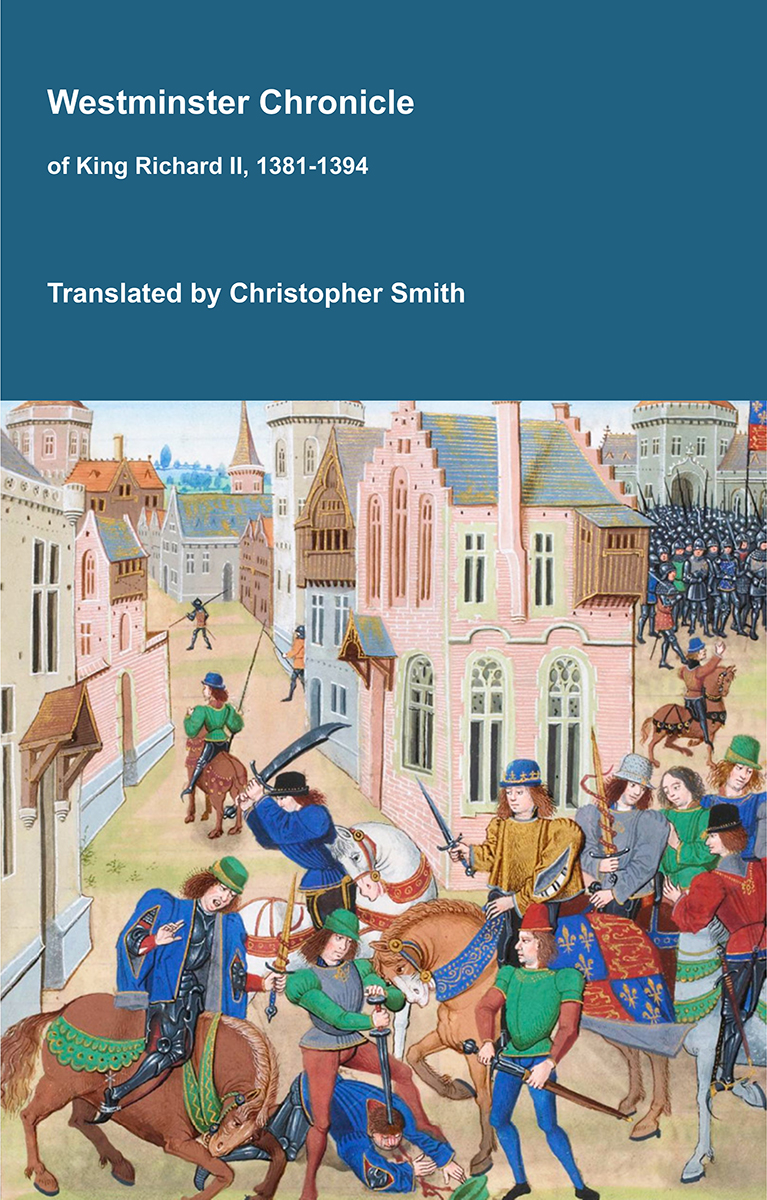 Westminster Chronicle. Around the beginning of the month of September, John Northampton was brought out from Corfe Castle and sent to the Tower of London. At that time the king sent for his justices and legal experts, ordering them, without further delay, to present themselves before him at Westminster on the seventh day of September, in order to proceed judicially against the aforesaid men, who had been publicly appealed on such notorious crimes and offences, and were also notoriously defamed. The king’s chief justice, named Robert Tresilian, was afraid to give sentence in a case of this kind. For he said that judgement upon them belonged only to the mayor of London. But since the aforesaid men, namely John Northampton and his associates, had been appealed, and also indicted, for treason, their goods, both movable and immovable, would necessarily be confiscated if it should happen that they were condemned to death in judgement for such crimes. Therefore, on the tenth day of September, in the Tower of London, before Lord John Montagu [aged 34], steward of the lord king, and with two justices also present, namely Robert Tresilian and Robert Belknap, three of them were brought forward and examined concerning the things laid against them. They confessed that the charges brought against them were true, yet they placed themselves wholly in the king’s grace. They did this because, owing to the suborning of men of the country, they did not dare trust in a jury. Therefore Lord John Montagu, steward of the lord king, as is reported, pronounced sentence upon them and adjudged them to be drawn and hanged. Immediately Lord Michael de la Pole [aged 54], the lord king’s chancellor, entered the council. Each of the things that had been done concerning them was made known to him, and how they had confessed the things laid against them. Therefore they had duly been adjudged to be drawn and hanged. Then the chancellor said, in the hearing of all: "Although these men, because of the crimes they have committed, ought swiftly to have undergone death, nevertheless, because they have of their own accord surrendered themselves to the king’s grace, the king grants them life only, by his special grace. Nevertheless, he wills that in the meantime they be kept in secure places until his good pleasure, until, should it seem expedient, he may decide to show them fuller grace." At once, lest those three men should rejoice together in any comforts, they were sent to three parts of England, sufficiently remote from one another, namely Thomas Northbury to Corfe Castle [Map], situated in the southern part of England, John More to Nottingham Castle [Map], situated in the northern part, and John Northampton to Tintagel Castle in Cornwall, so that they might remain there in custody. All these things, as was said, their rivals the fishmongers had procured to be done to them, because it was through those men that their craft and court had been destroyed.
Circa principium mensis Semptembris J. Northampton de castro Corfe eductus transmissus est in turrim Londoniæ. Quo in tempore misit rex pro justiciariis suis et juris peritis ut sine dilatione ulteriori septimo die Septembris se apud Westmonasterium ejus conspectui præsentarent ad procedendum juridice contra prædictos super tam notoriis criminibus et excessibus publice appellatos ac etiam notorie diffamatos. Principalis vero judex regis nomine Robertus Tresilian timuit in hujusmodi causa sententiare. Dicebat enim illorum judicium majori Londoniæ tummodo pertinere; at quia isti prædicti scilicet J. Northampton et ejus socii fuerunt super proditione appellati, ac etiam indictati, necessario eorum bona tam mobilia quam immobilia confiscarentur si contigerit eos propter hujusmodi crimina ad mortem in judicio condemnari. Igitur decimo die Septembris in turrim Londoniæ coram domino Johanne de Monteacuto senescallo domini regis, præsentibus etiam duobus justiciaribus, scilicet Roberto Tresylian et Roberto Beleknap, tres illorum fuerunt producti ac super sibi impositis examinati. Ea illis illata fatebantur esse vera, se tamen totaliter in regis gratiam posuerunt, et hoc ideo fecerunt quia propter subornationem in hominibus patriæ confidere non audebant. Unde dominus Johannes de Monteacuto senescallus domini regis, ut profertur, tulit sententiam super eos et adjudicavit eos trahi et suspendi. Mox dominus Michael de la Pole cancellarius domini regis concionem intravit. Et patefacta sunt ei singula quæ circa eos erant acta et quo modo erant confessi ea quæ sibi imponebantur. Unde rite fuerant adjudicati trahi et suspendi. Tunc cancellarius cunctis audientibus dixit "Licet isti propter scelera commissa mortem subire celeriter debuissent, tamen quia regiæ gratiæ se ultro dederunt rex concedit eis vitam tantum de sua gratia speciali. Nihilominus tamen vult quod usque ad beneplacitum suum in locis securis interim custodiantur, donec si videatur expedire eis gratiam facere duxerit ampliorem. Confestim ne isti tres insimul aliquibus solatiis congauderent, missi sunt ad tres partes Angliæ adinvicem satis remote distantes, scilicet T. Northbury ad castrum Corfe in australi parte Angliæ situatum ; J. More ad castrum Nottyngham in boreali parte situatum ; et J. Northampton ad castrum de Tyntagel in Cornubia situatum ut ibi in custodia morarentur." Hæc autem omnia sibi fieri procurarunt eorum æmuli piscarii, ut dicebatur, quia per illos stetit quod ars et curia eorum erant destructæ.
On 2nd March 1456 Humphrey Bourchier [aged 25] was appointed Constable of Nottingham Castle and Warden of Sherwood Forest which offices had previously been held by his late father-in-law Ralph Cromwell 3rd Baron Cromwell who had died in January 1456.
On 11th March 1489 Thomas Lovell was appointed Constable of Nottingham Castle.
On 5th August 1570 Edward Manners 3rd Earl of Rutland [aged 21] was appointed Constable of Nottingham Castle [Map] and steward, keeper, warden, and chief justice of Sherwood Forest.
In October 1612 Francis Manners 6th Earl of Rutland [aged 34] was appointed Constable of Nottingham Castle.
Chronicle of a Bourgeois of Valenciennes
Récits d’un bourgeois de Valenciennes aka The Chronicle of a Bourgeois of Valenciennes is a vivid 14th-century vernacular chronicle written by an anonymous urban chronicler from Valenciennes in the County of Hainaut. It survives in a manuscript that describes local and regional history from about 1253 to 1366, blending chronology, narrative episodes, and eyewitness-style accounts of political, military, and social events in medieval France, Flanders, and the Low Countries. The work begins with a chronological framework of events affecting Valenciennes and its region under rulers such as King Philip VI of France and the shifting allegiances of local nobility. It includes accounts of conflicts, sieges, diplomatic manoeuvres, and the impact of broader struggles like the Hundred Years’ War on urban life in Hainaut. Written from the perspective of a burgher (bourgeois) rather than a monastery or royal court, the chronicle offers a rare lay viewpoint on high politics and warfare, reflecting how merchants, townspeople, and civic institutions experienced the turbulence of the 13th and 14th centuries. Its narrative style combines straightforward reporting of events with moral and civic observations, making it a valuable source for readers interested in medieval urban society, regional politics, and the lived experience of war and governance in pre-modern Europe.
Available at Amazon in eBook and Paperback format.
Gruffudd ab Owain Glyndŵr Mathrafal was imprisoned at Nottingham Castle [Map].