

In 1381 and 1382 John of Northampton was appointed Lord Mayor of London.
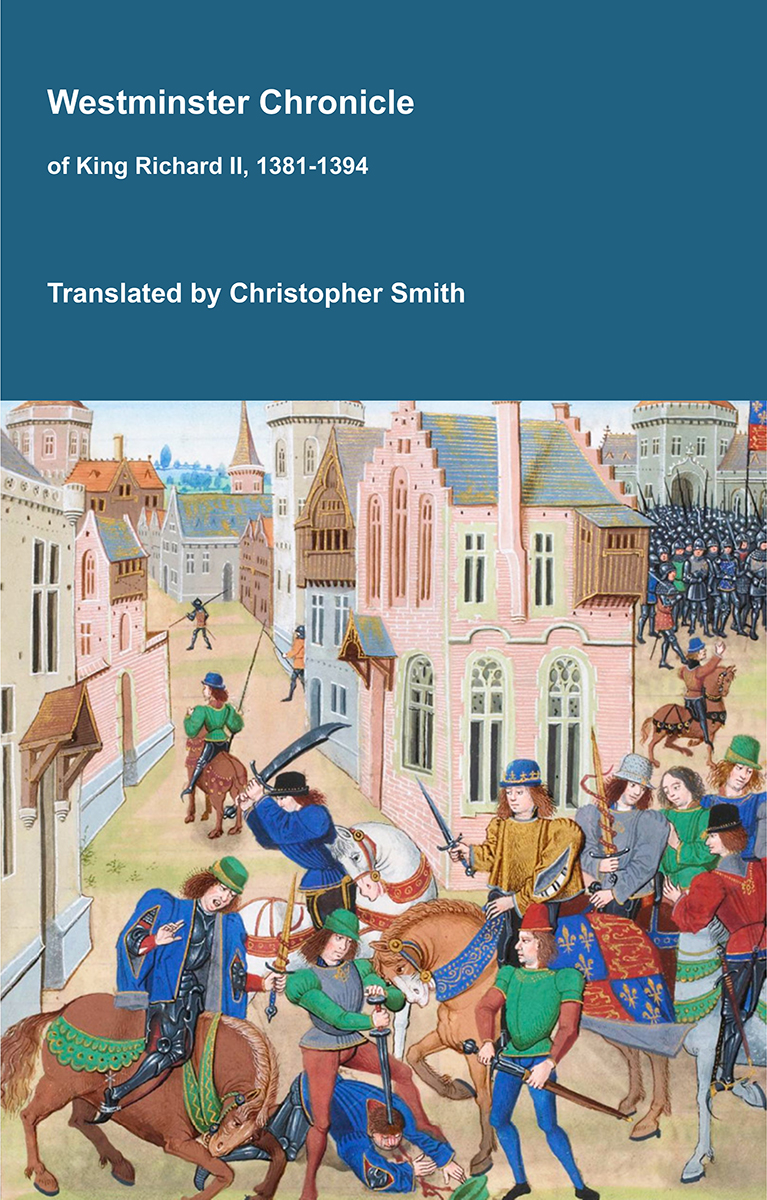 Westminster Chronicle. In this year there was a certain mayor in the city of London, named John Northampton. In his office he conducted himself sternly for almost two years. For he afflicted the fishmongers in the city of London harshly and bitterly, and deservedly, as some judged, because they always tirelessly sold every kind of fish at a higher price than the necessity of the time demanded. Because of these things, indeed also because of the other unjust customs which they constantly observed in the sale of fish, the aforesaid mayor destroyed their court. He forbade them to sell fresh fish unless they were willing to cross to the sea, bring back fish from there, and sell it at the same market price at which strangers wished to sell. At this the community of the city applauded in many ways. Seeing that this greatly pleased the aforesaid community, the mayor applied still greater diligence, namely so that the aforesaid community might thereafter buy their victuals at a better market price than they had done before. He arranged for strangers to come with fish, and allowed them to stand in the streets and freely sell fish to whomever they wished. At first this ordinance pleased everyone in the aforesaid city. But when he wished also to bring the other crafts of the same city to justice for their transgressions, to change their evil customs for the better, and to correct errors, he attempted to amend certain things which, because of the malice of the opposing party, he could not bring to an effective conclusion as he wished. For this reason a serious matter of dissension arose between the mayor himself and certain crafts of the aforesaid city, and it grew so much that many of those who at first had strongly held with him, casting far away the bond of friendship, turned aside from him and refused any longer to obey his command. At last, when the day came on which they were to proceed to the election of a new mayor, some cried out "Northampton", desiring to have him as their mayor as before. Others, thinking the contrary, rejected him and earnestly sought Sir Nicholas Brembre as their mayor. And so, after disputing with one another for some time, at last Sir Nicholas Brembre, with the king’s favour, was chosen as mayor of London, although he did not have the votes of all. Standing very manfully with his own craft, the fishmongers, he allowed the fishmongers to sell every kind of fish as usual, as they had done before. He also permitted strangers to sell fish at their stalls, but wholly forbade them to cut up the fish.
Hoc anno erat quidam major in civitate Londoniæ Johannes Northampton nomine. Hic in officio suo per duos ferme annos rigide se habuit. Nam piscarios in civitate Londoniæe dure et acerbe afilixit, et digne ut aliqui judicabant, quia omnis generis pisces carius quam necessitas pro tempore exposcebat semper indefesse vendebant. Unde propter ista immo et propter alias iniquas consuetudines quas jugiter in venditione piscium observabant major prædictus curiam eorum destruxit, recentes pisces eis vendere interdixit, nisi ad mare vellent transire et inde pisces afferre ac eo foro vendere quo extranei vendere voluerunt. Ad hæc enim communitas civitatis multipliciter applaudebat, videns namque major prædictus hoc communitati valde placere apposuit uberiorem diligentiam adhibere, scilicet ut communitas prædicta deinceps meliori foro eorum victualium emerent quam antea fecerunt, ordinavit extraneos venire cum piscibus et eos in -plateis stare ac cuicunque voluerint pisces vendere libere permisit. Placuit enim primo ista ordinatio universis civitatis prædictæ, sed cum vellet alias artes ejusdem civitatis super corum transgressionibus etiam justificare eorumque pravas consuetudines in melius transmutare et errata corrigere aliquo temptavit emendare quæ ad finem effectualem perducere propter malitiam partis adversæ prout voluit non valebat. Quare inter ipsum majorem et quasdam artes civitatis prædictæ gravis dissensionis materia est suborta et percrebuit in tantum quod multi ex eis qui primo fortiter tenuerunt cum eo, amicitiæ vineulo procul abjecto, divertentes ab eo noluerunt ejus imperio ulterius obedire, Tandem adveniente die quo ad novi majoris electionem procederent aliqui clamabant Northampton, ipsum affectantes ut ante in eorum majorem habere, alii vero contrarium sentientes ipsum respuerunt et dominum Nicholam Brembre in eorum majorem attentius petierunt. Et sic aliquamdiu invicem disceptantes demum dominum N. Brembre rege favente in majorem Londoniæ licet non habuit vota singulorum erat tamen assumptus. Qui cum arte sua piscaria tam viriliter stetit quod piscarii sicut ante omnis generis pisces more solito vendiderunt, extraneos etiam in eorum stationibus pisces vendere permisit sed eis pisces scindere penitus interdixit.
Westminster Chronicle. On the seventh day of February, while the earl of Nottingham [aged 15]1 was dining with the aforesaid John Northampton, the aforesaid earl asked him to come after dinner with his men to the Carmelite friars, to show him honour, because the anniversary day of his brother, lately buried there, was close at hand. Northampton agreed, and came with about seven hundred men gathered from various crafts. The mayor of London, however, had no more than forty men in his company. On his return, the mayor met Northampton and asked him why he was surrounded at that time by so great a crowd. Northampton told him the reason, saying that he had by no means invited all those who were then with him, but that they had flowed to him freely and without his knowledge. Others, however, said indignantly that this was the reason why he had then summoned so many and such men to himself, namely, so that he might stir up tumult and sedition among the people. Therefore, when dissension had arisen through seditious men, Northampton would have been killed there, notwithstanding his multitude, if the mayor had not arrested him more quickly. Afterwards, when a report had been made about him to the lord king, namely how he was striving in various ways to disturb the city of London, the king’s chamber, and that, unless for a time he was somewhere other than in the aforesaid city, there was reason to fear that he would be the cause of the destruction of that city, the king, because of this suggestion, ordered him to be sent to Corfe Castle [Map], to be held there in custody for a time, until he could clear himself of certain things charged against him.
Septimo die Februarii prandente comite de Notyngham cum prædicto Johanne Northampton rogavit eum comes præfatus ut post prandium veniret cum suis ad fratres Carmelitas exhibendo sibi honorem eo quod dies anniversarii fratris sui nuper ibidem sepulti in proximo imminebat. Annuit ipse et venit cum cecctis circiter viris de diversis artibus congregatis. Major vero Londoniæ non habuit secum in sua comitiva ultra xl. viros. In redeundo quoque major obviavit Northampton quærens ab eo ad quid tanta turba eo tempore erat vallätus. At ille retulit sibi causam dicens quod omnes qui erant cum illo pro tunc minime invitavit immo gratis absque sui notitia ad eum confluebant. Alii namque indignati dixerunt illam fuisse causam quare tot et tales sibi protunc ascivit, scilicet, ut tumultum et seditionem in populo suscitaret; unde per seditiosos orta dissensione non obstante ejus multitudine Northampton interfectus ibidem fuisset, nisi major eum citius arrestasset. Demum postea facta de illo relatione domino regi, scilicet quomodo nitebatur civitatem Londoniæ, cameram suam, diversimode perturbare et nisi alibi sit pro tempore quam in civitate præfata timendum est quod ipse erit causa destructionis civitatis prædictæ. Quare super ista suggestione rex jussit eum mitti in castrum de Corf ut ibi in custodia teneretur ad tempus quousque ipse super quibusdam sibi impositis etiam potuit se purgare.
Note 1. Thomas Mowbray, 1368-1399, younger brother of John Mowbray, Earl of Nottingham, who died in 1383. Created Duke of Norfolk in 1397. Married 1. 1383 Elizabeth Strange, and 2. Elizabeth Fitzalan, daughter of the Richard Fitzalan, Earl of Arundel. Thomas Mowbray died of plague in 1399.
Westminster Chronicle. Around the feast of Saint Margaret [of Antioch, 20th July 1384], certain Londoners seized Thomas Usk, clerk, sheriff of London, and chief supporter of John Northampton, who used to put into writing many of the things which Northampton proposed to do in the city. He was sent to prison, where he was detained for some time, for this reason, that he might reveal John Northampton’s secrets. Seeing that the way of escape was closed to him, and that those to whom he had formerly adhered had been committed to prison custody and could not assist him in any way, he cautiously yielded to the wishes of those whom he then knew to be prevailing. For by cunning and skill he strove to draw to himself the friendship of those whom he had undoubtedly known before to be his mortal enemies. Therefore the mayor of London received him into favour, although he had confessed that he had been a traitor to the aforesaid city. Released from prison, he stayed in the mayor’s house by his command. There, in the meantime, he recited many grave and sinister charges against John Northampton in various articles, accused him of these matters, and set them down in writing.
Circa festum sanctæ Margaretæ quidam Londonienses ceperunt Thomam Husk, clericum vicecomitem Londoniæ et præcipuum J. Northampton, qui plura quæ in civitate facere proponebat, redigebat in scriptis, missusque in carcerem in quo aliquamdiu erat detentus ea de causa ut secreta J. Northampton revelaret. Qui videns viam evadendi sibi fore præclusam ac illos quibus antea coherebat carcerali custodiæ deputari nec sibi posse in aliquo suffragari caute votis illorum cessit quos protunc noverat prævalere. Satagebat namque astu et arte illorum amicitiam sibi attrahere quos procul dubio ante capitales hostes sibi fuisse cognovit. Unde major Londoniæ eum recepit in gratiam licet confessus fuerit proditorem fuisse civitatis prædictæ. Liberatusque de carcere in domo majoris manebat eo mandante ubi interim contra Johannem Northampton multa enormia et sinistra in diversis articulis recitavit et eum super hujusmodi appellavit ac in scriptis redegit.
Westminster Chronicle. Meanwhile the friends of John Northampton worked energetically with the king and his council for his release. Because of this, the lord king decreed that on the eighteenth day of August [1384] he would hold a council at Reading, to which both the prelates of the Church and the nobles of the realm came at once by the king’s command. The mayor of London came to the said council with the elders and more powerful men of the said city, and brought with him the aforesaid Thomas Usk. Standing before the king and the whole council, Usk said: "I, Thomas Usk, traitor of the city of London and of the whole kingdom, knowingly wrote and concealed those things which John Northampton, with all his supporters, proposed to ordain for the destruction and weakening of the aforesaid city." And so there, in order, in various articles, he published without shame not a few evil and hateful charges against John Northampton and his accomplices, and formally accused him upon the same articles. At each article he began in this way: "I, Thomas Usk, etc." John Northampton, on the other hand, steadfastly denied the things which Usk charged against him, calling him in the king’s presence a false scoundrel and worthy of death, and offered to prove by duel, with his own hand, that Usk had falsely accused him.
Interea amici Johannis Northampton vivaciter laborabant erga regem et ejus consillum pro ipsius liberatione propter quod dominus rex xviii die Augusti apud Rading consillum celebrare decrevit, ad quod tam prælati ecclesiæ quam proceres regni confestim jussu regis venerunt. Accessit autem ad dictum consilium major Londoniæ cum senioribus et valentioribus dictæ civitatis; et adduxit secum Thomam Husk prædictum qui stans coram rege et toto consilio dixit: "Ego Thomas Husk proditor civitatis Londoniæ et totius regni scienter scripsi ea et celavi quæ Johannes Northampton cum omnibus fautoribus in destructionem et enervationem civitatis prædictæ proposuit ordinare." Sicque ibidem seriatim in diversis articulis mala non pauca et odiosa contra Johannem Northampton et complices sine erubescentia publicavit ac eum super eisdem articulis sic appellavit. Et ad quodlibet articulum sic incepit "Ego Thomas Husk, etc." Et e contra Johannes Northampton constanter negavit ea quæ sibi objiciebat vocansque eum in præsentia regis falsum ribaldum morteque dignum et quod falsum sibi imposuit manu propria obtulit se probare duello.
Westminster Chronicle. And so John Northampton, because of the three aforesaid matters and because of his disorderly conduct, would finally have ended his life by a shameful death, had not the lady queen [aged 18] happened to be present there, and, falling humbly before the lord king, begged for his life, that he should not die. Through her intervention the king granted him his life, but nevertheless ordered him to be committed to perpetual imprisonment. At last John Northampton, thus nobly rescued from destruction by death, was quickly taken to Corfe Castle [Map], where he had previously been assigned to prison custody. When the council had ended, each man returned to his own affairs. Not long afterwards, among the Londoners, which is to be lamented, serious discord arose, because it had been reported among them that John Northampton, John More, then sheriff of London, Richard Northbury, and William Essex, formerly men of great standing in the aforesaid city, together with their accomplices, had treacherously desired, and, so far as in them lay, wickedly procured, the death of great men both inside and outside the city, I shall not say of the king or of other illustrious men. For this reason John More and Richard Northbury were arrested and sent into custody. It was also reported that these men had worked in many ways to stir up sedition in the city of London, and therefore they were arrested. But William Essex, long before, had cautiously gone to Westminster for refuge.
Sicque J. Northampton propter tria præmissa ac propter incompositos mores vitam suam turpi morte finaliter terminasset nisi domina regina ibi casu aliter extitisset, ac pro ejus vita ne moreretur domino regi provoluta humiliter supplicasset. Cujus interventu rex concessit sibi vitam sed jussit eum tamen perpetuo carceri mancipari. Demum J. Northampton sic a mortis interitu generose ereptus ad castrum de Corfe celeriter est adductus ubi prius erat carcerali custodiæ deputatus. Finito consilio unusquisque remeavit ad propria. Non multum post inter Londonienses, quod dolendum est, gravis discordia est exorta, quia divulgçatum erat apud eos quod J. Northampton, J. More vicecomes tunc Londoniæ, Ricardus Northbury et Willelmus Estsex, quondam magni in civitate prædicta, cum suis complicibus mortem magnorum tam in civitate quam extra non dicam regis seu aliorum illustrium proditorie affectarunt et quantum in eis fuit nequiter procurarunt propter quod capti sunt J. More et R. Northbury et missi in custodiam. Relatum est etiam quod isti ad excitandam seditionem in civitate Londoniæ multipliciter laborabant et ideo erant capti sed Willelmus Estsex longe ante causa refugii ad Westmonasterium caute transivit.
Westminster Chronicle. Around the beginning of the month of September, John Northampton was brought out from Corfe Castle and sent to the Tower of London. At that time the king sent for his justices and legal experts, ordering them, without further delay, to present themselves before him at Westminster on the seventh day of September, in order to proceed judicially against the aforesaid men, who had been publicly appealed on such notorious crimes and offences, and were also notoriously defamed. The king’s chief justice, named Robert Tresilian, was afraid to give sentence in a case of this kind. For he said that judgement upon them belonged only to the mayor of London. But since the aforesaid men, namely John Northampton and his associates, had been appealed, and also indicted, for treason, their goods, both movable and immovable, would necessarily be confiscated if it should happen that they were condemned to death in judgement for such crimes. Therefore, on the tenth day of September, in the Tower of London, before Lord John Montagu [aged 34], steward of the lord king, and with two justices also present, namely Robert Tresilian and Robert Belknap, three of them were brought forward and examined concerning the things laid against them. They confessed that the charges brought against them were true, yet they placed themselves wholly in the king’s grace. They did this because, owing to the suborning of men of the country, they did not dare trust in a jury. Therefore Lord John Montagu, steward of the lord king, as is reported, pronounced sentence upon them and adjudged them to be drawn and hanged. Immediately Lord Michael de la Pole [aged 54], the lord king’s chancellor, entered the council. Each of the things that had been done concerning them was made known to him, and how they had confessed the things laid against them. Therefore they had duly been adjudged to be drawn and hanged. Then the chancellor said, in the hearing of all: "Although these men, because of the crimes they have committed, ought swiftly to have undergone death, nevertheless, because they have of their own accord surrendered themselves to the king’s grace, the king grants them life only, by his special grace. Nevertheless, he wills that in the meantime they be kept in secure places until his good pleasure, until, should it seem expedient, he may decide to show them fuller grace." At once, lest those three men should rejoice together in any comforts, they were sent to three parts of England, sufficiently remote from one another, namely Thomas Northbury to Corfe Castle [Map], situated in the southern part of England, John More to Nottingham Castle [Map], situated in the northern part, and John Northampton to Tintagel Castle in Cornwall, so that they might remain there in custody. All these things, as was said, their rivals the fishmongers had procured to be done to them, because it was through those men that their craft and court had been destroyed.
Circa principium mensis Semptembris J. Northampton de castro Corfe eductus transmissus est in turrim Londoniæ. Quo in tempore misit rex pro justiciariis suis et juris peritis ut sine dilatione ulteriori septimo die Septembris se apud Westmonasterium ejus conspectui præsentarent ad procedendum juridice contra prædictos super tam notoriis criminibus et excessibus publice appellatos ac etiam notorie diffamatos. Principalis vero judex regis nomine Robertus Tresilian timuit in hujusmodi causa sententiare. Dicebat enim illorum judicium majori Londoniæ tummodo pertinere; at quia isti prædicti scilicet J. Northampton et ejus socii fuerunt super proditione appellati, ac etiam indictati, necessario eorum bona tam mobilia quam immobilia confiscarentur si contigerit eos propter hujusmodi crimina ad mortem in judicio condemnari. Igitur decimo die Septembris in turrim Londoniæ coram domino Johanne de Monteacuto senescallo domini regis, præsentibus etiam duobus justiciaribus, scilicet Roberto Tresylian et Roberto Beleknap, tres illorum fuerunt producti ac super sibi impositis examinati. Ea illis illata fatebantur esse vera, se tamen totaliter in regis gratiam posuerunt, et hoc ideo fecerunt quia propter subornationem in hominibus patriæ confidere non audebant. Unde dominus Johannes de Monteacuto senescallus domini regis, ut profertur, tulit sententiam super eos et adjudicavit eos trahi et suspendi. Mox dominus Michael de la Pole cancellarius domini regis concionem intravit. Et patefacta sunt ei singula quæ circa eos erant acta et quo modo erant confessi ea quæ sibi imponebantur. Unde rite fuerant adjudicati trahi et suspendi. Tunc cancellarius cunctis audientibus dixit "Licet isti propter scelera commissa mortem subire celeriter debuissent, tamen quia regiæ gratiæ se ultro dederunt rex concedit eis vitam tantum de sua gratia speciali. Nihilominus tamen vult quod usque ad beneplacitum suum in locis securis interim custodiantur, donec si videatur expedire eis gratiam facere duxerit ampliorem. Confestim ne isti tres insimul aliquibus solatiis congauderent, missi sunt ad tres partes Angliæ adinvicem satis remote distantes, scilicet T. Northbury ad castrum Corfe in australi parte Angliæ situatum ; J. More ad castrum Nottyngham in boreali parte situatum ; et J. Northampton ad castrum de Tyntagel in Cornubia situatum ut ibi in custodia morarentur." Hæc autem omnia sibi fieri procurarunt eorum æmuli piscarii, ut dicebatur, quia per illos stetit quod ars et curia eorum erant destructæ.
Westminster Chronicle. Also, while the king was at Windsor on the feast of Saint George [23rd April 1387], certain wicked and very evil men stirred up the king against Lord Thomas, duke of Gloucester [aged 32], his uncle, to such an extent that, if he had waited there until the next day, he would undoubtedly not have escaped the noose of death. When he learned this, and after dinner had been held, he asked leave of the king and immediately departed. Also, on the twenty-fourth day of April, fifteen fishermen from Normandy were captured by the men of Calais. Also, on the twenty-seventh day of April, at the instance of the duke of Ireland [aged 25], the king granted John Northampton a full charter concerning all his forfeitures, and that he should have again all his goods, movable and immovable. This profited him little.
Item existente rege apud Wyndeshoram in festo sancti Georgii quidam iniqui et pessimi excitarunt regem contra dominum Thomam ducem Gloucestriæ avuneulum suum in tantum si ibidem diem crastinum expectasset indubie mortis laqueum minime evasisset; quo comperto et prandio celebrato petita a rege licentia confestim recessit. Item xxiiii die Aprilis capti sunt per Calesienses de Normannia quindecim piscatores. Item xxvii die Aprilis ad instantiam ducis Hiberniæ rex concessit Johanni Northampton unam cartam plenariam super omnibus forisfactis suis et quod rehaberet omnia bona sua mobilia et immobilia Cui modicum sibi profecit.
Westminster Chronicle. On the 12th day of November, the king held his Parliament at Westminster, and it lasted until the 3rd day of December. In it many matters were proposed, but few were brought to effect. First, there was discussion in it about the price of wool everywhere in England, according to its true value, weighing its quality, according to which it should be faithfully assessed, and also sold by everyone in every place, the aforesaid assessment being wholly observed. I think that this will hardly be observed. Furthermore, it was enacted in it for ever that the staple of wool should remain in England and henceforth should in no way be outside it. It was also granted to the lord king in this Parliament that he should receive 12 pence in the pound from the merchants. Also, at the petition of the community, it was granted to John Northampton that he should fully have back all his goods, movable and immovable, both within the city and outside it, and should stand as freely in the city of London as he had stood before, a few years past. It was freely permitted by Parliament that the lord pope should confer all benefices falling vacant in the Curia in future, notwithstanding any statutes whatsoever promulgated to the contrary. The rest the community allowed the lords to settle, and so they returned to their own homes.
Duodecimo die Novembris apud Westmonasterium tenuit rex suum parliamentum, duravitque usque in tertiun diem Decembris in quo multa erant proposita sed pauca ad effeetum deducta. Primo tactum fuit in eo de pretio lanæ ubicunque in Anglia secundum verum valorem pensando melioritatem illius juxta quam fideliter taxaretur, ac etiam ita venderetur ab omnibus utrobique, taxa præmissa omnino servata, Puto istud minime observari. Præterea statutum est in eo pro perpetuo, quod stapula lanæ staret in Anglia et deinceps nullatenus foret extra. Concessum est domino regi etiam in isto parliamento quod ipse de mercatoribus perciperet xii. denarios de libra. Item ad petitionem communitatis concessum est J. Northampton omnia bona sua mobilia et immobilia tam in civitate quam extra penitus rehabere, et ita libere stare in civitate Londoniæ sicut antea stetit paucis annis elapsis. Permissum est libere per parliamentum domino papæ conferre omnia beneficia in curia vacantia in futurum non obstantibus quibuseunque statutis in contrarium promulgatis. Cætera communitas permisit dominis terminare, sicque ad propria redierunt.
In 1398 John of Northampton died.