Lord High Treasurer

Lord High Treasurer is in Offices of State.

In 1221 Bishop Eustace of Fauconberg was appointed Lord High Treasurer.

In 1228 Bishop Walter Mauclerc was appointed Lord High Treasurer which office he held until 1233 when he was expelled from office despite being granted the office for life.

On 18th June 1280 Abbot Richard of Ware was appointed Lord High Treasurer.

In January 1284 Bishop John Kirkby was appointed Lord High Treasurer.

In 1295 Bishop Walter Langton was appointed Lord High Treasurer which office he held until 1307.

On 6th September 1296 Hugh de Cressingham was appointed Lord High Treasurer of Scotland.

After 22nd August 1307 Archbishop Walter Reynolds was appointed Lord High Treasurer.

In 1310 John Sandale was appointed Lord High Treasurer which office he held until 1311. Between 1312 and 1314 he was acting Lord Treasurer.

On 27th May 1317 Bishop John Hotham was appointed Lord High Treasurer.

Chronicle of Geoffrey le Baker of Swinbroke

Baker was a secular clerk from Swinbroke, now Swinbrook, an Oxfordshire village two miles east of Burford. His Chronicle describes the events of the period 1303-1356: Gaveston, Bannockburn, Boroughbridge, the murder of King Edward II, the Scottish Wars, Sluys, Crécy, the Black Death, Winchelsea and Poitiers. To quote Herbert Bruce 'it possesses a vigorous and characteristic style, and its value for particular events between 1303 and 1356 has been recognised by its editor and by subsequent writers'. The book provides remarkable detail about the events it describes. Baker's text has been augmented with hundreds of notes, including extracts from other contemporary chronicles, such as the Annales Londonienses, Annales Paulini, Murimuth, Lanercost, Avesbury, Guisborough and Froissart to enrich the reader's understanding. The translation takes as its source the 'Chronicon Galfridi le Baker de Swynebroke' published in 1889, edited by Edward Maunde Thompson.

Available at Amazon in eBook and Paperback format.

In November 1318 John Sandale was appointed Lord High Treasurer which office he held until his death.

In 1320 Bishop Walter Stapledon [aged 58] was appointed Lord High Treasurer.

In 1322 Bishop Walter Stapledon [aged 60] was appointed Lord High Treasurer.

On 26th November 1326 John de Straford [aged 51] was appointed Lord High Treasurer which office he held until 28th January 1327.

In 1327 Bishop Henry Burghesh [aged 35] was appointed Lord High Treasurer.

In January 1327 Bishop Adam Orleton was appointed Lord High Treasurer which office he held until March 1327.

In 1330 Archbishop William Melton [aged 55] was appointed Lord High Treasurer.

In 1334 Bishop Henry Burghesh [aged 42] was appointed Lord High Treasurer which office he held until 1337.

In February 1334 Bishop Richard de Bury [aged 47] was appointed Lord High Treasurer.

On 2nd May 1341 Robert Sadington was appointed Lord High Treasurer which office he held until 21st June 1340.

In 1362 Robert Assheton was appointed Lord High Treasurer.

From 27th June 1369 to 1371 Bishop Thomas de Brantingham was appointed Lord High Treasurer to King Edward III of England [aged 56].

From 1377 to 1381 Bishop Thomas de Brantingham was appointed Lord High Treasurer to King Richard II of England [aged 9].

On 1st February 1381 Robert Hales [aged 56] was appointed Lord High Treasurer.

The History of William Marshal, Earl of Chepstow and Pembroke, Regent of England. Book 1 of 2, Lines 1-10152.

The History of William Marshal was commissioned by his son shortly after William’s death in 1219 to celebrate the Marshal’s remarkable life; it is an authentic, contemporary voice. The manuscript was discovered in 1861 by French historian Paul Meyer. Meyer published the manuscript in its original Anglo-French in 1891 in two books. This book is a line by line translation of the first of Meyer’s books; lines 1-10152. Book 1 of the History begins in 1139 and ends in 1194. It describes the events of the Anarchy, the role of William’s father John, John’s marriages, William’s childhood, his role as a hostage at the siege of Newbury, his injury and imprisonment in Poitou where he met Eleanor of Aquitaine and his life as a knight errant. It continues with the accusation against him of an improper relationship with Margaret, wife of Henry the Young King, his exile, and return, the death of Henry the Young King, the rebellion of Richard, the future King Richard I, war with France, the death of King Henry II, and the capture of King Richard, and the rebellion of John, the future King John. It ends with the release of King Richard and the death of John Marshal.

Available at Amazon in eBook and Paperback format.

On 10th August 1381 Hugh Segrave [aged 85] was appointed Lord High Treasurer.

In 1386 Bishop John Gilbert was appointed Lord High Treasurer.

In 1389 Bishop Thomas de Brantingham was appointed Lord High Treasurer to King Richard II of England [aged 21].

Westminster Chronicle. After this, the king came to his manor of Sheen, where, on the 15th day of August, having held a council, he released the Bishop of Exeter from the office of Treasurer, and took back Brother Gilbert, now Bishop of St Davids, as his Treasurer. And afterwards he held many councils in several places, namely at Windsor, Salisbury, and elsewhere, wherever he happened to turn.

Post hæc venit rex ad manerium suum de Shene ubi xv, die Augusti celebrato consilio episcopum Exoniensem ab officio thesaurariæ absolvit et fratrem Gilbertum jam episcopum Menevensem in suum thesaurarium reassumpsit. Et ex post in pluribus locis multa consilia celebravit, videlicet apud Wyndesoram, Sarum et alibi, ubi sibi contigerat declinare.

In 1398 Bishop Guy Mone Aka Mohun was appointed Lord High Treasurer.

In 1398 William Scrope 1st Earl Wiltshire [aged 48] was appointed Lord High Treasurer.

Around 1402 William Ros 6th Baron Ros Helmsley [aged 32] was appointed Lord High Treasurer.

In February 1402 Archbishop Henry Bowet was appointed Lord High Treasurer seving until October.

In 1408 John Tiptoft 1st Baron Tiptoft was appointed Lord High Treasurer.

In 1422 Archbishop John Stafford was appointed Lord High Treasurer.

Memoires of Jacques du Clercq

This is a translation of the 'Memoires of Jacques du Clercq', published in 1823 in two volumes, edited by Frederic, Baron de Reissenberg. In his introduction Reissenberg writes: 'Jacques du Clercq tells us that he was born in 1424, and that he was a licentiate in law and a counsellor to Philip the Good, Duke of Burgundy, in the castellany of Douai, Lille, and Orchies. It appears that he established his residence at Arras. In 1446, he married the daughter of Baldwin de la Lacherie, a gentleman who lived in Lille. We read in the fifth book of his Memoirs that his father, also named Jacques du Clercq, had married a lady of the Le Camelin family, from Compiègne. His ancestors, always attached to the counts of Flanders, had constantly served them, whether in their councils or in their armies.' The Memoires cover a period of nineteen years beginning in in 1448, ending in in 1467. It appears that the author had intended to extend the Memoirs beyond that date; no doubt illness or death prevented him from carrying out this plan. As Reissenberg writes the 'merit of this work lies in the simplicity of its narrative, in its tone of good faith, and in a certain air of frankness which naturally wins the reader’s confidence.' Du Clercq ranges from events of national and international importance, including events of the Wars of the Roses in England, to simple, everyday local events such as marriages, robberies, murders, trials and deaths, including that of his own father in Book 5; one of his last entries.

Available at Amazon in eBook and Paperback format.
In 1432 John Scrope 4th Baron Scrope of Masham [aged 44] was appointed Lord High Treasurer.

Around June 1433 Ralph Cromwell 3rd Baron Cromwell [aged 30] was appointed Lord High Treasurer.

In 1449 James Fiennes 1st Baron Saye and Sele [aged 54] was appointed Lord High Treasurer.

Around 1450 Thomas Browne [aged 48] was appointed Lord High Treasurer.

In 1452 John "Butcher of England" Tiptoft 1st Earl of Worcester [aged 24] was appointed Lord High Treasurer.

In 1454 James Butler 1st Earl Wiltshire 5th Earl Ormonde [aged 33] was appointed Lord High Treasurer.

On 29th May 1455 Henry Bourchier 2nd Count of Eu 1st Earl Essex [aged 51] was appointed Lord High Treasurer.

Patent Rolls. 18th March 1461. Westminster Palace [Map]. Grant, during the King's pleasure, to the King's kinsman Henry, Viscount Bourchier [aged 57], was appointed the office of treasurer of the Exchequer in the same manner as Walter Hungerford, knight, late treasurer.

On 24th June 1463 Edmund Grey 1st Earl Kent [aged 46] was appointed Lord High Treasurer.

In March 1466 Richard Woodville 1st Earl Rivers [aged 61] was appointed Lord High Treasurer.

In 1468 John Howard [aged 43] was appointed Lord High Treasurer.

Chronicle of Abbot Ralph of Coggeshall

The Chronicle of Abbot Ralph of Coggeshall (Chronicon Anglicanum) is an indispensable medieval history that brings to life centuries of English and European affairs through the eyes of a learned Cistercian monk. Ralph of Coggeshall, abbot of the Abbey of Coggeshall in Essex in the early 13th century, continued and expanded his community’s chronicle, documenting events from the Norman Conquest of 1066 into the tumultuous reign of King Henry III. Blending eyewitness testimony, careful compilation, and the monastic commitment to record-keeping, this chronicle offers a rare narrative of political intrigue, royal power struggles, and social upheaval in England and beyond. Ralph’s work captures the reigns of pivotal figures such as Richard I and King John, providing invaluable insights into their characters, decisions, and the forces that shaped medieval rule. More than a simple annal, Chronicon Anglicanum conveys the texture of medieval life and governance, making it a rich source for scholars and readers fascinated by English history, monastic authorship, and the shaping of the medieval world.

Available at Amazon in eBook and Paperback format.

In 1468 John "Butcher of England" Tiptoft 1st Earl of Worcester [aged 40] was appointed Lord High Treasurer.

After 26th July 1469 John Lanstrother was appointed Lord High Treasurer.

On 25th October 1469 Bishop William Grey was appointed Lord High Treasurer.

In October 1470 John Lanstrother was appointed Lord High Treasurer.

In 1484 John Tuchet 6th Baron Audley, 3rd Baron Tuchet [aged 58] was appointed Lord High Treasurer.

In 1486 John Dynham 1st Baron Dynham [aged 53] was appointed Lord High Treasurer.

On 16th June 1501 Thomas Howard 2nd Duke of Norfolk [aged 58] was appointed Lord High Treasurer.

In 1509 George Hepburn Bishop Isles [aged 55] was appointed Lord High Treasurer.

On 4th December 1522 Thomas Howard 3rd Duke of Norfolk [aged 49] was appointed Lord High Treasurer.

Henry Machyn's Diary. 5th August 1553. And the Qwene [aged 37] grace mad ser Edward Hastyngs [aged 32] master of the horse, and ser Thomas Jernyngham [Note. Mistake for Henry made before.] vysse-chamburlayne and captayn of the gard, and master Rochastur [aged 59] master controller; my lord marqwes of Wynchaster [aged 70] lord tresorer of England, and dyvers odur offeserse, and dyvers odur.

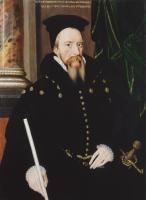
In 1572 William Cecil 1st Baron Burghley [aged 51] was appointed Lord High Treasurer.

In 1599 Thomas Sackville 1st Earl Dorset [aged 63] was appointed Lord High Treasurer.

In 1618 Thomas Edmondes [aged 55] was appointed Lord High Treasurer.

In 1620 Henry Montagu 1st Earl Manchester [aged 57] was appointed Lord High Treasurer.

Before November 1621 Lionel Cranfield 1st Earl Middlesex [aged 46] was appointed Lord High Treasurer.

In 1643 Francis Cottington 1st Baron Cottington [aged 64] was appointed Lord High Treasurer.

John Evelyn's Diary. 13th March 1661. I went to Lambeth, with Sir R. Browne's [aged 56] pretense to the Wardenship of Merton College, Oxford, to which, as having been about forty years before a student of that house, he was elected by the votes of every Fellow except one; but the statutes of the house being so that, unless every Fellow agree, the election devolves to the Visitor, who is the Archbishop of Canterbury (Dr. Juxon [aged 79]), his Grace gave his nomination to Sir T. Clayton, resident there, and the Physic Professor: for which I was not at all displeased, because, though Sir Richard missed it by much ingratitude and wrong of the Archbishop (Clayton being no Fellow), yet it would have hindered Sir Richard from attending at Court to settle his greater concerns, and so have prejudiced me, though he was much inclined to have passed his time in a collegiate life, very unfit for him at that time, for many reasons. So I took leave of his Grace, who was formerly Lord High Treasurer in the reign of Charles I.

John Evelyn's Diary. 19th June 1673. Congratulated the new Lord High Treasurer, Sir Thomas Osborne [aged 41], a gentleman with whom I had been intimately acquainted at Paris, and who was every day at my father-in-law's [aged 68] house and table there; on which account I was too confident of succeeding in his favor, as I had done in his predecessor's; but such a friend shall I never find, and I neglected my time, far from believing that my Lord Clifford [aged 42] would have so rashly laid down his staff, as he did, to the amazement of all the world, when it came to the test of his receiving the Communion, which I am confident he forbore more from some promise he had entered into to gratify the Duke, than from any prejudice to the Protestant religion, though I found him wavering a pretty while.

Chronicle of Geoffrey le Baker of Swinbroke

Baker was a secular clerk from Swinbroke, now Swinbrook, an Oxfordshire village two miles east of Burford. His Chronicle describes the events of the period 1303-1356: Gaveston, Bannockburn, Boroughbridge, the murder of King Edward II, the Scottish Wars, Sluys, Crécy, the Black Death, Winchelsea and Poitiers. To quote Herbert Bruce 'it possesses a vigorous and characteristic style, and its value for particular events between 1303 and 1356 has been recognised by its editor and by subsequent writers'. The book provides remarkable detail about the events it describes. Baker's text has been augmented with hundreds of notes, including extracts from other contemporary chronicles, such as the Annales Londonienses, Annales Paulini, Murimuth, Lanercost, Avesbury, Guisborough and Froissart to enrich the reader's understanding. The translation takes as its source the 'Chronicon Galfridi le Baker de Swynebroke' published in 1889, edited by Edward Maunde Thompson.

Available at Amazon in eBook and Paperback format.
John Evelyn's Diary. 25th July 1673. I went to Tunbridge Wells, Kent [Map], to visit my Lord Clifford [aged 42], late Lord High Treasurer, who was there to divert his mind more than his body; it was believed that he had so engaged himself to the Duke [aged 39], that rather than take the Test, without which he was not capable of holding any office, he would resign that great and honorable station. This, I am confident, grieved him to the heart, and at last broke it; for, though he carried with him music, and people to divert him, and, when I came to see him, lodged me in his own apartment, and would not let me go from him, I found he was struggling in his mind; and being of a rough and ambitious nature, he could not long brook the necessity he had brought on himself, of submission to this conjuncture. Besides, he saw the Dutch war, which was made much by his advice, as well as the shutting up of the Exchequer, very unprosperous. These things his high spirit could not support. Having stayed here two or three days, I obtained leave of my Lord to return.

In September 1684 Sidney Godolphin 1st Earl Godolphin [aged 39] was appointed Lord High Treasurer.

John Evelyn's Diary. 3rd January 1687. A Seal to confirm a gift of £4,000 per annum for 99 years to the Lord Treasurer out of the Post Office, and £1,700 per annum for ever out of Lord Grey's [aged 31] estate.

John Evelyn's Diary. 3rd January 1687. There was now another change of the great officers. The Treasury was put into commission, two professed Papists among them, viz, Lords Bellasis [aged 72] and Dover [aged 51], joined with the old ones, Lord Godolphin [aged 41], Sir Stephen Fox [aged 59], and Sir John Ernley.

John Evelyn's Diary. 21st February 1689. Innumerable were the crowds, who solicited for, and expected offices; most of the old ones were turned out. Two or three white staves were disposed of some days before, as Lord Steward, to the Earl of Devonshire [aged 49]; Treasurer of the household, to Lord Newport; Lord Chamberlain to the King, to my Lord of Dorset [aged 46]; but there were as yet none in offices of the civil government save the Marquis of Halifax [aged 55] as Privy Seal. A council of thirty was chosen, Lord Derby [aged 34] president, but neither Chancellor nor Judges were yet declared, the new Great Seal not yet finished.

John Evelyn's Diary. 3rd May 1702. The report of the committee sent to examine the state of Greenwich Hospital [Map] was delivered to the House of Commons, much to their satisfaction. Lord Godolphin [aged 56] made Lord High Treasurer.

On 30th July 1714 Charles Talbot 1st Duke Shrewsbury [aged 54] was appointed Lord High Treasurer.

In 1770 Charles Townshend 1st Baron Bayning [aged 40] was appointed Lord of the Treasury which position he held until 1777.