

Exeter Cathedral is in Exeter, Devon [Map], Cathedrals in England.
General Photos of Exeter Cathedral [Map]. Hand On Skull.


On 11th August 1107 Bishop William Warelwast was elected Bishop of Exeter.
After 11th April 1161 Bishop Bartholemew of Exeter was consecrated Bishop of Exeter at Canterbury Cathedral [Map] by Walter, the Bishop of Rochester.
On 15th December 1184 Bishop Bartholemew of Exeter died. He was probably buried in Exeter Cathedral [Map].
On 10th February 1194 Bishop Henry Marshal [aged 46] was appointed Bishop of Exeter.
On 24th or 27th October 1206 Bishop Henry Marshal [aged 58] died. He was buried at Exeter Cathedral [Map] where his tomb is extant.
Around 13th April 1214 Bishop Simon Apulia was elected Bishop of Exeter.
On 5th October 1214 Bishop Simon Apulia was consecrated as Bishop of Exeter.
Around 1220 Bishop Walter Branscombe was elected Bishop of Exeter.
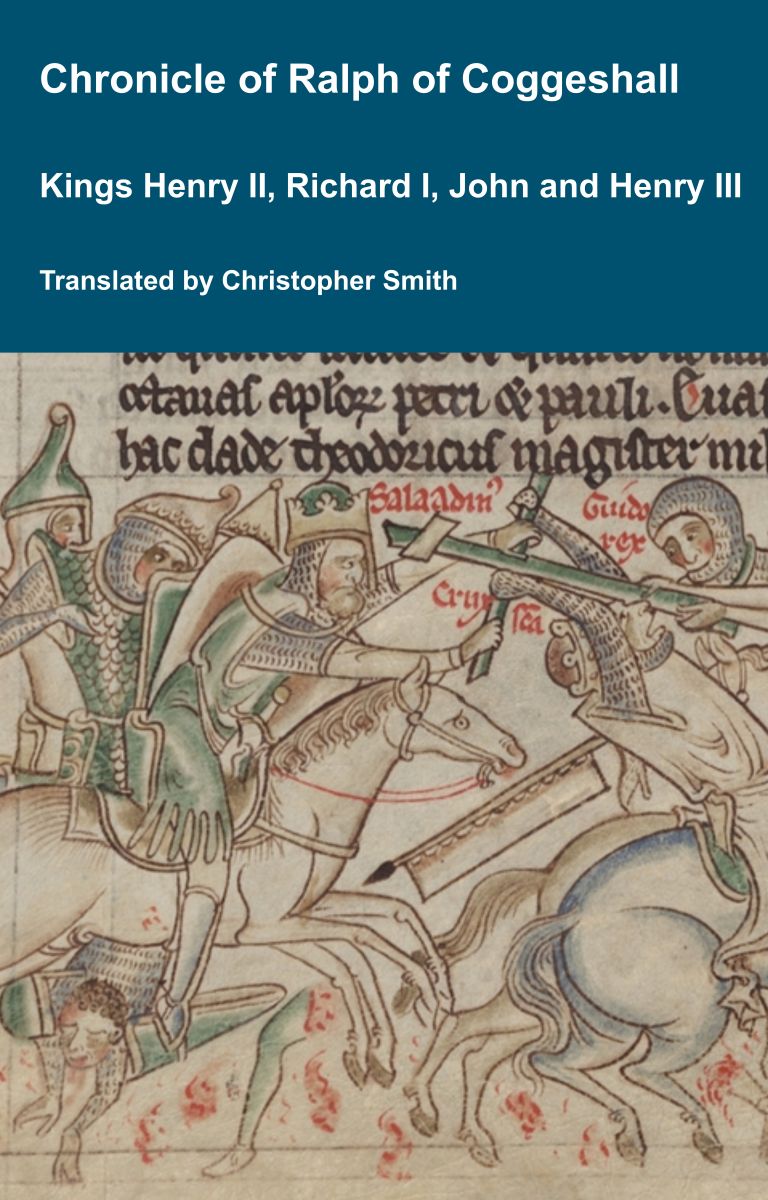
Chronicle of Abbot Ralph of Coggeshall
The Chronicle of Abbot Ralph of Coggeshall (Chronicon Anglicanum) is an indispensable medieval history that brings to life centuries of English and European affairs through the eyes of a learned Cistercian monk. Ralph of Coggeshall, abbot of the Abbey of Coggeshall in Essex in the early 13th century, continued and expanded his community’s chronicle, documenting events from the Norman Conquest of 1066 into the tumultuous reign of King Henry III. Blending eyewitness testimony, careful compilation, and the monastic commitment to record-keeping, this chronicle offers a rare narrative of political intrigue, royal power struggles, and social upheaval in England and beyond. Ralph’s work captures the reigns of pivotal figures such as Richard I and King John, providing invaluable insights into their characters, decisions, and the forces that shaped medieval rule. More than a simple annal, Chronicon Anglicanum conveys the texture of medieval life and governance, making it a rich source for scholars and readers fascinated by English history, monastic authorship, and the shaping of the medieval world.
Available at Amazon in eBook and Paperback format.
On 23rd February 1258 Bishop Walter Branscombe [aged 38] was elected Bishop of Exeter.
On 10th March 1258 Bishop Walter Branscombe [aged 38] was ordained priest and was consecrated Bishop of Exeter by Archbishop Boniface Savoy [aged 51].
On 14th April 1258 Bishop Walter Branscombe [aged 38] was enthroned Bishop of Exeter at Exeter Cathedral [Map].
On 22nd July 1280 Bishop Walter Branscombe [aged 60] died at Bishopsteignton, Devon. He was buried in Exeter Cathedral [Map].
On 11th August 1300 Isabel Vere Baroness Okehampton [aged 78] died at Okehampton, Devon. She was buried at Exeter Cathedral [Map].
In 1302 William Pontington Canon Exeter was appointed Precentor Exeter Cathedral.
Before 1307 William Pontington Canon Exeter was appointed Canon Exeter Cathedral.
In 1308 Bishop Walter Stapledon [aged 46] was appointed Bishop of Exeter.
On 5th December 1326 Bishop James Berkeley was appointed Bishop of Exeter; see 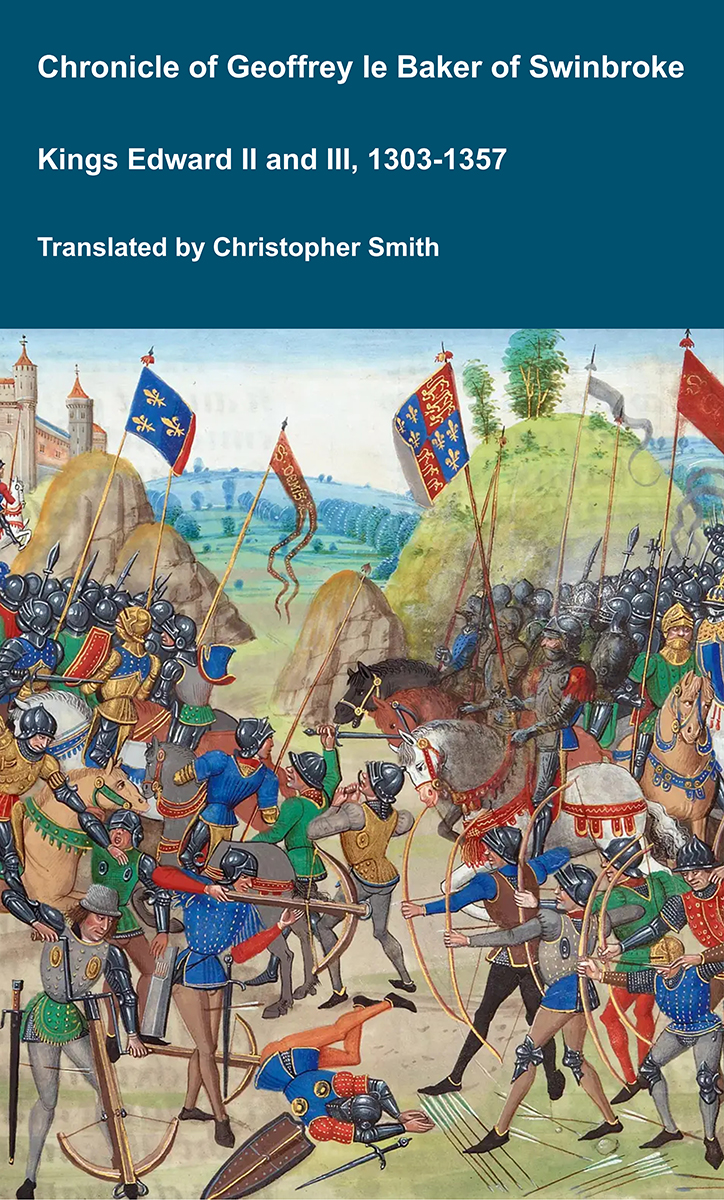 Chronicle of Geoffrey le Baker of Swinbroke.
On 10th August 1327 Bishop John Grandison 3rd Baron Grandison [aged 35] was appointed Bishop of Exeter.
On 10th September 1327 Bishop John Grandison 3rd Baron Grandison [aged 35] was consecrated Bishop of Exeter.
On 16th September 1360 William Bohun 1st Earl of Northampton [aged 50] died. He was buried either in the Courtenay Chantry Chapel at Exeter Cathedral [Map] or at Waldon Priory and Abbey [Map]. His son Humphrey [aged 19] succeeded 2nd Earl of Northampton. Joan Fitzalan Countess Essex, Hereford and Northampton [aged 13] by marriage Countess of Northampton.
On 16th July 1369 Bishop John Grandison 3rd Baron Grandison [aged 77] died. He was buried at Exeter Cathedral [Map]. His nephew Thomas [aged 30] succeeded 4th Baron Grandison. Margaret Carew Baroness Grandison and Beauchamp by marriage Baroness Grandison.
Jean de Waurin's Chronicle of England Volume 6 Books 3-6: The Wars of the Roses
Jean de Waurin was a French Chronicler, from the Artois region, who was born around 1400, and died around 1474. Waurin’s Chronicle of England, Volume 6, covering the period 1450 to 1471, from which we have selected and translated Chapters relating to the Wars of the Roses, provides a vivid, original, contemporary description of key events some of which he witnessed first-hand, some of which he was told by the key people involved with whom Waurin had a personal relationship.
Available at Amazon in eBook and Paperback format.
On 5th March 1370 Bishop Thomas de Brantingham was appointed Bishop of Exeter.
On 12th May 1370 Bishop Thomas de Brantingham was consecrated Bishop of Exeter.

After 2nd May 1377. Exeter Cathedral [Map]. Monument to Hugh Courtenay 2nd or 10th Earl Devon [deceased] and Margaret Bohun Countess Devon [aged 66]. Note the de Bohun Swans Effigies on which her feet rest.
Margaret Bohun Countess Devon: On 3rd April 1311 she was born to Humphrey Bohun 4th Earl Hereford 3rd Earl Essex and Princess Elizabeth of Rhuddlan Countess Essex, Hereford and Holland. She a granddaughter of King Edward I of England. On 11th August 1325 Hugh Courtenay 2nd or 10th Earl Devon and she were married. She the daughter of Humphrey Bohun 4th Earl Hereford 3rd Earl Essex and Princess Elizabeth of Rhuddlan Countess Essex, Hereford and Holland. He the son of Hugh Courtenay 1st or 9th Earl Devon and Agnes St John Countess Devon. They were fifth cousin once removed. She a granddaughter of King Edward I of England. On 23rd December 1340 Hugh Courtenay 1st or 9th Earl Devon died. His son Hugh succeeded 2nd Earl Devon, 5th Baron Okehampton, 2nd Baron Courtenay. She by marriage Countess Devon. On 16th December 1391 Margaret Bohun Countess Devon died.
On 18th February 1383 John Dynham [aged 24] killed John Broun (his father's murderer) at Exeter Cathedral [Map].
Around 23rd December 1394 Bishop Thomas de Brantingham died. He was buried in the nave in Exeter Cathedral [Map].
On 15th January 1395 Bishop Edmund Stafford [aged 51] was appointed Bishop of Exeter.
On 2nd February 1405 Peter Courtenay [aged 59] died. He was buried at the Courtenay Chantry Chapel at Exeter Cathedral [Map].
On 30th June 1413 William Wilford made his will, and died shortly thereafter, before 19th July when a new mayor was elected to fill the vacancy caused by his death. His estate was valued at over £228. He was buried in Exeter Cathedral [Map].
On 3rd September 1419 Bishop Edmund Stafford [aged 75] died. He was buried at Exeter Cathedral [Map].
In 1457 Bishop John Hales [aged 57] was appointed Dean of Exeter in which post he remained until 1459.
Jean de Waurin's Chronicle of England Volume 6 Books 3-6: The Wars of the Roses
Jean de Waurin was a French Chronicler, from the Artois region, who was born around 1400, and died around 1474. Waurin’s Chronicle of England, Volume 6, covering the period 1450 to 1471, from which we have selected and translated Chapters relating to the Wars of the Roses, provides a vivid, original, contemporary description of key events some of which he witnessed first-hand, some of which he was told by the key people involved with whom Waurin had a personal relationship.
Available at Amazon in eBook and Paperback format.
In 1458 Archbishop George Neville [aged 26] was appointed Bishop of Exeter.
On 3rd December 1458 Archbishop George Neville [aged 26] was consecrated as Bishop of Exeter.
On 15th March 1465 Bishop John Booth was appointed Bishop of Exeter.
In 1478 Bishop Peter Courtenay was appointed Bishop of Exeter.
In November 1478 Bishop Lionel Woodville [aged 31] was appointed Dean of Exeter which he held until 1482.
On 29th January 1487 Bishop Richard Foxe [aged 39] was elected Bishop of Exeter. He was consecrate on 8th April 1487.
On 1st October 1492 Bishop Oliver King [aged 60] was appointed Bishop of Exeter.
On 1st October 1492 Bishop William Smyth [aged 32] was appointed Bishop of Lichfield and Coventry.
On 3rd February 1493 Bishop Oliver King [aged 61] was consecrated Bishop of Exeter.
On 6th November 1495 Bishop Richard Redman was translated to Bishop of Exeter.
On 24th November 1504 Bishop Hugh Oldham [aged 52] was elected Bishop of Exeter.
Chronicle of Walter of Guisborough
A canon regular of the Augustinian Guisborough Priory, Yorkshire, formerly known as The Chronicle of Walter of Hemingburgh, describes the period from 1066 to 1346. Before 1274 the Chronicle is based on other works. Thereafter, the Chronicle is original, and a remarkable source for the events of the time. This book provides a translation of the Chronicle from that date. The Latin source for our translation is the 1849 work edited by Hans Claude Hamilton. Hamilton, in his preface, says: 'In the present work we behold perhaps one of the finest samples of our early chronicles, both as regards the value of the events recorded, and the correctness with which they are detailed; Nor will the pleasing style of composition be lightly passed over by those capable of seeing reflected from it the tokens of a vigorous and cultivated mind, and a favourable specimen of the learning and taste of the age in which it was framed.'
Available at Amazon in eBook and Paperback format.
On 12th January 1505 Bishop Hugh Oldham [aged 53] was consecrated Bishop of Exeter.
In 1519 Bishop John Vesey aka Harman [aged 57] was appointed Bishop of Exeter.
In 1535 George Carew [aged 37] was appointed Canon Exeter Cathedral.
On 4th September 1555 Bishop Edmund "Bloody" Bonner of London [aged 55] consecrated an Archbishop and two Bishops at St Paul's Cathedral [Map]:
Archbishop Hugh Curwen [aged 55] was consecrated Archbishop of Dublin.
Bishop James Turbeville was consecrated Bishop of Exeter.
Bishop William Glynne [aged 51] was consecrated Bishop of Bangor.
In 1556 George Carew [aged 58] was appointed Archdeacon Exeter.
On 20th May 1560 Bishop William Alley [aged 50] was elected Bishop of Exeter on the recommendation of Queen Elizabeth I of England and Ireland [aged 26]. Henry Machyn in his diary of 02 Apr 1560 refers to Bishop William Alley as being 'bishop elect of Exeter'.


On 14th July 1560 Bishop William Alley [aged 50] was consecrated Bishop of Exeter.
In 1571 George Carew [aged 73] was appointed Dean of Exeter.
On 21st March 1619 George Smith of Exeter died. He was buried at Exeter Cathedral [Map].
In 1627 Bishop Joseph Hall [aged 52] was appointed Bishop of Exeter.
On 21st July 1644 Princess Henrietta Stewart Duchess Orléans was baptised at Exeter Cathedral [Map]. John Berkeley 1st Baron Berkeley [aged 42] attended. Elizabeth Villiers Countess Morton [aged 35] was her godmother in whose care she was left.


On 3rd November 1660 Bishop John Gauden was elected Bishop of Exeter.
Abbot John Whethamstede’s Chronicle of the Abbey of St Albans
Abbot John Whethamstede's Register aka Chronicle of his second term at the Abbey of St Albans, 1451-1461, is a remarkable text that describes his first-hand experience of the beginning of the Wars of the Roses including the First and Second Battles of St Albans, 1455 and 1461, respectively, their cause, and their consequences, not least on the Abbey itself. His text also includes Loveday, Blore Heath, Northampton, the Act of Accord, Wakefield, and Towton, and ends with the Coronation of King Edward IV. In addition to the events of the Wars of the Roses, Abbot John, or his scribes who wrote the Chronicle, include details in the life of the Abbey such as charters, letters, land exchanges, visits by legates, and disputes, which provide a rich insight into the day-to-day life of the Abbey, and the challenges faced by its Abbot.
Available at Amazon in eBook and Paperback format.
On 2nd December 1660 Bishop John Gauden was consecrated Bishop of Exeter.
In 1667 Anthony Sparrow [aged 55] was appointed Bishop of Exeter.
In 1676 Archbishop Thomas Lamplugh [aged 61] was appointed Bishop of Exeter.
On 24th October 1676 Edward Lake [aged 34] was appointed Archdeacon Exeter.
In 1681 Richard Annesley 3rd Baron Altham [aged 26] was appointed Dean of Exeter.

In 1689 Bishop Jonathan Trelawny 3rd Baronet [aged 38] was appointed Bishop of Exeter.

In 1703 Archbishop William Wake [aged 45] was appointed Dean of Exeter.
In 1717 Archdeacon Lancelot Blackburne [aged 58] was appointed Bishop of Exeter.

In 1724 Bishop Stephen Weston [aged 59] was appointed Bishop of Exeter.
On 4th June 1748 Charles Lyttelton [aged 34] was appointed Dean of Exeter.
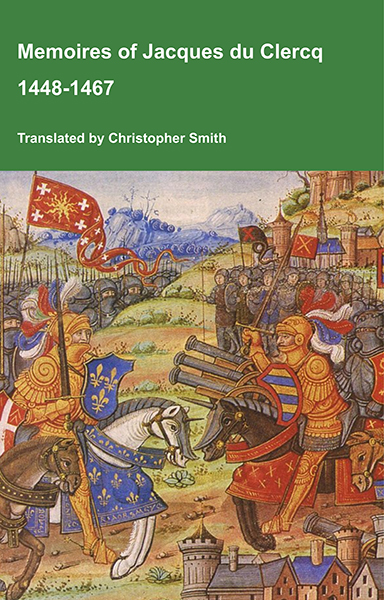
This is a translation of the 'Memoires of Jacques du Clercq', published in 1823 in two volumes, edited by Frederic, Baron de Reissenberg. In his introduction Reissenberg writes: 'Jacques du Clercq tells us that he was born in 1424, and that he was a licentiate in law and a counsellor to Philip the Good, Duke of Burgundy, in the castellany of Douai, Lille, and Orchies. It appears that he established his residence at Arras. In 1446, he married the daughter of Baldwin de la Lacherie, a gentleman who lived in Lille. We read in the fifth book of his Memoirs that his father, also named Jacques du Clercq, had married a lady of the Le Camelin family, from Compiègne. His ancestors, always attached to the counts of Flanders, had constantly served them, whether in their councils or in their armies.' The Memoires cover a period of nineteen years beginning in in 1448, ending in in 1467. It appears that the author had intended to extend the Memoirs beyond that date; no doubt illness or death prevented him from carrying out this plan. As Reissenberg writes the 'merit of this work lies in the simplicity of its narrative, in its tone of good faith, and in a certain air of frankness which naturally wins the reader’s confidence.' Du Clercq ranges from events of national and international importance, including events of the Wars of the Roses in England, to simple, everyday local events such as marriages, robberies, murders, trials and deaths, including that of his own father in Book 5; one of his last entries.
Available at Amazon in eBook and Paperback format.
In 1762 Bishop Frederick Keppel [aged 33] was appointed Bishop of Exeter.
In 1784 Bishop William Buller [aged 49] was elected Dean of Exeter.
On 16th June 1788 Martha Baker died unmarried. She was buried in Exeter Cathedral [Map] on 27th June 1788. She is commemorated on her father's monument.
In 1792 Bishop William Buller [aged 57] was elected Bishop of Exeter.

1797. Thomas Girtin [aged 21]. Exeter Cathedral [Map].
In March 1797 Bishop Reginald Courtenay [aged 55] was appointed Bishop of Exeter.

In 1803 Bishop John Fisher [aged 55] was consecrated Bishop of Exeter.
In 1807 Bishop George Pelham [aged 40] was translated to Bishop of Exeter.
In 1820 Bishop William Carey [aged 50] was appointed Bishop of Exeter.

In 1885 Bishop Edward Bickersteth [aged 59] was appointed Bishop of Exeter.
Chronicle of Abbot Ralph of Coggeshall
The Chronicle of Abbot Ralph of Coggeshall (Chronicon Anglicanum) is an indispensable medieval history that brings to life centuries of English and European affairs through the eyes of a learned Cistercian monk. Ralph of Coggeshall, abbot of the Abbey of Coggeshall in Essex in the early 13th century, continued and expanded his community’s chronicle, documenting events from the Norman Conquest of 1066 into the tumultuous reign of King Henry III. Blending eyewitness testimony, careful compilation, and the monastic commitment to record-keeping, this chronicle offers a rare narrative of political intrigue, royal power struggles, and social upheaval in England and beyond. Ralph’s work captures the reigns of pivotal figures such as Richard I and King John, providing invaluable insights into their characters, decisions, and the forces that shaped medieval rule. More than a simple annal, Chronicon Anglicanum conveys the texture of medieval life and governance, making it a rich source for scholars and readers fascinated by English history, monastic authorship, and the shaping of the medieval world.
Available at Amazon in eBook and Paperback format.
In 1916 Bishop Rupert Gascoyne-Cecil [aged 52] was appointed Bishop of Exeter.
In 1458 Thomas Courtenay 5th or 13th Earl Devon [aged 44] died at Yattendon Castle [Map]. He was buried at Courtenay Chantry Chapel Exeter Cathedral. His son Thomas [aged 26] succeeded 6th Earl Devon, 9th Baron Okehampton, 7th Baron Courtenay.