

On 13th October 1386 Nicholas Exton was elected Lord Mayor of London.
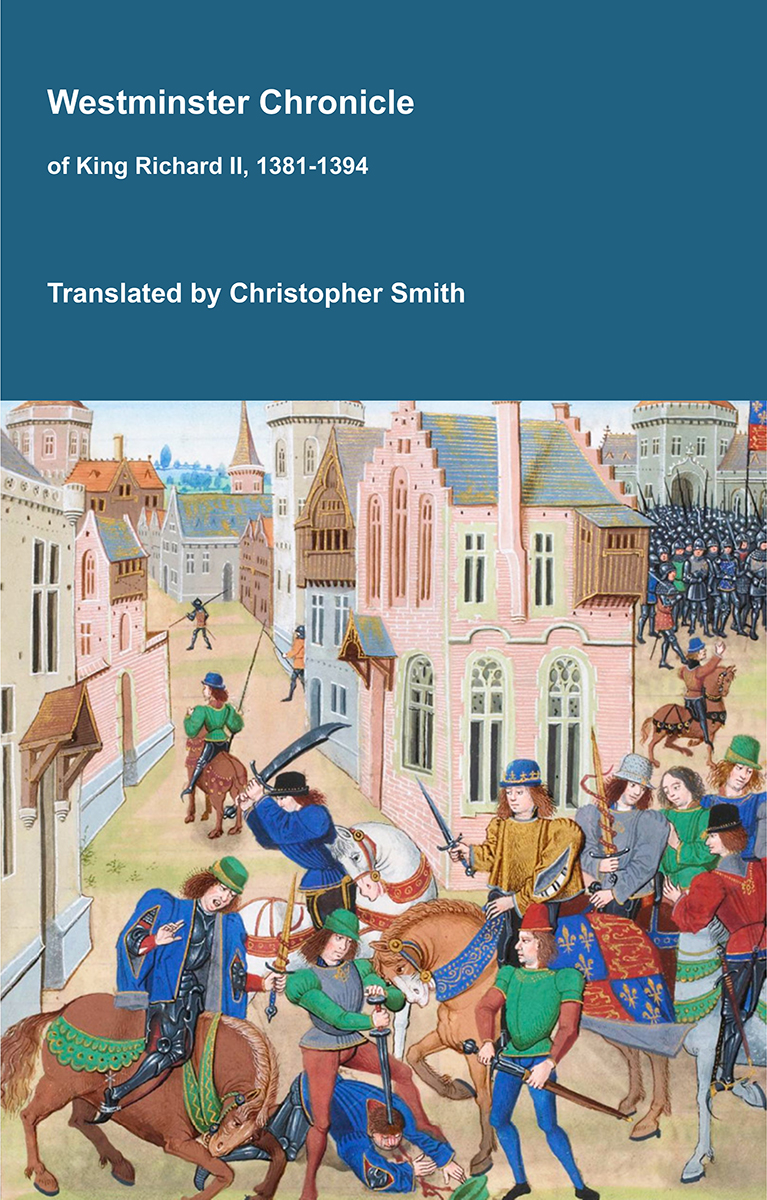 Westminster Chronicle. And although these things did not take effect, nevertheless, because of these and the other matters already mentioned and to be specified below, there arose the reason why the lords rose up. Another reason was the imminent danger of the destruction of the whole realm. The third reason was the bad governance of the king and kingdom, because the king had hitherto been governed by men of too little competence. Also, because the said counsellors of the lord king had conspired for the death of the aforesaid lords. Robert [aged 67], archbishop of Dublin, however, considered in his own mind that, unless these things were more quickly frustrated, they would certainly, indeed manifestly, tend to the confusion of the whole kingdom of England, indeed to its overthrow. Therefore, on a certain day, the same archbishop happened by chance to meet the duke of Gloucester, and first asked pardon from him. Then he revealed to him in order all the things which had been done before the king. And because the others concealed these things, they perished shamefully, but this man escaped free from every charge. And so Nicholas Exton, mayor of London, remained in his office, by the king’s wish, throughout the following year.
Et quamvis ista non sortiebantur effectum, nihilominus tamen pro his et aliis præmissis et inferius specificandis exorta est causa quare domini surrexerunt. Alia causa fuit propter imminens periculum destructionis totius regni. Tertia causa fuit propter malam gubernationem regis et regni; quia per minus sufficientes homines fuit rex lhactenus gubernatus. Item quia dicti consiliarii domini regis prædictorum dominorum conspirarunt in mortem. Robertus vero archiepiscopus Dublinensis suo consideravit in animo quod nisi ista citius frustrarentur in confusionem totius regni Anglie profecto immo in subversionem illius tenderent manifeste. Igitur quadem die idem archiepiscopus casualiter duci Gloucestriæ obviavit et ab eo primo petiit veniam ; deinde cuncta quæ coram rege sunt gesta sibi per ordinem propalavit, et ideo quia alii ea celarunt turpiter perierunt, iste namque ab omni impetitione immunis evasit. Major itaque Londoniarum Nicholaus Exton in suo officio permansit rege volente per totum annum sequentem.
In October 1387 Nicholas Exton was re-elected Lord Mayor of London.
Westminster Chronicle. Also, on the twenty-eighth day of October, the king sent the archbishop of York [aged 46] and Michael de la Pole [aged 57], earl of Suffolk, to the mayor and citizens of London, to ask them whether they were of one mind among themselves in the city of London, and whether they wished to stand with the king, if need required it, or not. To these things answer was made to them that they were unanimous, and that they wished to obey their king in all things, as his royal majesty demands and requires, and to hold with him, setting aside all others whatsoever. Having received this answer, they returned to the king with joy. The king, gladdened by this answer, entered the city of London on the tenth day of November. The mayor and the other citizens of the said city honourably came out to meet him, dressed in one livery, namely white and red, and rode in procession before him through the middle of the city as far as the Mews at Charing. There the king took off his shoes, and the archbishop of York, Robert de Vere [aged 25], duke of Ireland, and Michael de la Pole, earl of Suffolk, with him, likewise barefoot, proceeded to the church of Saint Peter at Westminster. The abbot and convent of the said monastery also came solemnly to meet him in copes as far as the royal gate, and led him from that place into the church over carpets laid out for him. When he had performed his devotions according to custom, he returned to his palace.
Item xxviii die Octobris misit rex archiepiscopum Eboracensem et Michaelum de la Pole comitem Suffolkiæ ad majorem et cives Londoniarum ad inquirendum ab eis, an essent inter se unanimes in civitate Londoniarum, et an ipsi vellent stare cum rege, si opus exposceret, aut non. Ad ista fuit eis responsum, quod illi forent unanimes et suo regi vellent obedire in omnibus prout sua regia majestas exigit et requirit ac secum tenere aliis postpositis quibuseunque. Accepto vero responso ad regem cum gaudio redierunt. Rex autem super hujusmodi responso exhilaratus x die Novembris civitatem Londoniarum intravit contra quem major et cæteri cives dictæ civitatis in una secta alba scilicet et rubea honorifice exierunt et ante eum per medium civitatis usque Le Muwes apud Charryngg processionaliter equitarunt. Ubi rex discalciavit se et ‘archiepiscopus Eboracensis, Robertus de Veer Dux Hiberniæ et Michael de la Pole, comes Suffolkiæ, cum eo pariter nudipedes ad ecclesiam sancti Petri Westmonasterii processerunt contra quem etiam abbas et conventus dicti monasterii in capis usque portam regiam ei obviam modo solemni venerunt et illum super tapetis ab illo loco stratis usque in ecclesiam deduxerunt. Factisque suis devotionibus ex more ad suum palatium remeavit.
Westminster Chronicle. Also, on the last day of November, the king sent for the mayor of London, together with the elders of the same city, to enquire from them how many men-at-arms they could provide to assist him, if need arose. To this they answered that almost all those in the said city were craftsmen and merchants, not very experienced in wars, and that they were not permitted to devote themselves to warfare except only for the defence of the said city. The mayor, however, pressed the king to be allowed to be discharged from his office, but he did not obtain what he sought. On the second day, when they had returned, the king sent for certain men from each craft of the said city for the aforesaid purpose, but he did not obtain his wish in all respects.
Item ultimo die Novembris misit rex pro majore Londoniarum cum senioribus ejusdem civitatis ad investigandum ab eis quot homines armorum possent ei si opus fuerit subvenire. Ad quod responderunt quod omnes in dicta civitate pro majore parte erant artifices et mercatores nec in bellis multum experti nec licuit cis bellis vacare nisi pro defensione tantummodo civitatis prædiectæ. Major vero institit penes regem quod posset ab officio suo exonerari; tamen non obtinuit quod petebat. Secundo die illis reversis misit rex pro quibusdam de qualibet arte dictæ civitatis causa prædicta; sed non est votum suum in omnibus assecutus.
Westminster Chronicle. Therefore, on the sixth day of Christmas [30th December 1387], the aforesaid lords went to the Guildhall of London, where, in the presence of the mayor and the community of the aforesaid city, they declared how, and in what form, and why they were doing the aforesaid things and had ridden with so great a multitude. When this had been done, they immediately came to the Tower of London with five hundred well-armed men. Seeing the king sitting near the chapel on his throne in the open air, and having paid him due reverence, namely with a threefold prostration to the ground, at last, with the king’s assent, they rose modestly. After some conversation had been held with him there, but not fully because of the tumult of the people, they therefore, with the king’s consent, entered the aforesaid chapel. There they addressed the king about his actions rather sternly: first, in that he was acting contrary to his own oath, by not keeping towards them those things which he had promised; secondly, in that he was at once threatening them with death, contrary to his nobility and estate; thirdly, in that he was defending the most false traitors, to his own destruction and the trampling down of the whole kingdom. They said many other things to him there which did not come into public knowledge. But finally, protesting, they asserted that he must necessarily correct his errors and henceforth submit himself to the governance of the lords. But if he refused to do this, he should certainly know that his heir was undoubtedly of full age, and that, for the advantage of the kingdom and its salvation, he would willingly and effectively obey them and be governed under their rule.
Igitur sexto die Natalis Domini accesserunt domini prædicti ad Gildam Aulam Londoniarum ubi in præsentia majoris et communitatis civitatis prædictæ declarabant se quomodo et sub qua forma et quare præmissa agebant ac cum tanta multitudine equitarunt. Quo facto ad turrim Londoniarum cum quingentis viris bene armatis illico pervenerunt videntesque regem juxta capellam in suo solio sub divo sedentem factaque sibi debita veneratione, scilicet cum trina prostratione in terram, tandem rege annuente cum modestia surrexerunt, habitoque cum illo ibidem aliquali colloquio, sed propter tumultum populi non ad plenum, ideo rege volente præfatam capellam intrabant, ubi sunt regem super factis suis satis rigide alloeuti ; primo in contraveniendo suum proprium juramentum non servando illis ea quæ promisit; secundo incontinenter mortem eis intentans contra suam nobilitatem et statum ; tertio in defendendo falsissimos proditores in sui ipsius destructionem et totius regni suppeditationem.Plura alia inibi sibi dixerunt quæ in publieum non venerunt, Sed finaliter protestando asseruerunt ipsum necessario errata corrigere et deinceps subjicere se regimini dominorum. Quod si renuerit ita facere, sciret utique suum heredem fore indubie perfectæ ætatis qui libenter propter commodum regni ejusque salvationem effectualiter vellet eis parere, ac sub corum regimine gubernari.
In 1402 Nicholas Exton died.