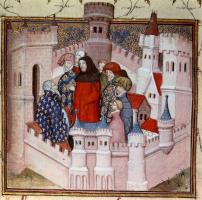
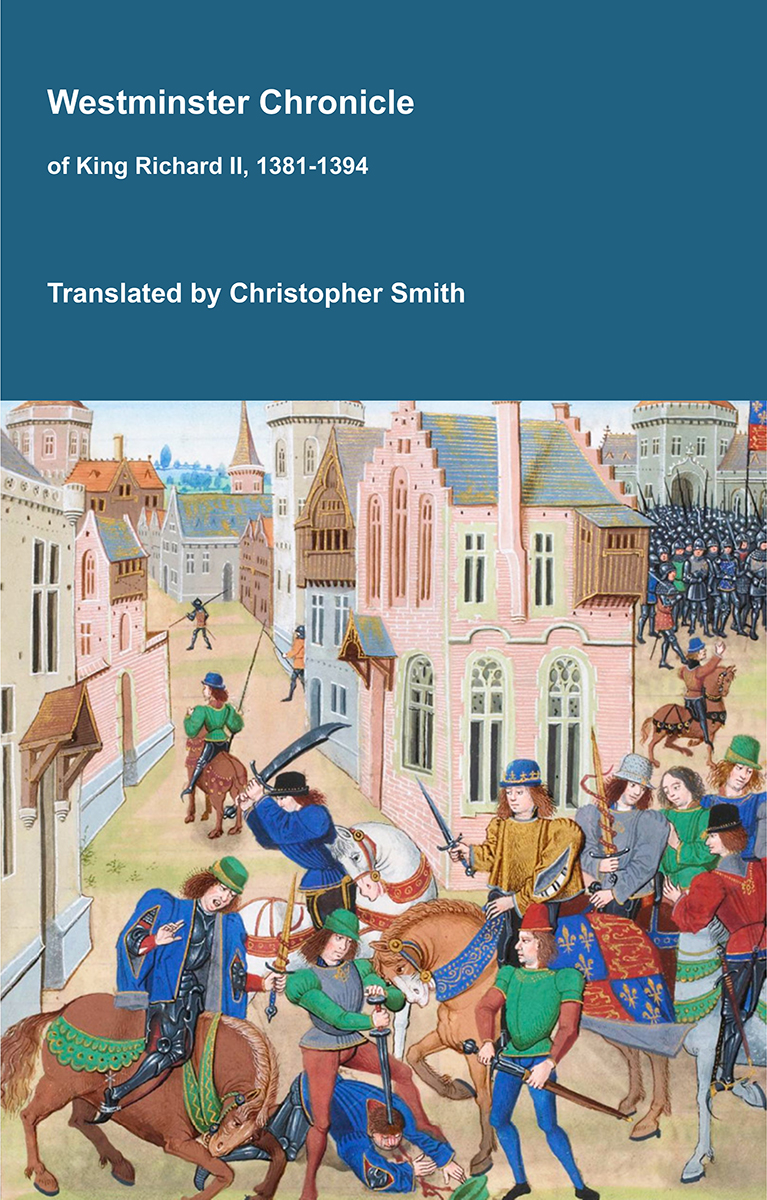
 Westminster Chronicle. In the same year, on the day before [12th June 1381] the Ides of June, a very great multitude of country people from Essex and Kent alike was assembled. Those from Kent, running through many parts of Kent like rabid dogs, razed the houses and manors of very many people to the ground, beheaded several men, and forced all those they met, who were not of their disturbance, to adhere to them and to bind themselves by oath with them in defence of King Richard. They claimed that they would defend the king and the welfare of the kingdom against his traitors. And so, as their crowd grew, they raged far and wide. They asserted that Master Simon of Sudbury [aged 65], then archbishop and also chancellor of England, was a traitor and most worthy of death. Therefore, going down to his manor of Lambeth, they burned in the fire books, vestments, cloths, and many other things left there. They broke open barrels filled with wine and drank from them and poured onto the ground what wine had been left. They smashed all the kitchen vessels by striking them against one another, and, as they committed these acts, applauding as though over some praiseworthy deed, they cried out, "A revel, a revel!" These things were done on the day before the Ides of June, namely the day of Basilides and Quirinus [12th June 1381], which day was then the vigil of Corpus Christi. Meanwhile the archbishop, fearing that he would be seized by the hands of those seeking him, fled into the royal palace, and then to the king in the Tower of London.
Eodem anno pridie Idus Junii coadunata fuit maxima multitudo ruralium Estsexiæ pariter et Cantiæ ; et hi quidem qui de Cantia per plures partes Cantiæ, uti rabidissimi canes discurrentes plurimorum domos et maneria solotenus diruerunt, nonnullos decapitaverunt et quosque sibi occurrentes, qui de eorum conturbine non fuerant, ut eis adhærerent et cum eis in defensionem regis Ricardi interposito juramento constringebant, prætendentes se defensuros regem et regni commoditatem contra suos traditores. Quare concrescente eorum turba longe lateque debacchabantur ; magistrum Simonem de Sudbury, tunc archiepiscopum pariter et Angliæ cancellarium, proditorem esse asserentes et morte dignissimum ; unde ad manerium suum de Lambhuth descendentes libros vestes mappas et plura alia inibi relicta igne combusserunt ; dolia vino referta confregerunt et hauserunt et quod vini fuerat relictum in terram effuderunt singula coquinæ vasa adinvicem collidentes fregerunt et ista perpetrantes velut de re laudabili plaudentes "A Revell A Revell" exclamaverunt. Acta sunt hæc pridie idus Junii die videlicet Basilidis et Cirini quæ dies tunc erat vigilia Corporis Christi. Interea archiepiscopus manibus se quærentium comprehendi timens in regium fugit palatium, deinde ad regem in turrim Londoniæ.
Click to read more ...