

Savoy Palace is in Savoy.
On 8th April 1364 King John "The Good" II of France [aged 44] died at Savoy Palace [Map] of an unknown illness. He was buried at the Basilica of St Denis [Map]. His son Charles [aged 25] succeeded V King France: Capet Valois.
In 1376 John Savile of Shelley and Golcar [aged 51] was elected MP Yorkshire in the Good Parliament. During the Good Parliament, he was sufficiently trusted to conduct Thomas Caterton from Queenborough Castle [Map] for interrogation before Parliament. Caterton had been appealed for treason by Sir John Annesley, and the court party, including Gaunt [aged 35], was anxious to protect him from attack. In the event, they were able to hold off the opposition, despite some damning revelations about their conduct of the war-effort. The duke himself was singled out for particular criticism, and during the Peasants' Revolt of 1381 he fled into Scotland, leaving his Savoy Palace [Map] to be destroyed by the London mob. Gaunt was, understandably, reluctant to cross the border again without the protection of a sizeable bodyguard. In late June 1376, therefore, his leading retainers in the north were instructed to provide an escort for his journey to Knaresborough [Map]. Not only did John Savile of Shelley and Golcar mobilize a personal retinue of ten men-at-arms and 40 archers; he also helped to suppress the rebellion in the north by serving on two commissions for the punishment of insurgents.
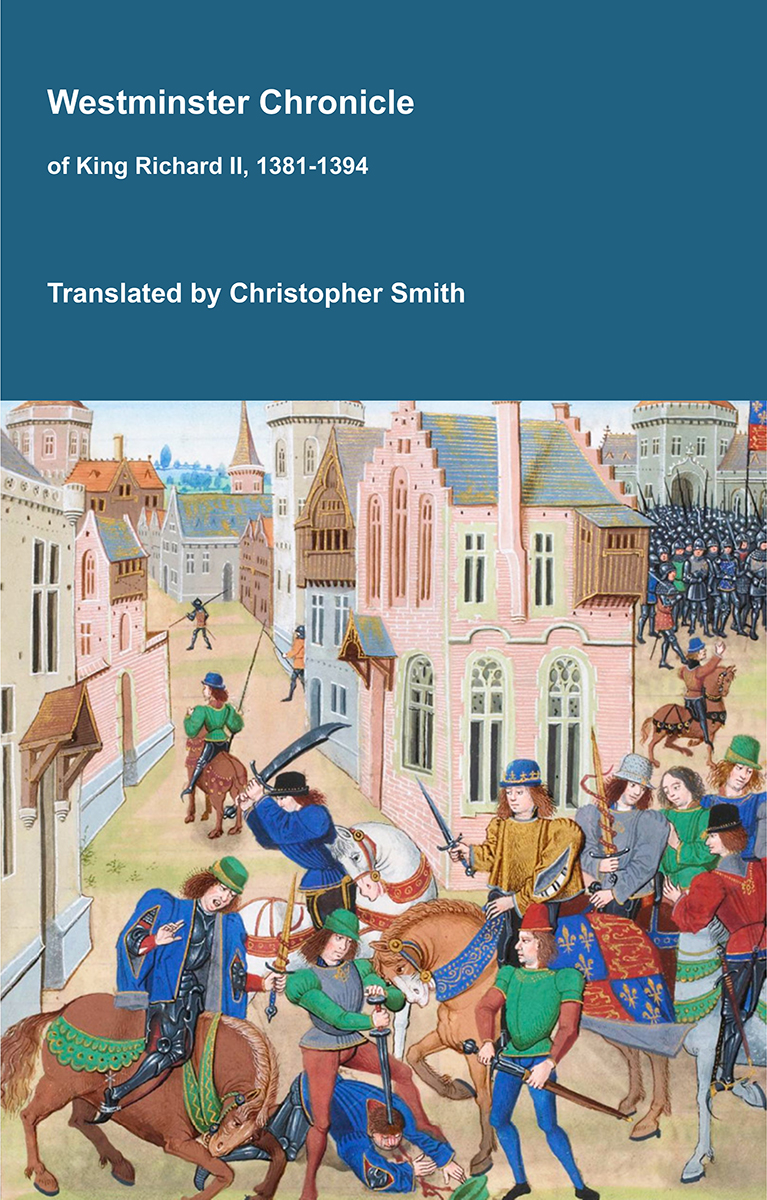 Westminster Chronicle. On the next day [13th June 1381], however, that rustic company, wholly driven into madness, at about the fourth hour after noon, invaded the duke’s lodging called 'the Savoy [Map]', breaking open all the enclosures. They spared nothing precious, but either burned it with fire or threw it into the river Thames to be sunk. There you would have seen a thing unusual in our age, for although they saw, handled, and gathered together the most precious objects, the rustic hand did not dare to snatch precious things with thieving hands. For if anyone had been detected in any theft, without process and without judgement he was dragged off to be beheaded. Nor were they satisfied with this vengeance, but they set fire in several places and reduced so beautiful a place, so notable a lodging, to ashes. After this, in the following twilight of night, they went to the house of Saint John at Clerkenwell. They killed all who resisted them, and consumed all the houses with fire. They also handed over to devouring flames the manor of Highbury, which Robert Hales, then prior of that house and treasurer of England, had recently built, together with the manors of others.
In crastino vero agrestis illa societas totum stimulata in rabiem hora quasi quarta post nonam hospitium ducis vocatum "le Savoye" invaserunt, omnes clausuras disrumpentes, nihil quod pretiosum erat parcentes quin illud aut igne combusserunt aut in Thamense flumen demergendum projecerunt. Cerneres ibidem rem nostris seculis insolitam, nam dum pretiosissima cernerent tractarent et colligerent non audebant rustica manus pretiosa furtivis manibus surripere, quia si quis in aliquo furto fuerat deprehensus sine processu sine judicio ad mortem rapiebatur decapitandus. Nec ista facientes satiati fuerunt vindicta, quin ignem in pluribus locis immittentes tam speciosum locum tam insigne hospitium in cineres redigerent. Supra hoc in sequente noctis crepusculo ad locum sancti Johannis de fonte clericorum pergentes quosque sibi resistentes interfecerunt, universasque domos igne consumpserunt sed et manerium de Hybury, quod noviter construxerat Robertus Hales tunc temporis loci prior et Angliæ thesaurarius, et aliorum maneria flammis voracibus delenda tradiderunt.
Patent Rolls. 15th June 1381. Commission of oyer and terminer to William Walleworth, mayor of London, Robert Bealknapp, Robert Knolles, Nicholas Brembre, John Philipot, Robert Launde, and William Cheyne, on information that great crowds of labourers and others have collected together, especially in the counties of Essex, Kent, Surrey, Sussex, and Middlesex, compelled their betters to go with them, killed many of the king's lieges, and burned many houses, entered the city of London, and burned the house of the king's uncle John, duke of Lancaster [aged 41], called the 'Sauveye [Map],' and the priory in Clerkenwelle of the Hospital of St. John of Jerusalem in England, and killed Simon, archbishop of Canterbury [deceased] and chancellor, and Robert de Hales [deceased], prior of the said Hospital. By К. June 15. London.
Chronicle of Adam of Usk [~1352-1430]. 15th June 1381. In this rising of the commons were many great men of the land in many places beheaded. The Savoy [Map], the palace of the duke of Lancaster [aged 41] and the fairest in the kingdom, standing near London on the bank of Thames, was, from the commons' hatred of the duke, utterly destroyed by them with fire; and the duke himself, for fear of them, fled into Scotland1. To appease them and to quiet their fury, the king [aged 14] granted that the state of villeinage, as well in their persons as in their labour, should be henceforth done away, freedom fully given, and all prisoners set at large. And this he commanded and made to be openly proclaimed throughout the counties of the kingdom. And then what a throe of grief passed through the desolated land! For they boasted that they would slay all those of higher birth, would raise up king and lords from among themselves, would stablish new laws, and, in a word, would make new, or rather - disfigure, the face and estate of the whole island. Then every man struck off the head of his enemy, and despoiled his richer neighbour. But, by the mercy of God, when their leader, being in Smithfield near London, doffed not his hood before the king nor in anything did reverence to the king's majesty, his head was deftly struck off, in the very midst of his flock of kites, by sir William Walworth, knight and citizen of London; and straightway, being raised on the point of a sword, it was shown before them. Then the commons in sore dread sought flight by stealth, and there and then casting away their rebellious weapons, as though unguilty of such riot and wickedness, like foxes into their holes, they pitifully crept home. But the king and the lords pursued them, and some they made to be dragged behind horses, some they slew with the sword, some they hanged on the gallows, some they quartered; and they destroyed thousands2.
Note 1. John of Gaunt was at this time in the north, negotiating a truce with Scotland. Knighton (ij. 143-7) tells us that so unpopular was his name that his duchess was refused admission into his own castle at Pontefract [Map], and that he himself was denied hospitality by the earl of Northumberland; and that it was reported that a large force of the insurgents was sent north in pursuit of him. He retired to Edinburgh on a safe-conduct from the Scots, by whom he was well entertained.
Note 2. The severity of the punishments inflicted after the suppression of the outbreak is fully set forth in the pages of Walsingham's History. Richard, however, interfered to prevent indiscriminate slaughter of the insurgents when first beaten in the field.— Wals. Hist. Angl. (Rolls series), i. 466.
Henry Machyn's Diary. 8th December 1554. The viij day of Desember, the wyche was the Conceptyon of owre blessed lady the Vyrgyn, was a goodly prossessyon at the Save [Map] be the Spaneards, the prest carehyng the sacrement ryally be-twyne ys hands, and on deacon carehyng a senser sensyng, and anodur the ale-water stoke, and a nombur of frers and prestes syngyng, [and every] man and woman, and knyghts and gentylmen, bayryng a gren tapur bornyng, and viij trumpeters blohyng; and when they had don plahyng, and then begane the sagbottes plahyng; and when they had don theyr was on that cared ij drumes on ys bake, and on cam after playng; and, so don, they whent a-bowt the Sawve with-in; and a wyll after playing a-gayn, and so cam in syngyng, and so after they whent to masse, wher the bedes w .. (unfinished).

On 3rd April 1606 Charles Blount 1st Earl Devonshire [aged 43] died at Savoy Palace [Map]. Earl Devonshire, Baron Mountjoy extinct.
On 27th March 1629 George Carew 1st Earl Totnes [aged 73] died at Savoy Palace [Map]. He was buried at Clopton Chantry Chapel Church of the Holy Trinity, Stratford upon Avon [Map]. Earl Totnes extinct.

Vesta Monumenta. 1750. Plate 2.5. Savoy Palace [Map] with C. St Mary le Strand Church, F. Savoy French Church.

Vesta Monumenta. 1753. Plate 2.14. Plan of the Savoy Palace [Map]. Engraving by George Vertue [aged 69] after his own drawings.