Lamplugh, Cumberland, North-West England, British Isles

Lamplugh, Cumberland is in Cumberland.

Around May 1899 Joseph Edwin Sewell was born to William Sewell at Lamplugh, Cumberland

Bird Dyke, Lamplugh, Cumberland, North-West England, British Isles

31st March 1901. Census. Bird Dyke, Lamplugh.

William Sewell. Iron Ore Miner.

Joseph Edwin Sewell [aged 1].

2nd April 1911. Census. Bird Dyke, Lamplugh.

William Sewell.

Joseph Edwin Sewell [aged 11].

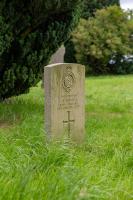
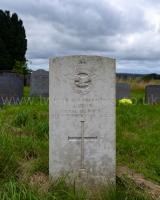
On 12th June 1918 Joseph Edwin Sewell [aged 19] died from wounds at Southampton, Hampshire [Map]. He was buried at St Michael's Church, Lamplugh [Map].

Joseph Sewell was born in 1899 at Lamplugh, Cumberland. The second son of iron ore miner William Sewell and his wife Maria (nee Hope) of Bird Dyke, Lamplugh. He enlisted at Workington in 1917. Letters home show that he was stationed at Edinburgh Castle in August 1917. He had served with the Royal Fusiliers.

Lamplugh Hall, Cumberland, North-West England, British Isles

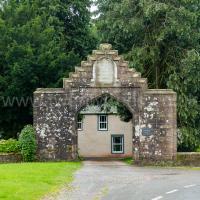
1595. The Gateway at Lamplugh Hall, Cumberland is in stone and consists of a moulded archway with a pointed head, a rectangular hood mould, and a stepped parapet. On the front is a panel containing an armorial, the date 1595 and the name John Lamplugh, and in the apex is a datestone. At the rear is a sundial inscribed Sic Transit Gloria Mundi (sic) with brass gnomon set in carved sun's disc with Roman numerals to sides.

Lamplugh Stone Circle, Cumberland, North-West England, British Isles [Map]

Lamplugh Stone Circle [Map] was

Parish of Lamplugh. On an eminence in the Stockhow Hall estate, in this parish, are the remains of a druidical circle [Map] called Standing Stones. Only the northern segment is now to be seen; the remainder having been blasted and removed a few years ago to make fences with. The part remaming consists of six large stones, of the kind provincially called the smooth blue cobble, placed at irregular distances, varying from eighteen paces to one; and the circle, when perfect, may have been one hundred paces in diameter. The stones are mostly of an oblong figure, placed endwise in the circumference of the circle; four of the largest are nearly four feet in height above ground, and are supported in an upright position by other large stones around their bases underground. The neighbouring rock is of limestone. We can ascertain no tradition relating to the stones beyond the name, which is common to similar erections in other parts of the kingdom.

St Michael's Church, Lamplugh, Cumberland, North-West England, British Isles [Map]

On 19th January 1687 Frances Lamplugh died. She was buried at St Michael's Church, Lamplugh [Map].

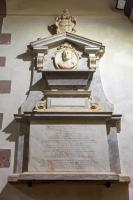
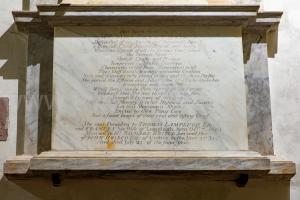
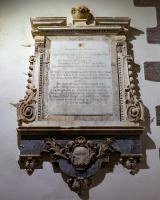
After 21st July 1731. Memorial at St Michael's Church, Lamplugh [Map] to Margaret Lamplugh [deceased].

Margaret Lamplugh: On 7th October 1693 she was born to Thomas Lamplugh and Frances Moline. Around 14th July 1731 Richard Brisco and she were married. She was dead a week later. The churchwarden at Lamplugh church explained this a possibly being a means for Richard to gain the estate of her father with whose wife, Margaret's mother, he Richard was conducting an affair. Alternatively it may have been a means by which Lamlugh Hall would retained by Richard Brisco. On 21st July 1731 Margaret Lamplugh died.

After 1750. Memorial at St Michael's Church, Lamplugh [Map] to Thomas Lamplugh, his wife Frances Moline and their son-in-law Richard Brisco [aged 51].

Frances Moline: In 1665 she was born to Abraham Moline of Cumberland and Frances Bullock. Before 7th October 1693 Thomas Lamplugh and she were married. On 5th January 1746 she died.

Richard Brisco: On or before 28th February 1698 he was born to John Brisco of Crofton. On 26th January 1750 he died.

The Deeds of the Dukes of Normandy

The Gesta Normannorum Ducum [The Deeds of the Dukes of Normandy] is a landmark medieval chronicle tracing the rise and fall of the Norman dynasty from its early roots through the pivotal events surrounding the Norman Conquest of England. Originally penned in Latin by the monk William of Jumièges shortly before 1060 and later expanded at the behest of William the Conqueror, the work chronicles the deeds, politics, battles, and leadership of the Norman dukes, especially William’s own claim to the English throne. The narrative combines earlier historical sources with firsthand information and oral testimony to present an authoritative account of Normandy’s transformation from a Viking settlement into one of medieval Europe’s most powerful realms. William’s history emphasizes the legitimacy, military prowess, and governance of the Norman line, framing their expansion, including the conquest of England, as both divinely sanctioned and noble in purpose. Later chroniclers such as Orderic Vitalis and Robert of Torigni continued the history, extending the coverage into the 12th century, providing broader context on ducal rule and its impact. Today this classic work remains a foundational source for understanding Norman identity, medieval statesmanship, and the historical forces that reshaped England and Western Europe between 800AD and 1100AD.

Available at Amazon in eBook and Paperback format.

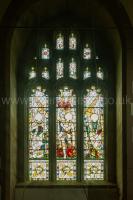
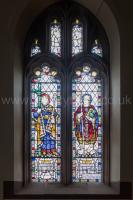
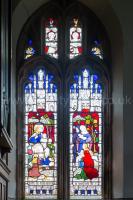
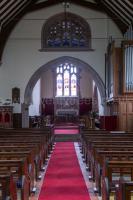
After 1800 Stained glass windows at St Michael's Church, Lamplugh [Map].

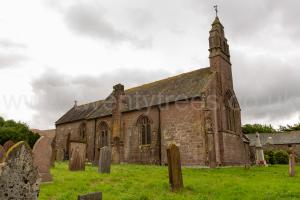
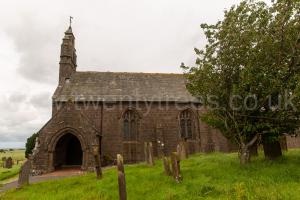
In 1870 St Michael's Church, Lamplugh [Map] was constructed from local sandstone by William Butterfield. A chapel or church is believed to have been on the site since 1150 with two previous reconstructions recorded in 1658 and 1771. The vestry was previously part of the Lamplugh family mortuary chapel.

On 12th June 1918 Joseph Edwin Sewell [aged 19] died from wounds at Southampton, Hampshire [Map]. He was buried at St Michael's Church, Lamplugh [Map].

Joseph Sewell was born in 1899 at Lamplugh, Cumberland. The second son of iron ore miner William Sewell and his wife Maria (nee Hope) of Bird Dyke, Lamplugh. He enlisted at Workington in 1917. Letters home show that he was stationed at Edinburgh Castle in August 1917. He had served with the Royal Fusiliers.

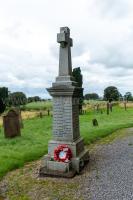
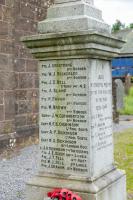
June 1921. St Michael's Church, Lamplugh [Map]. The war memorial, immediately to the west of the church, unveiled and consecrated in June 1921, is inscribed with 30 names from World War I and four names from World War II. When the names of the fallen of World War II were added it as moved from its original site under the West window to face the Church.

Leading Aircraftman James Benn (1076715). Son of Braithwaite And Sarah Benn, of Lamplugh, Cumberland. On 4th November 1943, early in the morning, he took his service rifle from the rack in a hut in East Anglia, went outside and shot himself. Lancashire Evening Post, 5 November 1943. He is buried at St Michael's Church, Lamplugh [Map].