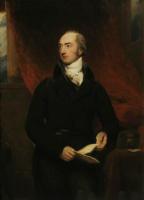
Charles Canning 1st Earl Canning 1812-1862

On 8th July 1800 [his father] George Canning Prime Mininster [aged 30] and [his mother] Joan Scott Viscountess Canning [aged 24] were married.

On 14th December 1812 Charles Canning 1st Earl Canning was born to George Canning Prime Mininster [aged 42] and Joan Scott Viscountess Canning [aged 36] at Gloucester Lodge.

On 4th April 1825 [his brother-in-law] Ulick Burgh 1st Marquess Clanricarde [aged 22] and [his sister] Harriet Canning Marchioness Clanricarde [aged 20] were married at Gloucester Lodge. She by marriage Marchioness Clarincade. He the son of John Thomas Burgh 13th Earl Clanricarde.

On 8th August 1827 [his father] George Canning Prime Mininster [aged 57] died.

On 22nd January 1828 [his mother] Joan Scott Viscountess Canning [aged 51] was created 1st Viscountess Canning with a special remainder to the heirs male of her late husband [his father] George Canning Prime Mininster.

On 5th September 1835 Charles Canning 1st Earl Canning [aged 22] and Charlotte Stuart Countess Canning [aged 18] were married at St Martin in the Fields Church [Map].

On 14th March 1837 [his mother] Joan Scott Viscountess Canning [aged 60] died. Her son Charles [aged 24] succeeded 2nd Viscount Canning.

In June 1842 Henry de la Poer Beresford 3rd Marquess Waterford [aged 31] and [his sister-in-law] Louisa Anne Stuart Marchioness Waterford [aged 24] were married byy his uncle Archbishop John Beresford [aged 68] at the Chapel Roal, Whitehall. She by marriage Marchioness Waterford. He the son of Henry de la Poer Beresford 2nd Marquess Waterford and Susan Hussey Carpenter Marchioness Waterford.

In May 1859 Charles Canning 1st Earl Canning [aged 46] was created 1st Earl Canning. [his wife] Charlotte Stuart Countess Canning [aged 41] by marriage Countess Canning.

Chronicle of a Bourgeois of Valenciennes

Récits d’un bourgeois de Valenciennes aka The Chronicle of a Bourgeois of Valenciennes is a vivid 14th-century vernacular chronicle written by an anonymous urban chronicler from Valenciennes in the County of Hainaut. It survives in a manuscript that describes local and regional history from about 1253 to 1366, blending chronology, narrative episodes, and eyewitness-style accounts of political, military, and social events in medieval France, Flanders, and the Low Countries. The work begins with a chronological framework of events affecting Valenciennes and its region under rulers such as King Philip VI of France and the shifting allegiances of local nobility. It includes accounts of conflicts, sieges, diplomatic manoeuvres, and the impact of broader struggles like the Hundred Years’ War on urban life in Hainaut. Written from the perspective of a burgher (bourgeois) rather than a monastery or royal court, the chronicle offers a rare lay viewpoint on high politics and warfare, reflecting how merchants, townspeople, and civic institutions experienced the turbulence of the 13th and 14th centuries. Its narrative style combines straightforward reporting of events with moral and civic observations, making it a valuable source for readers interested in medieval urban society, regional politics, and the lived experience of war and governance in pre-modern Europe.

Available at Amazon in eBook and Paperback format.

On 18th November 1861 [his wife] Charlotte Stuart Countess Canning [aged 44] died at Calcutta, India in the arms of her husband Charles Canning 1st Earl Canning [aged 48].

On 17th June 1862 Charles Canning 1st Earl Canning [aged 49] died without issue. Earl Canning, Viscount Canning extinct.

Ancestors of Charles Canning 1st Earl Canning 1812-1862

father: George Canning Prime Mininster

Charles Canning 1st Earl Canning

Grandfather: John "Pawky Scott" Scott

mother: Joan Scott Viscountess Canning