Peterhouse College, Cambridge University, Cambridgeshire, East England, British Isles [Map]

Peterhouse College, Cambridge University is in Cambridge University.

On 16th June 1286 Bishop Hugh de Balsham died at Doddington, Ely [Map]. He left 200 pounds in his will to Peterhouse College, Cambridge University [Map] which he had founded. He was buried at Ely Cathedral [Map] on 24th June 1286.

Around 1520 Bishop Edmund Scambler was born at Gressingham. He was educated at Peterhouse College, Cambridge University [Map] and Jesus College, Cambridge University.

In 1530 Bishop Richard Cheyney [aged 17] was elected Fellow of Pembroke Hall [Map].

Around 1550 Henry Herbert 2nd Earl Pembroke [aged 11] educated at Peterhouse College, Cambridge University [Map].

On 11th November 1562 Bishop Richard Howand [aged 22] was elected a Fellow of Peterhouse College, Cambridge University [Map] and proceeded M. A. in 1564.

Around 1564 Edward Stafford [aged 12] educated at Peterhouse College, Cambridge University [Map].

On 9th August 1564 Anthony Mildmay [aged 14], whilst being educated at Peterhouse College, Cambridge University [Map], delivered an oration to Queen Elizabeth I of England and Ireland [aged 30] with much success during her visit to the college.

In 1595 Oliver St John 1st Earl Bolingbroke [aged 15] was educated at Peterhouse College, Cambridge University [Map].

On 2nd June 1631 Bishop Robert Mossum [aged 14] entered Magdalene College aka Buckingham, Cambridge University. Two months later he migrated to Peterhouse College, Cambridge University [Map].

The True Chronicles of Jean le Bel Volume 1 Chapters 1-60 1307-1342

The True Chronicles of Jean le Bel offer one of the most vivid and immediate accounts of 14th-century Europe, written by a knight who lived through the events he describes, and experienced some of them first hand. Covering the early decades of the Hundred Years’ War, this remarkable chronicle follows the campaigns of Edward III of England, the politics of France and the Low Countries, and the shifting alliances that shaped medieval warfare. Unlike later historians, Jean le Bel writes with a strong sense of eyewitness authenticity, drawing on personal experience and the testimony of fellow soldiers. His narrative captures not only battles and sieges, but also the realities of military life, diplomacy, and the ideals of chivalry that governed noble society. A key source for Jean Froissart, Le Bel’s chronicle stands on its own as a compelling and insightful work, at once historical record and literary achievement. This translation builds on the 1905 edition published in French by Jules Viard, adding extensive translations from other sources Rymer's Fœdera, the Chronicles of Adam Murimuth, William Nangis, Walter of Guisborough, a Bourgeois of Valenciennes, Geoffrey le Baker of Swinbroke and Richard Lescot to enrich the original text and Viard's notes.

Available at Amazon in eBook and Paperback format.

On 8th February 1635 Bishop John Cosins [aged 40] was appointed Master of Peterhouse College, Cambridge University [Map].

John Evelyn's Diary. 31st August 1654. Peter-House [Map], formerly under the government of my worthy friend, Dr. Joseph Cosin [aged 59] [Note. Joseph appears to be a mistake for John?], Dean of Peterborough; a pretty neat college, having a delicate chapel. Next to Sidney, a fine college.

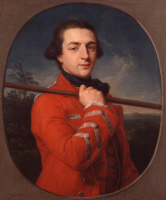
Around 1751 Augustus Henry Fitzroy 3rd Duke Grafton [aged 15] was educated at Peterhouse College, Cambridge University [Map].