

Battle of Bannockburn is in 1310-1319 Piers Gaveston.
On 24th June 1314 the Scottish army of King Robert the Bruce I of Scotland [aged 39] including, James "Black" Douglas [aged 28], heavily defeated the English army led by King Edward II of England [aged 30] at the Battle of Bannockburn.
Gilbert de Clare 8th Earl Gloucester 7th Earl Hertford [aged 23] was killed. Earl Gloucester, Earl Hertford extinct.
John Comyn 4th Lord Baddenoch [aged 20], Robert Felton 1st Baron Felton [aged 44] and William Vesci were killed.
William Marshal 1st Baron Marshal [aged 36] was killed. His son John [aged 22] succeeded 2nd Baron Marshal.
Robert Clifford 1st Baron Clifford [aged 40] was killed. His son Roger [aged 14] succeeded 2nd Baron de Clifford.
John Lovell 2nd Baron Lovel [aged 25] was killed. His son John succeeded 3rd Baron Lovel of Titchmarsh.
Henry de Bohun was killed by King Robert the Bruce I of Scotland. He was buried in Llanthony Secunda Priory, Gloucestershire [Map].
Walter Fauconberg 2nd Baron Fauconberg [aged 50] possilby died although his death is also reported as being on 31 Dec 1318.
Bartholomew Badlesmere 1st Baron Badlesmere [aged 38], Humphrey Bohun 4th Earl Hereford 3rd Earl Essex [aged 38], Goronwy ap Tudur Hen Tudor, Henry Beaumont Earl Buchan [aged 35], Aymer de Valence 2nd Earl Pembroke [aged 39] and Robert Umfraville 8th Earl Angus [aged 37] fought.
Pain Tiptoft 1st Baron Tibetot [aged 34] was killed. His son John succeeded 2nd Baron Tibetot.
John Montfort 2nd Baron Montfort [aged 23] was killed. Peter Montfort 3rd Baron Montfort [aged 23] succeeded 3rd Baron Montfort.
Thomas Grey [aged 34] undertook a suicidal charge that contributed to the English defeat and subsequently blemished his career.
William Latimer 2nd Baron Latimer of Corby [aged 38] was captured.
Michael Poynings [aged 44] was killed.
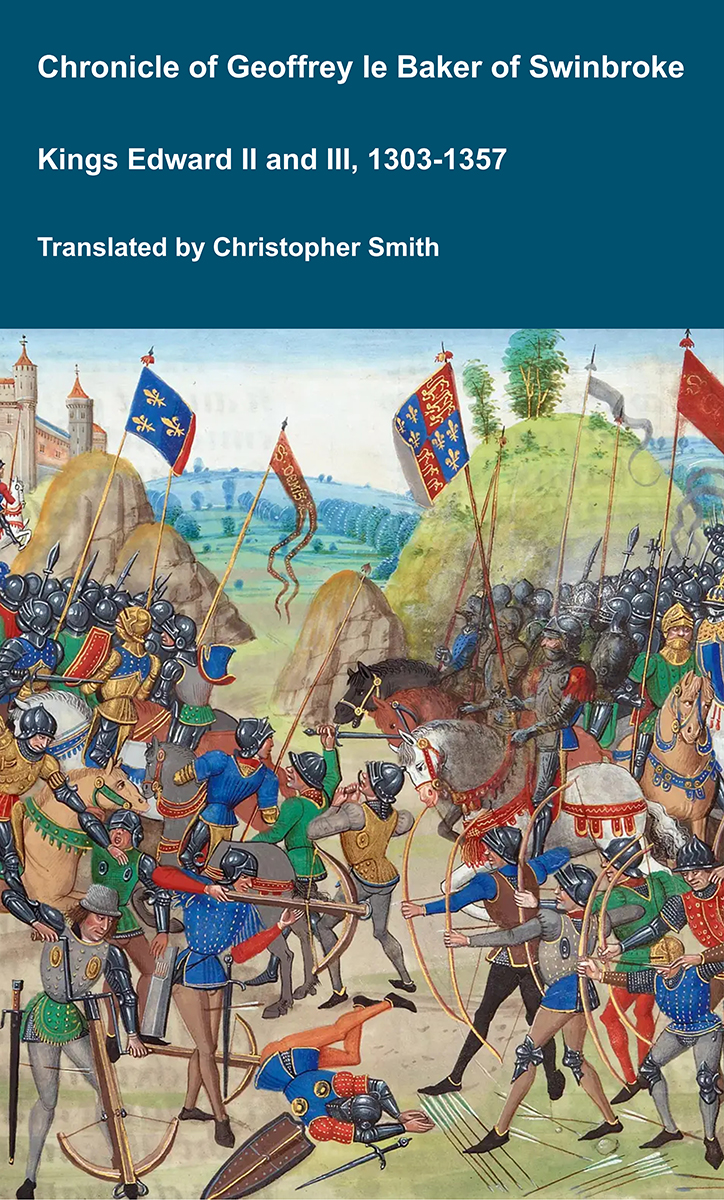 Chronicle of Geoffrey le Baker of Swinbroke. In the year of Christ 1314, and the seventh year of the reign of the same king, the English army, growing impatient with the injuries inflicted by Robert the Bruce and the treacherous supporters of his conspiracy against the King of England in Scotland, gathered under the command of the king near the Scottish settlement called Stirling by the natives, on the eve of the Nativity of St. John the Baptist [23rd June 1314]. There, in great pomp, the English force, which had until then been accustomed to waging war on horseback, brought forth an array of galloping destriers, shining armour, and a vast host of knights. Their recklessly overconfident boldness, indulging itself with the promise of victory, which the Ruler of all customarily bestows upon those who despair in their own strength, was so assured of its own security that, beyond the necessary abundance of warhorses, arms, and provisions, they even brought with them golden and silver vessels,1 the kind used to adorn the feasts of worldly princes in times of peace, carrying them as though they were merely attending a banquet rather than marching to battle.
Never before nor after had those present seen such nobility so magnificently arrayed, so swollen with pride, entrusting themselves solely to the favour of Mars, as the poor Carmelite friar,2 Brother R. Baston, sorrowfully lamented in his heroic verses about this same battle, in which he himself was captured by the Scots. That night, you would have seen the English, not living like angels3 but rather drunk with wine, belching out their revelry, shouting "Wassail" and "Drinkhail" louder than usual. In contrast, the Scots remained silent, observing a holy vigil in fasting, burning with the love of their country's freedom, though in an unjust cause, yet fiercely determined and ready to die.
Anno Christi MCCCXIIIJ, et ipsius regis VIJ, Anglie milicia, impaciens iniuriarum quas Robertus le Bruys et sue conspirate infidelitatis contra regem Anglie prodiciosi fautores in Scocia perpetrarunt, sub ducatu regis iuxta pagum Scocie, quem Strivelyn indigene nuncuparunt, se coadunavit, in vigilia Nativitatis sancti Iohannis Baptiste. Illuc Anglicorum pompa, usque tunc solita in equis belligerare, copias adduxit cursantium dextrariorum, armorum radiancium, miliciamque copiosam, cuius temeritas nimium presumptuosa, sibi ipsi blandiendo promittens victoriam quam de suis viribus desperantibus solet Imperator universi conferre, de sua securitate adeo fuerat confisa ut, preter necessariam reii militari equorum et armorum atque victualium habundanciam, vasa quoque aurea et argentea, quibus qualibus pacis tempore solent mundi principum convivia luxuriare, secum facerent deferrii.
Nunquam tunc presentes antea vel post tantam nobilitatem tam nobilem apparatum tanta superbia intumentem viderunt solo guerre Martis favouri commendare, ut pauper ille Carmelita, frater R. Bastone, in suis heroicis de eodem bello, quo presens a Scotis captus, deplanxit luctuose. Vidisses illa nocte gentem Anglorum, non angelorum more vivencium set vino madencium, crapulam eructancium, 'Wassayl' et 'Drinkhail' plus solito intonancium; econtra Scotos silentes sanctam vigiliam ieiunio celebrantes, et amore patrie libertatis licet iniusto, tamen acri et in mortem parato, estuantes.
Note 1. The Monk of Malmesbury, Vita Edward II, 206.
Note 2. Robert Baston, here referred to, was a Carmelite friar of Scarborough, who wrote, among other things, several copies of verses on the Scotch wars, including the poem mentioned by Baker. Bower, in his continuation of Fordun's Scotichronicon (ed. Goodall, 1759, volume 2 p. 250). Then follow the verses.
Holinshed is not so complimentary either to the poet or to his verses. In his Chronicles (ed. 1807, 1808, 2.588; 5.345, 349) he mentions Baston as being "borne not farre from Notingham, a Carmelite frier of Scarburgh, the same whom King Edward tooke with him into Scotland to write some remembrances of his victories, although, being taken by the Scots, he was constreined by Robert Bruce to frame a dittie to a contrarie tune"; and as "a religious man, somewhat learned belike," who, upon receiving Bruce's commands, "gathered his rustie wits togither and made certeine rude verses beginning thus:
With barren verse this rime I make,
Bewailing whilest such theame I take."
Stow, Annales 333 is misleading, when, in the passage quoted above, he ascribes (by the words "saith hee") so much of the description to Baston. The poem, which is given in Bower, is written in more general terms, as e.g. in the following lines referring to the English:
While they boast like Bacchus, revelling through the night,
They strike at you, O Scotland, with words empty and trite.
They doze and they snore, by vain dreams they are stirred,
They think themselves mighty, yet flee at a word.
Their army once spread out bright banners through fields
Now scattered they lie, for their strength barely yields.
A few verses describing the pitfalls form one of the few passages in which the poet condescends to details:
A machine full of evils is built on equine feet,
Hollow within and staked, that none pass without defeat.
The common folk dig pits, so horsemen may fall in,
And perish too, if ever footmen dare begin.
With a modest consciousness of shortcomings he concludes:
I am a Carmelite, called by the name Baston,
Grieving in life, left amidst such devastation.
If I have done wrong, or left anything worth reciting,
Let those who are fair of speech add their own writing.
Note 3. 'not living like angels'. Bede in his Ecclesiastical History of the English People has Pope Gregory I, upon seeing English slaves in the market of Rome, saying 'they are not Angles, but angels.'
The Bruce. [23rd June 1314] Lines 12.25-:
| And quhen Glowcister and Herfurd wer, | And when Gloucester and Hereford were | 25 |
| With thair battalis, approchand ner, | With their battles, approached near, | |
| Befor thame all thar com rydand, | Before them all there come riding | |
| With helme on hed and sper in hand, | With helmet on head and spear in hand | |
| Schir Henry of Boune, the worthy, | Sir Henry de Bohun, the worthy | |
| That wes ane gud knycht and hardy, | That was a good knight and hardy, | 30 |
| And to the Erll of Herfurd cosyne, | And to the Earl of Hereford cousin, | |
| Armyt in armys gude and fyne; | Armed in armies good and fine, | |
| Com on a steid, a merk-schote neir | He came on a steed, a bowshot’s distance nearer | |
| Before all othir that thair wer, | Than all the others who were there, | |
| And knew the King, for that he saw | And recognized the King, because he saw | 35 |
| Hym swa araynge his men on raw, | Him so arranging his men in ranks. | |
| And be the croun that wes set | And the crown that was set | |
| Abovin his hed on the basnet; | Above his head upon the bascinet; | |
| And toward him he went in hy. | And toward him he went in haste. | |
| And quhen the Kyng so apertly40 | And when the King so plainly | 40 |
| Saw hym cum forrouth all his feris, | Saw him come forward with all his strength, | |
| In hy till hym his hors he steris; | In haste he turned his horse toward him; | |
| And quhen Schir Henry saw the Kyng | And when Sir Henry saw the King | |
| Cum on for-outen abaysyng, | Come on without any sign of fear, | |
| Till him he raid in full gret hy. | He rode toward him at full speed. | 45 |
| He thoucht that he suld weill lichtly | He thought that he would very easily | |
| Wyn him, and haf hym at his will, | Overcome him and have him at his will, | |
| Sen he hym horsit saw so ill. | Since he saw him so poorly mounted. | |
| Than sprent thai sammyn in-till a lyng; | Then they charged together into the field; | |
| Schir Henry myssit the nobill Kyng; | Sir Henry missed the noble King; | 50 |
| And he, that in his sterapis stude, | And he, who stood firm in his stirrups, | |
| With ax that wes bath hard and gude | With an axe that was both hard and good, | |
| With so gret mayn roucht hym ane dynt, | With such great force struck him a blow | |
| That nouthir hat no helm mycht stynt | That neither hat nor helmet could stop | |
| The hevy dusche that he him gaf, | The heavy stroke that he gave him, | 55 |
| That he the hed till harnys claf. | So that he split his head down to the brains. | |
| The hand-ax-schaft frushcit in twa, | The handle of the axe shattered in two, | |
| The hand-ax-schaft frushcit in twa, | And he went down to the ground at once, | |
| And he doune till the erd can ga | Falling flat, for his strength failed him; | |
| All flatlyngis, for hym falyheit mycht; | This was the first blow of the fight, | 60 |
| This wes the first strak of the ficht | And it was carried out with great prowess. | |
| That wes perfornyst douchtely. | And when the King’s men so boldly | |
| And quhen the Kingis men so stoutly | Saw him, right at the first encounter, | |
| Saw him, richt at the first metyng, | Without doubt or hesitation, | |
| For-outen dout or abaysing, | Slay a knight with a single stroke, | 65 |
| Have slayn ane knycht swa at ane strak, | Such courage did they then take | |
| Sic hardyment than can thai tak, | That they advanced straight on fiercely. | |
| That thai com on richt hardely. | When the English men saw them boldly | |
| Quhen Inglis men saw thame stoutly | Come on, they were greatly dismayed; | |
| Cum on, thai had gret abaysyng; | And especially because the King | 70 |
| And specialy, for that the Kyng | Had so swiftly slain that good knight. | |
| So smertly that gud knycht had slayne; | Then each and every one of them drew back, | |
| Than thai with-drew thaim evir-ilkane, | And did not dare then to stand and fight, | |
| And durst nocht than abyde to ficht, | So greatly did they fear the King’s might. |
Lanercost Chronicle. Before the feast of the Nativity of St John the Baptist [24th June], the king gathered his whole army together and approached, with the aforesaid pomp, towards the castle of Stirling, to raise the siege and to fight with the Scots, who were gathered there in all their strength. And on the vigil of the aforesaid Nativity [23rd June 1314], after dinner, the king’s army came near the wood of Torres. And when it was heard that the Scots were in the wood, the king’s first division, which Lord Clifford led, wished to go round the wood, in case the Scots might escape by fleeing. But the Scots allowed this until they were far separated from their companions; and then they showed themselves. Dividing that first division of the king from the middle division and the rear division, they rushed upon it, killed some, and put others to flight. And from that hour fear arose among the English, and greater boldness among the Scots.
Ante feftum autem nativitatis fancti Johannis baptiftæ [Jun. 24], collecto in unum toto exercitu fuo, appropinquavit rex cum pompa prædicta verfus caftrum de Strivelyn ad amovendam obfidionem et pugnandumcum Scottis, qui ibi erant in tota fua fortitudine congregati; et in vigilia Nativitatis prædictæ [Jun. 23] poft prandium venit exercitus regis juxta filvam de Torres; et audito quod Scotti effent in filva, prima acies regis, quam duxit dominus de Clifforde, voluit circuire filvam, ne forte Scotti evaderent fugiendo. Scotti, autem, hoc permiferunt, donec effent multum a fociis elongati, et tunc oftenderunt fe, et, dividentes illam primam aciem regis a media acie et extrema, irruerunt in eam, et quofdam occiderunt, et it fugam alios converterunt, et ab illa hora factus eft timor inter Anglicos et major audacia inter Scottos.
Life of Edward II by a Monk of Malmesbury. The Earl of Gloucester and the Earl of Hereford commanded the first battle1. And so, on the Sunday, which was the vigil of St John [23rd June 1314], when they had already passed a certain wood and were now approaching the castle of Stirling, behold, the Scots were moving about under the trees as though fleeing. A certain knight, Henry de Bohun, pursued them with the Welsh as far as the entrance of the wood. For he had it in mind that, if he found Robert Bruce there, he would either put him to death or bring him back with him as a captive. But when he had reached that place, Robert himself at once came out from the hiding-places of the wood. And the aforesaid Henry, seeing that he could not resist the multitude of Scots, turned his horse, wishing to return to his companions; but Robert opposed him and, with the axe which he carried in his hand, crushed his head. His squire, while trying to protect or avenge his lord, was overwhelmed by the Scots.
This was the beginning of their misfortunes. On that same day a fairly fierce battle was fought, in which the Earl of Gloucester was thrown from his horse, and in which Robert de Clifford was shamefully turned to flight. But while our men pursued the Scots, many were killed on both sides. But since the day was now drawing to a close, the whole army gathered at the place where it was to rest that night. Yet there was no rest, for they spent that whole night sleepless. They thought that the Scots would make an attack by night rather than wait for battle by day.
Comes autem Gloucestriæ et comes Herfordiæ primam aciem regebant. Die itaque Dominica, quæ erat beati Johannis vigilia, cum jam quandam silvam præteriissent et castrum de Stryvelyn jam appropinquarent, ecce Scoti quasi fugientes errabant sub nemore, quos miles quidam Henricus de Boun cum Walensibus persecutus est usque ad introitum nemoris, Gestabat enim in animo quod, si Robertum de Brutz ibidem inveniret, vel morti traderet vel secum-captum adduceret. Cum autem eo pervenisset, Robertus ipse a latebris silvæ statim exibat ; vidensque prædictus Henricus quod multitudini Scotorum resistere non posset, redire volens ad socios equum retorsit; sed Robertus ei restitit et securi quam manu gerebat caput ipsius contrivit. Armiger autem ejus, dum dominum sunm tueri vel vindicare conatur, a Scotis opprimitur.
Initium malorum hoc! ipso eodem die satis acre bellum geritur, in quo comes Gloucestriæ ab equo deicitur, in quo Robertus de Clifford turpiter in fugam convertitur, sed et homines nostri dum Scotos persequuntur, multi ex utraque parte perimuntur. Quia vero inclinata erat jam dies convenit totus exercitus ad locum ubi ipsa nocte reclinaret. Sed nulla erat quies ; totam enim illam duxerunt insompnem. Putabant namque Scotos potius insultum dare de nocte quam bellum expectare de die.
Note 1. A 'battle' in the sense of a division of an army. In this case the vanguard.
Chronicle of Geoffrey le Baker of Swinbroke. On the following day [24th June 1314], the Scots, having secured a battlefield location most advantageous to the victors, dug trenches three feet deep and of the same width,1 extending lengthwise from the right to the left wing of the army. They covered them with fragile interwoven branches and wicker hurdles, what they called herdeles, layered with turf and grass on top. These pits were passable for infantry who were aware of the ruse, but they were incapable of bearing the weight of charging cavalry.
In crastino Scoti, campi locum nacti victoribus maxime oportunum, subfodiebant ad mensuram trium pedum in profundum et ad eiusdem mensure latitudinem fossas protensas in longum a dextro in sinistrum cornu exercitus, operientes illas cum plexis fragilibus ex virgulis et viminibus sive cratibus, id est 'herdeles,' cespite et herbis superstratis, peditibus quidem perviis saltim consciis cautele, set equitum pondera non valentibus sufferre.
Note 1. In crastino Scoti, etc. Harbour's Brits (Spalding Club), 262, describes the stratagem of the pitfalls in the following lines:
And in ane plane feld by the way,
Quhar he thocht ned behufit a way
The Inglishmen, gif that tha wald
Throu the Park to the castell hald,
He gert men mony pottis ma
Of ane fut bred round, and all tha
War dep up till ane manis kne,
Sa thik that tha micht liknit be
Till ane wax-cayme that beis mais.
Thus all that nicht travaland he was
Sa that or day was he had mad
Tha pottis, and tham helit had
With stikis and with gyrs [foliage] all grene
Sa that tha micht nocht wele be sene.
....
The king, quhen that the mes was done,
Went furth to see the pottis sone,
And at his liking saw tham mad:
On athir sid the way wele brad
It was pottit as I haf tald.
Gif that thar fais on hors will hald
Furth in that way, I trow tha sail
Nocht wele eschap [escape] forouten [without] fall.
The account of the battle as given in the Chronicle of Lanercost 225.
The chronicler seems to know nothing of the artificial pits. According to his account, the English fell into the channel of the burn, Chronicle of Lanercost 226.
So also the writer of the Vita Edward II, 205.
The Brute chronicle (Harl. MS. 2279) has an interesting note of a popular song commemorating the victory: "And when kyng Edward herde this tithing, he lete assemble his hoste, and mette the Scottis atte Est Revelyn, in the day of the Nativite of seint John the Baptist, in the yeer of his regne the VII, and in the yeer of oure Lorde Jesu Criste MCCCXIIIJ. Alias the sorowe and lost that ther was done! For ther was slayn the noble erle Gilbert of Clare, sir Robert of Clifford, baron, and many other; and of other peple that no man couth nombre. And the kyng Edward was scomfitede. and sire Edmunde of Maule, the kyng stiward, for drede wente and drenchid him selfe in a fressh ryver that is callede Bannokesburne. Wherfore the Scottis seide in reprofe and dispite of kyng Edward, for as moche that he lovede for to gone by water and also for he was descomfitede atte Bannokesbourne, therfore maydenes maden a songe therof, in that cuntre, of kyng Edward of Engelonde, and in this maner songe:
"Maydenes of Engelonde, sare may ye mourne,
For tynte ye have youre lemmans atte Bannokisbourne.
With hevalowe.
What! wende the kyng of Engelonde
[To] have gete Scotlande?
With rumbelowe."'
Chronicle of Geoffrey le Baker of Swinbroke. [24th June 1314] The Scots, none of whom, by the command of their leader, were permitted to mount a warhorse, divided their army into companies as customary. They stood firmly in well-ordered ranks not far from the aforementioned trench, which had been devised, not deceitfully, but with strategic caution, between them and the English. On the opposing side, the advancing English army, approaching from the west, shone brilliantly under the rising sun, which reflected off their golden shields and polished helmets. The dazzling rays, bouncing off the armoured ranks, would have moved even the great Alexander to postpone the engagement, at least until later in the day, or to await the judgment of the midday sun, which would have been to their advantage. But alas! The impetuous stubbornness of the English, who preferred battle over delay, even at the cost of death, drove them forward. In the first line of their formation, they positioned a phalanx of knights mounted on destriers and massive chargers, unaware of the Scots' cleverly concealed trench, covered as previously described with fragile hurdles and turf. In the second line stood the infantry and archers, held in reserve to pursue a fleeing enemy. In the third, the king himself took position, accompanied by bishops and other religious figures, among whom was the reckless knight Hugh le Despenser.
The knights of the first battle line, advancing upon the enemy, found their horses stumbling as their front hooves broke through the fragile hurdles covering the trench. Plunging headlong into the concealed pit, they fell in a disastrous collapse, pre-empting all their intended assault and cruelty against their adversaries with their own downfall from above. As they crashed down, the enemy seized the opportunity, slaying, capturing, and sparing only those wealthy enough to be ransomed. Among those who perished was Gilbert,1 Earl of Gloucester, whom the Scots would gladly have held for ransom had they recognized him beneath his armour, though, at the time, he was not wearing his distinctive surcoat. Accompanying him on his fatal path were Edmund Maulie, Robert de Clifford, Paine Tiptoft, Giles D'Argentine, and many other knights. However, among those taken prisoner for ransom were Humphrey de Bohun, Earl of Hereford, John de Segrave, John de Clavering, William le Latimer, and nearly three hundred other knights. The chaos of the battle was further compounded when a detachment of English archers, lacking an assigned or suitable position, was overwhelmed and driven into disorder, not by their enemies, but by their own retreating armoured men, who should have been standing at the rear but were now pressing in from the side.
When they saw the Scots fiercely attacking the fallen English trapped in the pit, some archers shot their arrows high, only for them to land uselessly upon the enemy helmets; others shot directly, striking a few Scots in the chest but many more English in the back. Thus, the grand spectacle of the previous day was reduced to nothing. The king, along with the bishops and Despenser, took to flight for their safety. No mortal cunning, the speed of their horses, nor the obscurity of the landscape could have saved them from capture by the Scots, had not Christ, through the prayers of the king's mother, delivered him from the borders of Scotland, just as He once passed unseen through the midst of the Jews. Not only did the king himself, but also those who fled with him, later confess to this miraculous escape. In the great peril of his flight, the king made a vow to God and to the beloved Virgin, His mother, that he would found a monastery for her poor Carmelite friars, those specially devoted to the title of the Mother of God. There, he pledged to provide for twenty-four friars dedicated to the study of theology, supporting them with sufficient funds. This vow was later ratified by Pope John XXII, and the king fulfilled it by assigning his palace in Oxford2 to the aforementioned friars as a pure and perpetual alms-gift, despite the dissuasion of Hugh Despenser, in the year of his reign, and of the aforesaid Lord Pope John, [blank].
Scotorum, quorum null, rege duce proibente, fas erat equum pugnacem asscendere, exercitu in turmas ut assolet diviso, non longe a predicta fossa, inter ipsos et Anglicos non dico dolose set caute excogitata, stetit solidissime acies ordinata. Ex adverso progredientis ab occidente exercitus Anglorum refulsit sol oriens in scutos aureos et galeas politas, cuius radii micantes aspectus armatorum reverberantes movissent magnanimum Alexandrum ut illis loco et die vel saltim hora diei congressum suspendisset, et solis meridiani, que fuisset illis dexter, iudicium exspectasset; set proth dolor impetuosa cervicositas Anglorum, suspendio conflictus mortem preeligencium, habuit in prima custodia phalangem dextrarios et grossos cursarios equitancium, quos latuit Scotorum fossa integumento fragili, ut dictum est, sofisticata; in secunda vero pedites cum sagittariis adversariorum fuge reservatis; in tercia vero regem cum episcopis et aliis religiosis viris et inter ipsos vecordi milite Hugone le Spenser.
Equites acieii prime in hostes progressi, equorum titubancium anterioribus pedibus in fossam trans plexas perforatas affixis, precipites corruerunt, ceciderunt, et omnem insultum et crudelitatem adversariorum ruina ex alto prevenerunt; quibus collapsis insteterunt hostes, mactantes, capientes, et solis divitibus redimendis parcentes. Ibi tunc occubuit Gilbertus comes Gloucestriæ, quem Scoti redimendum libenter reservassent, si per togam proprie armature, quam tunc non induebat, ipsum cognovissent. Comitem comitabantur in mortis itinere Edmundus Maulie, Robertus de Clifford, Paganus Tiptoft, Egidius Dargentyn, et multi alii ordinis militaris. Ceterum inter viros redempcioni fuerunt reservati Wufridus de Bohun comes Herefordie, Iohannes de Segrave, Iohannes de Claveringhe, Willelmus le Latimer, et fere trecenti viri militares. Occisorum in predicto discrimine nonnullos detraxit in cladem falanx sagittariorum non habencium destinatum locum aptum, set prius armatorum a tergo stancium qui nunc a latere solent constare.
Ubi viderunt Scotos collapsis in fossam atrociter instare, sagittas quidam in altum casuras inter hostium cassides incassum, quidam vero in directum iacientes Scotorum paucos a pectore, Anglorum multos a tergo, necuere. Sic redit in nihilum hesterna pompa, rege cum episcopis et Dispensatore fuge presidium arripiente, quem non ingenium mortale nec agilitas equorum aut involucra locorum a captura Scotorum liberassent, nisi precibus sue matris Christus, qui per medium Iudeorum incognitus abibat, ipsum regem a Scocie finibus eripuisset; quod non solum ipse, set qui cum ipso fugiebant postmodum confitebantur. In tanto fuge periculo rex vovit Deo et Virgini dilecte sue genitrici quod pauperibus ipsius Carmelitis, matris Dei titulo specialiter insignitis, fundaret monasterium aptum ad inhabitandum, in quo xxiIIJ fratribus studio teologie deputatis de competentibus expensis subveniret. Votum ratificatum a domino papa Iohanne XXIJ rex complevit, pallacium suum Oxonie, Hugone le Spenser dissuadente, fratribus predictis in puram et perpetuam helemosinam assignando, anno regni sui, domini quoque pape Iohannis predicti [blank].
Note 1. See the account of Gloucester's death in the Vita Edward II, 203, 204.
A fuller list of the English slain is given in Annales London, 231.
All the others mentioned by Baker, Mauley, Clifford, Tibetot or Tiptoft, and Argentine, as well as the prisoners, Hereford, Segrave, Clavering, and Latimer, had served with more or less distinction in Edward I's wars in Scotland, in which Segrave had already been made prisoner. Argentine was slain fighting, after he had secured the king's safety. Leland's Collectanea, 1.786, Vita Edward II, 204.
Note 2. The palace of Beaumont, or, as it was commonly called, the King's Hall, which was built in the reign of Henry I, in the northern suburb of Oxford. In 1317 it was granted by Edward, in fulfilment of his vow, to the Carmelites or White Friars, who established there a convent for twenty four friars, moving from their old house near the river where they had been settled since 1256. Wood, Hist. Antiq. Univ. Oxon., 1.248; Maxwell-Lyte, Hist. Univ. Oxford, 1886, pp. 50, 120.
Annals Londonienses. In the same year, after Easter, the king and his men set out with his army towards Scotland, against Robert Bruce, who for many years had held this our King of England out of Scotland by strong hand, but falsely. When the King of England, with his army, had come from the town of Berwick-upon-Tweed as far as the castle of Stirling, which is about 60 miles distant from it, and which is situated on the water of Forth, also called the Queenferry, 24 miles west of Edinburgh, and which had been besieged by the Scots, a horrible battle was joined between the parties [on 24th June 1314]. But, alas for grief, the Scots prevailed, and killed Gilbert de Clare, Earl of Gloucester, Robert de Clifford, baron, Payn Tiptoft, William Marshal, Giles d’Argentan, and many other noble knights. And the King of England scarcely escaped to Berwick by water; and the Earl of Hereford was captured there, and afterwards ransomed. And all this happened because of the enormous sins of the English, namely because of their very great pride, lust, gluttony, avarice, and other vices.
Eodem anno, post Pascha,rex cum suis arripuit iter cum suo exercitu versus Scotiam, contra Robertum le Brus, qui multis annis tenuit istum nostrum regem Angliæ de Scotia forti manu, sed false Cum autem rex Angliæ de villa de Berewyk super Twede usque castrum de Strivelin, quod abeo distat circa Ix miliaria, et quod situm est super aquam de Ferthe, quæ etiam vocatur la Queneverie, distans ab Edeneborthe xxiiii in occidente et quod a Scotis obsessum fuerat, cum exercitu suo pervenisset, commissum est prælium horribile inter partes, sed, proh dolor! Scoti prævaluerunt, et occiderunt Gilbertum de Clare comitem de Glovernia, Robertum de Clifford baronem, Paganum Tybetot, Willelmum Marescallum, Egidium de Argentein, et multos alios nobiles milites; et vix rex Angliæ evasit Berewyk per aquam ; et comes Herefordiæ fuit ibi captus, et postea redemptus. Et istud : totum factum est propter peccata enormia Anglorum, videlicet propter superbiam permaximam, luxuriam, gulam, avaritiam et cetera vitia.
Annals Londonienses. [24th June 1314] First, Gilbert de Clare, Earl of Gloucester, about 23 years of age, whose inheritance passed to his sisters, as will be said later; he lies buried at Tewkesbury. Also: Robert de Clifford, baron, Payn Tiptoft, William Marshal, Anselm Marshal, John de Montfort, Henry de Bohun, John de Rivers, Edmund de Mauley, steward of the lord king, John Comyn, Robert de Hastely, Edmund Comyn, William Deincourt, Giles (Egidius) de Argentein, John Lovell le Riche, Edmund de Hastings, Robert Botevilyn, Oliver de Picton, Gerard del Idle, John de Gosorald, Hugh de Scales, John de Elsefeld, John de Henebregge, Robert de Pulford, Thomas de Bosford, Reginald Deincourt, Robert de Applyndene, Thomas de Conradi, Thomas de Saint Leger, Reginald de Lem, Robert Bertram, knight of Beauchamp, John Cabery, Thomas le Archdeacon, Nicholas de Vespont, Miles (knight) de Stapleton, Miles de Poynings, William de Gosyngton, Among the English foot soldiers and squires, not the greatest part were killed, but there was immeasurable vengeance from God and widespread flight. Truly, that day was an avenger of the wickedness of the English, for they were all as if without heart, and all who could flee, did so. Aymer de Valence, Earl of Pembroke, fled barefoot. The Earl of Hereford fled too, though with a thousand armed men; but he was captured through deception, and later ransomed. A great number were taken prisoner, but afterwards they ransomed themselves however they could.
Primo Gilbertus de Clare comes Gloucestriz, ætate ciira XXIII annos, cujus hæreditatem habuerunt sorores ejus, ut postea dicetur; pausat apud [Tewkesberie]; Robertus de Clifford baro, Paganus Tyfetot, Willelmus Marescallus, Anselmus Marescallus, Johannes de Mountfort, Henricus de Boun, Johannes de Riveres, Edmundus de Maule senescallus domini regis, Johannes Comyn, Robertus de Hastele, Edmundus Comyn, Willelmus Deincourt, Egidius de Argentein, Johannes Lovell le Riche, Edmundus de Hastinges, Robertus Botevilyn, Oliverus de Picton, Gerard del Idle, Johannes de Gosorald, Hugo de Scales, Johannes de Elsefeld, Johannes de Henebregge, Robertus de Pulford, Thomas de Bosford, Reginaldus Deyncourt, Robertus de Applyndene, Thomas de Conradi, Thomas de Seint Legier, Reginaldus de Lem, Robertus Bertram miles de Beauchampe, Johannes Cabery, Thomas le Ercedekene, Nicholaus de Vespont, Miles de Stapeltone, Miles de Poininges, Willelmus de Gosyngtone. De peditibus et scutiferis Anglorum non fuit maxima pars interfecta, sed insæstimabilis Dei vindicta et fuga: et certe illa dies fuit vindex de nequitia Anglorum, quia omnes fuerunt quasi sine corde, et omnes qui potuerunt fugerunt. Et Americus de Valence comes Penbrochiæ fugiebat nudis pedibus, et comes Herefordiæ fugiebat bene cum mille armatis; sed tamen per seductionem captus fuit, et postea redemptus: et maxima multitudo fuerat capta, sed postea, sicut potuerunt, se redimebant.

Anne Boleyn. Her Life as told by Lancelot de Carle's 1536 Letter.
In 1536, two weeks after the execution of Anne Boleyn, her brother George and four others, Lancelot du Carle, wrote an extraordinary letter that described Anne's life, and her trial and execution, to which he was a witness. This book presents a new translation of that letter, with additional material from other contemporary sources such as Letters, Hall's and Wriothesley's Chronicles, the pamphlets of Wynkyn the Worde, the Memorial of George Constantyne, the Portuguese Letter and the Baga de Secrets, all of which are provided in Appendices.
Available at Amazon in eBook and Paperback format.
Life of Edward II by a Monk of Malmesbury. [24th June 1314] But when morning came, it was discovered with absolute certainty that the Scots were ready for battle, with a great multitude of armed men. Therefore our men, namely the veteran knights and those who were more experienced, gave counsel that battle should not be fought on that day, but that the next day should rather be awaited, both because of the solemn feast and because of the labour already undergone. This was indeed useful and honourable counsel, but it was rejected by the young men and considered idle and cowardly.
The Earl of Gloucester advised the king not to go out to battle on that day, but rather, because of the feast, to remain at leisure and greatly refresh his army. But the king despised the earl’s counsel, and, imputing treason and disloyalty to him, became violently enraged against him. "Today," said the earl, "it will be made clear that I am neither a traitor nor disloyal"; and at once he prepared himself for battle. Meanwhile Robert Bruce warned and instructed his companions, gave them bread and wine, and strengthened them in whatever way he could. And when he learned that the English divisions had come down into the field, he led his whole army out of the wood. He brought with him about 40,000 men, and divided them into three companies; and none of them mounted a horse, but each one was protected with light armour, which a sword could not easily pierce. They had axes at their sides and carried spears in their hands. They also advanced packed close together like a dense hedge, and such a company could not easily be broken through.
When the moment came that they had to join battle, James Douglas, who commanded the first division of the Scots, fiercely attacked the line of the Earl of Gloucester. And the earl met him manfully; once and again he broke through the wedge of the enemy, and indeed would have won triumph—if only he had had loyal companions. But behold, as the Scots suddenly charged, the earl's horse was killed and he fell to the ground. He, having no defender and being burdened by the weight of his body, could not easily rise. And so, among the five hundred armed men he had brought to battle at his own expense, he alone was left to die. For when they saw their lord thrown from his horse, they stood as if stunned, offering no aid. Cursed be the knighthood whose courage fails in the moment of greatest need.
Giles de Argentein, a valiant knight and greatly experienced in military affairs, while guiding the king's bridle and witnessing the fall of the earl, rushed there swiftly, brave and troubled, to aid the earl—but he could not. Yet he did what he could, and fell alongside the earl, judging it more honorable to perish with such a man than to flee and escape death. For those who are slain in battle for the public good are always understood to live on in glory. On that same day, Robert de Clifford, Payn Tiptoft, and William Marshal—distinguished, powerful, and valiant knights—were overwhelmed by the Scots and likewise fell there.
While therefore our people were fleeing, while they pursued the footsteps of the king, behold, a certain ditch swallowed many; a great part of our men perished in it. When the king arrived at the castle, believing he would find refuge there, he was repelled as if he were an enemy: the drawbridge was raised, and the gate shut. Because of this, many believed that the castle's keeper was not free from suspicion of treachery, especially since he had been seen that very day, armed in the field, apparently ready to fight for the king. Yet I neither absolve the keeper, nor do I accuse him of treason; but I confess it happened by the counsel of God that the King of England did not enter the castle, because if he had been admitted at that time, he would not have escaped without being captured.
Mane autem facto certo certius compertum est Scotos paratos ad prælium cum magna multitudine armatorum. Unde homines nostri, milites scilicet veterani, et hii qui magis erant experti, consilium dederunt ipso die non esse pungnaturum, sed diem crastinum magis expectandum, tum propter solempne festum tum propter laborem præteritum. Utile quidem et honestum erat consilium apud juvenes reprobatum, inhers et ignavum putatum.
Comes autem Gloucestriæ consiluit regi ne ipso die in bellum prodiret, sed propter festum potius vacaret, et exercitum suum valde recrearet. Sed rex consilium comitis sprevit, et proditionem et prævaricationem sibi imponens in ipsum vehementer excanduit. "Hodie," inquit comes, "erit liquidum quod nec proditor nec prævaricator sum," et statim paravit se ad pungnandum. Interim Robertus de Brutz socios monuit et instruxit, panem et vinum præbuit, et modo quo potuit confortavit ; ubi vero didicit acies Anglorum in campum devenisse totum exercitum suum eduxit de nemore. Circiter quadraginta milia hominum secum produxit, ipsosque in tres turmas divisit, et nullus eorum equuma scendit, sed erat unusquisque eorum ‘levi armatura munitus, quam non faciliter penetraret gladius. Securim habebant ad latus et lanceas ferebant in manibus. Ibant etiam quasi sepes densa conserti, nec leviter potuit talis turma penetrari.
Cum autem ad hoc ventum esset ut congredi simul oporteret, Jacobus Douglas, qui prime turmæ Scotorum præerat, aciem comitis Gloucestriæ acriter invasit. Et comes ipsum viriliter excepit, semel et iterum cuneum penetravit, et triumphum utique reportasset si fideles socios habuisset. Sed ecce, subito irruentibus Scotis, equus comitis occiditur et comes in terram labitur. Ipse etiam defensore carens et mole corporis nimis oneratus faciliter exsurgere non potuit, sed inter quingentos armatorum quos suis sumptibus duxerat ad bellum, ipse fere solum occubuit. Cum enim viderent dominum suum ab equo dejectum, stabant quasi attoniti non ferentes auxilium. Maledicta militia cujus summa necessitate perit audacia.
Ægidius de Argentym, miles strenuus et in re militari multum expertus, dum frænum regis regeret et casum comitis aspiceret, acer et anxius illuc properavit subvenire comiti, nec potuit. Fecit tamen quod potuit, et cum comite simul occubuit, honestius arbitrans cum tanto viro succumbere quam fugiendo mortem evadere; nam qui in acie pro re publica perimuntur semper per gloria vivere intelliguntur. Eodem die Robertus de Clifford, Paganus Typetot, Willelmus Mareschal, milites preeclari, potentes et strenui, a Scotis oppressi ibidem occumbunt.
Dum igitur gens nostra fugeret, dum vestigia regis arriperet, ecce quædam fossa multos absorbuit, magna pars nostrorum in ipsa periit. Veniens namque rex ad castrum et credens ibidem habere refugium, tanquam hostis repellitur; pons attrahitur et porta clauditur. Unde custos castri a plerisque proditionis expers non esse credebatur, et tamen in acie armatus quasi pro rege pungnaturus ipso die videbatur. Verum nec custodem absolvo, nec proditionis accuso, sed consilio Dei fateor evenisse regem Anglize castrum non intrasse, quia si tunc admissus fuisset sine captione nequaquam evasisset.
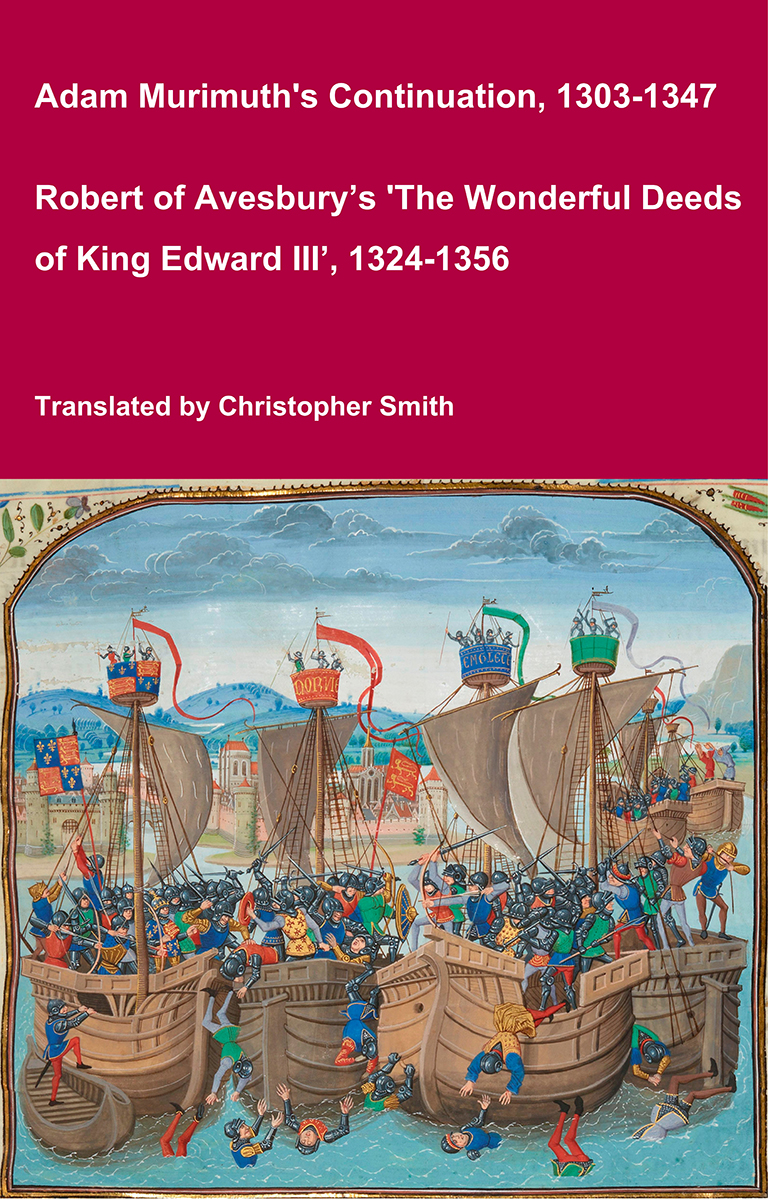 Adam Murimuth Continuation. In this year of our Lord 1314, though the reckoning had changed, on the feast of the Nativity of Saint John the Baptist [24th June], a great battle was fought near Stirling between the king of England with his army and the Scots. In it the earl of Gloucester, Gilbert [aged 23], was killed, and many others on the king's side; the earl of Hereford [aged 38] was captured, along with many other nobles; and the king of England and others scarcely escaped.
Hoc anno Domini MCCCXIIII, mutato tamen, in festo Nativitatis sancti Johannis baptistæ, fuit magnum prœlium prope Strivelyn inter regem Anglie et exercitum suum et Scotos; in quo fuit occisus comes Gloucestriæ, Gilbertus, et multi alii de parte regis, et comes Herefordiæ captus, et multi alii nobiles, et rex Angliæ et ali vix evaserunt.
Lanercost Chronicle. On the morrow [24th June 1314], an evil, miserable and calamitous day for the English, when both sides had made themselves ready for battle, the English archers were thrown forward before the line, and the Scottish archers engaged them, a few being killed and wounded on either side; but the King of England's archers quickly put the others to flight. Now when the two armies had approached very near each other, all the Scots fell on their knees to repeat Paternoster^ commending themselves to God and seeking help from heaven; after which they advanced boldly against the English. They had so arranged their army that two columns went abreast in advance of the third, so that neither should be in advance of the other; and the third followed, in which was Robert.1 Of a truth, when both armies engaged each other, and the great horses of the English charged the pikes of the Scots, as it were into a dense forest, there arose a great and terrible crash of spears broken and of destriers wounded to the death; and so they remained without movement for a while. Now the English in the rear could not reach the Scots because the leading division was in the way, nor could they do anything to help themselves, wherefore there was nothing for it but to take to flight. This account I heard from a trustworthy person who was present as eye-witness.
Now they had arranged their army in such a way that two divisions marched ahead of the third, one to the side of the other, so that neither preceded the other; and the third followed behind, in which was Robert. When at last both armies engaged each other, and the great English warhorses charged into the Scottish spears, as into a thick forest, a great and terrible noise arose from the breaking of lances and the mortal wounding of chargers. Thus they stood, at peace for a moment. But the English reinforcements could not reach the Scots because the first division (of English troops) stood in the way, nor could they assist in any way, and so there remained no option but to plan for retreat. I heard this account from a trustworthy man, who was present and saw it. In that first English division were slain: the Earl of Gloucester, Sir Robert de Clifford, Sir John Comyn, Sir Payn Tiptoft, Sir Edmund de Mauley, and many other nobles, apart from the foot soldiers, who fell in great numbers.
Ordinaverant autem sic exercitum suum, quod duæ acies ejus præirent tertiam, una ex latere alterius, ita quod neutra aliam præcederet; et tertia sequeretur, in qua erat Robertus. Quando vero ambo exercitus se mutuo conjunxerunt, et magni equi Anglorum irruerunt in lanceas Scottorum, sicut in unam densam silvam, factus est sonus maximus et horribilis ex lanceis fractis et ex dextrariis vulneratis ad mortem, et sic steterunt in pace ad tempus. Anglici, autem, sequentes non potuerunt assingere ad Scottos, propter primam aciem interpositam, nec in aliquo se juvare, et ideo nihil restabat nisi ordinare de fuga. Istum processum audivi a quodam fidedigno, qui fuit præfens et vidit. In illa autem prima acie interfecti sunt comes Glovernie, dominus Robertus de Clifforde, dominus Johannes de Comyn, dominus Paganus de Typetot, dominus Edmundus de Mauley, et multi alii nobiles, exceptis peditibus, qui in magno numero corruerunt.