

See Painters.
On 31st December 1842 Giovanni Boldini was born at Ferrara. The son of a painter of religious subjects, and the younger brother of architect Luigi (Louis) Boldini.
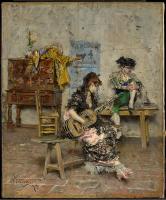
1872. Giovanni Boldini [aged 29]. "The Guitar Player".
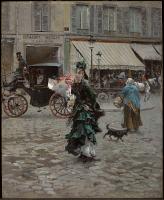
1873-75. Giovanni Boldini [aged 30]. "Crossing the Street".
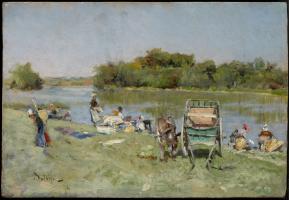
1874. Giovanni Boldini [aged 31]. "Washerwomen".

1875. Giovanni Boldini [aged 32]. "The Letter".
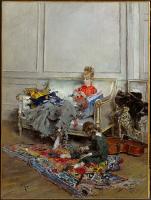
1875. Giovanni Boldini [aged 32]. "Young Woman Crocheting".

1875. Giovanni Boldini [aged 32]. "Woman at a Piano".

1875. Giovanni Boldini [aged 32]. "Peaceful Days".
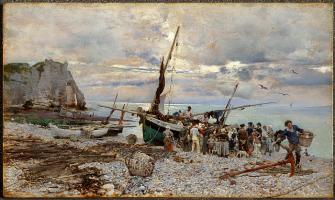
1879. Giovanni Boldini [aged 36]. "Return of the Fishing Boats, Étretat".
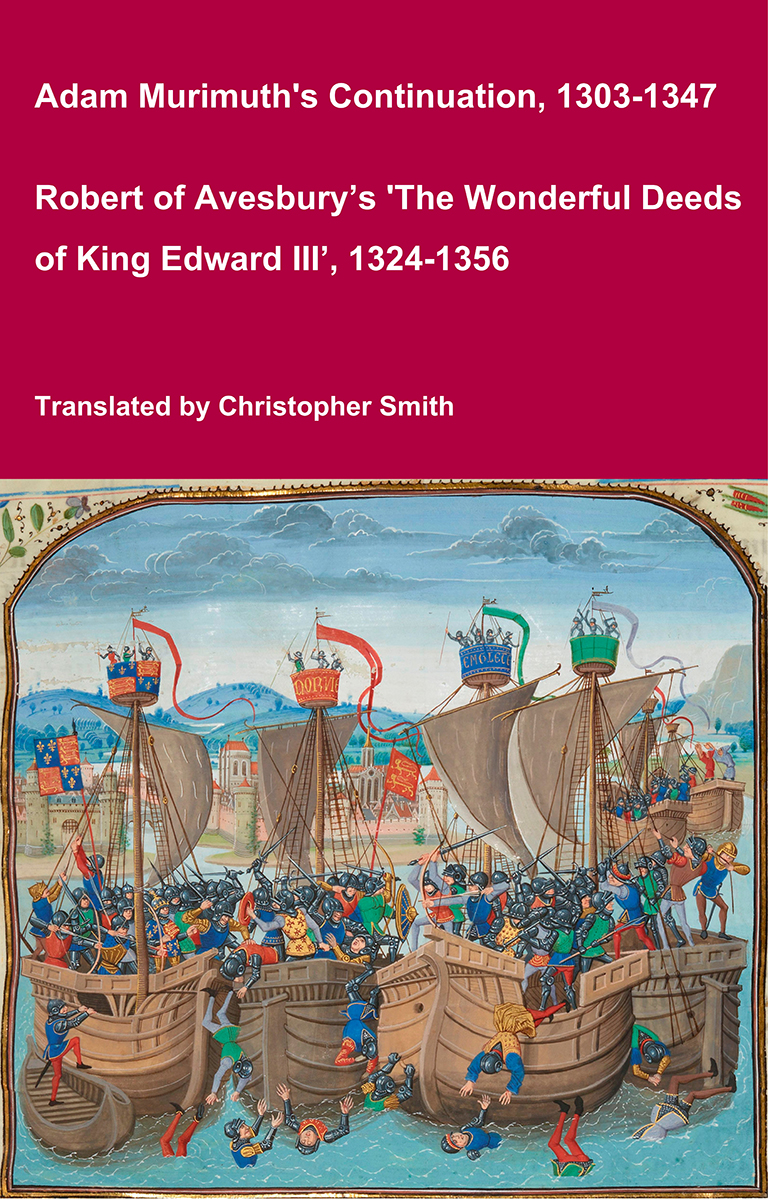
Adam Murimuth's Continuation and Robert of Avesbury’s 'The Wonderful Deeds of King Edward III'
This volume brings together two of the most important contemporary chronicles for the reign of Edward III and the opening phases of the Hundred Years’ War. Written in Latin by English clerical observers, these texts provide a vivid and authoritative window into the political, diplomatic, and military history of fourteenth-century England and its continental ambitions. Adam Murimuth Continuatio's Chronicarum continues an earlier chronicle into the mid-fourteenth century, offering concise but valuable notices on royal policy, foreign relations, and ecclesiastical affairs. Its annalistic structure makes it especially useful for establishing chronology and tracing the development of events year by year. Complementing it, Robert of Avesbury’s De gestis mirabilibus regis Edwardi tertii is a rich documentary chronicle preserving letters, treaties, and official records alongside narrative passages. It is an indispensable source for understanding Edward III’s claim to the French crown, the conduct of war, and the mechanisms of medieval diplomacy. Together, these works offer scholars, students, and enthusiasts a reliable and unembellished account of a transformative period in English and European history. Essential for anyone interested in medieval chronicles, the Hundred Years’ War, or the reign of Edward III.
Available at Amazon in eBook and Paperback format.

1886 or 1892. Giovanni Boldini [aged 43]. Portrait of Madame Gabrielle Rejane.

1887. Giovanni Boldini [aged 44]. Portrait of Contessa de Leusse.

1888. Giovanni Boldini [aged 45]. Portrait of Emiliana Concha de Ossa.

1888. Giovanni Boldini [aged 45]. Portrait of Signorina Concha de Ossa.

1889. Giovanni Boldini [aged 46]. Portrait of Princesse de Carman Chimay.

1889. Giovanni Boldini [aged 46]. Portrait of a Lady.

1890. Giovanni Boldini [aged 47]. Portrait of John Singer Sargent [aged 33].

1892. Giovanni Boldini [aged 49]. Self-Portrait.

1892 to 1894. Giovanni Boldini [aged 49]. Portrait of Signora Bruna.

1896. Giovanni Boldini [aged 53]. Portrait of Madame Charles Max.

1897. Giovanni Boldini [aged 54]. Portrait of Gertrude Elizabeth Blood.

1898. Giovanni Boldini [aged 55]. Portrait of Maria Eualia of Spain.

1899. Giovanni Boldini [aged 56]. Portrait of La Contessa Speranza.

1901. Giovanni Boldini [aged 58]. Portrait of Lina Cavalieri.

1901. Giovanni Boldini [aged 58]. Portrait of Lina Cavalieri.

1901. Giovanni Boldini [aged 58]. Portrait of Gladys Marie Deacon Duchess of Marlborough [aged 19].
Gladys Marie Deacon Duchess of Marlborough: On 7th February 1881 she was born. In 1921 Charles Richard John Spencer-Churchill 9th Duke of Marlborough and she were married; she had previoiusly been his mistress. She by marriage Duchess Marlborough. He the son of George Charles Spencer-Churchill 8th Duke of Marlborough and Albertha Frances Anne Hamilton Duchess of Marlborough. On 13th October 1977 she died.

1903. Giovanni Boldini [aged 60]. Portrait of Lady Nanne Schrader.
Henrici Quinti, Angliæ Regis, Gesta, is a first-hand account of the Agincourt Campaign, and subsequent events to his death in 1422. The author of the first part was a Chaplain in King Henry's retinue who was present from King Henry's departure at Southampton in 1415, at the siege of Harfleur, the battle of Agincourt, and the celebrations on King Henry's return to London. The second part, by another writer, relates the events that took place including the negotiations at Troye, Henry's marriage and his death in 1422.
Available at Amazon in eBook and Paperback format.

Around 1905. Giovanni Boldini [aged 62]. Portrait of Marthe de Florian.

1905. Giovanni Boldini [aged 62]. Portrait of Mrs Henry Lehr aka Elizabeth Wharton Drexel Baroness Decies [aged 36].

1905. Giovanni Boldini [aged 62]. "La Divina in Blue".

1906. Giovanni Boldini [aged 63]. Portrait of Consuelo Vanderbilt Duchess of Marlborough [aged 28] and her son Ivor Charles Spencer-Churchill [aged 7].
Ivor Charles Spencer-Churchill: On 14th October 1898 he was born to Charles Richard John Spencer-Churchill 9th Duke of Marlborough and Consuelo Vanderbilt Duchess of Marlborough. The Duke's secondd wife Gladys Deacon apparently later implied that Ivor's father was Winthrop Rutherford; source unknown. On 17th September 1956 Ivor Charles Spencer-Churchill died. He was buried at St Martin's Church, Bladon [Map].

1906. Giovanni Boldini [aged 63]. Portrait of Mrs Howard Johnston.

1907. Giovanni Boldini [aged 64]. Portrait of Mlle Lantelme.

1907. Giovanni Boldini [aged 64]. Portrait of Gladys Dacon.

1908. Giovanni Boldini [aged 65]. Portrait of Mlle Nemidoff.

1908. Giovanni Boldini [aged 65]. Portrait of Mrs Whitney Warren.

1910. Giovanni Boldini [aged 67]. Portrait of Princess Cécile Murat.

1911. Giovanni Boldini [aged 68]. Portrait of Princess Martha Bibescu nee Lahovary [aged 24].
Princess Martha Bibescu nee Lahovary: On 28th January 1886 she was born. In 1902 Prince George Valentin Bibesco and she were married. On 28th November 1973 she died.
Adam Murimuth's Continuation and Robert of Avesbury’s 'The Wonderful Deeds of King Edward III'
This volume brings together two of the most important contemporary chronicles for the reign of Edward III and the opening phases of the Hundred Years’ War. Written in Latin by English clerical observers, these texts provide a vivid and authoritative window into the political, diplomatic, and military history of fourteenth-century England and its continental ambitions. Adam Murimuth Continuatio's Chronicarum continues an earlier chronicle into the mid-fourteenth century, offering concise but valuable notices on royal policy, foreign relations, and ecclesiastical affairs. Its annalistic structure makes it especially useful for establishing chronology and tracing the development of events year by year. Complementing it, Robert of Avesbury’s De gestis mirabilibus regis Edwardi tertii is a rich documentary chronicle preserving letters, treaties, and official records alongside narrative passages. It is an indispensable source for understanding Edward III’s claim to the French crown, the conduct of war, and the mechanisms of medieval diplomacy. Together, these works offer scholars, students, and enthusiasts a reliable and unembellished account of a transformative period in English and European history. Essential for anyone interested in medieval chronicles, the Hundred Years’ War, or the reign of Edward III.
Available at Amazon in eBook and Paperback format.

1911. Giovanni Boldini [aged 68]. Portrait of Rita de Acosta Lydig [aged 35].
Rita de Acosta Lydig: In October 1875 he was born at New York. On 27th October 1929 he died.

1912. Giovanni Boldini [aged 69]. Portrait of a Lady.

1913. Giovanni Boldini [aged 70]. Portrait of Lina Bilitis with two Pekingese.

1914. Giovanni Boldini [aged 71]. Portrait of Luisa Adele Rosa Maria Amman Marchesa Casati [aged 32].

1924. Giovanni Boldini [aged 81]. Portrait of Donna Franca Florio.

Before 1931. Giovanni Boldini [aged 88]. Portrait of Luisa Adele Rosa Maria Amman Marchesa Casati [aged 49] With A Greyhound.

Before 1931. Giovanni Boldini [aged 88]. Portrait of Cleo de Morode.

Before 1931. Giovanni Boldini [aged 88]. "The Black Sash".

Before 1931. Giovanni Boldini [aged 88]. "Lady in Red".

Before 1931. Giovanni Boldini [aged 88]. "Portrait of a Lady".
Henrici Quinti, Angliæ Regis, Gesta, is a first-hand account of the Agincourt Campaign, and subsequent events to his death in 1422. The author of the first part was a Chaplain in King Henry's retinue who was present from King Henry's departure at Southampton in 1415, at the siege of Harfleur, the battle of Agincourt, and the celebrations on King Henry's return to London. The second part, by another writer, relates the events that took place including the negotiations at Troye, Henry's marriage and his death in 1422.
Available at Amazon in eBook and Paperback format.

Before 1931. Giovanni Boldini [aged 88]. "Spanish Dancer at the Moulin Rouge".

Before 1931. Giovanni Boldini [aged 88]. Portrait of Madame Josephina Alvear De Errazuriz.
On 11th January 1931 Giovanni Boldini [aged 88] died. The New York Times: "Boldini was a fashionable portrait painter. He 'did' all the grandes dames of Paris, and at a certain period to have a portrait painted by Boldini was a crowning event of social season. His style was racy and advanced for his time, and he believed that his décolleté paintings touched the extreme limit of convention. His work was the talk of numerous salons. And then he was superseded by Vandongens and Etcheverrys and Domergues and others whose daring shocked and discouraged Boldini. He had not painted for many years before his death. His body was taken to Ferrara, his native city, for burial."