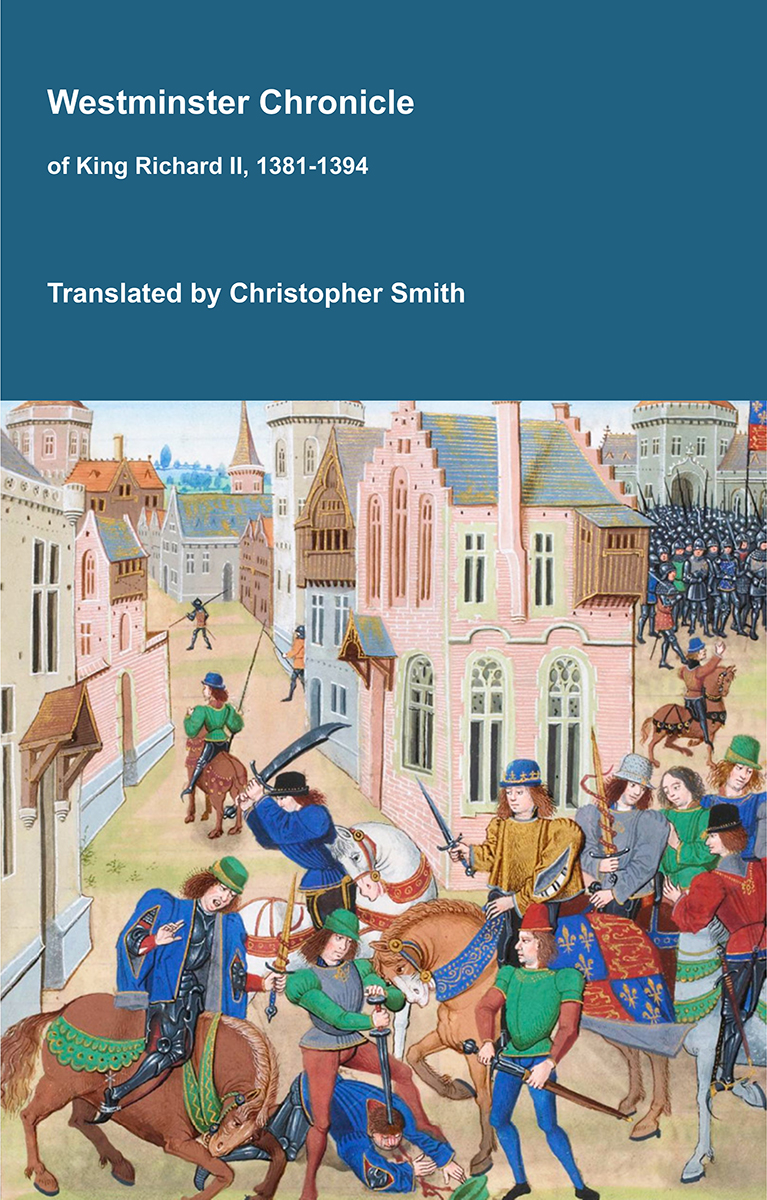
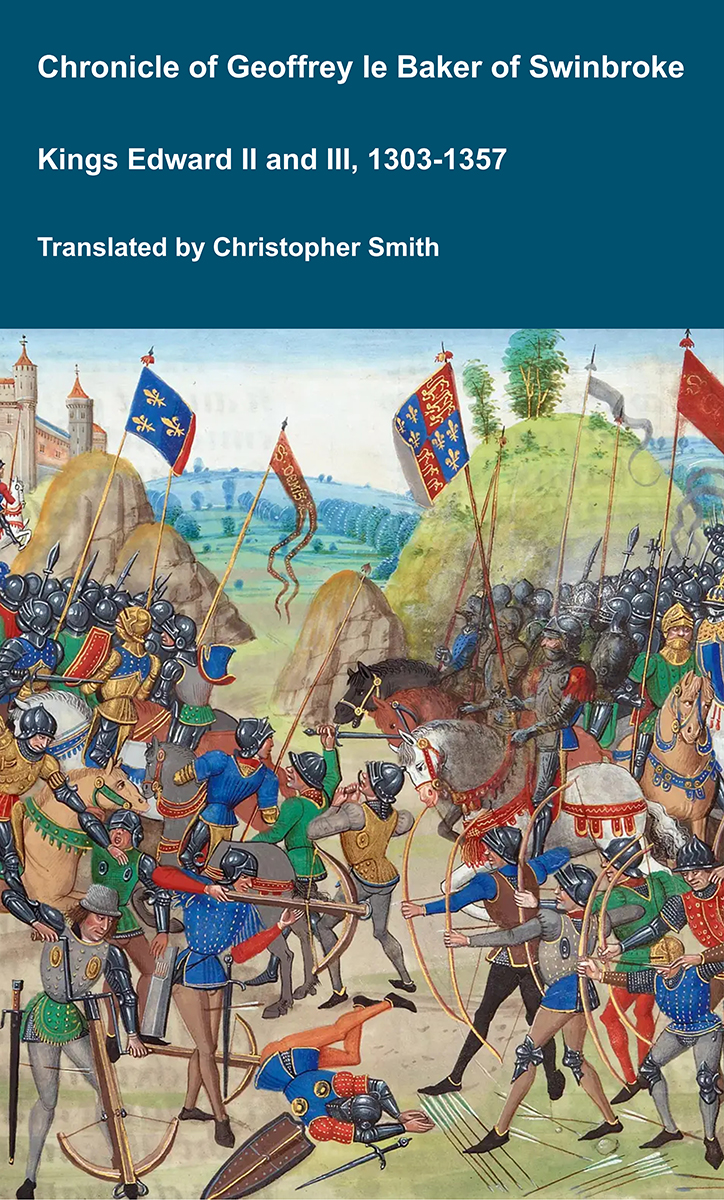
Westminster Chronicle of King Richard II, 1381-1394
The Westminster Chronicle is one of the most vivid and important narrative sources for the reign of Richard II. Written by an anonymous chronicler closely connected with Westminster Abbey, it covers the years 1381 to 1394, from the Peasants’ Revolt to the political tensions, court ceremonies, diplomatic negotiations, royal progresses, and public crises of Richard’s later reign. Rich in detail the chronicle records major events such as the conflicts between the King and Lords Appellant, King and the City of London, negotiations with France and Scotland, the death and funeral of Queen Anne of Bohemia, the illness of Charles VI of France, and the changing fortunes of leading nobles including John of Gaunt, Thomas of Gloucester, Robert de Vere, and the Earl of Arundel. The Chronicle offers readers a remarkable window into late fourteenth-century England, combining political observation, courtly spectacle, urban drama, ecclesiastical affairs, and moral judgement. It is an essential source for anyone interested in medieval monarchy, London, Westminster, and the troubled reign of Richard II.
Available at Amazon in eBook and Paperback format.
Murder of the Bishop of Exeter is in 1320-1329 Despencer War.
On 15th October 1326 brothers Richard Stapledon and Bishop Walter Stapledon [aged 65] were beheaded in the street by a mob loyal to Queen Isabella.
Chronicle of Geoffrey le Baker of Swinbroke. With matters thus unfolding, the London mob, eager to please the queen and Roger de Mortimer, furiously seized and beheaded1 the late Lord Walter [aged 65], Bishop of Exeter, on the 15th of October [1326], in the middle of the city. They also savagely killed certain others loyal to the king, solely because they had faithfully served him in his government. The bishop's head was sent to the queen, who was encamped with her army at Gloucester, and was offered as a kind of sacrifice pleasing to Dea, [the goddess] of vengeance. Furthermore, the people broke into the Tower of London and released all the prisoners, and by public edict of the queen, nearly all incarcerated persons throughout England were granted liberty. The exiled and outlawed were also recalled to peace, so that under the pretence of general clemency and mercy, public enthusiasm might burn more brightly for the coronation of the new king, one who would appear gentler than the old.
Hiis ita se habentibus, wlgus Londoniensis, regine et Rogero de Mortuo mari volens complacere, bone memorie dominum Walterum episcopum Exoniensem XV die Octobris in medio civitatis furiose captum decapitavit, quosdam quoque alios regi fideles, ea sola causa quod regis ministerio fideliter adeserunt, attrociter necuere. Capud vero episcopi regine apud Gloverniam suo exercitui incubanti, quasi sacrificium Deane bene placitum, optulerunt. Intrantes insuper turrim Londoniarum omnes incarceratos liberarunt, et ita per edictum pupplicum regine omnes fere incarcerati per totam Angliam dabantur libertati. Banniti quoque et fugitivi paci fuerunt revocati, ut, pretensis generali pietate et misericordia, in novi regis, vetere mitioris, coronacionem populi cupiditas excandesceret.
Note 1. William de Dene, Historia Roffensis [History of Rochester] (Anglia Sacra), 1.366.
Annales Paulini 316, Walsingham Historia Anglicana 1.182 and The Brut. See also Leland's Collectanea.
The lenient treatment, at a later date, of two of his murderers is thus described in the Annales Paulini 345.
And Annales Paulini 350.
Historia Roffensis [1275-1346]. [15th October 1326] On the Wednesday before the feast of Saint Luke, all the leaders and commoners gathered in the city of London at the Guildhall, entering into council on how they might deceitfully capture and kill the Bishops of London and Exeter, along with other royal justiciars, who were then assembled at the house of the Friars Preachers. They also plotted to plunder the merchants in the city, using as justification the arrival of the queen, declaring that those who refused to adhere to her should be publicly deemed traitors to the kingdom. As a result, ambushes were set in certain places to watch for the arrival of the Bishop of Exeter. When he came and sought refuge in the Church of St. Paul, he was seized at the church entrance by criminals, dragged out, struck, and severely wounded. These sons of the devil pulled him through the streets and alleys to the Great Cross in Cheapside, fearing not to lay hands on the Lord's anointed. There, stripping him of his garments, they, more cruel than pagans, brutally beheaded a man who was faithful, prudent, and wise, and most necessary to the realm. They placed his severed head on a butchers' block, threw his body to the dogs to be devoured, and forbade his burial.
Die Mercurii proxima ante festum S. Lucas convenerunt in civitate London, apud la Gyld Hall, omnes majores et minores, consilium ineuntes quomodo episcopos Londoniensem et Exoniensem et alios regis justiciaries, ad Fratres Predicatores tune congregates, dolo caperent et occiderent, et mercatores in civitate deprasdarent, accepta occasione de adventu reginas, quod reginæ adhasrere nolentes proditores regni. publice censerentur. Unde factum est quod in certis locis positas sunt insidiæ ad explorandum adventum episcopi Exoniensis. Qui cum venisset et ad ecclesiam S. Pauli confugisset, in hostio ecclesiæ a malefactoribus comprehensus, extractus, percussus, et graviter vulneratus, traxerunt eum per plateas et vicos usque ad magnam crucem in Chepe filii diaboli, non verentes manum ponere in christum Domini. Sed eum spoliantes et vestibus suis exuentes, ausu crudeli pejores quam pagani virum utique fidelem, providum et discretum ac regno valde necessarium truculenter decapitarunt, caput de corpore abscissum super collistrigium statuentes, corpus canibus ad corrodendum projicientes, et ad sepeliendum prohibuerunt.
Collectanea by John Leland [1502-1552]. 15th October 1326. At this tyme Walter Stapleton was making a faire Toure on the very Tamys Side at his Place with owte Temple bar, and lakking Stone and Lyme to a finishid it, sent a force to the Chirch of the White Freres, and toke it, and yn despite of this the Loundener biryid Stapleton and his 2. Esquires yn the Here of Rubrische aboute his Toure, as they had beene Dogges. And no mervel. For he was sumisch, and withowt Pite. But after a xi. Wekes at the Requeste of Quene Isabels Lettres the Bisshops Body was caried to the Chirche thereby, and after to Excestre. And the 2. Esquires Bodyes were caryed to S. Clementes Chirch, and there buried.
Annales Paulini. Then, going to the house of the Bishop of Exeter [Walter Stapledon [aged 65]], they attacked it with weapons and fire until an entrance was opened to them, and, plundering his treasure and everything they found there, they carried it away with them. Meanwhile the Bishop of Exeter came from one of his manors and, wishing to pass through the middle of the City to the Tower of London, entered by Newgate [on 15th October 1326]. When he reached the church of St Michael at the Cornmarket and heard the tumult and shouting of the people, he became afraid and turned aside, fleeing to St Paul’s Cathedral. But those pursuing him, together with others who met him like men possessed by fury, seized him at the north door of the church, struck him on the head and dragged him from his horse. They then cruelly dragged him through the middle of the churchyard to the market of West Cheap, where they stripped him miserably and beheaded him together with his two esquires, John de Paddington and William Walle. Their naked bodies lay throughout the whole day in the middle of the market, a horrible sight to all who looked upon them. The bishop’s head, however, was sent to the lady queen at Bristol. On the same day, after Vespers had been sung in St Paul’s Cathedral, the minor canons and vicars of the church, carrying the cross, honourably went to recover the bishop’s body because of the dignity of his office, and brought it to St Paul’s. The body rested in the cathedral throughout that night. On the following day it was taken to the church of St Clement Danes, near the manor of the deceased bishop. He had obtained the perpetual right of presentation to that church for his successors in the see of Exeter from the brethren of the church of the Holy Sepulchre at Warwick, compensating them with another church said to have been worth twice as much. But because the rector of that church, ungrateful although he had been promoted to it by the said bishop, would not permit the body to receive Christian burial in his churchyard, it was taken to a certain church of the Holy Innocents near the aforesaid church of St Clement, which had been abandoned and completely ruined, and there it was buried without its head. Later, however, through the efforts of the dean and chapter of Exeter, the said body was exhumed from that place and taken to Exeter, namely on the thirteenth day before the Kalends of March [17th February].
Deinde adeuntes domum episcopi Exoniensis, cum armis et igne insultum fecerunt, quousque introitus eis patuit, et deprædantes ejus thesaurum et omnia quæ invenerunt secum asportaverunt. Interim venit episcopus Exoniensis de quodam manerio suo, et, cum voluisset transisse per medium civitatis ad Turrin Londoniensem, intrans per portam de Neugate, et ad ecclesiam Sancti Michaelis ad bladum audiens hujusmodi tumultum et clamorem populi, timuit, et se divertit fugiendo ad ecclesiam Sancti Pauli. At illi insequentes, et alii obviantes ei ut furibundi, apprehenderunt eum ad ostium ecclesiæ boriale; percusserunt in capite, et de equo traxerunt, et, sic per medium cimiterium eum crudeliter trahentes, in foro de Westchepe, ibi eum miserabiliter despoliantes decollaverunt cum suis duobus armigeris J. de Padingtone et W. Walle; et jacuerunt cadavera nuda per totum diem in medio foro, horribile spectaculum cunctis intuentibus. Caput vero episcopi missum fuit dominæ reginæ apud Bristolliam. Eodem die corpus vero episcopi, post vesperas decantatas in ecclesia Sancti Pauli, minores canonici et vicarii ejusdem ecclesiæ cum cruce honorifice quæsierunt, propter statum suæ dignitatis, et ad ecclesiam Sancti Pauli deportaverunt; et tota nocte illa in dicta ecclesia requiescens corpus, et in crastino ductum fuit ad ecclesiam Sancti Clementis Dacorum prope manerium dicti episcopi defuncti, cujus ecclesiæ perpetuam collationem successoribus suis ecclesiæ Exoniensis conferendam impetravit a fratribus ecclesiæ Sanctæ Sepulchræ Dominicæ de Warewick, et eos remuneravi de quadam alia ecclesia quæ valuit in duplum ut asserebatur. Et quia rector illius ecclesiæ, ut ingratus, eo quod promotus fuit ad eandem per dictum episcopum, sacræ sepulturæ in suo cimiterio tradi non permisit, ductum fuit ad quandam ecclesiam Sanctorum Innocentium, quæ prope fuit prædictam ecclesiam Sancti Clementis, derelictam et omnino destructam, et ibidem fuit sine capite humatum. Sed postea, ex procuratione decani et capituli Exoniensis, dictum corpus exhumatum fuit ex prædicto loco et deportatum Exoniam, videlicet xiii kalendas Martii.
Walsingham Chronica Majora. [15th October 1326] On the same day, continuing their fury, the mob attacked the residence of the Bishop of Exeter, Master Walter de Stapeldon. Setting fire to the doors, they quickly broke in. Not finding the bishop—whom they had come to destroy—they seized his jewels, silver vessels, and household goods. It happened, however, most unfortunately, that the bishop returned from the countryside at that very hour. Though he had been warned in advance of these plots, he feared nothing. Sitting confidently on his horse, he approached the north door of St Paul's, but was immediately seized by the raging crowd. He was struck, torn, thrown down, and at last dragged off to the place of execution. When they had dragged him to Cheapside, they cried out against him, calling him a public traitor, a deceiver of the king, and a destroyer of the liberties of the city. The bishop was wearing a kind of armour, commonly called an aketoun (a padded defensive garment); he was stripped of it, and of all his other clothing as well, and then beheaded. Two members of his household, a squire and a valet, were likewise slain. Having committed this sacrilegious murder, the crowd, as though in triumph, fixed the bishop's head on a tall pole, so that it might stand as a lasting reminder of the crime to all who passed by. His body was thrown without rites into a pit in an old cemetery that had once belonged to the friars commonly called the 'Frères Pies'—but which was now completely abandoned. There, as though excommunicated, he was buried without any funeral. The cause of their hatred was that, when he was Treasurer of the Realm, he had persuaded the King's Council that the itinerant justices should sit in the city of London. As a result, since many of the citizens were found guilty of offenses, they were punished accordingly—through loss of liberties, heavy financial penalties, and bodily punishments, as they had deserved. It was also said that he had raised a large number of fighting men against the queen and her son, the Duke of Aquitaine; and for this reason the Londoners, as they claimed, were eager to preempt his plans before they could be carried out.
Eodem die, continuantes suam rabiem, incurrerunt ad hospitium Exoniensis Episcopi, Magistri Walteri de Stapultone; et supposito igne in januis, concito sunt ingressi. Non invenientes autem Episcopum, ad quern perdendum venerant, jocalia sua, cum vasis argenteis et utensilibus, rapuerunt. Accidit autem, hora infortunata, Episcopum de campo reverti; qui quamvis præmiunitus fuisset de hiis molitionibus, eos tamen nullatenus metuebat; et cum satis audacter equo sedens venisset ad ostium Boreale Sancti Pauli, mox a furenti populo comprebensus est, percussus, laniatus, dejectus, et tandem ad supplicii locum tractus. Cumque traxissent eum ad vicum de Chepe, ubi acclamaverunt eum publicum proditorem, Regis seductorem, et eorum civitatis libertatum destructorem; indutus autem fuit Episcopus quadam armatura, quam "aketone" vulgariter appellamus; qua spoliatus, et etiam aliis omnibus indumentis, decapitatus est; aliis duobus de sua familia, scutifero scilicet et valecto, simili sorte peremptis. Perpetrato sacrilegio, velut pro triumpbo, caput fixerunt Episcopi in longo palo, ut esset aspicientibus diuturna memoria sceleris attentati. Cadaver vero Pontificis in quodam veteri coemeterio, quod fuerat quondam Fratrum quos "Freres Pyes" veteres appellabant, sed tamen penitus derelicto, absque ullis exequiis, velut excommunicatum, in quadam ibidem fovea projecerunt. Causa inimicitiarum fuerat, quia cum esset regni Thesaurarius, apud Regis Consilium procuravit, ut Justiciarii Itinerantes sederent in civitate Londoniarum. Qua occasione, quia in multis cives deliquorant, in amissione libertatum et emunctione pecuniæ ac castigatione corporum multipliciter, prout meruerant, sunt puniti. Dicebatur etiam, quod maximam pugnatorum collegerat multitudinem contra Reginam et filium suum Ducem Aquitanniæ; et ideo Londonienses studuerunt, ut dicebant, molitiones tempestivius prævenire.
Annales Paulini. On the Sunday following the feast of Saint Mary Magdalene [23rd July 1329], a certain R. de Hatfield returned from the Roman Curia, bearing letters of absolution and penance for having been one of the first to lay violent hands on the Bishop of Exeter. As he himself confessed, he struck the bishop across the neck with a knife. As penance, he went before the procession, naked and barefoot, and received public discipline from the penitentiary in the middle of the church. Then, accompanied by the penitentiary and a very large crowd of men and women, he proceeded to all the principal churches of the city to receive absolution.
Dominica proxima post festum Sanctæ Mariæ Magdalenæ quidam R. de Hatfelde venit de curia Romana, ferens litteras absolutionis et pœnitentiæ, de eo quod fuerit unus de primis qui manus violenter injecerunt in episcopum Exoniensem, et, ut ipsemet fatebatur, per medium colli cum cultello percussit; unde nudus et discalciatus processionem antecedens, disciplinam a pœnitentiario in medio ecclesiæ accepit. Deinde ad omnes sollempniores ecclesias civitatis, peenitentiario cum multitudine foaxima virorum ac mulierum sequente, absolutionem accepturus perrexit.
Annales Paulini. On the feast of Saint Lawrence [10th August 1330], a certain penitent came from the Roman Curia to St Paul's, who had been present at the killing of the Bishop of Exeter. He confessed before the entire people during the procession that, when the bishop was about to die, he cried out and commanded, 'Kill him, kill him!' and handed over his bread-knife, with which the bishop's head had been cut off. During the procession, kneeling in the church nave, completely naked except for his breeches and wearing a cord around his neck, he received absolution from the Archdeacon of Essex. Thus, greatly contrite, he went through the whole city carrying a white rod, and at several churches he received discipline from the penitentiary who followed him.
In festo Sancti Laurentii venit quidam pœnitens de curia Romana apud Sanctum Paulum, qui interfuit neci episcopi Exonim, et fatebatur coram omni populo in processione, quod quando episcopus erat moriturus clamavit et preecepit "Occide, occide;" et ad hoc tradidit suum panade, unde caput episcopi fuerat abscisum; et in processione in navi ecclesia genuflectens totus nudus praler braceas, et in collo quiddam vinculum portans, absolutionem recepit ab archidiacono Essexiæ; et sic valde contritus ibat per totam civitatem bajulans albam virgam, et ad plures ecclesias disciplinam recepit a peenitentiario ipsum sequente.