

In 1753 [his father] Thomas Lobb aka Chute [aged 32] and [his mother] Anne Rachael Wiggett [aged 20] were married.
In 1772 Thomas Chute was born to Thomas Lobb aka Chute [aged 51] and Anne Rachael Wiggett [aged 39].

On 26th May 1776 John Chute [aged 74] died. His cousin [his father] Thomas Lobb aka Chute [aged 55] inherited The Vyne, Sherbourne St John [Map]. He subsequently adopted the surname Chute.
In 1790 [his father] Thomas Lobb aka Chute [aged 69] died. [his brother] William John Chute [aged 33] inherited The Vyne, Sherbourne St John [Map].
In 1790 [his mother] Anne Rachael Wiggett [aged 57] died.
Letters of Jane Austen 1. Steventon, Thursday (January 16, 1796).
I have just received yours and Mary's letter, and I thank you both, though their contents might have been more agreeable. I do not at all expect to see you on Tuesday, since matters have fallen out so unpleasantly; and if you are not able to return till after that day, it will hardly be possible for us to send for you before Saturday, though for my own part I care so little about the ball that it would be no sacrifice to me to give it up for the sake of seeing you two days earlier. We are extremely sorry for poor Eliza's illness. I trust, however, that she has continued to recover since you wrote, and that you will none of you be the worse for your attendance on her. What a good-for-nothing fellow Charles is to bespeak the stockings! I hope he will be too hot all the rest of his life for it!
I sent you a letter yesterday to Ibthorp, which I suppose you will not receive at Kintbury. It was not very long or very witty, and therefore if you never receive it, it does not much signify. I wrote principally to tell you that the Coopers were arrived and in good health. The little boy is very like Dr. Cooper, and the little girl is to resemble Jane, they say.
Our party to Ashe to-morrow night will consist of Edward Cooper, James (for a ball is nothing without him), Buller, who is now staying with us, and I. I look forward with great impatience to it, as I rather expect to receive an offer from my friend in the course of the evening. I shall refuse him, however, unless he promises to give away his white coat.
I am very much flattered by your commendation of my last letter, for I write only for fame, and without any view to pecuniary emolument.
Edward is gone to spend the day with his friend, John Lyford, and does not return till to-morrow. Anna is now here; she came up in her chaise to spend the day with her young cousins, but she does not much take to them or to anything about them, except Caroline's spinning-wheel. I am very glad to find from Mary that Mr. and Mrs. Fowle are pleased with you. I hope you will continue to give satisfaction.
How impertinent you are to write to me about Tom, as if I had not opportunities of hearing from him myself! The last letter that I received from him was dated on Friday, 8th, and he told me that if the wind should be favorable on Sunday, which it proved to be, they were to sail from Falmouth on that day. By this time, therefore, they are at Barbadoes, I suppose. The Rivers are still at Manydown, and are to be at Ashe to-morrow. I intended to call on the Miss Biggs yesterday had the weather been tolerable. Caroline, Anna, and I have just been devouring some cold souse, and it would be difficult to say which enjoyed it most.
Tell Mary that I make over Mr. Heartley and all his estate to her for her sole use and benefit in future, and not only him, but all my other admirers into the bargain wherever she can find them, even the kiss which C. Powlett wanted to give me, as I mean to confine myself in future to Mr. Tom Lefroy, for whom I don't care sixpence. Assure her also, as a last and indubitable proof of Warren's indifference to me, that he actually drew that gentleman's picture for me, and delivered it to me without a sigh.
Friday.—At length the day is come on which I am to flirt my last with Tom Lefroy, and when you receive this it will be over. My tears flow as I write at the melancholy idea. [his brother] Wm. Chute [aged 39] called here yesterday. I wonder what he means by being so civil. There is a report that Tom [aged 24] is going to be married to a Lichfield lass. John Lyford and his sister bring Edward home to-day, dine with us, and we shall all go together to Ashe. I understand that we are to draw for partners. I shall be extremely impatient to hear from you again, that I may know how Eliza is, and when you are to return.
With best love, etc., I am affectionately yours,
J. Austen.
Miss Austen,
The Rev. Mr. Fowle's, Kintbury, Newbury
Letters of Jane Austen 18. Steventon, Saturday (January 3, 1801).
My dear Cassandra,—As you have by this time received my last letter, it is fit that I should begin another; and I begin with the hope, which is at present uppermost in my mind, that you often wore a white gown in the morning at the time of all the gay parties being with you.
Our visit at Ash Park, last Wednesday, went off in a come-cá way. We met Mr. Lefroy and Tom Chute [aged 29], played at cards, and came home again. James and Mary dined here on the following day, and at night Henry set off in the mail for London. He was as agreeable as ever during his visit, and has not lost anything in Miss Lloyd's estimation.
Yesterday we were quite alone—only our four selves; but to-day the scene is agreeably varied by Mary's driving Martha to Basingstoke, and Martha's afterwards dining at Deane.
My mother looks forward with as much certainty as you can do to our keeping two maids; my father is the only one not in the secret. We plan having a steady cook and a young giddy housemaid, with a sedate, middle-aged man, who is to undertake the double office of husband to the former and sweetheart to the latter. No children of course to be allowed on either side.
You feel more for John Bond than John Bond deserves. I am sorry to lower his character, but he is not ashamed to own himself that he has no doubt at all of getting a good place, and that he had even an offer many years ago from a Farmer Paine of taking him into his service whenever he might quit my father's.
There are three parts of Bath which we have thought of as likely to have houses in them,—Westgate Buildings, Charles Street, and some of the short streets leading from Laura Place or Pulteney Street.
Westgate Buildings, though quite in the lower part of the town, are not badly situated themselves. The street is broad, and has rather a good appearance. Charles Street, however, I think is preferable. The buildings are new, and its nearness to Kingsmead Fields would be a pleasant circumstance. Perhaps you may remember, or perhaps you may forget, that Charles Street leads from the Queen Square Chapel to the two Green Park Streets.
The houses in the streets near Laura Place I should expect to be above our price. Gay Street would be too high, except only the lower house on the left-hand side as you ascend. Towards that my mother has no disinclination; it used to be lower rented than any other house in the row, from some inferiority in the apartments. But above all others her wishes are at present fixed on the corner house in Chapel Row, which opens into Prince's Street. Her knowledge of it, however, is confined only to the outside, and therefore she is equally uncertain of its being really desirable as of its being to be had. In the mean time she assures you that she will do everything in her power to avoid Trim Street, although you have not expressed the fearful presentiment of it which was rather expected.
We know that Mrs. Perrot will want to get us into Oxford Buildings, but we all unite in particular dislike of that part of the town, and therefore hope to escape. Upon all these different situations you and Edward may confer together, and your opinion of each will be expected with eagerness.
As to our pictures, the battle-piece, Mr. Nibbs, Sir William East, and all the old heterogeneous, miscellany, manuscript, Scriptural pieces dispersed over the house, are to be given to James. Your own drawings will not cease to be your own, and the two paintings on tin will be at your disposal. My mother says that the French agricultural prints in the best bedroom were given by Edward to his two sisters. Do you or he know anything about it?
She has written to my aunt, and we are all impatient for the answer. I do not know how to give up the idea of our both going to Paragon in May. Your going I consider as indispensably necessary, and I shall not like being left behind; there is no place here or hereabouts that I shall want to be staying at, and though, to be sure, the keep of two will be more than of one, I will endeavor to make the difference less by disordering my stomach with Bath buns; and as to the trouble of accommodating us, whether there are one or two, it is much the same.
According to the first plan, my mother and our two selves are to travel down together, and my father follow us afterwards in about a fortnight or three weeks. We have promised to spend a couple of days at Ibthorp in our way. We must all meet at Bath, you know, before we set out for the sea, and, everything considered, I think the first plan as good as any.
My father and mother, wisely aware of the difficulty of finding in all Bath such a bed as their own, have resolved on taking it with them; all the beds, indeed, that we shall want are to be removed,—namely, besides theirs, our own two, the best for a spare one, and two for servants; and these necessary articles will probably be the only material ones that it would answer to send down. I do not think it will be worth while to remove any of our chests of drawers; we shall be able to get some of a much more commodious sort, made of deal, and painted to look very neat; and I flatter myself that for little comforts of all kinds our apartment will be one of the most complete things of the sort all over Bath, Bristol included.
We have thought at times of removing the sideboard, or a Pembroke table, or some other piece of furniture, but, upon the whole, it has ended in thinking that the trouble and risk of the removal would be more than the advantage of having them at a place where everything may be purchased. Pray send your opinion.
Martha has as good as promised to come to us again in March. Her spirits are better than they were....
My mother bargains for having no trouble at all in furnishing our house in Bath, and I have engaged for your willingly undertaking to do it all. I get more and more reconciled to the idea of our removal. We have lived long enough in this neighborhood: the Basingstoke balls are certainly on the decline, there is something interesting in the bustle of going away, and the prospect of spending future summers by the sea or in Wales is very delightful. For a time we shall now possess many of the advantages which I have often thought of with envy in the wives of sailors or soldiers. It must not be generally known, however, that I am not sacrificing a great deal in quitting the country, or I can expect to inspire no tenderness, no interest, in those we leave behind....
Yours affectionately, J. A.
Miss Austen,
Godmersham Park, Faversham, Kent.
Letters of Jane Austen 22. Southampton, Wednesday (January 7, 1807).
My dear Cassandra,—You were mistaken in supposing I should expect your letter on Sunday; I had no idea of hearing from you before Tuesday, and my pleasure yesterday was therefore unhurt by any previous disappointment. I thank you for writing so much; you must really have sent me the value of two letters in one. We are extremely glad to hear that Elizabeth is so much better, and hope you will be sensible of still further amendment in her when you return from Canterbury.
Of your visit there I must now speak "incessantly;" it surprises, but pleases me more, and I consider it as a very just and honorable distinction of you, and not less to the credit of Mrs. Knight. I have no doubt of your spending your time with her most pleasantly in quiet and rational conversation, and am so far from thinking her expectations of you will be deceived, that my only fear is of your being so agreeable, so much to her taste, as to make her wish to keep you with her forever. If that should be the case, we must remove to Canterbury, which I should not like so well as Southampton.
When you receive this, our guests will be all gone or going; and I shall be left to the comfortable disposal of my time, to ease of mind from the torments of rice puddings and apple dumplings, and probably to regret that I did not take more pains to please them all.
Mrs. J. Austen has asked me to return with her to Steventon; I need not give my answer; and she has invited my mother to spend there the time of Mrs. F. A.'s confinement, which she seems half inclined to do.
A few days ago I had a letter from Miss Irvine, and as I was in her debt, you will guess it to be a remonstrance, not a very severe one, however; the first page is in her usual retrospective, jealous, inconsistent style, but the remainder is chatty and harmless. She supposes my silence may have proceeded from resentment of her not having written to inquire particularly after my hooping-cough, etc. She is a funny one.
I have answered her letter, and have endeavored to give something like the truth with as little incivility as I could, by placing my silence to the want of subject in the very quiet way in which we live. Phebe has repented, and stays. I have also written to Charles, and I answered Miss Buller's letter by return of post, as I intended to tell you in my last.
Two or three things I recollected when it was too late, that I might have told you; one is that the Welbys have lost their eldest son by a putrid fever at Eton, and another that Tom Chute [aged 35] is going to settle in Norfolk.
You have scarcely ever mentioned Lizzy since your being at Godmersham. I hope it is not because she is altered for the worse.
I cannot yet satisfy Fanny as to Mrs. Foote's baby's name, and I must not encourage her to expect a good one, as Captain Foote is a professed adversary to all but the plainest; he likes only Mary, Elizabeth, Anne, etc. Our best chance is of "Caroline," which in compliment to a sister seems the only exception.
He dined with us on Friday, and I fear will not soon venture again, for the strength of our dinner was a boiled leg of mutton, underdone even for James; and Captain Foote has a particular dislike to underdone mutton; but he was so good-humored and pleasant that I did not much mind his being starved. He gives us all the most cordial invitation to his house in the country, saying just what the Williams ought to say to make us welcome. Of them we have seen nothing since you left us, and we hear that they are just gone to Bath again, to be out of the way of further alterations at Brooklands.
Mrs. F. A. has had a very agreeable letter from Mrs. Dickson, who was delighted with the purse, and desires her not to provide herself with a christening dress, which is exactly what her young correspondent wanted; and she means to defer making any of the caps as long as she can, in hope of having Mrs. D.'s present in time to be serviceable as a pattern. She desires me to tell you that the gowns were cut out before your letter arrived, but that they are long enough for Caroline. The Beds, as I believe they are called, have fallen to Frank's share to continue, and of course are cut out to admiration.
"Alphonsine" did not do. We were disgusted in twenty pages, as, independent of a bad translation, it has indelicacies which disgrace a pen hitherto so pure; and we changed it for the "Female Quixote," which now makes our evening amusement; to me a very high one, as I find the work quite equal to what I remembered it. Mrs. F. A., to whom it is new, enjoys it as one could wish; the other Mary, I believe, has little pleasure from that or any other book.
My mother does not seem at all more disappointed than ourselves at the termination of the family treaty; she thinks less of that just now than of the comfortable state of her own finances, which she finds on closing her year's accounts beyond her expectation, as she begins the new year with a balance of 30l. in her favor; and when she has written her answer to my aunt, which you know always hangs a little upon her mind, she will be above the world entirely. You will have a great deal of unreserved discourse with Mrs. K., I dare say, upon this subject, as well as upon many other of our family matters. Abuse everybody but me.
Thursday.—We expected James yesterday, but he did not come; if he comes at all now, his visit will be a very short one, as he must return to-morrow, that Ajax and the chair may be sent to Winchester on Saturday. Caroline's new pelisse depended upon her mother's being able or not to come so far in the chair; how the guinea that will be saved by the same means of return is to be spent I know not. Mrs. J. A. does not talk much of poverty now, though she has no hope of my brother's being able to buy another horse next summer.
Their scheme against Warwickshire continues, but I doubt the family's being at Stoneleigh so early as James says he must go, which is May.
My mother is afraid I have not been explicit enough on the subject of her wealth; she began 1806 with 68l. she begins 1807 with 99l., and this after 32l. purchase of stock. Frank too has been settling his accounts and making calculations, and each party feels quite equal to our present expenses; but much increase of house-rent would not do for either. Frank limits himself, I believe, to four hundred a year.
You will be surprised to hear that Jenny is not yet come back; we have heard nothing of her since her reaching Itchingswell, and can only suppose that she must be detained by illness in somebody or other, and that she has been each day expecting to be able to come on the morrow. I am glad I did not know beforehand that she was to be absent during the whole or almost the whole of our friends being with us, for though the inconvenience has not been nothing, I should have feared still more. Our dinners have certainly suffered not a little by having only Molly's head and Molly's hands to conduct them; she fries better than she did, but not like Jenny.
We did not take our walk on Friday, it was too dirty, nor have we yet done it; we may perhaps do something like it to-day, as after seeing Frank skate, which he hopes to do in the meadows by the beech, we are to treat ourselves with a passage over the ferry. It is one of the pleasantest frosts I ever knew, so very quiet. I hope it will last some time longer for Frank's sake, who is quite anxious to get some skating; he tried yesterday, but it would not do.
Our acquaintance increase too fast. He was recognized lately by Admiral Bertie, and a few days since arrived the Admiral and his daughter Catherine to wait upon us. There was nothing to like or dislike in either. To the Berties are to be added the Lances, with whose cards we have been endowed, and whose visit Frank and I returned yesterday. They live about a mile and three-quarters from S. to the right of the new road to Portsmouth, and I believe their house is one of those which are to be seen almost anywhere among the woods on the other side of the Itchen. It is a handsome building, stands high, and in a very beautiful situation.
We found only Mrs. Lance at home, and whether she boasts any offspring besides a grand pianoforte did not appear. She was civil and chatty enough, and offered to introduce us to some acquaintance in Southampton, which we gratefully declined.
I suppose they must be acting by the orders of Mr. Lance of Netherton in this civility, as there seems no other reason for their coming near us. They will not come often, I dare say. They live in a handsome style and are rich, and she seemed to like to be rich, and we gave her to understand that we were far from being so; she will soon feel therefore that we are not worth her acquaintance.
You must have heard from Martha by this time. We have had no accounts of Kintbury since her letter to me.
Mrs. F. A. has had one fainting fit lately; it came on as usual after eating a hearty dinner, but did not last long.
I can recollect nothing more to say. When my letter is gone, I suppose I shall.
Yours affectionately, J. A.
I have just asked Caroline if I should send her love to her godmamma, to which she answered "Yes."
Miss Austen,
Godmersham Park, Faversham, Kent.
In 1824 William John Chute [aged 67] died. His younger brother Thomas Chute [aged 52] inherited The Vyne, Sherbourne St John [Map].
In 1827 Thomas Chute [aged 55] died. His godson from his mother's family William Lyde Wiggett aka Chute [aged 27] inherited The Vyne, Sherbourne St John [Map]. He subsequently adopted the surname Chute. Thomas' deceased brother William's wife Elizabeth Smith retained a life interest in The Vyne, Sherbourne St John [Map].
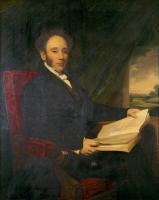
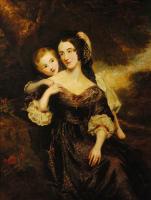
Grandfather: Thomas Lobb of Norfolk
Father: Thomas Lobb aka Chute
Grandmother: Elizabeth Chute
Mother: Anne Rachael Wiggett