

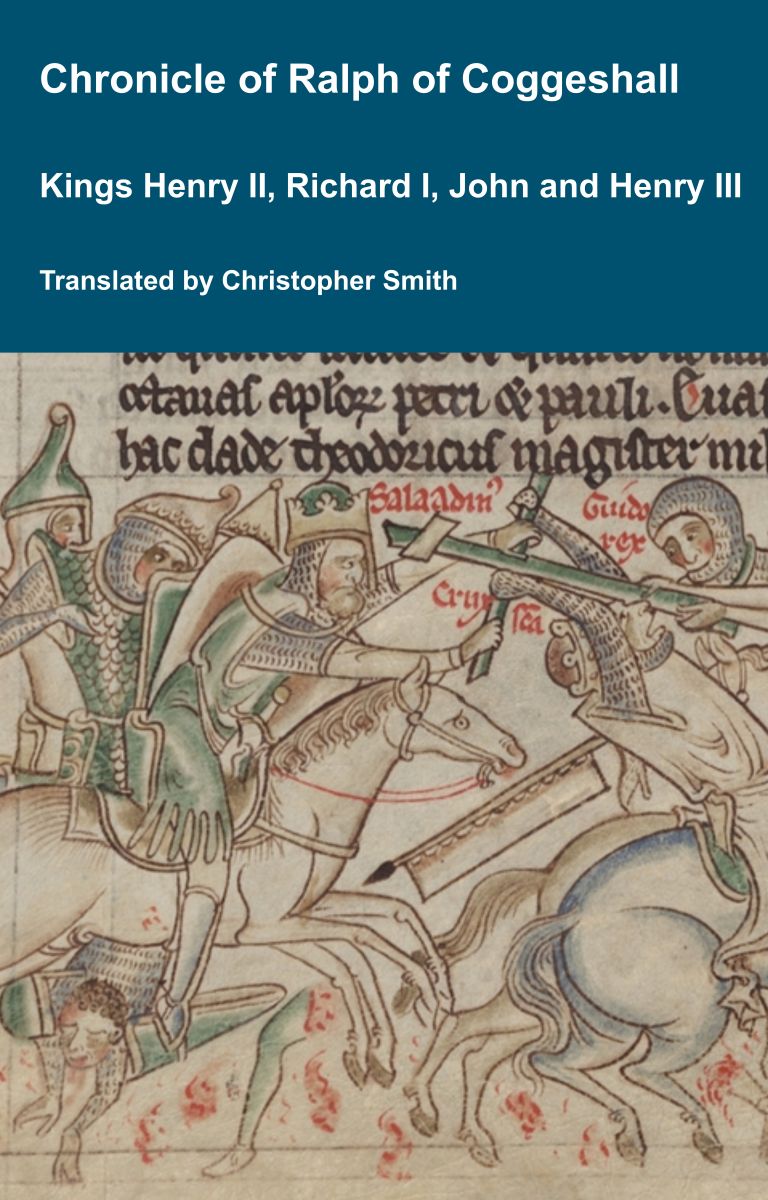
Chronicle of Abbot Ralph of Coggeshall
The Chronicle of Abbot Ralph of Coggeshall (Chronicon Anglicanum) is an indispensable medieval history that brings to life centuries of English and European affairs through the eyes of a learned Cistercian monk. Ralph of Coggeshall, abbot of the Abbey of Coggeshall in Essex in the early 13th century, continued and expanded his community’s chronicle, documenting events from the Norman Conquest of 1066 into the tumultuous reign of King Henry III. Blending eyewitness testimony, careful compilation, and the monastic commitment to record-keeping, this chronicle offers a rare narrative of political intrigue, royal power struggles, and social upheaval in England and beyond. Ralph’s work captures the reigns of pivotal figures such as Richard I and King John, providing invaluable insights into their characters, decisions, and the forces that shaped medieval rule. More than a simple annal, Chronicon Anglicanum conveys the texture of medieval life and governance, making it a rich source for scholars and readers fascinated by English history, monastic authorship, and the shaping of the medieval world.
Available at Amazon in eBook and Paperback format.
Emmanuel College, Cambridge University is in Cambridge University.
On 23rd November 1583 Walter Mildmay [aged 62] purchased the site of Emmanuel College, Cambridge University for £550 and on 11th January 1584 obtained the Queen's licence to set up Emmanuel College there.
In 1585 William Godolphin [aged 18] was educated at Emmanuel College, Cambridge University.
On 16th April 1607 John Burgoyne 1st Baronet [aged 15] was admitted to Emmanuel College, Cambridge University.
In 1614 Thomas Twisden 1st Baronet [aged 11] was admitted to Emmanuel College, Cambridge University.
Around 1616 Theophilus Clinton 4th Earl Lincoln [aged 16] educated at Emmanuel College, Cambridge University.

Before 11th September 1617. Unknown Painter. Portrait of Anthony Mildmay [aged 68] at Emmanuel College, Cambridge University which father Walter Mildmay founded.
Around 1622 Basil Feilding 2nd Earl Denbigh [aged 14] educated at Emmanuel College, Cambridge University.
On 13th June 1622 Thomas Jermyn [aged 5] admitted at Emmanuel College, Cambridge University.
Around 1623 William Spring 1st Baronet [aged 10] educated at Emmanuel College, Cambridge University.

Anne Boleyn. Her Life as told by Lancelot de Carle's 1536 Letter.
In 1536, two weeks after the execution of Anne Boleyn, her brother George and four others, Lancelot du Carle, wrote an extraordinary letter that described Anne's life, and her trial and execution, to which he was a witness. This book presents a new translation of that letter, with additional material from other contemporary sources such as Letters, Hall's and Wriothesley's Chronicles, the pamphlets of Wynkyn the Worde, the Memorial of George Constantyne, the Portuguese Letter and the Baga de Secrets, all of which are provided in Appendices.
Available at Amazon in eBook and Paperback format.
In 1624 Henry Pierrepont 1st Marquess Dorchester [aged 17] educated at Emmanuel College, Cambridge University.

In 1624 William Pierrepont of Thoresby [aged 16] was educated at Emmanuel College, Cambridge University.
In 1626 Thomas Jermyn [aged 9] was awarded Bachelor of Arts at Emmanuel College, Cambridge University.
In 1629 Thomas Jermyn [aged 12] was awarded Master of Arts: Cambridge University at Emmanuel College, Cambridge University.
On 22nd October 1634 John Burgoyne 2nd Baronet [aged 16] was admitted to Emmanuel College, Cambridge University.
In 1642 Edward Dering 2nd Baronet [aged 16] transferred to Emmanuel College, Cambridge University. He was awarded BA in 1643.
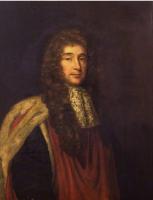
On 13th May 1647 William Croone [aged 13] was admitted a pensioner of Emmanuel College, Cambridge University, graduating B.A. in 1651, and M.A. in 1654

In 1649 Bishop James Gardiner [aged 12] entered Emmanuel College, Cambridge University, being awarded B.A. 1652–3, M.A. 1656, and D.D. 1669.
On 3rd April 1652 Robert Pierrepont [aged 15] educated at Emmanuel College, Cambridge University.
John Evelyn's Diary. 31st August 1654. Catherine-Hall, though a mean structure, is yet famous for the learned Bishop Andrews, once Master. Emanuel College, that zealous house, where to the hall they have a parlor for the Fellows. The chapel is reformed, ab origine, built north and south, and meanly erected, as is the library.
John Evelyn's Diary. 6th February 1670. Dr. John Breton, Master of Emmanuel College, in Cambridge (uncle to our vicar), preached on John i. 27; "whose shoe-latchet I am not worthy to unloose", etc. [Note. This is the King [aged 39] James Bible translation], describing the various fashions of shoes, or sandals, worn by the Jews, and other nations: of the ornaments of the feet: how great persons had servants that took them off when they came to their houses, and bore them after them: by which pointing the dignity of our Savior, when such a person as St. John Baptist acknowledged his unworthiness even of that mean office. The lawfulness, decentness, and necessity, of subordinate degrees and ranks of men and servants, as well in the Church as State: against the late levelers, and others of that dangerous rabble, who would have all alike.
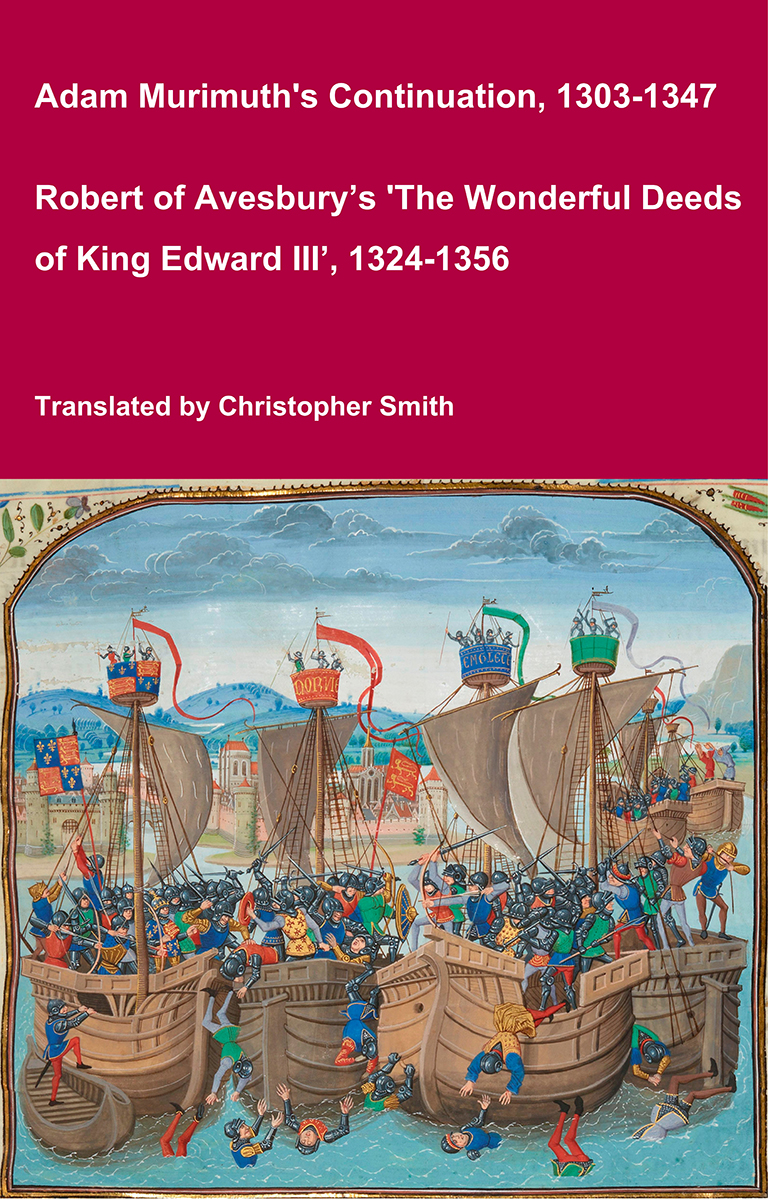
Adam Murimuth's Continuation and Robert of Avesbury’s 'The Wonderful Deeds of King Edward III'
This volume brings together two of the most important contemporary chronicles for the reign of Edward III and the opening phases of the Hundred Years’ War. Written in Latin by English clerical observers, these texts provide a vivid and authoritative window into the political, diplomatic, and military history of fourteenth-century England and its continental ambitions. Adam Murimuth Continuatio's Chronicarum continues an earlier chronicle into the mid-fourteenth century, offering concise but valuable notices on royal policy, foreign relations, and ecclesiastical affairs. Its annalistic structure makes it especially useful for establishing chronology and tracing the development of events year by year. Complementing it, Robert of Avesbury’s De gestis mirabilibus regis Edwardi tertii is a rich documentary chronicle preserving letters, treaties, and official records alongside narrative passages. It is an indispensable source for understanding Edward III’s claim to the French crown, the conduct of war, and the mechanisms of medieval diplomacy. Together, these works offer scholars, students, and enthusiasts a reliable and unembellished account of a transformative period in English and European history. Essential for anyone interested in medieval chronicles, the Hundred Years’ War, or the reign of Edward III.
Available at Amazon in eBook and Paperback format.
In 1690 Reverend Pierre Allix [aged 49] was awarded Doctor of Divinity by Emmanuel College, Cambridge University.
In 1702 Thomas Palmer 4th Baronet was born to Robert Palmer of Medbourne in Leicestershire. He was educated at Emmanuel College, Cambridge University. He married 1735 Jemima Harpur, daughter of John Harpur 4th Baronet, and had issue.
On or before 20th February 1735 John Palmer 5th Baronet was born to Thomas Palmer 4th Baronet [aged 33] and Jemima Harpur. He was baptised 20th February 1735. He was educated at Emmanuel College, Cambridge University from 1752. He married 23rd July 1768 Charlotte Gough Lady Palmer, daughter of Henry Gough 1st Baronet and Barbara Calthorpe Lady Gough, and had issue.
In 1784 Theodore Henry Broadhead [aged 16] was educated at Emmanuel College, Cambridge University.