

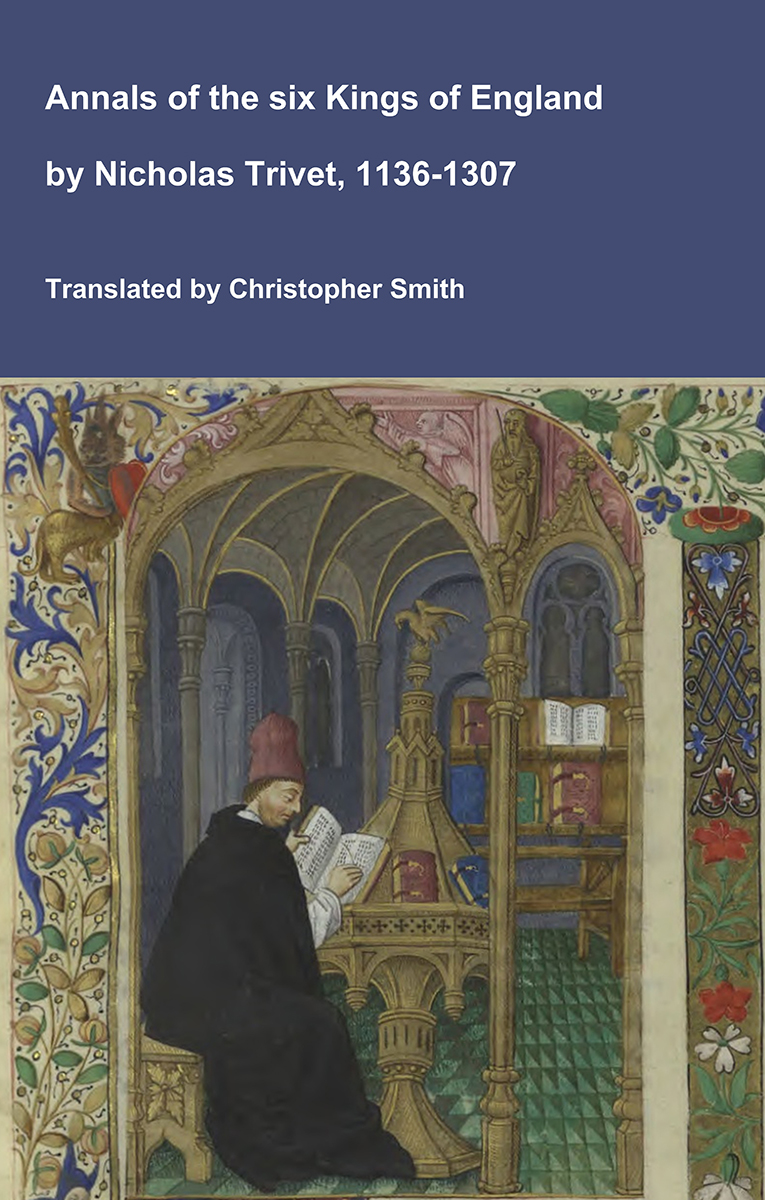
Annals of the six Kings of England by Nicholas Trivet
Translation of the Annals of the Six Kings of England by that traces the rise and rule of the Angevin aka Plantagenet dynasty from the mid-12th to early 14th century. Written by the Dominican scholar Nicholas Trivet, the work offers a vivid account of English history from the reign of King Stephen through to the death of King Edward I, blending political narrative with moral reflection. Covering the reigns of six monarchs—from Stephen to Edward I—the chronicle explores royal authority, rebellion, war, and the shifting balance between crown, church, and nobility. Trivet provides detailed insight into defining moments such as baronial conflicts, Anglo-French rivalry, and the consolidation of royal power under Edward I, whose reign he describes with particular immediacy. The Annals combines careful year-by-year reporting with thoughtful interpretation, presenting history not merely as a sequence of events but as a moral and political lesson. Ideal for readers interested in medieval history, kingship, and the origins of the English state, this chronicle remains a valuable and accessible window into the turbulent world of the Plantagenet kings.
Available at Amazon in eBook and Paperback format.
Marshalsea Prison is in Marshalsea.
Chronicle of the Kings of England by Richard Baker. 19th March 1330. For another Parliament being holden at Winchester, Edmund Earl of Kent [aged 28], the Kings Uncle, is there accused, and condemned upon his confession, for intending to restore his Brother, the late King Edward; an intention only without any fact, yet condemned he was, and brought to the Scaffold: but generally so beloved of the people, that he stood on the Scaffold from one a Clock till five, before any Executioner could be found that would do the Office; till at last a silly wretch of the Marshalsey [Map] was gotten to cut off his head.
Patent Rolls. 15th May 1385. Pardon to John Quenyld, fishmonger, 'sumtyme duellyng in Edyngbregg,' of outlawries in the counties of Southampton and Middlesex, for not appearing in the King's Bench to answer Hugh Crane and John Glemesford respectively touching trespasses, or to pay the king a ransom in each case, he having now surrendered to the Marshalsea prison [Map], as certified by Robert Tresiliam, chief justice,
In December 1447 Robert Wingfield [aged 44] was imprisoned for rioting at Marshalsea Prison [Map].
In 1448 William Tailboys 7th Baron Kyme [aged 33] was imprisoned at Marshalsea Prison [Map].
Chronicle of Gregory. 5th July 1450. And uppon the morowe the Sonday at hyghe mas tyme a lette to be heddyd a man of Hampton, a squyer, the whyche was namyd Thomas Mayne. And that same evyn Londyn dyd a rysse and cam out uppon them at x [of] a the belle, beyng that tyme her captaynys the goode olde lorde Schalys [aged 53] and Mathewe Goughe. Ande from that tyme unto the morowe viij of belle they were ever fyghtynge uppon London Brygge [Map], ande many a man was slayne and caste in Temys, harnys, body, and alle; and monge the presse was slayne Mathewe Goughe and John Sutton aldyrman. And the same nyght, a-non aftyr mydnyght, the Captayneof Kentte dyde fyre the draught brygge of London; and be-fore that tyme he breke bothe Kyngys Bynche [Map] ande the Marchelsy [Map], and lete out alle the presoners that were yn them.
In 1476 Gilbert Debenham [aged 44] is found in Marshalsea Prison [Map].
Chronicle of Edward Hall [1496-1548]. 6th June 1522. When this was done, they came into Southwark, where the clergy received them, in copes, with crosses, and censers, and so kept the one side of the street, all the city through. When they came by the Marshalsea [Map] at the King's Benche, the Emperor desired pardon of the King, for the prisoners, and he at the Emperor's request, pardoned a great number of them. When they were almost at the Bridge foot there was a stay [delay], the King demanded the cause, and it was told him that the Herald's had appointed two gentlemen to ride together, one was the Ambassador from the Marquess of Mantua, to the Emperor, and the other from the City of Seines, to the Emperor also and the City and the Marquess were not friends, the Emperor incontinent, sent his Lord Chamberlain to them, saying that if they would that day do him honour, he would thank them, and if they would not ride as they were appointed, he prayed them to depart. When the Lord Chamberlain had told this message, they rode furth and made no more courtesy.
Henry Machyn's Diary. 3rd January 1553. [Note. Probably February] The iij day of January was cared from the Marshalleshe [Map] unto saynt Thomas of Wateryng a talman, and whent thedur with the rope a-bowt ys neke, and so he hangyd a whylle, and the rope burst, and a whylle after and then th[ey went f] or a-nodur rope, and so lyke-wyss he burst yt [and fell] to the grond, and so he skapyd with ys lyffe.
Henry Machyn's Diary. 5th August 1553. The sam day cam out of the Marsalsay [Map] the old bysshop of London, Bonar [aged 53], and dyvers bysshopes bryng hym home unto ys plasse at Powlles; and doctur Cokes [aged 60] whent to the sam plasse in the Marselsay [Map] that the bysshope was in.


Wriothesley's Chronicle [1508-1562]. 22nd February 1554. The 22 of February certeyne of the rebells which lay in Newgate [Map], both the Counters, the Kings Benche [Map], the Marshallsie [Map], and Westminster, to the number of iiii C. and more, were ledd to Westminster to the Cowrte, coupled together with collers and halters abowte their neckes, and there in the Tylt-yeard kneeled afore the Queen [aged 38] lookinge owt at the gallerie by the gate, and cried for meroye, who most gratiouslye gave to them their pardon.


Henry Machyn's Diary. 26th April 1555. The xxvj day of Aprell was cared from the Marselsee [Map] in a care thrugh London unto Charyng-crosse [Map] to the galows, and ther hangyd, iij men for robyng of serten Spaneardes of tresur of gold owt of the abbay of Vestmynster.
Henry Machyn's Diary. 1st May 1557. Item the sam day a-bowt non ther wher sarten Spaneardes fowyth [fought] the cowrt-gate a-gaynst one Spaneard, and one of them frust hym thrugh with ys raper, and ded contenent [immediately]; and ij of the Spaneardes that kyld hym was browt in-to the cowrt by on of the gard, and he delevered them to the knyght marshall('s) servandes to have them (to) the Marshellsay [Map]... .... serten skochyons.
Henry Machyn's Diary. After 7th April 1559. The (blank) day cam from Franse my lord chamburlayn Haward [aged 38] and my lord bysshope of Elly [aged 53] and master doctur Wotton, and (unfinished) .... ye Tempull, and ix .... dener, and ther dynyd the consell and dyvers notabyll .... and juges, and my lord mayre [aged 50] and the althermen, and the [officers of the] Chansseres [Chancery] and the Flett [Map], and the Kyngesbynshe [Map], and the Marshalsea [Map]; [and they] gayff gownes of ij collers, morreys and mustars, and ... ij collers ... hondered; and at v of cloke at after-non [the new] serganttes whent unto sant Thomas of Acurs in a ... gowne and skarlette hodes a-bowt ther nekes, and whyt [hoods on] ther hedes, and no capes [caps]; and after they whent unto Powles [Map] with typstayffes and offesers of the Kyngbynche [Map], and odur plasses, and [they were] browth be ij old serganttes, one after a-nodur in skarlett ... of north syd, and ther thay stod tyll thay had brou[th them] unto ix sondre pellers [pillars] of the north syd, and after the ... cam unto the furst, and after to the reseduu; and thay whe[nt back] unto the Tempull on a-lone [one-by-one], and a-for whent the ... and the rulers and the Chansere and of the Kyngbynche [ij and ij to]gether, and after cam a hondered in parte cottes of ...
Note. P. 195. The serjeants' feast. This took place at the Inner Temple on the 19th of April. In the second line read, "and ix. [serjeants made]." Dugdale, indeed, gives the names of ten as having been called to the degree by writ tested by the queen on the 12th Dec. namely, Thomas Carus, Reginald Corbet, John Welsh, John Southcote, William Simmonds, George Wall, Richard Harper, Ranulph Cholmley, Nicholas Powtrell, and John Birch; and to these was added Richard Weston by writ dated 24 Jan. making in all eleven. Dugdale's Chronica Series.
Chronicle of Walter of Guisborough
A canon regular of the Augustinian Guisborough Priory, Yorkshire, formerly known as The Chronicle of Walter of Hemingburgh, describes the period from 1066 to 1346. Before 1274 the Chronicle is based on other works. Thereafter, the Chronicle is original, and a remarkable source for the events of the time. This book provides a translation of the Chronicle from that date. The Latin source for our translation is the 1849 work edited by Hans Claude Hamilton. Hamilton, in his preface, says: 'In the present work we behold perhaps one of the finest samples of our early chronicles, both as regards the value of the events recorded, and the correctness with which they are detailed; Nor will the pleasing style of composition be lightly passed over by those capable of seeing reflected from it the tokens of a vigorous and cultivated mind, and a favourable specimen of the learning and taste of the age in which it was framed.'
Available at Amazon in eBook and Paperback format.
Henry Machyn's Diary. 25th July 1559. The xxv day of July, was sant James day, the warden of Wynchaster and odur docturs and prestes wher delevered owt of the towre, and masselsay [Map], and odur.
Henry Machyn's Diary. 14th August 1559. The xiiij day of August landyd at the Bryghowsse a iiijxx [80] rovers and mareners that was taken with Strangwys, and send unto the masselsay [Map] and to the kynges bynche [Map], and ther trumpeter, and as sone as thay cold make hast put on fetters on ther leges for ther offensys.... pesse over chargyd at master Hyksun .... and one of ys servand dyd fyre yt that was ... and yt hytt brust in pesses, and on pesse yt ... and smott on of ys leg a-way by the ... smott a pesse of the calff of ys lege a-way ... of the pesse fluw over Temes a-pon the .. and in dyvers plases.
Henry Machyn's Diary. 2nd October 1559. The ij day of October master Strangwys and v [of his men were] lad from the Towre [Map] unto the Masselsay [Map].
Henry Machyn's Diary. 14th May 1560. The xiiij day of May was the sam men cared to Westmynster hall [Map] how they shuld do theyre, and ther they wher cast and cared to the masselsay [Map]
Henry Machyn's Diary. 28th February 1561. The xxviij day of Feybruary dyd pryche at the cowrt master Pylkyngtun [aged 41] electyd pyshope of Durram a-for the quen('s) [aged 27] grace, and made a godly sermon, and grett audyens.... the Marsalsay [Map] to be cared into the co[untry ...] men that was cast in Westmynster hall for robere done the last day of terme.


Before 6th March 1561 Dean Seth Holland died at the Marshalsea Prison [Map].
Henry Machyn's Diary. 10th April 1561. The x day of Aprell was wyped on that cam owt of Bedlem for he sayd he was Cryst, and on Peter that cam owt of the Masselsay [Map], boyth wyped, for he sayd that he was the sam Peter that dyd folow Crist.... toward Chelsey unto my lo .... a man fond slayne by the way, and so .... that fonde hym, the wyche man dwelt in sant ... with-owt Alther-gatt in More lane.

Henry Machyn's Diary. 18th October 1561. The xviij day of October ther was (a) fray be-twyn my lord Montyguw('s) [aged 32] men and my lord Delaware('s) [aged 35] men, and after the ij lordes wher sent to the Flett [Map], and the men to the Masselsay [Map].
Henry Machyn's Diary. 8th September 1562. The viij day of September whent thrughe London a prest, with a cope, taken sayhyng of masse in Feyter lane at my lade (blank), and so to my lord mare [aged 66], and after to the contur in ...; and the thursday after he was cared to the Masselsay [Map]... an for kyllyng of her ....
Henry Machyn's Diary. 17th March 1563. The sam day at the Well with ij [2] bokettes in sant Martens [Map] ther was (a) woman dwellyng ther toke a pere of sherers for to have cutt here throwtt, butt she myssyd the pype in here syknes and madnes, and with a day after she ded and was bered ther in the parryche.... and to the Masselsay [Map] to the .... that he had a lysens for to kyll fl[esh.]
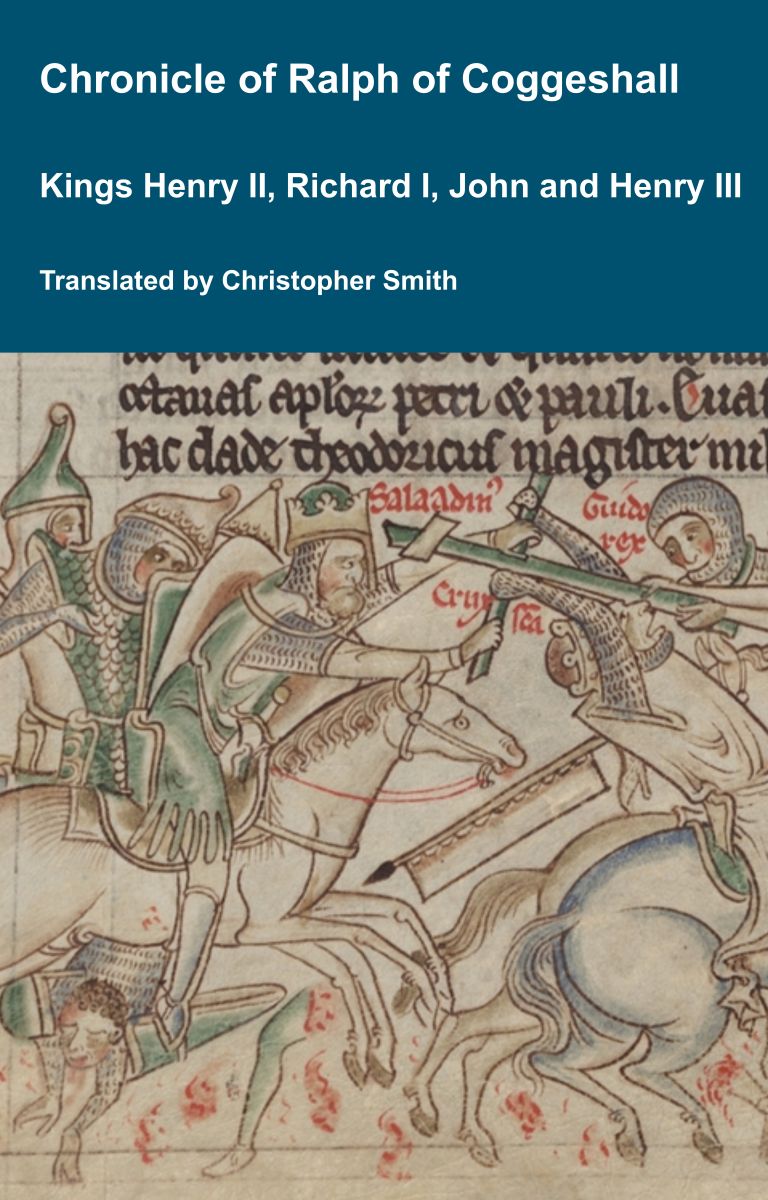
Chronicle of Abbot Ralph of Coggeshall
The Chronicle of Abbot Ralph of Coggeshall (Chronicon Anglicanum) is an indispensable medieval history that brings to life centuries of English and European affairs through the eyes of a learned Cistercian monk. Ralph of Coggeshall, abbot of the Abbey of Coggeshall in Essex in the early 13th century, continued and expanded his community’s chronicle, documenting events from the Norman Conquest of 1066 into the tumultuous reign of King Henry III. Blending eyewitness testimony, careful compilation, and the monastic commitment to record-keeping, this chronicle offers a rare narrative of political intrigue, royal power struggles, and social upheaval in England and beyond. Ralph’s work captures the reigns of pivotal figures such as Richard I and King John, providing invaluable insights into their characters, decisions, and the forces that shaped medieval rule. More than a simple annal, Chronicon Anglicanum conveys the texture of medieval life and governance, making it a rich source for scholars and readers fascinated by English history, monastic authorship, and the shaping of the medieval world.
Available at Amazon in eBook and Paperback format.
John Evelyn's Diary. 25th December 1657. I went to London with my wife [aged 22], to celebrate Christmas-day, Mr. Gunning [aged 43] preaching in Exeter chapel [Map], on Micah vii. 2. Sermon ended, as he was giving us the Holy Sacrament, the chapel was surrounded with soldiers, and all the communicants and assembly surprised and kept prisoners by them, some in the house, others carried away. It fell to my share to be confined to a room in the house, where yet I was permitted to dine with the master of it, the Countess of Dorset [aged 35], Baroness Hatton [aged 45], and some others of quality who invited me. In the afternoon, came Colonel Whalley, Goffe, and others, from Whitehall [Map], to examine us one by one; some they committed to the marshal [Map], some to prison. When I came before them, they took my name and abode, examined me why, contrary to the ordinance made, that none should any longer observe the superstitious time of the nativity (so esteemed by them), I durst offend, and particularly be at common prayers, which they told me was but the mass in English, and particularly pray for Charles Stuart [aged 27]; for which we had no Scripture. I told them we did not pray for Charles Stuart, but for all Christian kings, princes, and governors. They replied, in so doing we prayed for the king of Spain, too, who was their enemy and a Papist, with other frivolous and ensnaring questions, and much threatening; and, finding no color to detain me, they dismissed me with much pity of my ignorance. These were men of high flight and above ordinances, and spoke spiteful things of our Lord's nativity. As we went up to receive the Sacrament, the miscreants held their muskets against us, as if they would have shot us at the altar; but yet suffering us to finish the office of Communion, as perhaps not having instructions what to do, in case they found us in that action. So I got home late the next day; blessed be God!


John Evelyn's Diary. 29th September 1665. To Erith, to quicken the sale of the prizes lying there, with order to the commissioner who lay on board till they should be disposed of, £5,000 being proportioned for my quarter. Then I delivered the Dutch Vice-Admiral, who was my prisoner, to Mr. Lowman of the Marshalsea [Map], he giving me bond in £500 to produce him at my call. I exceedingly pitied this brave unhappy person, who had lost with these prizes £40,000 after twenty years' negotiation [trading] in the East Indies. I dined in one of these vessels, of 1,200 tons, full of riches.
John Evelyn's Diary. 9th July 1685. Just as I was coming into the lodgings at Whitehall [Map], a little before dinner, my Lord of Devonshire [aged 45] standing very neere his Ma's [aged 51] bed-chamber doore in the lobby, came Col. Culpeper [aged 50], and in a rude manner looking my Lord in the face, asked whether this was a time and place for excluders to appeare; my Lord at first tooke little notice of what he said, knowing him to be a hot-headed fellow, but he reiterating it, my Lord ask'd Culpeper whether he meant him; he said, yes, he meant his Lordship. My Lord told him he was no excluder (as indeed he was not); the other affirming it againe, my Lord told him he lied, on which Culpeper struck him a box on the eare, which my Lord return'd and fell'd him. They were soone parted, Culpeper was seiz'd, and his Ma*, who was all the while in his bed-chamber, order'd him to be carried to the Green Cloth Officer, who sent him to the Marshalsea [Map] as he deserv'd. My Lord Devon had nothing said to him. I supp'd this night at Lambeth at my old friend's Mr. Elias Ashmole's [aged 68], with my Lady Clarendon, ye Bishop of St. Asaph [aged 57], and Dr. Tenison [aged 48], when we were treated at a greate feast.


After 9th July 1685 Thomas Culpepper [aged 47] was imprisoned in Marshalsea Prison [Map] for having insulted his litagee by striking him within the precincts of the court at Whitehall Palace [Map] on 9 Jul 1685, and was sentenced to losing a hand; his wife's intervention saved him.
Old and New London Volume 6 Chaper XIX The Old Kent Road. St. Thomas à Watering [Map] was once the boundary of the City liberties, and in the "olden time," when the lord mayor and sheriffs "in great state" crossed the water to open Southwark Fair and to inspect the City boundaries, the City magistrates continued either to St. George's Church, Newington Bridge, or "to the stones pointing out the City liberties at St. Thomas à Watering." The precise situation was as near as possible that part of the Old Kent Road which is intersected by the Albany Road, and the memory of the place is still kept alive by St. Thomas's Road, close by, and by the tavern-signs in the neighbourhood. "At the commencement of the present century," writes Mr. Blanch, in his history of "Ye Parishe of Cam[b]erwell," "there was a stream here which served as a common sewer, across which a bridge was built; and in going from Camberwell into Newington or Southwark, it was not unusual for people to say they were going over the water. The current from the Peckham hills was at times so strong as to overflow at least two acres of ground."
St. Thomas à Waterings was situated close to the second milestone on the Old Kent Road, and was so called from a brook or spring, dedicated to St. Thomas à Becket. Chaucer's pilgrims, as we have seen in a previous chapter, passed it on their way to the shrine of St. Thomas à Becket at Canterbury:-
"And forth we riden a litel more than pas,
Unto the watering of Seint Thomàs,
And then our host began his hors arrest."
Ben Jonson, in The New Inn, makes mention of the spot in the following lines:-
"These are the arts
Or seven liberal deadly sciences,
Of pagery, or rather paganism,
Note A. the tides run! to which if he apply him,
He may perhaps take a degree at Tyburn
A year the earlier; come to read a lecture
Upon Aquinas at St. Thomas à Waterings."
This spot was in the old Tudor days the place of execution for the northern parts of Surrey; and here the Vicar of Wandsworth, his chaplain, and two other persons of his household, were hung, drawn, and quartered in 1539 for denying the supremacy of Henry VIII. in matters of faith.
In 1553 (January 3rd) "was caried from the Marshalleshe [Map] unto Saynt Thomas of Wateryng [Map] a talman, and went thedur with the rope a-bowt ys neke, and so he hanggd a whylle, and the rope burst, and a whylle after and then they went for a-nodur rope, and so lyke-wyss he burst ytt and fell to the ground, and so he skapyd with his lyffe."
Chronicle of Edward Hall [1496-1548]. In this month was sent to the Tower, Doctor Wilson, and docter Sampson Bishop of Chichester, for relieving of certain traitorous persons, which denied the King's Supremacy and for the same offence was one Richard Farmer Grocer of London, a riche and wealthy man, and of good estimation in the City, committed to the Marshall See [Map], and after in Westminster Hall was arraigned and attainted in the Premunire, and lost all his goods.