

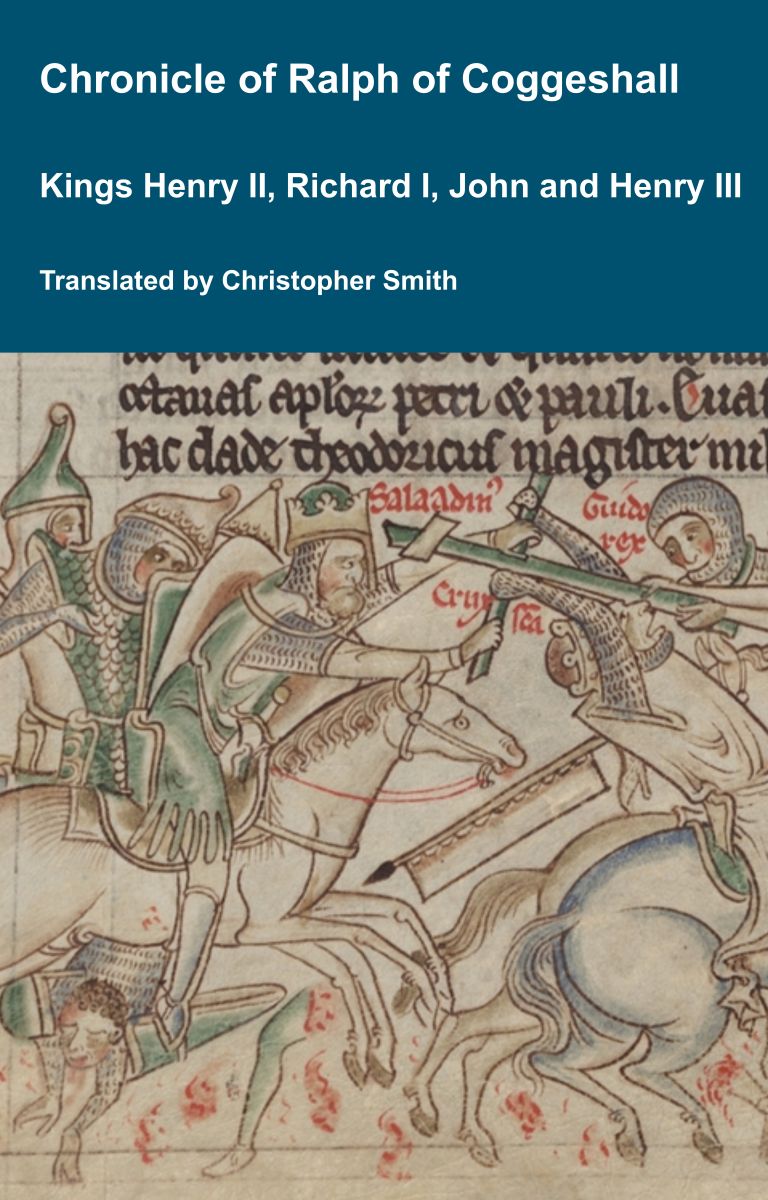
Chronicle of Abbot Ralph of Coggeshall
The Chronicle of Abbot Ralph of Coggeshall (Chronicon Anglicanum) is an indispensable medieval history that brings to life centuries of English and European affairs through the eyes of a learned Cistercian monk. Ralph of Coggeshall, abbot of the Abbey of Coggeshall in Essex in the early 13th century, continued and expanded his community’s chronicle, documenting events from the Norman Conquest of 1066 into the tumultuous reign of King Henry III. Blending eyewitness testimony, careful compilation, and the monastic commitment to record-keeping, this chronicle offers a rare narrative of political intrigue, royal power struggles, and social upheaval in England and beyond. Ralph’s work captures the reigns of pivotal figures such as Richard I and King John, providing invaluable insights into their characters, decisions, and the forces that shaped medieval rule. More than a simple annal, Chronicon Anglicanum conveys the texture of medieval life and governance, making it a rich source for scholars and readers fascinated by English history, monastic authorship, and the shaping of the medieval world.
Available at Amazon in eBook and Paperback format.
Edinburgh Castle is in Edinburgh.
On 5th September 1186 King William I of Scotland [aged 43] and Ermengarde Beaumont Sarthe Queen Consort Scotland [aged 16] were married at Woodstock Palace, Oxfordshire [Map] by Archbishop Baldwin of Forde [aged 61]. She by marriage Queen Consort Scotland at Woodstock Palace, Oxfordshire [Map]. His bride had been chosen by King Henry "Curtmantle" II of England [aged 53] as part of the Treaty of Falaise. William received Edinburgh Castle [Map] as a wedding gift from King Henry "Curtmantle" II of England. The difference in their ages was 27 years. He the son of Henry Dunkeld 3rd Earl Huntingdon 1st Earl of Northumbria and Ada Warenne Countess Huntingdon and Northumbria. They were half fourth cousins. She a great granddaughter of King Henry I "Beauclerc" England.
In 1341 William "Flower of Chivalry and Knight Liddesdale" Douglas 1st Earl Atholl [aged 41] was captured at Edinburgh Castle [Map].
In October 1355 Thomas Grey [aged 27] was imprisoned at Edinburgh Castle [Map].
On 22nd February 1371 King David II of Scotland [aged 46] died without issue at Edinburgh Castle [Map]. He was buried at Holyrood Abbey [Map]. His nephew Robert [aged 54] succeeded II King Scotland. He, David, was the last of the male line of the House of Bruce. Robert, the first of the House of Stewart, being the son of his sister Marjorie Bruce who had married Walter Stewart 6th High Steward.
On 26th March 1437 Walter Stewart 1st Earl Atholl 3rd Earl Caithness [aged 77] and his grandson Robert Stewart [aged 37] were hanged, drawn and quartered at Edinburgh Castle [Map] for having conspired to assassinate King James I of Scotland [deceased].
On 22nd February 1452 William Douglas 8th Earl Douglas 2nd Earl Avondale [aged 27] was murdered by King James II of Scotland [aged 21] at Edinburgh Castle [Map] for refusing to desist from conspiring with Alexander Lindsay 4th Earl Crawford [aged 29]. His brother James [aged 26] succeeded 9th Earl Douglas, 3rd Earl Avondale.
On 14th July 1510 Arthur Stewart 1st Duke Rothesay died at Edinburgh Castle [Map].
In 1537 Archibald Campbell of Skipness died whilst attempting to escape at Edinburgh Castle [Map].
On 17th July 1537 Janet Douglas Lady Glamis [aged 39] was burned at the stake at Edinburgh Castle [Map] for conspiring against the king's [aged 25] life. Her son, John 7th Lord Glamis Lyon [aged 16], was supposedly a witness to the burning.


On 11th June 1560 Mary of Guise Queen Consort Scotland [aged 44] died at Edinburgh Castle [Map].
On 19th June 1566 King James I of England and Ireland and VI of Scotland was born to Henry "Lord Darnley" Stewart [aged 20] and Mary Queen of Scots [aged 23] at Edinburgh Castle [Map]. He a great x 2 grandson of King Henry VII of England and Ireland. Coefficient of inbreeding 3.67%. He married 23rd November 1589 his third cousin once removed Anne of Denmark Queen Consort Scotland England and Ireland, daughter of Frederick II King of Denmark and Sophie Mecklenburg-Schwerin Queen Consort Denmark, and had issue.
On 3rd March 1572 Henry Stewart 2nd Lord Methven [aged 44] was shot and killed by a cannon at Edinburgh Castle [Map]. His son Henry succeeded 3rd Lord Methven.
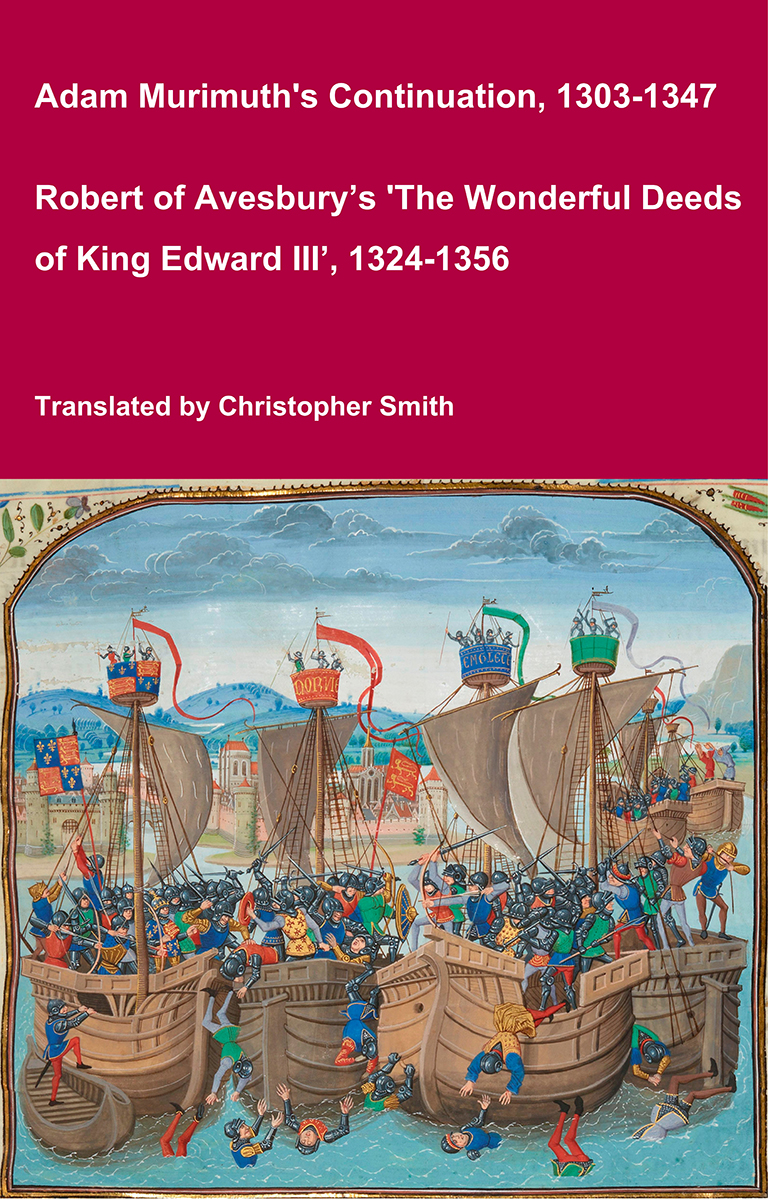
Adam Murimuth's Continuation and Robert of Avesbury’s 'The Wonderful Deeds of King Edward III'
This volume brings together two of the most important contemporary chronicles for the reign of Edward III and the opening phases of the Hundred Years’ War. Written in Latin by English clerical observers, these texts provide a vivid and authoritative window into the political, diplomatic, and military history of fourteenth-century England and its continental ambitions. Adam Murimuth Continuatio's Chronicarum continues an earlier chronicle into the mid-fourteenth century, offering concise but valuable notices on royal policy, foreign relations, and ecclesiastical affairs. Its annalistic structure makes it especially useful for establishing chronology and tracing the development of events year by year. Complementing it, Robert of Avesbury’s De gestis mirabilibus regis Edwardi tertii is a rich documentary chronicle preserving letters, treaties, and official records alongside narrative passages. It is an indispensable source for understanding Edward III’s claim to the French crown, the conduct of war, and the mechanisms of medieval diplomacy. Together, these works offer scholars, students, and enthusiasts a reliable and unembellished account of a transformative period in English and European history. Essential for anyone interested in medieval chronicles, the Hundred Years’ War, or the reign of Edward III.
Available at Amazon in eBook and Paperback format.
In 1708 Charles Hay 13th Earl Erroll was imprisoned at Edinburgh Castle [Map].

1831. David Roberts [aged 34]. Edinburgh Town and Castle [Map].
In August 1917 Joseph Edwin Sewell [aged 18] was stationed at Edinburgh Castle [Map] as described in his letters home.