

Church of St Leonard, Apethorpe is in Apethorpe, Northamptonshire, Churches in Northamptonshire.

Around 1442. Monument to Richard Dalton of Apethorpe -1442. Unusual floor slab effigy. Armour later than 1442 circa 1500. Fluted Period. Church of St Leonard, Apethorpe [Map].
On 11th September 1617 Anthony Mildmay [aged 68] died. He was buried at the Church of St Leonard, Apethorpe [Map]. His inscription reads ... Here sleepeth in the Lord with certaine hope of resurection Sr Antony Mildmay Knt eldet sonne to Sr Walter Mildmay Knt Chaunclor of the Exchequor. to Queene Elizabeth. He was Embassador from Queen Eliza: to the most Christian King of Fraunce Henry the 4th Ano. 1596; He was to Prince and Country faithful, and serviceable, in peace and warre, to freinds constant to enemies reconciliable. Bountiful and loved hospitality. He died September 11 1617.
On 27th July 1620 Grace Sharington [aged 68] died. She was buried at the Church of St Leonard, Apethorpe [Map]. The inscription of her monument reads ... Here also lyeth Grace Ladie Mildmay the only wife of the saied Sr Antho: Mildmay one of the heyres of Sr Henry Sharington Knt: of Lacock in the County of Wiltes who lived 50 years maried to him and three years a widow after him. she was most devout, unspotedly chast mayd, wife, and widow, compassionate in heart, and charitably helpful with phisick, cloathes, nourishment, or counsels to any in misery, She was most careful and wise in managing worldly estate. So as her life was a blessing to hirs, and hir death she blessed them which hapned July 27 1620.
From RCHME Inventory. It is of grey veined and black marble and is partly gilded and painted. Two effigies lie on a black and white marble tomb chest beneath a baldachino consisting of a shallow dome with a cupola having round-headed openings in its drum, which give light to the interior. The baldachino is supported at each end by a rectangular pier onto which curtains, hanging from the architrave of the dome, are looped. Against the piers are standing figures representing the four Virtues, and the frieze is inscribed 'Devoute', 'Wise', 'Charitable' and 'Just'; the frieze is also inscribed 'Chaste' and 'Valiant'. The head of the figure representing Justice is modern. Seated on the cornice are smaller figures, on the E. of Faith and on the W. of Hope; on the cupola dome is a seated figure of Charity. Crowning the cornice are freestanding cartouches of arms of Mildmay (N.E. and S.E.) and Sherington (N.W. and S.W.). Against the cupola drum are shields of arms of Mildmay impaling Sherington, both quartered with alliances, and Mildmay quarterly. The W. pier of the baldachino is inscribed with a record of the setting up of the monument by Sir Francis Fane [aged 37] in 1621. The tomb chest is enriched with emblems of mortality and eulogistically-phrased inscriptions record the lives of Sir Anthony on the S., and of Lady Grace on the N. The effigies lie on rush mats, he in Greenwich armour, she in full mantle, ruff and head-dress. The authorship of the monument is not known but the figures of the four Virtues are in the manner of Maximillian Colt [aged 42] (cf. Cecil monument, Hatfield, Hertfordshire); the baldachino may be compared with that over the tomb of the Countess of Derby at Harefield, Middlesex, probably also by Colt.
Grace Sharington: Around 1552 she was born to Henry Sharington of Lacock in Wiltshire and Anne Paggett of Lacock Abbey. In 1567 Anthony Mildmay and she were married. They lived at Apethorpe Hall, Northamptonshire. In 1581 Henry Sharington of Lacock in Wiltshire died. His two surviving daughters for many disputed his will. According to Grace Sharington her sister Olive Sharington had persuaded their father to change his will. Grace Sharington eventually gained an equal share.


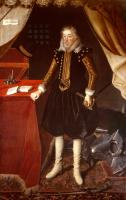


After 1627. Monument in the Church of St Leonard, Apethorpe [Map] to John Leigh -1627. Descended from the Leigh family of Addington. Grateful for further information as to his descent; email@twentytrees.co.uk.
Black marble panel flanked by Ionic columns supporting a frieze enriched with fruit and flowers, and an inverted broken pediment on which rest a reclining figure and a cartouche of arms of Leigh quartered with others

Undated (around 1650?) monument to Rowland Woodward in the Church of St Leonard, Apethorpe [Map]. Black marble panel with pilasters enriched with rosettes, a crowned skull on the apron and a large cartouche of arms flanked by obelisks each inscribed 'Dum Descendit Largitur'; the arms are of Woodward impaling Grimsdith.

After 21st June 1813. Memorial to Lieutenant-Colonel Charles Fane [deceased] at the Church of St Leonard, Apethorpe [Map].
Lieutenant-Colonel Charles Fane: On 14th May 1781 he was born to Henry Fane of Fulbeck and Anne Buckley Batson. On 21st June 1813 Lieutenant-Colonel Charles Fane was killed in action at the Battle of Vitoria.

On 11th December 1814 Susan Gordon Countess of Westmoreland [aged 62] died. Memorial in the Church of St Leonard, Apethorpe [Map].
Susan Gordon Countess of Westmoreland: In 1752 she was born to Cosmo George Gordon 3rd Duke Gordon and Catherine Gordon Duchess Gordon. On 28th May 1767 John Fane 9th Earl of Westmoreland and she were married. The difference in their ages was 23 years. She the daughter of Cosmo George Gordon 3rd Duke Gordon and Catherine Gordon Duchess Gordon. He the son of Thomas Fane 8th Earl of Westmoreland and Elizabeth Swymmer Countess Westmoreland.
On 29th August 1816 John Arthur Fane died. He was buried in the Church of St Leonard, Apethorpe [Map]. White marble effigy of infant in bonnet, on mattress and couch decorated with anthemion ornament
John Arthur Fane: On 12th February 1816 he was born to John Fane 11th Earl of Westmoreland and Priscilla Anne Wellesley-Pole Countess of Westmoreland.


On 25th March 1837 Maria Louisa Priscilla Fane [aged 14] died.
On 29th May 1848 George Augustus Frederick John Fane [aged 28] died.
On 22nd January 1851 Ernest Neville Fitzroy Fane [aged 27] died. Both brothers and sister were buried at the Church of St Leonard, Apethorpe [Map].
Maria Louisa Priscilla Fane: On 24th May 1822 she was born to John Fane 11th Earl of Westmoreland and Priscilla Anne Wellesley-Pole Countess of Westmoreland.
George Augustus Frederick John Fane: On 18th June 1819 he was born to John Fane 11th Earl of Westmoreland and Priscilla Anne Wellesley-Pole Countess of Westmoreland.
Ernest Neville Fitzroy Fane: On 7th January 1824 he was born to John Fane 11th Earl of Westmoreland and Priscilla Anne Wellesley-Pole Countess of Westmoreland. Around August 1849 he and Selina Lock were married. He the son of John Fane 11th Earl of Westmoreland and Priscilla Anne Wellesley-Pole Countess of Westmoreland.

On 16th October 1859 John Fane 11th Earl of Westmoreland [aged 75] died. His son Francis [aged 33] succeeded 12th Earl of Westmoreland. Adelaide Ida Curzon Howe Countess of Westmoreland [aged 24] by marriage Countess of Westmoreland.
On 18th February 1879 Priscilla Anne Wellesley-Pole Countess of Westmoreland [aged 85] died. Both were buried at the Church of St Leonard, Apethorpe [Map].
John Fane 11th Earl of Westmoreland: On 2nd February 1784 he was born to John Fane 10th Earl of Westmoreland and Sarah Anne Child Countess of Westmoreland. On 26th June 1811 he and Priscilla Anne Wellesley-Pole Countess of Westmoreland were married. She the daughter of William Wellesley aka Wellesley-Pole 3rd Earl Mornington and Katherine Forbes Countess Mornington. He the son of John Fane 10th Earl of Westmoreland and Sarah Anne Child Countess of Westmoreland. On 15th December 1841 John Fane 10th Earl of Westmoreland died. His son John succeeded 11th Earl of Westmoreland. Priscilla Anne Wellesley-Pole Countess of Westmoreland by marriage Countess of Westmoreland.
Priscilla Anne Wellesley-Pole Countess of Westmoreland: On 13th March 1793 she was born to William Wellesley aka Wellesley-Pole 3rd Earl Mornington and Katherine Forbes Countess Mornington.

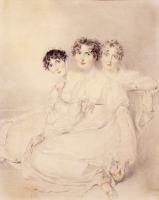

On 31st July 1860 George Neville John Fane [aged 1] died. Memorial in the Church of St Leonard, Apethorpe [Map].
George Neville John Fane: On 3rd September 1858 he was born to Francis William Henry Fane 12th Earl of Westmoreland and Adelaide Ida Curzon Howe Countess of Westmoreland.

On 19th April 1870 Julian Henry Charles Fane [aged 42] died. On 20th October 1868 Adine Eliza Anne Cowper died. Memorial in the Church of St Leonard, Apethorpe [Map].
Julian Henry Charles Fane: On 10th October 1827 he was born to John Fane 11th Earl of Westmoreland and Priscilla Anne Wellesley-Pole Countess of Westmoreland. In 1866 he and Adine Eliza Anne Cowper were married. She the daughter of George Augustus Frederick Cowper 6th Earl Cowper and Ann Florence Robinson Countess Cowper. He the son of John Fane 11th Earl of Westmoreland and Priscilla Anne Wellesley-Pole Countess of Westmoreland. They were sixth cousins.
Adine Eliza Anne Cowper: In 1840 she was born to George Augustus Frederick Cowper 6th Earl Cowper and Ann Florence Robinson Countess Cowper.
On 3rd August 1891 Francis William Henry Fane 12th Earl of Westmoreland [aged 65] died. His son Anthony [aged 31] succeeded 13th Earl of Westmoreland.
In 1903 Adelaide Ida Curzon Howe Countess of Westmoreland [aged 68] died.
Memorial in the Church of St Leonard, Apethorpe [Map] and graves in churchyard.
Anthony Fane 13th Earl of Westmoreland: On 16th August 1859 he was born to Francis William Henry Fane 12th Earl of Westmoreland and Adelaide Ida Curzon Howe Countess of Westmoreland. On 28th May 1892 he and Sybil Mary St Clair-Erskine Countess of Westmorland were married. She by marriage Countess of Westmoreland. He the son of Francis William Henry Fane 12th Earl of Westmoreland and Adelaide Ida Curzon Howe Countess of Westmoreland. On 9th June 1922 he died. His son Vere succeeded 14th Earl of Westmoreland.


Interior of the Church of St Leonard, Apethorpe [Map]

After 23rd May 1966. Memorial to Cecil George Armitage Preston 1903-1966 Vicar of the Church of St Leonard, Apethorpe [Map].