Adam Murimuth's Continuation and Robert of Avesbury’s 'The Wonderful Deeds of King Edward III'

This volume brings together two of the most important contemporary chronicles for the reign of Edward III and the opening phases of the Hundred Years’ War. Written in Latin by English clerical observers, these texts provide a vivid and authoritative window into the political, diplomatic, and military history of fourteenth-century England and its continental ambitions. Adam Murimuth Continuatio's Chronicarum continues an earlier chronicle into the mid-fourteenth century, offering concise but valuable notices on royal policy, foreign relations, and ecclesiastical affairs. Its annalistic structure makes it especially useful for establishing chronology and tracing the development of events year by year. Complementing it, Robert of Avesbury’s De gestis mirabilibus regis Edwardi tertii is a rich documentary chronicle preserving letters, treaties, and official records alongside narrative passages. It is an indispensable source for understanding Edward III’s claim to the French crown, the conduct of war, and the mechanisms of medieval diplomacy. Together, these works offer scholars, students, and enthusiasts a reliable and unembellished account of a transformative period in English and European history. Essential for anyone interested in medieval chronicles, the Hundred Years’ War, or the reign of Edward III.

Available at Amazon in eBook and Paperback format.

Giles de Argentan 1280-1314

Annals Londonienses. On the vigil of Saint Oswald [4th August 1265], the aforesaid earl led his army to the town of Evesham. On that day, around the first hour, it was reported to him that the lord Edward and the Earl of Gloucester were approaching with a great army and a strong force. The aforesaid Earl of Leicester, therefore, led by a pure spirit and knowing that he was to fulfil his purpose, did not shrink from bodily suffering. Although his army was small in comparison, he went out to meet them, submitting himself entirely to the divine will. The battle lines met, and no small slaughter followed. After they had fought in this manner with swords for much of the day, darkness spread over every part of England and there was violent thunder. At length the aforesaid Earl of Leicester fell, together with his son Henry, the noble Hugh Despenser, Peter de Montfort, Ralph Basset of Drayton, Giles d'Argentan, Roger de St John, William de Mandeville, William d'Evreux, Robert de Tregoz, Thomas de Hales, Richard de Colworth, John de Beauchamp of Bedford, Guy de Balliol and Richard Trussell. Most of their fellow soldiers were also slain in a most wretched manner. Certain servants of wickedness, acting of their own will, cut off the aforesaid earl's head, arms, legs and private parts after he had died, leaving only the trunk. They placed his severed genitals in his mouth. Thus, on the vigil of the aforesaid king and martyr Oswald, he completed his struggle in the manner described. Guy de Montfort, Humphrey de Bohun, John FitzJohn, Henry de Hastings, John de Vescy, Nicholas de Segrave and Peter de Montfort the younger were captured. King Henry was wounded and, had the grace of God not preserved him, he would have been brought to death.

In vigilia Sancti Oswaldi, duxit dictus comes exercitum apud villam de Evesham; quo die circa horam primam, nuntiatur eidem, dominum Edwardum et comitem Gloverniæ cum exercitu magno et manu forti supervenientes. Ductus igitur mundo spiritu eæpedictus comes Leicestrensis, propositum suum sciens adimplere, cruciatum corporis non abhorrens, cum exercitu suo, licet respectu modico, obviam exivit, dispositioni divinæ totaliter se submittens. Concurrunt etiam acies; strages efficitur non minima Verum cum, illis in hunc modum gladiis certantibus, multum diei præterisset, factisque tenebris super universas partes Anglise, atque tonitruo vehementi, demum suceubuit præfatus comes Leicestrensis et Henricus filius ejus, nobilisque Hugo Dispensator, Petrus de Monteforti, Radulphus Basset de Draitone, Egidius de Argentein, Rogerus de Sancto Johanne, Willelmus de Mandeville, Willelmus de Everois, Robertus de Tregois, Thomas de Hele, Ricardus de Coleworthe, Johannes de Bellocampo de Bredeford, Guydo de Baliol, et Ricardus Trussel; et ceteri commilitones sui pro majori parte, omnes morte vilissima interfectii Quidam vero iniquitatis satellites, propria moti voluntate, prædicti comitis, postquam expiraverat, caput, brachia, crura necnon et pudibunda, solo trunco remanente, nequiter amputarunt; dicta virilia ori ejusdem imponentes. Sic ergo vigilia dicti regis et martiris Oswaldi, modoque prædicto, certamen suum consummavit. Et capti sunt Guido de Mounfort, Humfridus de Bun,; Johannes filius Johannis, Henricus de Hastinggs, Johannes de Vessi, Nicholaus de Segrave, Petrus de Mounford junior. Porro rex Henricus extitit vulneratus; et, nisi gratin Dei ipsum conservasset, morti esset adductus.

Click to read more ...

Annals Londonienses. Shortly after the feast of Saint Michael [29th September 1266], the lord king, perceiving that he was undertaking costly labours in the siege of Kenilworth Castle, earnestly considered, together with the counsel of the legate and the other magnates who adhered to him, by what means and in what easier manner he might pacify the kingdom and have the castle surrendered to him. Twelve nobles were therefore appointed to make ordinances concerning the condition of all the disinherited throughout the kingdom. The lord king bound himself by oath to observe their ordinance in all things, although the consent of the disinherited had not been sought. On the day after the Commemoration of All Souls [2nd November], the aforesaid arbitrators proclaimed their judgement, namely, that none of the aforesaid disinherited should be disinherited for ever, but that some should remain so for seven years and others for five years, according to the seriousness of their offence. The assessed value of their lands, according to their true worth, was to be paid to those upon whom the lord king had previously conferred them. Once that valuation had been paid in full, they were to recover their possessions and lands completely. When this decree had been published, those thus besieged in the aforesaid castle gave hostages to the lord king, undertaking that, after forty full days, they would submit to the aforesaid provision unless in the meantime they obtained relief through Simon de Montfort. When the same Simon provided no assistance within the appointed period, they, oppressed by hunger, sickness and various infirmities, surrendered the aforesaid castle to the lord king on the day after the feast of Saint Lucy [14th December], which was the fortieth day. The following nobles surrendered it, together with a great multitude of common people:

Richard de Grey, Adam de Newmarket, William de Munchensy, Baldwin Wake, Hugh de Neville, John, son of Richard de Grey, John le Despenser, Gilbert de Gant and Giles d'Argentan.

Cito post festum Sancti Michaelis, dominus rex perpendens quod circa obsidionem castri de Kenilworth labores faceret sumptuosos, instanter studuit, una cum consilio legati aliorumque magnatum sibi adhærentiurm, qua arte et modo faciliori regnum pacificaret, eique castrum redderetur. Provisi sunt ergo xii. nobiles, qui de statu omnium exheredatorum per totum regnum ordinarent; quorum ordinationem dominus rex in omnibus se observaturum juramento astrinxit, consensu tamen exheredatorum irrequisito. In crastino autem commemorationis Animarum, prædicti provisores dictum suum promulgarunt, videlicet, ut nullus dictorum exheredatorum imperpetuum exheredaretur: sed quidam eorum per septennium, quidam eorum per quinquennium, secundum sui delicti quantitatem: æstimatio terrarum suarum secundum suum valorem, illis quibus dominus rex eas prius contulerat, debeatur: qua æetimatione plene persoluta, possessiones suas et terras ad plenum recuperarunt. Quo publicato decreto, in dicto castro sic obsessi obsides domino regi tradiderunt, ut dictæ provisioni, post quadraginta dies completos nisi per Simonem de Monteforti interim suceursum obtinerent [se submitterent]. Eodem quoque Simone nullum remedium infra dictum tempus adhibente; fame, ægritudinibus variisque langoribus oppressi, dictum castrum, in crastino Sanctæ Luciæ, qui dies fuerat quadragesimus, domino regi restituerunt. Reddiderunt isti infrascripti proceres cum multitudine plebeiorum copiosa:—

Ricardus le Grei, Adam de Novomercato, Willelmus de Muncansei, Baldewynus Wake, Hugo de Nevile, Johannes filius Ricardi le Grei, Johannes le Despeneer, Gilbertus le Gant, [Egidius de] Argentain.

Click to read more ...

Around 1280 Giles de Argentan was born.

Annales Paulini. In the same year, on the fifth day before the Kalends of June [28th May 1309], a great tournament was held at Stepney, with Sir Giles d'Argentan [aged 29], who was called the 'King of the Green Wood', coming with his companions on one side against all challengers.

Eodem anno, V kalendas Junii, fuit magnum hastiludium apud Stebbenhethe, domino at Stepney. apud Stebenhethe. Egidio de Argentein, qui dicebatur rex de viridi bosco, cum suis sociis veniente ex parte una contra omnes venientes.

On 24th June 1314 the Scottish army of King Robert the Bruce I of Scotland [aged 39] including, James "Black" Douglas [aged 28], heavily defeated the English army led by King Edward II of England [aged 30] at the Battle of Bannockburn.

Gilbert de Clare 8th Earl Gloucester 7th Earl Hertford [aged 23] was killed. Earl Gloucester, Earl Hertford extinct.

John Comyn 4th Lord Baddenoch [aged 20], Robert Felton 1st Baron Felton [aged 44] and William Vesci were killed.

William Marshal 1st Baron Marshal [aged 36] was killed. His son John [aged 22] succeeded 2nd Baron Marshal.

Robert Clifford 1st Baron Clifford [aged 40] was killed. His son Roger [aged 14] succeeded 2nd Baron de Clifford.

John Lovell 2nd Baron Lovel [aged 25] was killed. His son John succeeded 3rd Baron Lovel of Titchmarsh.

Henry de Bohun was killed by King Robert the Bruce I of Scotland. He was buried in Llanthony Secunda Priory, Gloucestershire [Map].

Walter Fauconberg 2nd Baron Fauconberg [aged 50] possilby died although his death is also reported as being on 31 Dec 1318.

Bartholomew Badlesmere 1st Baron Badlesmere [aged 38], Humphrey Bohun 4th Earl Hereford 3rd Earl Essex [aged 38], Goronwy ap Tudur Hen Tudor, Henry Beaumont Earl Buchan [aged 35], Aymer de Valence 2nd Earl Pembroke [aged 39] and Robert Umfraville 8th Earl Angus [aged 37] fought.

Pain Tiptoft 1st Baron Tibetot [aged 34] was killed. His son John succeeded 2nd Baron Tibetot.

John Montfort 2nd Baron Montfort [aged 23] was killed. Peter Montfort 3rd Baron Montfort [aged 23] succeeded 3rd Baron Montfort.

Thomas Grey [aged 34] undertook a suicidal charge that contributed to the English defeat and subsequently blemished his career.

William Latimer 2nd Baron Latimer of Corby [aged 38] was captured.

Michael Poynings [aged 44] was killed.

Giles de Argentan [aged 34] was killed; he was serving under King Edward II.

Click to read more ...

Annals Londonienses. In the same year, after Easter, the king and his men set out with his army towards Scotland, against Robert Bruce, who for many years had held this our King of England out of Scotland by strong hand, but falsely. When the King of England, with his army, had come from the town of Berwick-upon-Tweed as far as the castle of Stirling, which is about 60 miles distant from it, and which is situated on the water of Forth, also called the Queensferry, 24 miles west of Edinburgh, and which had been besieged by the Scots, a horrible battle was joined between the parties [on 24th June 1314]. But, alas for grief, the Scots prevailed, and killed Gilbert de Clare, Earl of Gloucester, Robert de Clifford, baron, Payn Tiptoft, William Marshal, Giles d'Argentan [aged 34], and many other noble knights. And the King of England scarcely escaped to Berwick by water; and the Earl of Hereford was captured there, and afterwards ransomed. And all this happened because of the enormous sins of the English, namely because of their very great pride, lust, gluttony, avarice, and other vices.

Eodem anno, post Pascha,rex cum suis arripuit iter cum suo exercitu versus Scotiam, contra Robertum le Brus, qui multis annis tenuit istum nostrum regem Angliæ de Scotia forti manu, sed false Cum autem rex Angliæ de villa de Berewyk super Twede usque castrum de Strivelin, quod abeo distat circa Ix miliaria, et quod situm est super aquam de Ferthe, quæ etiam vocatur la Queneverie, distans ab Edeneborthe xxiiii in occidente et quod a Scotis obsessum fuerat, cum exercitu suo pervenisset, commissum est prælium horribile inter partes, sed, proh dolor! Scoti prævaluerunt, et occiderunt Gilbertum de Clare comitem de Glovernia, Robertum de Clifford baronem, Paganum Tybetot, Willelmum Marescallum, Egidium de Argentein, et multos alios nobiles milites; et vix rex Angliæ evasit Berewyk per aquam; et comes Herefordiæ fuit ibi captus, et postea redemptus. Et istud: totum factum est propter peccata enormia Anglorum, videlicet propter superbiam permaximam, luxuriam, gulam, avaritiam et cetera vitia.

Click to read more ...

Life of Edward II of Caernarfon by a Monk of Bridlington. Likewise, in the same year, on the Sunday which was the vigil of Saint John the Baptist, and on the following day [24th June 1314], battle was joined at Bannockburn near Stirling between the King of England and Robert Bruce, King of Scotland. They fought on both days, but the Scots prevailed, for through the wickedness of the Scots the Lord rebuked and punished the arrogance and envy of the English. Thus it happened that the English entered the battle not in a single formation, but scattered, so that none was able to come to another's aid. On that day the Earl of Gloucester, Robert de Clifford, Payn Tiptoft, Giles d'Argentan, William Marshal, John de Grey, Edmund de Mauley and many other barons, bannerets and knights, whose names it would take too long to recount, all lost their lives. William Deyncourt and his brother Reginald, who had been made a knight there, likewise died. The Earls of Hereford and Angus were also captured there, together with other magnates and knights numbering one hundred and twenty, apart from clerks and squires, who were afterwards ransomed for various sums. Moreover, the Earl of Pembroke, Henry de Beaumont and many magnates who were Pharisees at heart withdrew from the fighting, while numerous knights and men-at-arms cast away their weapons and fled. The King of England, therefore, perceiving that fortune was wholly against him, went to Stirling Castle and sought refuge there. But Alexander de Mowbray, the knight who at that time held the castle in the name of the King of England, refused to open it to his lord, although events fortunately turned out as they did. The aforesaid keeper knew that his provisions could not suffice for himself, his men and the King's company. He also feared that Robert Bruce, having gained the victory, would attack and storm the castle. He was therefore unwilling to expose his lord the King of England to so great a danger, or rather to perpetual disgrace, and for that reason refused to open the King's castle. Not long afterwards, the keeper's expectation was fulfilled. Robert Bruce attacked and besieged the fortress, and those within, having no means of enduring the hardships of the siege, were compelled to surrender the castle. Each of the besieged was then granted his life and movable possessions, and so it was done. The Scots, therefore, elated by fortune's favour, became swollen with pride. Not content with the triumph granted to them, they invaded the northern borders of England with a considerable army as far as Richmondshire, plundering the region and laying waste the countryside by fire. They then returned, taking many captives with them.

Item eodem anno, die Dominica quæ fuit vigilia Sancti Johannis Baptistæ, et in crastino, commissum est prælium apud Bannokburne juxta Strivelyn inter regem Angliæ et Robertum Bruys regem Scotiæ; utrisque diebus pugnaverunt, sed et Scoti prævaluerunt, arrogantiam namque et invidian Anglicorum per Seotorum nequitian corripuit Dominus et punivit; unde factum quod non uniformiter sed sparsim Anglici sunt congressi, ita quod nullus alteri valuit subvenire; et ceciderunt illo die comes Gloucestriæ Robertus de Clifford, Paganus Typtoft, Egidius de Argenton, Willelmus Marscallus, Johannes de Grey, Eadmundus de Malo Lacu et plures alii barones, baneretti et milites, quorum nomina longum esset numerare, vitam pariter finierunt. Dominus Willelmus Deyncourt, et Reginaldus frater ejus ibidem miles factus, similiter obierunt; capiebantur ctiam ibidem comites de Herford et Anegos, aliique proceres et milites numero sexies viginti, præter clericos et armigeros, qui postea sub diversis pretiis redimuntur. Insuper comes de Pembroke, Henricus de Bello Monte, et multi magnates cordetenus Pharisei, a certamine recesserunt, plures etiam milites et scutarii projectis armis fugierunt. Itaque rex Angliæ perpendens fortunam sibi totaliter repugnare, castrum de Strivelyn adiit, ibique refugium requisivit; sed Alexander de Moubray miles, qui castri custodiam de domino rege Angliæ tunchabebat; et tamen feliciter sic evenit. Præfatus namque custos, sciens victualia sua sibi et suis non posse sufficere, ac etiam timens sibi quod Robertus de Bruys potita victoria castrum peteret et expugnaret, noluit dominum suum regem Angliæ tanto perieulo, quin potius confusioni perpetuæ, subjacere, et propter hoc castrum regis renuit reserare. Nec multum post custodis contigit conjectura. Nam Robertus de Bruys prædictam munitionem petiit et obsedit, ac illi deintus,! non habentes unde obsidionis incommoda sustinerent, castrum reddere compelluntur, mobilibus suis et vita obsessis singulis tuncconcessa. Quod et factum est. Scoti igitur, propter arridentem sibi fortunam, in superbiam eriguntur, nec de concesso sibi triumpho sunt contenti, quin cum non modico exercitu fines Angliæ boriales usque Rychemundiam deprædarent, et per incendium patrias devastantes reversi sunt, secum captivos plurimos abducentes.
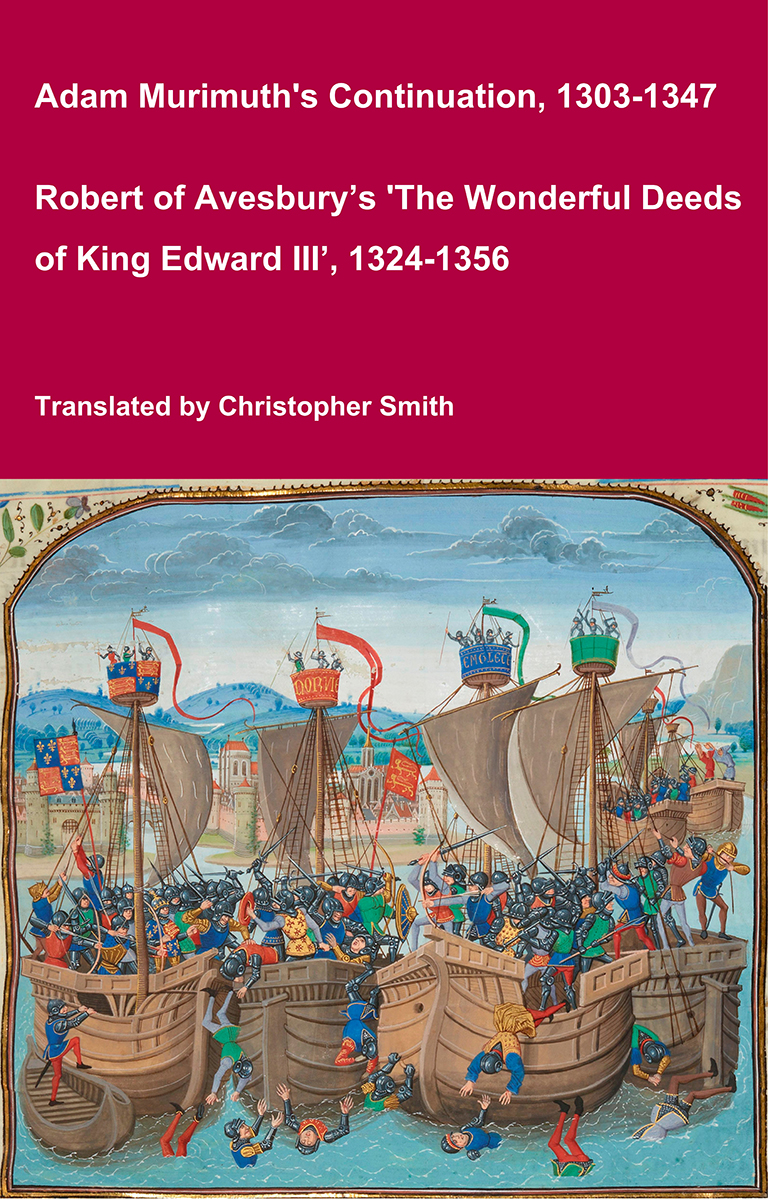
The Life of Edward II, King of England, by Thomas de la Moore. On the following day, the Scots [24th June 1314], having secured a position favourable for victory, dug long trenches from right to left, three feet deep and of the same width. They covered them with frail woven hurdles made from branches and osiers, laying turf and grass over them. The foot soldiers, who had already been informed of the device, could cross them safely, but they were unable to bear the weight of cavalry. The Scottish army took its stand not far from this trench, divided into companies and arranged in very compact battle formations. From the west, opposite them, the English army gleamed. The rising sun cast its rays upon golden shields and shining helmets. They ought instead to have waited until midday before engaging, when they would have had the sun on their right. The cavalry formed the first division, the infantry and archers the second, and in the third stood the king himself with the bishops and other religious men, and among them the cowardly kite Hugh Despenser. When the cavalry advanced against the enemy, they plunged headlong into the trench. The enemy were close at hand, killing and capturing them, sparing only the wealthy, who could be ransomed for a great price. There Gilbert, Earl of Gloucester, was killed. The Scots would gladly have preserved him for ransom had they recognised him, but that day he had neglected to wear the surcoat bearing his own arms. With him fell Edmund Mauley, Robert Clifford, Payn Tiptoft, Giles d'Argentan and many others of knightly rank. Humphrey de Bohun, Earl of Hereford, John Segrave, John Clavering, William Latimer and almost three hundred fighting men were captured and preserved for ransom. Many, however, were killed by our own archers. Seeing men charging directly into the trenches, they loosed their arrows at them, and struck not the Scots, who were armoured in front, but our own men, whose backs were unprotected. The king fled with the bishops and Hugh. Neither the speed of his horse nor human skill delivered him from his enemies, but the Mother of God, whom the king invoked. He vowed to her and to her Son that, should he escape safely, he would establish for her poor Carmelites a house dedicated under the title of the Mother of God, for twenty-four friars assigned to the study of theology. He afterwards fulfilled this vow at Oxford and endowed the house at his own expense, despite Despenser's opposition.

In crastino Scoti, campi locum nacti victoribus opportunum, suffodiebant ad mensuram trium pedum in profandum, et in eandem latitudimem, fossas longas a dextra in sinistram, operientes illas plexis fragilibus ex virgultis et viminibus "hordelles", cespite et herbis superstratis, peditibus quidem prius consciis cautelæ sufficientes, sed ecquitum pondera non valentes sufferre. Exercitus Scotorum non longe ab hac fossa constitit in turmas divisus, in acies solidissimas distributus. Ab occidente vero e contra Anglus refulsit; sol oriens in scuta auren et galeas splendentes radios emisit; oportnit autem ut expectassent potius meridiem ad confligendum cum solem habuissent dextram. In prima acie fuerunt cquites, in secunda pedites et sagittarii, in tertia rex ipse cum episcopis et aliis religiosis, et inter ipsos vecors milvus Hugo Le Spenser. Equites in hostes moti, præcipites in fossam ceciderunt, quibus adfuaerant hostes mactantes, capientes, divitibusque solis, magno pretio redimendis, parcentes. Ibi occubuit Gilbertus comes Glocestriæ, quem Scoti libenter ad redemptionem servassent, si cognovissent; et vero is togam propriæ armaturæ co die induere neglexerat. Ceciderunt cam co Edmundus Maulee, Robertus de Clifford, Paganus Tiptoft, Egidius D'Argentine, et multi alii ordinis militaris. Capti sunt et redemptioni servati Humfridus de Bohun comes Herefordiæ, Johannes de Segrave, Johannes de Clavering, Gulielmus le Latimer, et fere trecenti viri militares. Multos antem occiderant nostri sagittarii, qui, cum Scotos in fossas directos irruere aspexissent, sagittis in eos directis, non Scotos a pectore armatos, sed nostros a tergore nudos trajecernnt. Rex cum episcopis et Hnugone fugam capessivit. Hie non equi velocitas, non hominum industria, regem ab inimicis liberavit, sel Mater Dei quam rex invocavit. Cui rex et Filio suo vovit, si salvus evasisset se crccturam pauperibus ejus Carmelitis mansionem in Matris Dei titulo insignitam pro viginti quatuor fratribus, theologiæ studio deputatis, quod et posten fecit Oxonii, et expensis ditavit, dissuadente Spensero.

Annals Londonienses. In the year of Our Lord 1309, and the aforesaid second year of the king's reign. In the same year, at the quinzaine of Easter [13th April], a Parliament was held at Westminster, in which certain articles written below were presented to the lord king by the earls and barons for the welfare of the realm, but were not yet granted by him. In the same year, on the fifth day before the Kalends of June [28th June], a great tournament was held at Stepney, at which Sir Giles d'Argentan was called the King of the Greenwood, and he, together with his companions, held the field against all comers. In the same year, on the third day before the Kalends of June [30th May], there was a certain dispute in Bridge Street between the men of Sir Giles d'Argentan and the fishmongers of London. Afterwards, however, they were peacefully reconciled.

Anno Domini millesimo CCCIX, et anno regis secundo supradicto. Eodem anno in quindena Paschæ fuit parliamentum apud Westmonasterium, in quo quidam articuli infrascripti per comites et barones pro proficuo regni domino regi fuerunt propositi; sed per ipsum nondum concessi. Eodem anno, quinto kalendas Junii, fuit magnum hastiludium apud Stebenhethe, de quo dominus Egidius Argentein dicebatur rex de Vertbois; et ipse, cum suis complicibus, fuit contra omnes venientes Eodem anno fuit quædam discordia inter homines domini Egidii Argentein et piscenarios Londoniarum, tertio kelendas Junii, in vico Pontis. Sed post, cum amore concordati fuerunt.