

 John Evelyn's Diary February 1693
 Sicily
 John Evelyn's Diary March 1693
 Gravesend, Kent
 John Evelyn's Diary April 1693
 John Evelyn's Diary June 1693
 Banqueting House, Whitehall Palace
 John Evelyn's Diary December 1693
John Evelyn's Diary 1693 is in John Evelyn's Diary 1690s.
1st January 1693. Contest in Parliament about a self-denying Act, that no Parliament man should have any office; it wanted only two or three voices to have been carried. The Duke of Norfolk's [aged 37] bill for a divorce thrown out, he having managed it very indiscreetly. The quarrel between Admiral Russell [aged 40] and Lord Nottingham [aged 45] yet undetermined.


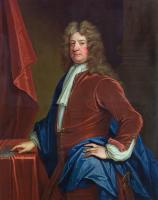
4th February 1693. After five days' trial and extraordinary contest, the Lord Mohun [aged 18] was acquitted by the Lords of the murder of Montford, the player, notwithstanding the judges, from the pregnant witnesses of the fact, had declared him guilty; but whether in commiseration of his youth, being not eighteen years old, though exceedingly dissolute, or upon whatever other reason, the King [aged 42] himself present some part of the trial, and satisfied, as they report, that he was culpable. 69 acquitted him, only 14 condemned him.


4th February 1693. Unheard of stories of the universal increase of witches in New England; men, women, and children, devoting themselves to the devil, so as to threaten the subversion of the government. At the same time there was a conspiracy among the negroes in Barbadoes to murder all their masters, discovered by overhearing a discourse of two of the slaves, and so preventing the execution of the design. Hitherto an exceedingly mild winter. France in the utmost misery and poverty for want of corn and subsistence, while the ambitious King is intent to pursue his conquests on the rest of his neighbours both by sea and land. Our Admiral, Russell [aged 40], laid aside for not pursuing the advantage he had obtained over the French in the past summer; three others chosen in his place. Dr. Burnet [aged 49], Bishop of Salisbury's book burned by the hangman for an expression of the King's title by conquest, on a complaint of Joseph How, a member of Parliament, little better than a madman.


19th February 1693. The Bishop of Lincoln [aged 56] preached in the afternoon at the Tabernacle near Golden Square, set up by him. Proposals of a marriage between Mr. Draper and my daughter Susanna [aged 24]. Hitherto an exceedingly warm winter, such as has seldom been known, and portending an unprosperous spring as to the fruits of the earth; our climate requires more cold and winterly weather. The dreadful and astonishing earthquake swallowing up Catania, and other famous and ancient cities, with more than 100,000 persons in Sicily [Map], on 11th January last, came now to be reported among us.
26th February 1693. An extraordinary deep snow, after almost no winter, and a sudden gentle thaw. A deplorable earthquake at Malta, since that of Sicily [Map], nearly as great.
19th March 1693. A new Secretary of State, Sir John Trenchard [aged 43]; the Attorney-General, Somers [aged 42], made Lord-Keeper, a young lawyer of extraordinary merit. King William [aged 42] goes toward Flanders; but returns, the wind being contrary.

23rd April 1693. An extraordinary wet spring.
27th April 1693. My daughter Susanna [aged 24] was married to William Draper, Esq, in the chapel of Ely House, by Dr. Tenison [aged 56], Bishop of Lincoln (since Archbishop). I gave her in portion £4,000, her jointure is £500 per annum. I pray Almighty God to give his blessing to this marriage! She is a good child, religious, discreet, ingenious, and qualified with all the ornaments of her sex. She has a peculiar talent in design, as painting in oil and miniature, and an extraordinary genius for whatever hands can do with a needle. She has the French tongue, has read most of the Greek and Roman authors and poets, using her talents with great modesty; exquisitely shaped, and of an agreeable countenance. This character is due to her, though coming from her father. Much of this week spent in ceremonies, receiving visits and entertaining relations, and a great part of the next in returning visits.
Abbot John Whethamstede’s Chronicle of the Abbey of St Albans
Abbot John Whethamstede's Register aka Chronicle of his second term at the Abbey of St Albans, 1451-1461, is a remarkable text that describes his first-hand experience of the beginning of the Wars of the Roses including the First and Second Battles of St Albans, 1455 and 1461, respectively, their cause, and their consequences, not least on the Abbey itself. His text also includes Loveday, Blore Heath, Northampton, the Act of Accord, Wakefield, and Towton, and ends with the Coronation of King Edward IV. In addition to the events of the Wars of the Roses, Abbot John, or his scribes who wrote the Chronicle, include details in the life of the Abbey such as charters, letters, land exchanges, visits by legates, and disputes, which provide a rich insight into the day-to-day life of the Abbey, and the challenges faced by its Abbot.
Available at Amazon in eBook and Paperback format.
11th May 1693. We accompanied my daughter [aged 24] to her husband's house, where with many of his and our relations we were magnificently treated. There we left her in an apartment very richly adorned and furnished, and I hope in as happy a condition as could be wished, and with the great satisfaction of all our friends; for which God be praised!
14th May 1693. Nothing yet of action from abroad. Muttering of a design to bring forces under color of an expected descent, to be a standing army for other purposes. Talk of a declaration of the French King [aged 54], offering mighty advantages to the confederates, exclusive of King William [aged 42]; and another of King James [aged 59], with an universal pardon, and referring the composing of all differences to a Parliament. These were yet but discourses; but something is certainly under it. A declaration or manifesto from King James, so written, that many thought it reasonable, and much more to the purpose than any of his former.


1st June 1693. Whitsunday. I went to my Lord Griffith's chapel; the common church office was used for the King without naming the person, with some other, apposite to the necessity and circumstances of the time.
11th June 1693. I dined at Sir William Godolphin's [aged 53]; and, after evening prayer, visited the Duchess of Grafton [aged 25].


21st June 1693. I saw a great auction of pictures in the Banqueting house, Whitehall [Map]. They had been my Lord Melford's [aged 42], now Ambassador from King James [aged 59] at Rome, and engaged to his creditors here. Lord Mulgrave [aged 45] and Sir Edward Seymour [aged 60] came to my house, and desired me to go with them to the sale. Divers more of the great lords, etc., were there, and bought pictures dear enough. There were some very excellent of Vandyke, Rubens, and Bassan. Lord Godolphin [aged 48] bought the picture of the Boys, by Murillo the Spaniard, for 80 guineas, dear enough; my nephew Glanville, the old Earl of Arundel's head by Rubens, for £20. Growing late, I did not stay till all were sold.


24th June 1693. A very wet hay harvest, and little summer as yet.
9th July 1693. Mr. Tippin, successor of Dr. Parr at Camberwell, preached an excellent sermon.
13th July 1693. I saw the Queen's [aged 31] rare cabinets and collection of china; which was wonderfully rich and plentiful, but especially a large cabinet, looking-glass frame and stands, all of amber, much of it white, with historical bas-reliefs and statues, with medals carved in them, esteemed worth £4,000, sent by the Duke of Brandenburgh, whose country, Prussia, abounds with amber, cast up by the sea; divers other China and Indian cabinets, screens, and hangings. In her library were many books in English, French, and Dutch, of all sorts; a cupboard of gold plate; a cabinet of silver filagree, which I think was our Queen Mary's, and which, in my opinion, should have been generously sent to her.


18th July 1693. I dined with Lord Mulgrave [aged 45], with the Earl of Devonshire [aged 53], Mr. Hampden [aged 40] (a scholar and fine gentleman), Dr. Davenant, Sir Henry Vane, and others, and saw and admired the Venus of Correggio, which Lord Mulgrave had newly bought of Mr. Daun for £250; one of the best paintings I ever saw.


1st August 1693. Lord Capel [aged 55], Sir Cyril Wyche [aged 61], and Mr. Duncomb, made Lord Justices in Ireland; Lord Sydney [aged 52] recalled, and made Master of the Ordnance.
6th August 1693. Very lovely harvest weather, and a wholesome season, but no garden fruit.

The True Chronicles of Jean le Bel Volume 1 Chapters 1-60 1307-1342
The True Chronicles of Jean le Bel offer one of the most vivid and immediate accounts of 14th-century Europe, written by a knight who lived through the events he describes, and experienced some of them first hand. Covering the early decades of the Hundred Years’ War, this remarkable chronicle follows the campaigns of Edward III of England, the politics of France and the Low Countries, and the shifting alliances that shaped medieval warfare. Unlike later historians, Jean le Bel writes with a strong sense of eyewitness authenticity, drawing on personal experience and the testimony of fellow soldiers. His narrative captures not only battles and sieges, but also the realities of military life, diplomacy, and the ideals of chivalry that governed noble society. A key source for Jean Froissart, Le Bel’s chronicle stands on its own as a compelling and insightful work, at once historical record and literary achievement. This translation builds on the 1905 edition published in French by Jules Viard, adding extensive translations from other sources Rymer's Fœdera, the Chronicles of Adam Murimuth, William Nangis, Walter of Guisborough, a Bourgeois of Valenciennes, Geoffrey le Baker of Swinbroke and Richard Lescot to enrich the original text and Viard's notes.
Available at Amazon in eBook and Paperback format.
31st October 1693. A very wet and uncomfortable season.
12th November 1693. Lord Nottingham [aged 46] resigned as Secretary of State; the Commissioners of the Admiralty ousted, and Russell [aged 40] restored to his office. The season continued very wet, as it had nearly all the summer, if one might call it summer, in which there was no fruit, but corn was very plentiful.
14th November 1693. In the lottery set up after the Venetian manner by Mr. Neale, Sir R. Haddock, one of the Commissioners of the Navy, had the greatest lot, £3,000; my coachman £40.
17th November 1693. Was the funeral of Captain Young, who died of the stone and great age. I think he was the first who in the first war with Cromwell against Spain, took the Governor of Havanna, and another rich prize, and struck the first stroke against the Dutch fleet in the first war with Holland in the time of the Rebellion; a sober man and an excellent seaman.

30th November 1693. Much importuned to take the office of President of the Royal Society, but I again declined it. Sir Robert Southwell [aged 57] was continued. We all dined at Pontac's as usual.
3rd December 1693. Mr. Bentley preached at the Tabernacle, near Golden Square. I gave my voice for him to proceed on his former subject the following year in Mr. Boyle's lecture, in which he had been interrupted by the importunity of Sir J. Rotheram that the Bishop of Chichester [aged 59] might be chosen the year before, to the great dissatisfaction of the Bishop of Lincoln [aged 57] and myself. We chose Mr. Bentley again. The Duchess of Grafton's [aged 25] appeal to the House of Lords for the Prothonotary's place given to the late Duke and to her son by King Charles II, now challenged by the Lord Chief Justice. The judges were severely reproved on something they said.

10th December 1693. A very great storm of thunder and lightning.