

 John Evelyn's Diary January 1648
 John Evelyn's Diary February 1648
 John Evelyn's Diary April 1648
 John Evelyn's Diary May 1648
 John Evelyn's Diary July 1648
 John Evelyn's Diary August 1648
 John Evelyn's Diary September 1648
John Evelyn's Diary 1648 is in John Evelyn's Diary 1640s.
14th January 1648. From London I went to Wotton, Surrey [Map] to see my young nephew; and thence to Baynards [in Ewhurst], to visit my brother Richard [aged 25].
28th February 1648. I went with my noble friend, Sir William Ducy (afterward Lord Downe), to Thistleworth, where we dined with Sir Clepesby Crew, and afterward to see the rare miniatures of Peter Oliver, and rounds of plaster, and then the curious flowers of Mr. Barill's garden, who has some good medals and pictures. Sir Clepesby has fine Indian hangings, and a very good chimney-piece of water colors, by Breughel, which I bought for him.
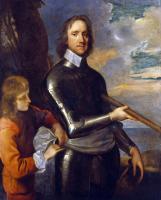
4th May 1648. Came up the Essex petitioners for an agreement between his Majesty and the rebels. The 16th, the Surrey men addressed the Parliament for the same; of which some of them were slain and murdered by Oliver Cromwell's [aged 49] guards, in the new palace yard [Map]. I now sold the impropriation of South Malling, near Lewes [Map], in Sussex, to Messrs. Kemp and Alcock, for £3,000.
30th May 1648. There was a rising now in Kent, my Lord of Norwich [aged 63] being at the head of them. Their first rendezvous was in Broome-field, next my house at Sayes Court, Deptford [Map], whence they went to Maidstone, and so to Colchester, Essex [Map], where was that memorable siege.
27th June 1648. I purchased the manor of Hurcott, in Worcestershire, of my brother George [aged 31], for £3,300.
1st July 1648. I sate for my picture, in which there is a Death's head, to Mr. Walker [aged 49], that excellent painter.
Note 1. See Portrait by Robert Walker.
10th July 1648. News was brought me of my Lord Francis Villiers [deceased] being slain by the rebels near Kingston [Map].
16th August 1648. I went to Woodcote (in Epsom) to the wedding of my brother, Richard [aged 25], who married the daughter [aged 19] and coheir of Esquire Minn [aged 67], lately deceased; by which he had a great estate both in land and money on the death of a brother. The coach in which the bride and bridegroom were, was overturned in coming home; but no harm was done.
28th August 1648. To London from Sayes Court, Deptford [Map], and saw the celebrated follies of Bartholomew Fair.
16th September 1648. Came my lately married brother, Richard, and his wife, to visit me, when I showed them Greenwich, and her Majesty's Palace, now possessed by the rebels.
28th September 1648. I went to Albury, to visit the Countess of Arundel [aged 38], and returned to Wotton, Surrey [Map].
31st October 1648. I went to see my manor of Preston Beckhelvyn, and the Cliffhouse.
29th November 1648. Myself, with Mr. Thomas Offley, and Lady Gerrard, christened my niece Mary, eldest daughter of my brother, George Evelyn [aged 31], by my Lady Cotton, his second wife. I presented my niece a piece of plate which cost me £18, and caused this inscription to be set on it-.
29th November 1648. In memoriam facti.
29th November 1648. Anno cIc Ix. xliix. Cal. Decem. viii. Virginum castiss: Xtianorum innocentis: Nept: suavis: Mariæ. Johan. Evelynus Avunculus et Susceptor Vasculum hoc cum Epigraphe L. M. Q. D.
29th November 1648. Ave Maria Gratiâ sis plena; Dominus tecum.
2nd December 1648. This day I sold my manor of Hurcott for £3,400 to one Mr. Bridges.
13th December 1648. The Parliament now sat up the whole night, and endeavored to have concluded the Isle of Wight Treaty; but were surprised by the rebel army; the members dispersed, and great confusion every where in expectation of what would be next.
17th December 1648. I heard an Italian sermon, in Mercers' Chapel, one Dr. Middleton, an acquaintance of mine, preaching.
18th December 1648. This was a most exceedingly wet year, neither frost nor snow all the winter for more than six days in all. Cattle died every where of a murrain.