

Abbot John Whethamstede’s Chronicle of the Abbey of St Albans
Abbot John Whethamstede's Register aka Chronicle of his second term at the Abbey of St Albans, 1451-1461, is a remarkable text that describes his first-hand experience of the beginning of the Wars of the Roses including the First and Second Battles of St Albans, 1455 and 1461, respectively, their cause, and their consequences, not least on the Abbey itself. His text also includes Loveday, Blore Heath, Northampton, the Act of Accord, Wakefield, and Towton, and ends with the Coronation of King Edward IV. In addition to the events of the Wars of the Roses, Abbot John, or his scribes who wrote the Chronicle, include details in the life of the Abbey such as charters, letters, land exchanges, visits by legates, and disputes, which provide a rich insight into the day-to-day life of the Abbey, and the challenges faced by its Abbot.
Available at Amazon in eBook and Paperback format.
Around 1517 Dean Alexander Nowell was born.
On 29th May 1559 Dean Alexander Nowell [aged 42] was appointed Dean of St Paul's Cathedral.
Henry Machyn's Diary. 29th May 1559. The xxix day of May was depreved of ys byshopepryke of London doctur Boner [aged 59], and in ys plasse master Gryndall [aged 40]; and [Nowell] [aged 42] electyd dene of Powlles, and the old dene depreved, master [Cole] [aged 59].
Henry Machyn's Diary. 20th February 1560. The xx day of Feybruary dyd pryche at Powlles crosse [Map] master Nowell [aged 43]; and ther was a man dyd pennans for he would have a-nodur wyffe, the wyche he had on afore.
Henry Machyn's Diary. 18th February 1561. The xviij day of Feybruary dyd pryche at the cowrt master Nowell [aged 44], the dene of Powlles, Wednysday the furst [ie in Lent].
Henry Machyn's Diary. 19th February 1561. The xix day of Feybruary dyd pryche a-for the quen [aged 27] master Nevell [aged 44], the [dean of Saint Paul's,] and he mad a godly sermon, and gret [audience].


Henry Machyn's Diary. 20th March 1561. The xx day dyd pryche at the courtt the [dean] of Powlles, master Nowell [aged 44].
Henry Machyn's Diary. 15th June 1561. The xv day dyd pryche at Powlles crosse [Map] master Nowell [aged 44] the dene of Powlles, and mad a goodly sermon, and my lord mayre [aged 52] and the althermen and the most of the worshephull craftes wher commondyd to be ther, and ther wher grett audyense.
Henry Machyn's Diary. 25th October 1561. The sam tyme was delt thrugh alle the wardes of London xijd. a howse for ser Rowland Hylle, late mayre of London, behyng vere syke that time.... master Nowelle [aged 44], the dene of Powlles.
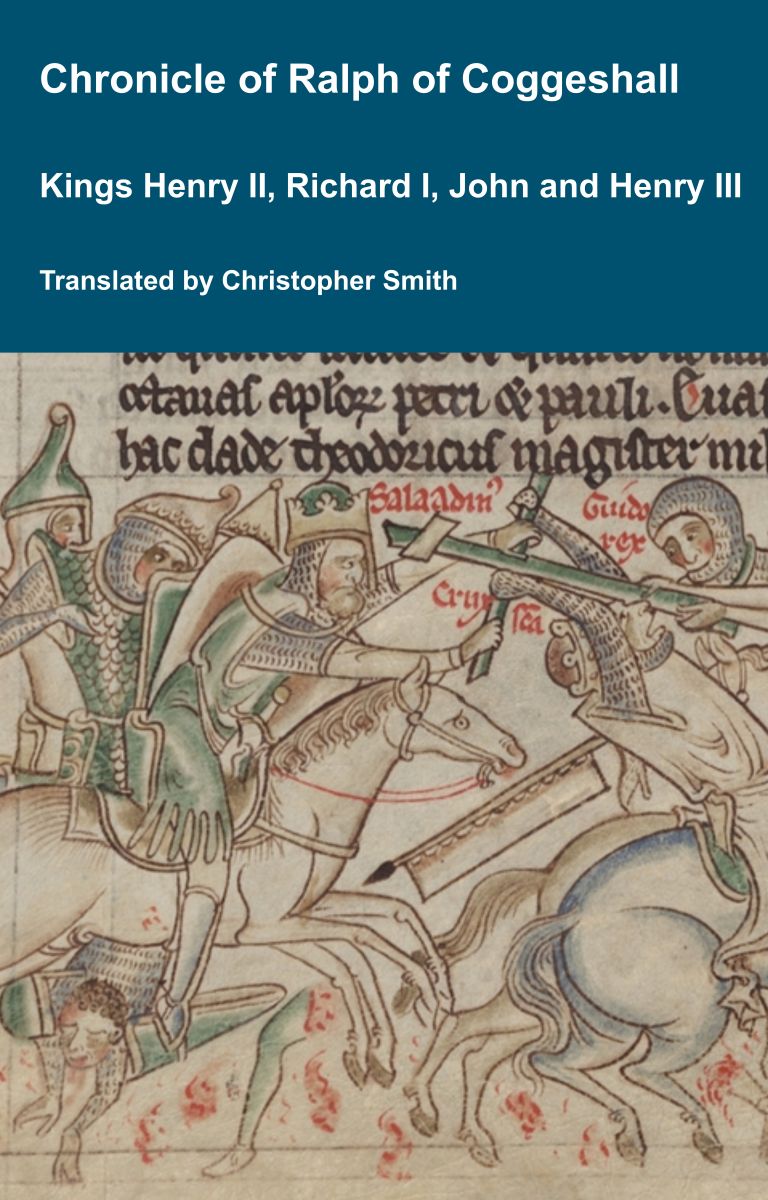
Chronicle of Abbot Ralph of Coggeshall
The Chronicle of Abbot Ralph of Coggeshall (Chronicon Anglicanum) is an indispensable medieval history that brings to life centuries of English and European affairs through the eyes of a learned Cistercian monk. Ralph of Coggeshall, abbot of the Abbey of Coggeshall in Essex in the early 13th century, continued and expanded his community’s chronicle, documenting events from the Norman Conquest of 1066 into the tumultuous reign of King Henry III. Blending eyewitness testimony, careful compilation, and the monastic commitment to record-keeping, this chronicle offers a rare narrative of political intrigue, royal power struggles, and social upheaval in England and beyond. Ralph’s work captures the reigns of pivotal figures such as Richard I and King John, providing invaluable insights into their characters, decisions, and the forces that shaped medieval rule. More than a simple annal, Chronicon Anglicanum conveys the texture of medieval life and governance, making it a rich source for scholars and readers fascinated by English history, monastic authorship, and the shaping of the medieval world.
Available at Amazon in eBook and Paperback format.

Henry Machyn's Diary. 5th November 1561. The v day of November was bered in sant Stephen's in Walbroke ser Rowland Hylle, latt mare and altherman and mercer and knyght, with a standard and v pennons of armes, and a cott armur and a helmet, a crest, sword, and mantyll, and xj dosen of skochyons of armes; and he gayff a c. gownes and cottes to men and women; and ther wher ij haroldes of armes, master Clarenshux [aged 51] and master Somersett, and my lord mayre [aged 65] morner, the cheyff morner; ser Recherd Lee, master Corbett, with dyvers odur morners, ser Wylliam Cordell, ser Thomas Offeley [aged 61], ser Martens Bowes [aged 64] and master Chamburlan althermen, and the ij shreyffes, and master Chambur .. and master Blakewell, with mony mo morners, and a 1. pore men in good blake gownes, besyd women; and the dene of Powlles [aged 44] mad the sermon; and after all done my lord mayre and mony and althermen whent to the Mercers' hall and the craft to dener, and the resedu to ys plase to dener, and grett mon mad [moan made] for ys deth, and he gayff myche to the pore.
Note. P. 271. Death and funeral of the good sir Rowland Hill. This reverend senator has the highest character given him in his epitaph, which was placed "on a faire stone in the south aile of St. Stephen's Walbrook:"
A friend to vertue, a lover of learning,
A foe to vice, and vehement corrector,
A prudent person, all truth supporting;
A citizen sage, and worthy counsellor;
A lover of wisdome, of justice a furtherer,
Loe, here his corps lyeth, sir Rowland Hill by name,
Of London late lord maier, and alderman of fame.
He was the son of Thomas Hill, of Hodnet in Shropshire; was sheriff 1541–2; lord mayor 1549–50. He founded a grammar school at Drayton in Shropshire, and performed other admirable acts of beneficence recorded by Stowe in his Survay, in his chapter "Honour of Citizens." "He dwelled in Walbrook, over against the said church of St. Stephen; and was buried at St. Stephen's in Walbrook 1561." Arms, Azure, two bars argent, on a canton sable a chevron between three pheons of the second, an eagle's head erased of the third, between two mullets gules. (List by Wm. Smith, Rouge-dragon.)
Henry Machyn's Diary. 4th January 1562. The iiij day dyd pryche at Powlles crosse [Map] [the] dene of Powlles [aged 45], and ther dyd a man pennans; he was dume, but the masters of Brydwell mad ym [speak], and for that cause he was there.
Henry Machyn's Diary. 11th February 1562. The xj day of February, was Aswednysday, dyd pryche a-for the quen [aged 28] master Nowelle [aged 45] the dene of [saint Paul's.]
Henry Machyn's Diary. 11th March 1562. The xj day dyd pryche at the cowrt the dene of Powlles master Nowell [aged 45], that was wedynsday.
Henry Machyn's Diary. 13th March 1562. The sam day dyd pryche at the cowrte, that was fryday a-for Passyon sonday, master Nowell [aged 45] the dene of Powlles.
Henry Machyn's Diary. 15th March 1562. The xv day of Marche dyd pryche at the cowrt, the wyche was the v sonday and Passyon sonday, master Nowell [aged 45] the dene of Powlles, for the byshope of London master Gryndall [aged 43]; he dyd pryche be-cause the byshope was syke that day.
Henry Machyn's Diary. 31st March 1562. The xxxj day of Marche dyd pryche at the [court], that was Ester tuwysday, master Nowelle [aged 45] the dene of Powlles.
Henry Machyn's Diary. 2nd April 1562. The ij day of Aprell was bered in the parryche of Allhallows in Bredstrett master Robart Melys [deceased], latt master of the Marchand [taylors,] and he gayff in gownes and cottes to the number of iijxx [coats of] rattes coller of vijs. the yerd to the pore men, and the chylderyn of the hospetall ij and ij together, and [masters] of the hospetall with ther gren stayffes in ther [hands; and master] Nowelle [aged 45] the dene of Powlles dyd pryche; and after to dener at ys sune howse.
Note. P. 279. Funeral of Robert Mellish. Died March, 1562. Epitaph in Stowe.
Henry Machyn's Diary. 19th April 1562. The xix day of Aprell dyd pryche at Powlles crosse master Nowelle [aged 45] the dene of Powlles.
Henry Machyn's Diary. 25th May 1562. The xxv day of May was bered master Godderyke [aged 56] sqwyer, the wyche he ded at ys place with-in Whyt-freres, and cared unto sant Andrew's in Holborne [Map] to be bered; and ther was the compene of the Clarkes syngyng pryke-song, and then cam a morner careng ys pennon of armes, and then cam master Yorke beyryng ys cott armur, and after master Clarenshus [aged 52]; and then cam the corse with a ryche palle of tynsell and ryche cloth of sylver with armes of bokeram; and then the morners, and after the byshope of Canturbere [aged 57] and the byshope of Ely [aged 69] and the byshope of London [aged 43], and next my lord keper [aged 51] and my lord cheyffe justus of England and mony worshephull men, and after ij C [200] of the ines of the cowrt folowd; and the dene of Powlles [aged 45] dyd pryche for hym.
Note. P. 283. Funeral of master Godderyke. It seems not improbable, from the attendance at this funeral, that this was a brother or near relative of the late bishop of Ely and lord chancellor. In the register of St. Andrew's he is styled sir Richard Goodricke. (Malcolm.)


Henry Machyn's Diary. After 25th May 1562. [The .. day of May was the funeral of lady Cheyne [deceased], late wife of ser Thomas Cheyne councillor to] kyng Edward the vj and unto quen Mary and queen Elesabett [aged 28] tyll he ded, and she was beried at Toddington [Map] with mony mornars; master Garter [aged 52] and master Norrey [aged 64] [were] the haroldes, and (the) dene of Powlles [aged 45] dyd pryc[h the sermon,] for ther was grett chere, and a grett dole [as ever] in that contrey sene-iij mylles from Donstabull.
Note. P. 282. Funeral of lady Cheney. See the note on sir Thomas Cheney in p. 369. There is an effigy of the lady at Toddington; see the Topographer, 1846, vol. i. p. 156.
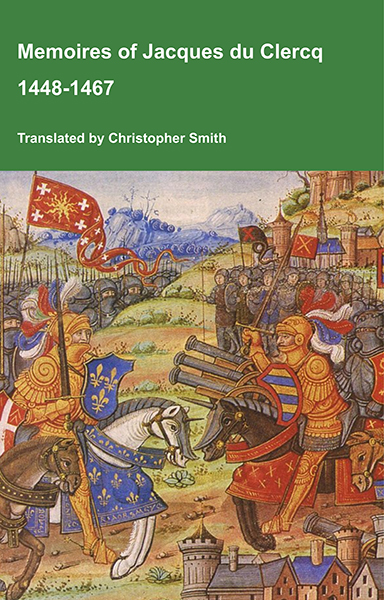
This is a translation of the 'Memoires of Jacques du Clercq', published in 1823 in two volumes, edited by Frederic, Baron de Reissenberg. In his introduction Reissenberg writes: 'Jacques du Clercq tells us that he was born in 1424, and that he was a licentiate in law and a counsellor to Philip the Good, Duke of Burgundy, in the castellany of Douai, Lille, and Orchies. It appears that he established his residence at Arras. In 1446, he married the daughter of Baldwin de la Lacherie, a gentleman who lived in Lille. We read in the fifth book of his Memoirs that his father, also named Jacques du Clercq, had married a lady of the Le Camelin family, from Compiègne. His ancestors, always attached to the counts of Flanders, had constantly served them, whether in their councils or in their armies.' The Memoires cover a period of nineteen years beginning in in 1448, ending in in 1467. It appears that the author had intended to extend the Memoirs beyond that date; no doubt illness or death prevented him from carrying out this plan. As Reissenberg writes the 'merit of this work lies in the simplicity of its narrative, in its tone of good faith, and in a certain air of frankness which naturally wins the reader’s confidence.' Du Clercq ranges from events of national and international importance, including events of the Wars of the Roses in England, to simple, everyday local events such as marriages, robberies, murders, trials and deaths, including that of his own father in Book 5; one of his last entries.
Available at Amazon in eBook and Paperback format.
Henry Machyn's Diary. 30th September 1562. The xxx day of September was raylles mad at sant Giles's withwtt Crepull-gatte [Map], and hangyd with blake and armes, [for the] gentyll knyght ser Hare Gray [deceased], and was brodur unto the earl of Kent [Note. Hare Gray was Earl but didn't use the title.], with ij haroldes of armes, master Clarenshux [aged 52] kynge, and Ruge-crosse pursewantt of armes, and he bare the helme and crest, master Clarenshux the cott of armes, and then the standard and [banners of] armes; and the clarkes syngyng; and then the corse covered [with a bla]ke velvett pall with a whyt crosse of saten and armes a-p[on it,] and many mornars in blake; and ther dyd pryche master (Nowell) [aged 45] the [dean of] Powlles; and after he was bered home to the plase to d[inner, where] ther was good chere, dener after dener tyll iiij of the [clock.]
Note. P. 293. Funeral of sir Harry Grey, brother to the earl of Kent. Richard earl of Kent, having much wasted his estate by gaming, died at the sign of the George in Lombardstreet, in 15 Hen. VIII. and was buried at the White Friars in Fleet-street. Whereupon his brother and heir male, sir Henry Grey of Wrest, by reason of his slender estate, declined to take upon him the title of Earl. (Ralph Brooke's Catalogue of Nobilitie.) He died Sept. 24, 1562; and in his epitaph at St. Giles's, Cripplegate, was styled "Sir Henry Grey knight, sonne and heire to George lord Grey of Ruthen and earl of Kent." (Stowe's Survay.) The dignity was resumed by his grandson Reginald, in 1571. "Sir Harry Grey knight dyed at his howsse in London in Sant Gyles parishe the xvjth day of September, in the 4th yere of our soveraigne lady quene Elizabethe, and was buryed in the parishe churche there the xxijth of the same mounthe, and lyeth in the chapel of the south syde the quere. The said sir Henry maryd Anne doghter of John Blenerhasset, in the county of Suffolk." (MS. Harl. 897, f. 20b, where his issue is also stated.)
Henry Machyn's Diary. 12th January 1563. [The xij day of January the Queen's second Parliament began to sit at Westminster, and the] lordes and byshopes rod in ther [parliament robes, and] the Quen('s) [aged 29] grase in cremesun welvett, [and the earl of] Northumburland [aged 35] bare the sword a-for the quen; [all the] haroldes of armes in ther cotte armurs, and all the trumpettes [blowing], and lythe at owre lade of Grace chapell, and they [went in]to the abbay, and ther was a sermon (by Nowell [aged 46], dean of Saint Paul's.)
Henry Machyn's Diary. 14th April 1563. The xiiij day of Aprell dyd pryche at the spyttylle the wedynsday the dene of Powlles [aged 46] in Ester wyke.
On 13th February 1602 Dean Alexander Nowell [aged 85] died.