

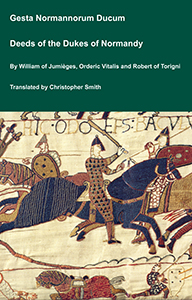
The Deeds of the Dukes of Normandy
The Gesta Normannorum Ducum [The Deeds of the Dukes of Normandy] is a landmark medieval chronicle tracing the rise and fall of the Norman dynasty from its early roots through the pivotal events surrounding the Norman Conquest of England. Originally penned in Latin by the monk William of Jumièges shortly before 1060 and later expanded at the behest of William the Conqueror, the work chronicles the deeds, politics, battles, and leadership of the Norman dukes, especially William’s own claim to the English throne. The narrative combines earlier historical sources with firsthand information and oral testimony to present an authoritative account of Normandy’s transformation from a Viking settlement into one of medieval Europe’s most powerful realms. William’s history emphasizes the legitimacy, military prowess, and governance of the Norman line, framing their expansion, including the conquest of England, as both divinely sanctioned and noble in purpose. Later chroniclers such as Orderic Vitalis and Robert of Torigni continued the history, extending the coverage into the 12th century, providing broader context on ducal rule and its impact. Today this classic work remains a foundational source for understanding Norman identity, medieval statesmanship, and the historical forces that reshaped England and Western Europe between 800AD and 1100AD.
Available at Amazon in eBook and Paperback format.
Archbishop of Canterbury is in Archbishop. See Canterbury Cathedral [Map].
616 Death of Æthelberht King of Kent
1052 Coronation of William the Conqueror
Around 604 Archbishop Laurence was appointed Archbishop of Canterbury.
Anglo-Saxon Chronicle. 616. This year died Ethelbert [aged 66], king of Kent, the first of English kings that received baptism: he was the son of Ermenric. He reigned fifty-six winters, and was succeeded by his son Eadbald. And in this same year had elapsed from the beginning of the world five thousand six hundred and eighteen winters. This Eadbald renounced his baptism, and lived in a heathen manner; so that he took to wife the relict of his father. Then Laurentius, who was archbishop in Kent, meant to depart southward over sea, and abandon everything. But there came to him in the night the apostle Peter, and severely chastised him19, because he would so desert the flock of God. And he charged him to go to the king, and teach him the right belief. And he did so; and the king returned to the right belief. In this king's days the same Laurentius, who was archbishop in Kent after Augustine, departed this life on the second of February, and was buried near Augustine. The holy Augustine in his lifetime invested him bishop, to the end that the church of Christ, which yet was new in England, should at no time after his decease be without an archbishop. After him Mellitus, who was first Bishop of London, succeeded to the archbishopric. The people of London, where Mellitus was before, were then heathens: and within five winters of this time, during the reign of Eadbald, Mellitus died. To him succeeded Justus, who was Bishop of Rochester, whereto he consecrated Romanus bishop.
Note 19. Literally, "swinged, or scourged him." Both Bede and Alfred begin by recording the matter as a vision, or a dream; whence the transition is easy to a matter of fact, as here stated by the Norman interpolators of the "Saxon Annals".
In 619 Bishop Mellitus was appointed Archbishop of Canterbury.
In 624 Archbishop Justus was appointed 4th Archbishop of Canterbury.
On 21st July 625 Archbishop Paulinus of York was appointed Archbishop of Canterbury.
Anglo-Saxon Chronicle. 627. This year was King Edwin [aged 41] baptized at Easter, with all his people, by Paulinus, who also preached baptism in Lindsey [Map], where the first person who believed was a certain rich man, of the name of Bleek, with all his people. At this time Honorius succeeded Boniface in the papacy, and sent hither to Paulinus the pall; and Archbishop Justus having departed this life on the tenth of November, Honorius was consecrated at Lincoln, Lincolnshire [Map] Archbishop of Canterbury by Paulinus; and Pope Honorius sent him the pall. And he sent an injunction to the Scots, that they should return to the right celebration of Easter.
In 627 Archbishop Honorius was appointed Archbishop of Canterbury.
On 26th March 655 Archbishop Deusdedit was consecrated Archbishop of Canterbury by Bishop Ithamar.
Anglo-Saxon Chronicle. This year Ithamar, Bishop of Rochester, consecrated Deus-dedit to Canterbury, on the twenty-sixth day of March.
Anglo-Saxon Chronicle. 667. This year Oswy [aged 55] and Egbert sent Wighard, a priest, to Rome, that he might be consecrated there Archbishop of Canterbury; but he died as soon as he came thither.
The History of William Marshal was commissioned by his son shortly after William’s death in 1219 to celebrate the Marshal’s remarkable life; it is an authentic, contemporary voice. The manuscript was discovered in 1861 by French historian Paul Meyer. Meyer published the manuscript in its original Anglo-French in 1891 in two books. This book is a line by line translation of the first of Meyer’s books; lines 1-10152. Book 1 of the History begins in 1139 and ends in 1194. It describes the events of the Anarchy, the role of William’s father John, John’s marriages, William’s childhood, his role as a hostage at the siege of Newbury, his injury and imprisonment in Poitou where he met Eleanor of Aquitaine and his life as a knight errant. It continues with the accusation against him of an improper relationship with Margaret, wife of Henry the Young King, his exile, and return, the death of Henry the Young King, the rebellion of Richard, the future King Richard I, war with France, the death of King Henry II, and the capture of King Richard, and the rebellion of John, the future King John. It ends with the release of King Richard and the death of John Marshal.
Available at Amazon in eBook and Paperback format.
Anglo-Saxon Chronicle. 668. This year Theodore [aged 66] was consecrated archbishop, and sent into Britain.
On 26th March 668 Archbishop Theodore of Tarsus [aged 66] was appointed Archbishop of Canterbury in Rome, Italy [Map].
On 10th June 729 Archbishop Tatwine [aged 59] was consecrated Archbishop of Canterbury by Bishop Daniel of Winchester.
In 735 Archbishop Nothelm was appointed Archbishop of Canterbury.
In 740 Archbishop Cuthbert was consecrated Archbishop of Canterbury.
In 760 Archbishop Bregowine was appointed Archbishop of Canterbury.
On 2nd February 765 Archbishop Jænberht was consecrated Archbishop of Canterbury.
In 792 Archbishop Æthelhard was translated to Archbishop of Canterbury by King Offa of Mercia.
On 21st January 793 Archbishop Æthelhard was enthroned Archbishop of Canterbury in a service presided over by Archbishop Hygeberht.
Anglo-Saxon Chronicle. 803. This year died Hibbald, Bishop of Holy-island, on the twenty-fourth of June, and Egbert was consecrated in his stead, on the thirteenth of June following. Archbishop Ethelherd also died in Kent, and Wulfred was chosen archbishop in his stead. Abbot Forthred, in the course of the same year, departed this life.
Anglo-Saxon Chronicle. This year the army rode over Mercia into East-Anglia, and there fixed their winter-quarters at Thetford [Map]. And in the winter King Edmund fought with them; but the Danes gained the victory, and slew the king [20th November 869]; whereupon they overran all that land, and destroyed all the monasteries to which they came. The names of the leaders who slew the king were Hingwar and Hubba. At the same time came they to Medhamsted [Map], burning and breaking, and slaying abbot and monks, and all that they there found. They made such havoc there, that a monastery [Map], which was before full rich, was now reduced to nothing. The same year died Archbishop Ceolnoth; and Ethered, Bishop of Witshire, was chosen Archbishop of Canterbury.
In 870 Archbishop Æthelred was consecrated Archbishop of Canterbury.
In 890 Archbishop Plegmund was appointed Archbishop of Canterbury.
Around 923 Archbishop Athelm was appointed Archbishop of Canterbury.
Around 926 Archbishop Wulfhelm was appointed Archbishop of Canterbury.
In 941 Archbishop Oda was appointed Archbishop of Canterbury.
In 958 a charter of King Edgar I of England [aged 15] describes Penkridge, Staffordshire [Map] as a "famous place". St Michael's Church, Penkridge [Map] was established as a Royal Free Chapel making it a Royal Peculiar. The church was independent of the Bishop of Lichfield and, correspondingly, the Archbishop of Canterbury.
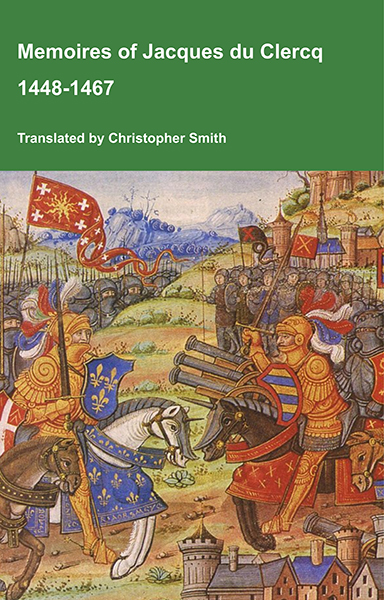
This is a translation of the 'Memoires of Jacques du Clercq', published in 1823 in two volumes, edited by Frederic, Baron de Reissenberg. In his introduction Reissenberg writes: 'Jacques du Clercq tells us that he was born in 1424, and that he was a licentiate in law and a counsellor to Philip the Good, Duke of Burgundy, in the castellany of Douai, Lille, and Orchies. It appears that he established his residence at Arras. In 1446, he married the daughter of Baldwin de la Lacherie, a gentleman who lived in Lille. We read in the fifth book of his Memoirs that his father, also named Jacques du Clercq, had married a lady of the Le Camelin family, from Compiègne. His ancestors, always attached to the counts of Flanders, had constantly served them, whether in their councils or in their armies.' The Memoires cover a period of nineteen years beginning in in 1448, ending in in 1467. It appears that the author had intended to extend the Memoirs beyond that date; no doubt illness or death prevented him from carrying out this plan. As Reissenberg writes the 'merit of this work lies in the simplicity of its narrative, in its tone of good faith, and in a certain air of frankness which naturally wins the reader’s confidence.' Du Clercq ranges from events of national and international importance, including events of the Wars of the Roses in England, to simple, everyday local events such as marriages, robberies, murders, trials and deaths, including that of his own father in Book 5; one of his last entries.
Available at Amazon in eBook and Paperback format.
In 959 Archbishop Dunstan [aged 50] was appointed Archbishop of Canterbury.
Anglo-Saxon Chronicle. 961. This year departed Odo, the good archbishop, and St. Dunstan [aged 52] took to the archbishopric. This year also died Elfgar, a relative of the king, in Devonshire; and his body lies at Wilton [Map]: and King Sifferth killed himself; and his body lies at Wimborn [Map]. This year there was a very great pestilence; when the great fever was in London; and St. Paul's minster was consumed with fire, and in the same year was afterwards restored. In this year Athelmod the masspriest, went to Rome, and there died on the eighteenth before the calends of September.
In 988 Archbishop Ethelgar was elected Archbishop of Canterbury.
In 989 Archbishop Sigeric was elected Archbishop of Canterbury.
In 994 Archbishop Ælfric was elected Archbishop of Canterbury.
Anglo-Saxon Chronicle. 996. This year was Elfric consecrated archbishop at Christ church.49
Note 49. i.e. at Canterbury. He was chosen or nominated before, by King Ethelred [aged 30] and his council, at Amesbury: vid. an. 994. This notice of his consecration, which is confirmed by Florence of Worcester, is now first admitted into the text on the authority of three MSS.
In 1004 Archbishop Ælfheah [aged 51] was elected Archbishop of Canterbury.
In 1006 Archbishop Ælfheah [aged 53] was consecrated Archbishop of Canterbury.
In 1013 Archbishop Ælfstan aka Lyfing was appointed Archbishop of Canterbury by King Æthelred II of England [aged 47].
Anglo-Saxon Chronicle. 1020. This year came King Knute [aged 25] back to England; and there was at Easter a great council at Cirencester, Gloucestershire [Map], where Alderman Ethelward was outlawed, and Edwy, king of the churls. This year went the king to Assingdon; with Earl Thurkyll, and Archbishop Wulfstan, and other bishops, and also abbots, and many monks with them; and he ordered to be built there a minster of stone and lime, for the souls of the men who were there slain, and gave it to his own priest, whose name was Stigand; and they consecrated the minster at Assingdon. And Ethelnoth the monk, who had been dean at Christ's church, was the same year on the ides of November consecrated Bishop of Christ's church by Archbishop Wulfstan.
On 13th November 1020 Archbishop Æthelnoth was consecrated Archbishop of Canterbury by Archbishop Wulfstan.
In 1038 Archbishop Eadsige was appointed Archbishop of Canterbury.
William of Worcester's Chronicle of England
William of Worcester, born around 1415, and died around 1482 was secretary to John Fastolf, the renowned soldier of the Hundred Years War, during which time he collected documents, letters, and wrote a record of events. Following their return to England in 1440 William was witness to major events. Twice in his chronicle he uses the first person: 1. when writing about the murder of Thomas, 7th Baron Scales, in 1460, he writes '… and I saw him lying naked in the cemetery near the porch of the church of St. Mary Overie in Southwark …' and 2. describing King Edward IV's entry into London in 1461 he writes '… proclaimed that all the people themselves were to recognize and acknowledge Edward as king. I was present and heard this, and immediately went down with them into the city'. William’s Chronicle is rich in detail. It is the source of much information about the Wars of the Roses, including the term 'Diabolical Marriage' to describe the marriage of Queen Elizabeth Woodville’s brother John’s marriage to Katherine, Dowager Duchess of Norfolk, he aged twenty, she sixty-five or more, and the story about a paper crown being placed in mockery on the severed head of Richard, 3rd Duke of York.
Available at Amazon in eBook and Paperback format.
In 1044 Archbishop Robert of Jumièges was appointed Archbishop of Canterbury; the first Norman Archbishop of Canterbury.
In 1052 Archbishop Stigand was appointed Archbishop of Canterbury which he held jointly with his Bishopric of Worcester making him very wealthy. Five successive Popes excommunicated Stigand for his holding of both Winchester and Canterbury. His excommunication meant he could ot preside at the Coronation of William the Conqueror.
On 29th August 1070 Archbishop Lanfranc [aged 65] was consecrated Archbishop of Canterbury.
Flowers of History. 8th April 1071. A general council of the kingdom of England was held, to discuss the question of the primacy of the church of Canterbury, as superior to the church of York, on the eighth of April. And at last it was decreed that the archbishop of Canterbury had the preeminence, and that the archbishop of York was subordinate to him in everything.
Flowers of History. 24th April 1071. Lanfranc [aged 66], abbot of Caen, was consecrated archbishop of Canterbury, on the twenty-fourth of April. And this Lanfranc, when archbishop, established the order of monks according to the rule of Saint Benedict in many of the convents of England. And he did so, first of all, in the church of Canterbury; after that, in the church of Saint Alban [Map], the protomartyr of the English, where also, when the abbot Frederic died, he appointed his [Lanfranc's] nephew Paul as his successor; who, relying on the support of his uncle, restored the church, and reformed the brotherhood, which had fallen into some irregularities.
In 1072 the Accord of Winchester established the primacy of the Archbishop of Canterbury over the Archbishop of York. It was signed by...
King William "Conqueror" I of England [aged 44] and Matilda Flanders Queen Consort England [aged 41].
Archbishop Ealdred who signed "I concede" whereas other signatories signed "I subscribe".
Bishop Wulfstan [aged 64].
Herfast Bishop Chancellor.
In 1093 Archbishop Anselm [aged 60] was appointed Archbishop of Canterbury.
On 26th April 1114 Archbishop Ralph d'Escures was appointed Archbishop of Canterbury.
Chronicon ex Chronicis by Florence and John of Worcester. 16th February 1123. William [aged 53], a canon of St. Osythe, at Chiche1, was named to the archbishopric of Canterbury at Gloucester, where the king held his court at the feast of the Purification of St. Mary; and he was consecrated at Canterbury by William, bishop of Winchester, assisted by many other bishops, on the fourteenth of the calends of March [16th February]. With his approval, the bishopric of Lincoln was given to Alexander, archdeacon of Salisbury. Afterwards, archbishop William, in company with Thurstan [aged 53], archbishop of York, Bernard, bishop of St. David's2, Sigefred, abbot Glastonbury, and Anselm, abbot of St. Edmund's, went to Rome to receive the pallium.
Note 1. St. Osythe, in Essex, a priory rebuilt in 1118 for canons of the Augustine order, of which there are considerable remains.
Note 2. Henry of Huntingdon includes Alexander, the new bishop of Lincoln, among the archbishop's companions to Rome, and it is probable that the historian attended his patron. See his character of bishop Alexander, p. 253, of his history in the Antiq. Lib.
In 1139 Archbishop Theobald of Bec [aged 49] was appointed Archbishop of Canterbury.
On 23rd May 1162 Archbishop Thomas Becket [aged 42] was elected Archbishop of Canterbury by King Henry "Curtmantle" II of England [aged 29].
On 3rd June 1162 Archbishop Thomas Becket [aged 42] was consecrated Archbishop of Canterbury by Bishop Henry of Blois [aged 64].
On 24th May 1162 Archbishop Thomas Becket [aged 42] was appointed Archbishop of Canterbury.
Chronicle of Walter of Guisborough
A canon regular of the Augustinian Guisborough Priory, Yorkshire, formerly known as The Chronicle of Walter of Hemingburgh, describes the period from 1066 to 1346. Before 1274 the Chronicle is based on other works. Thereafter, the Chronicle is original, and a remarkable source for the events of the time. This book provides a translation of the Chronicle from that date. The Latin source for our translation is the 1849 work edited by Hans Claude Hamilton. Hamilton, in his preface, says: 'In the present work we behold perhaps one of the finest samples of our early chronicles, both as regards the value of the events recorded, and the correctness with which they are detailed; Nor will the pleasing style of composition be lightly passed over by those capable of seeing reflected from it the tokens of a vigorous and cultivated mind, and a favourable specimen of the learning and taste of the age in which it was framed.'
Available at Amazon in eBook and Paperback format.
On 3rd February 1173 Archbishop Richard of Dover was elected Archbishop of Canterbury although the monks preferred Odo, Prior of Canterbury.
On 7th April 1174 Archbishop Richard of Dover was consecrated Archbishop of Canterbury at Anagni Frosinone Latium by Pope Alexander III. Richard returned to England at the close of the year bearing his pallium which he had received directly from the pope.
In December 1184 Archbishop Baldwin of Forde [aged 59] was translated to Archbishop of Canterbury.
On 27th November 1191 Archbishop Reginald Fitz Jocelin was elected Archbishop of Canterbury. The year may have been 1191; it is known he died a month of being elected.
On 29th May 1193 Archbishop Hubert Walter [aged 33] was elected as Archbishop of Canterbury.
On 7th June 1207 Archbishop Stephen Langton [aged 57] was consecrated Archbishop of Canterbury at Viterbo [Map] by Pope Innocent III [aged 47].
In 1233 Archbishop Edmund Rich [aged 58] was appointed Archbishop of Canterbury.
On 15th January 1245 Archbishop Boniface Savoy [aged 38] was consecrated Archbishop of Canterbury at Lyon, France [Map] by Pope Innocent IV during the First Council of Lyon.
On 11th October 1272 Archbishop Robert Kilwardby was elected Archbishop of Canterbury.
On 26th February 1273 Archbishop Robert Kilwardby was consecrated Archbishop of Canterbury.
On 25th January 1279 Archbishop John Peckham [aged 49] was appointed Archbishop of Canterbury.
This is a translation of the 'Memoires of Jacques du Clercq', published in 1823 in two volumes, edited by Frederic, Baron de Reissenberg. In his introduction Reissenberg writes: 'Jacques du Clercq tells us that he was born in 1424, and that he was a licentiate in law and a counsellor to Philip the Good, Duke of Burgundy, in the castellany of Douai, Lille, and Orchies. It appears that he established his residence at Arras. In 1446, he married the daughter of Baldwin de la Lacherie, a gentleman who lived in Lille. We read in the fifth book of his Memoirs that his father, also named Jacques du Clercq, had married a lady of the Le Camelin family, from Compiègne. His ancestors, always attached to the counts of Flanders, had constantly served them, whether in their councils or in their armies.' The Memoires cover a period of nineteen years beginning in in 1448, ending in in 1467. It appears that the author had intended to extend the Memoirs beyond that date; no doubt illness or death prevented him from carrying out this plan. As Reissenberg writes the 'merit of this work lies in the simplicity of its narrative, in its tone of good faith, and in a certain air of frankness which naturally wins the reader’s confidence.' Du Clercq ranges from events of national and international importance, including events of the Wars of the Roses in England, to simple, everyday local events such as marriages, robberies, murders, trials and deaths, including that of his own father in Book 5; one of his last entries.
Available at Amazon in eBook and Paperback format.
On 13th February 1293 Archbishop Robert Winchelsey [aged 48] was elected Archbishop of Canterbury.
On 12th September 1294 Archbishop Robert Winchelsey [aged 49] was consecrated Archbishop of Canterbury in Aquila by Pope Celestine V.
On 12th November 1299 Archbishop Thomas Corbridge was elected Archbishop of Canterbury.
In 1313 Archbishop Walter Reynolds was appointed Archbishop of Canterbury.
In January 1314 Archbishop Walter Reynolds was enthroned Archbishop of Canterbury at Canterbury Cathedral [Map].
On 11th December 1327 Simon Mepeham was elected Archbishop of Canterbury.
On 3rd November 1333 John de Straford [aged 58] was appointed Archbishop of Canterbury.
On 24th September 1348 John de Ufford was appointed Archbishop of Canterbury by papal bull. He died eight months later of the plague before he was consecrated.
On 19th July 1349 Archbishop Thomas Bradwardine [aged 49] was consecrated Archbishop of Canterbury. He died a month later of plague.
On 20th December 1349 Archbishop Simon Islip was consecrated Archbishop of Canterbury.
In May 1375 Archbishop Simon Sudbury [aged 59] was appointed Archbishop of Canterbury.
On 30th July 1381 Archbishop William Courtenay [aged 39] was appointed Archbishop of Canterbury.
Henrici Quinti, Angliæ Regis, Gesta, is a first-hand account of the Agincourt Campaign, and subsequent events to his death in 1422. The author of the first part was a Chaplain in King Henry's retinue who was present from King Henry's departure at Southampton in 1415, at the siege of Harfleur, the battle of Agincourt, and the celebrations on King Henry's return to London. The second part, by another writer, relates the events that took place including the negotiations at Troye, Henry's marriage and his death in 1422.
Available at Amazon in eBook and Paperback format.
On 25th September 1396 Archbishop Thomas Fitzalan aka Arundel [aged 43] was appointed Archbishop of Canterbury.
On 8th November 1397 Archbishop Roger Walden was elected Archbishop of Canterbury as a result of the influence of Archbishop Thomas Fitzalan aka Arundel [aged 44].
Before 13th October 1399 Archbishop Thomas Fitzalan aka Arundel [aged 46] was appointed Archbishop of Canterbury.
On 17th June 1408 Archbishop Henry Chichele [aged 45] was consecrated Archbishop of Canterbury.
In May 1443 Archbishop John Stafford was appointed Archbishop of Canterbury which position he held until his death.
In July 1452 Cardinal John Kempe [aged 72] was translated to Archbishop of Canterbury.
In April 1454 Cardinal Thomas Bourchier [aged 36] was appointed Archbishop of Canterbury.
On 6th October 1486 Cardinal John Morton [aged 66] was appointed Archbishop of Canterbury.
In 1501 Archbishop Henry Deane was appointed Archbishop of Canterbury.
On 22nd January 1501 Bishop Thomas Langton was elected Archbishop of Canterbury. He died five days later of the plague.
On 29th November 1503 Archbishop William Warham [aged 53] was appointed Archbishop of Canterbury.


After 1st September 1532 Thomas Cranmer [aged 43], whilst staying in Mantua, received a royal letter dated 1st September 1532 by which he was appointed Archbishop of Canterbury; he was ordered to return to England. Cranmer's appointment, supported, if not arranged, by the Boleyn family who he subsequently supported.
On 30th March 1553 Archbishop Thomas Cranmer [aged 63] was consecrated as Archbishop of Canterbury at St Stephen's Chapel, Westminster Palace [Map] by Bishop John Longland, Bishop John Vesey aka Harman [aged 91] and Bishop Henry Standish.

On 1st August 1559 Archbishop Matthew Parker [aged 54] was elected Archbishop of Canterbury. He was helped by his friend Nicholas Bacon [aged 48].
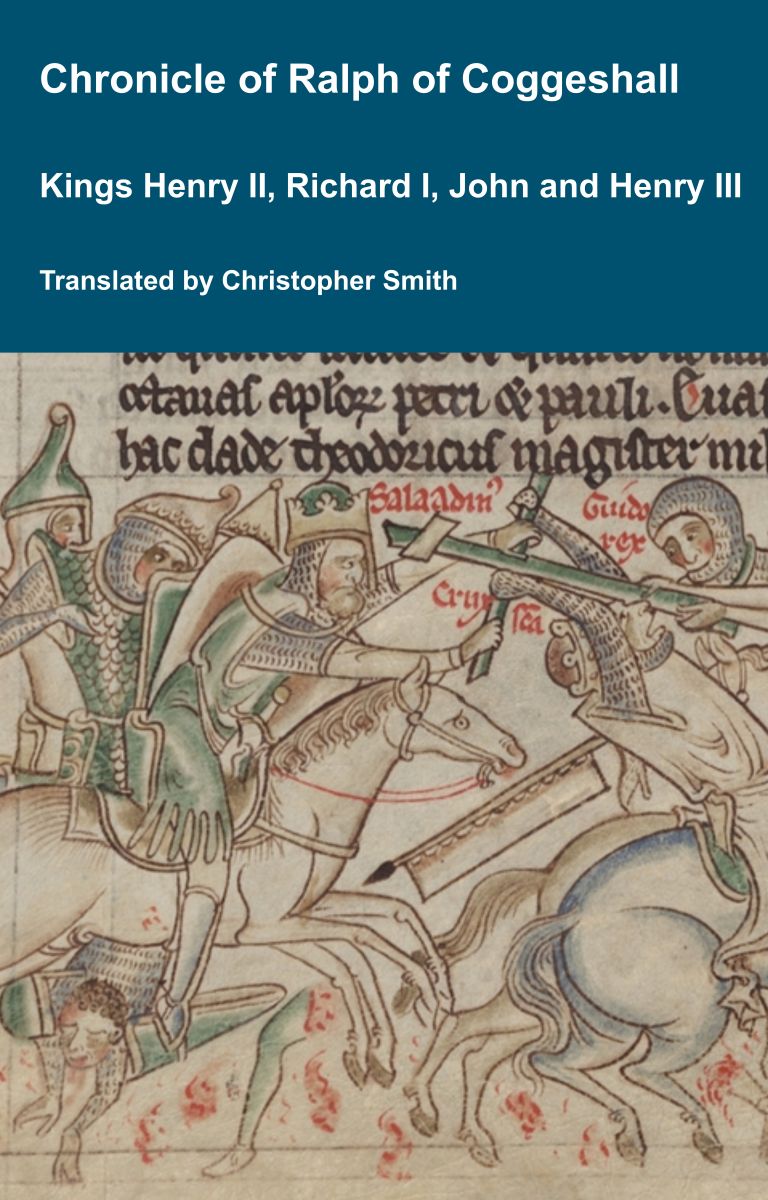
Chronicle of Abbot Ralph of Coggeshall
The Chronicle of Abbot Ralph of Coggeshall (Chronicon Anglicanum) is an indispensable medieval history that brings to life centuries of English and European affairs through the eyes of a learned Cistercian monk. Ralph of Coggeshall, abbot of the Abbey of Coggeshall in Essex in the early 13th century, continued and expanded his community’s chronicle, documenting events from the Norman Conquest of 1066 into the tumultuous reign of King Henry III. Blending eyewitness testimony, careful compilation, and the monastic commitment to record-keeping, this chronicle offers a rare narrative of political intrigue, royal power struggles, and social upheaval in England and beyond. Ralph’s work captures the reigns of pivotal figures such as Richard I and King John, providing invaluable insights into their characters, decisions, and the forces that shaped medieval rule. More than a simple annal, Chronicon Anglicanum conveys the texture of medieval life and governance, making it a rich source for scholars and readers fascinated by English history, monastic authorship, and the shaping of the medieval world.
Available at Amazon in eBook and Paperback format.
Henry Machyn's Diary. 16th December 1559. The xvj day of Desember was the sam man bered in sant Don stones in the est, master Cottell, that was slayne with (the) falle, and he had a sarmon, and all ys compene in ther clothyng, and a grett dener, for ther was mad mon [moan] for hym, and a dolle.... Parker [aged 55] electyd byshope of Canturbere.
On 17th December 1559 Archbishop Matthew Parker [aged 55] was consecrated Archbishop of Canterbury at Lambeth Palace [Map] by Bishop William Barlow [aged 61].
In November 1604 Archbishop Richard Bancroft [aged 60] was elected Archbishop of Canterbury.
In 1611 Archbishop George Abbott [aged 48] was elected Archbishop of Canterbury.
On 6th August 1633 Archbishop William Laud [aged 59] was appointed Archbishop of Canterbury.


On 13th September 1660 Archbishop William Juxon [aged 78] was elected Archbishop of Canterbury.
In 1663 Archbishop Gilbert Sheldon [aged 64] was appointed Archbishop of Canterbury.
John Evelyn's Diary. 31st August 1663. I was invited to the translation of Dr. Sheldon [aged 65], Bishop of London, from that see to Canterbury, the ceremony performed at Lambeth Palace [Map]. First, went his Grace's mace bearer, steward, treasurer, comptroller, all in their gowns, and with white staves; next, the bishops in their habits, eight in number; Dr. Sweate, Dean of the Arches, Dr. Exton, Judge of the Admiralty, Sir William Merick, Judge of the Prerogative Court, with divers advocates in scarlet. After divine service in the chapel, performed with music extraordinary, Dr. French and Dr. Stradling (his Grace's chaplains) said prayers. The Archbishop in a private room looking into the chapel, the bishops, who were commissioners, went up to a table placed before the altar, and sat round it in chairs. Then Dr. Chaworth presented the commission under the broad seal to the Bishop of Winchester [aged 65], and it was read by Dr. Sweate. After which, the Vicar-General went to the vestry, and brought his Grace into the chapel, his other officers marching before. He being presented to the Commissioners, was seated in a great armchair at one end of the table, when the definitive sentence was read by the Bishop of Winchester, and subscribed by all the bishops, and proclamation was three times made at the chapel door, which was then set open for any to enter, and give their exceptions; if any they had. This done, we all went to dinner in the great hall to a mighty feast. There were present all the nobility in town, the Lord Mayor of London, Sheriffs, Duke of Albemarle [aged 54], etc. My Lord Archbishop did in particular most civilly welcome me. So going to visit my Lady Needham, who lived at Lambeth, I went over to London.


John Evelyn's Diary. 7th March 1666. Dr. Sancroft [aged 49], since Archbishop of Canterbury, preached before the King [aged 35] about the identity and immutability of God, on Psalm cii. 27.
In 1667 Archbishop William Sancroft [aged 49] was appointed Archbishop of Canterbury at the express wish of King Charles II of England Scotland and Ireland [aged 36].


John Evelyn's Diary. 9th December 1694. I had news that my dear and worthy friend, Dr. Tenison [aged 58], Bishop of Lincoln, was made Archbishop of Canterbury, for which I thank God and rejoice, he being most worthy of it, for his learning, piety, and prudence.
In 1695 Archbishop Thomas Tenison [aged 58] was appointed Archbishop of Canterbury.

In 1716 Archbishop William Wake [aged 58] was translated to Archbishop of Canterbury.

On 21st October 1747 Archbishop Thomas Herring [aged 54] was elected Archbishop of Canterbury.
Jean de Waurin's Chronicle of England Volume 6 Books 3-6: The Wars of the Roses
Jean de Waurin was a French Chronicler, from the Artois region, who was born around 1400, and died around 1474. Waurin’s Chronicle of England, Volume 6, covering the period 1450 to 1471, from which we have selected and translated Chapters relating to the Wars of the Roses, provides a vivid, original, contemporary description of key events some of which he witnessed first-hand, some of which he was told by the key people involved with whom Waurin had a personal relationship.
Available at Amazon in eBook and Paperback format.

In 1768 Archbishop Frederick Cornwallis [aged 54] was translated to Archbishop of Canterbury.
On 26th April 1783 Archbishop John Moore [aged 53] was preferred Archbishop of Canterbury.

In 1805 Archbishop Charles Manners-Sutton [aged 49] was appointed Archbishop of Canterbury.
In 1828 Archbishop William Howley [aged 61] was appointed Archbishop of Canterbury.


In 1848 Archbishop John Bird Sumner [aged 67] was elected Archbishop of Canterbury.
In 1862 Archbishop Charles Longley [aged 67] was appointed Archbishop of Canterbury.


In 1883 Archbishop Edward White Benson [aged 53] was appointed Archbishop of Canterbury.
On 24th June 1884 Bishop Adelbert John Robert Anson [aged 43] was consecrated Bishop of Bishop of Qu'Appelle in Canada by Archbishop of Canterbury at St Mary at Lambeth Church, Surrey [Map].

In 1903 Bishop Randall Davidson [aged 54] was elected Archbishop of Canterbury.
On 26th July 1928 Archbishop Cosmo Gordon Lang [aged 63] was appointed Archbishop of Canterbury.
On 4th December 1928 Archbishop Cosmo Gordon Lang [aged 64] was enthroned Archbishop of Canterbury.
On 12th January 1945 Archbishop Geoffrey Fisher [aged 57] was elected Archbishop of Canterbury.
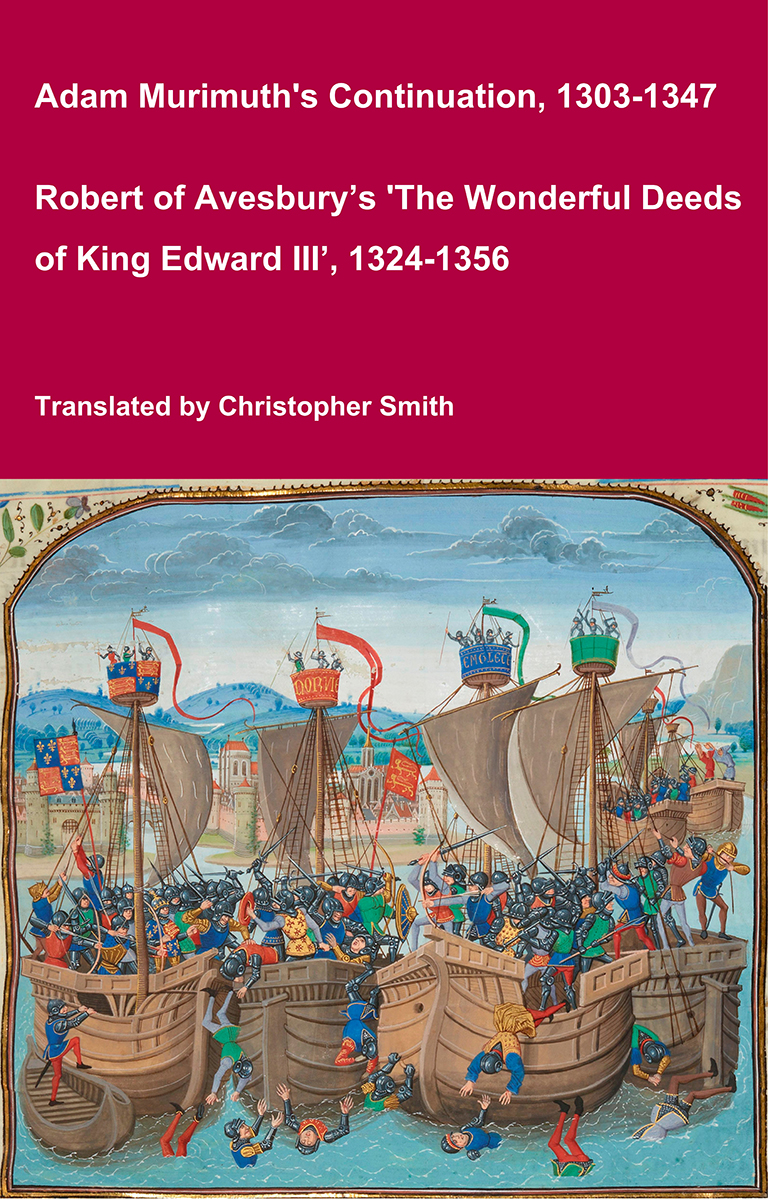
Adam Murimuth's Continuation and Robert of Avesbury’s 'The Wonderful Deeds of King Edward III'
This volume brings together two of the most important contemporary chronicles for the reign of Edward III and the opening phases of the Hundred Years’ War. Written in Latin by English clerical observers, these texts provide a vivid and authoritative window into the political, diplomatic, and military history of fourteenth-century England and its continental ambitions. Adam Murimuth Continuatio's Chronicarum continues an earlier chronicle into the mid-fourteenth century, offering concise but valuable notices on royal policy, foreign relations, and ecclesiastical affairs. Its annalistic structure makes it especially useful for establishing chronology and tracing the development of events year by year. Complementing it, Robert of Avesbury’s De gestis mirabilibus regis Edwardi tertii is a rich documentary chronicle preserving letters, treaties, and official records alongside narrative passages. It is an indispensable source for understanding Edward III’s claim to the French crown, the conduct of war, and the mechanisms of medieval diplomacy. Together, these works offer scholars, students, and enthusiasts a reliable and unembellished account of a transformative period in English and European history. Essential for anyone interested in medieval chronicles, the Hundred Years’ War, or the reign of Edward III.
Available at Amazon in eBook and Paperback format.
Bede. But the apostolic pope having consulted about that affair, made diligent inquiry for some one to send to be archbishop of the English churches. There was then in the Niridan monastery, which is not far from the city of Naples [Map] in Campania, an abbot, called Hadrian, by nation an African, well versed in holy writ, experienced in monastical and ecclesiastical discipline, and excellently skilled both in the Greek and Latin tongues. The pope, sending for him, commanded him to accept of the bishopric, and repair into Britain; he answered, that he was unworthy of so great a dignity, but said he could name another, whose learning and age were fitter for the episcopal office. And having proposed to the pope a certain monk, belonging to a neighbouring monastery of virgins, whose name was Andrew, he was by all that knew him judged worthy of a bishopric; but bodily infirmity prevented his being advanced to the episcopal station. Then again Hadrian was pressed to accept of the bishopric; but he desired a respite for a time, to see whether he could find another fit to be ordained bishop.