

Chronicle of Walter of Guisborough
A canon regular of the Augustinian Guisborough Priory, Yorkshire, formerly known as The Chronicle of Walter of Hemingburgh, describes the period from 1066 to 1346. Before 1274 the Chronicle is based on other works. Thereafter, the Chronicle is original, and a remarkable source for the events of the time. This book provides a translation of the Chronicle from that date. The Latin source for our translation is the 1849 work edited by Hans Claude Hamilton. Hamilton, in his preface, says: 'In the present work we behold perhaps one of the finest samples of our early chronicles, both as regards the value of the events recorded, and the correctness with which they are detailed; Nor will the pleasing style of composition be lightly passed over by those capable of seeing reflected from it the tokens of a vigorous and cultivated mind, and a favourable specimen of the learning and taste of the age in which it was framed.'
Available at Amazon in eBook and Paperback format.
Baron Hungerford is in Baronies of England Alphabetically.
There have been two creations of Baron Hungerford:
1st. 7th January 1426. Walter Hungerford 1st Baron Hungerford. Extant. 17th May 1920.
2nd. 8th June 1536. Walter Hungerford 1st Baron Hungerford Heytesbury. Forfeit. 28th July 1540. Execution of Thomas Cromwell.
Baron Hungerford is also in Baronies of England Chronologically, Forfeit Baronies of England, Succeeded Baronesses of England, Abeyant Baronies of England, Extant Baronies of England.
Summary
7th January 1426. Walter Hungerford 1st Baron Hungerford [aged 47] created.
9th August 1449. Son Robert Hungerford 2nd Baron Hungerford [aged 49] succeeded.
1459. Son Robert Hungerford 3rd Baron Hungerford 1st Baron Moleyns [aged 28] succeeded.
1461. Robert Hungerford 3rd Baron Hungerford 1st Baron Moleyns forfeit.
7th November 1485. Granddaughter Mary Hungerford Baroness Hastings, 4th Baroness Hungerford, 5th Baroness Botreaux and 2nd Baroness Moleyns [aged 19] attainder reversed.
1530. Son George Hastings 1st Earl Huntingdon [aged 43] succeeded.
24th March 1545. Son Francis Hastings 2nd Earl Huntingdon [aged 31] succeeded.
20th June 1560. Son Henry Hastings 3rd Earl Huntingdon [aged 25] succeeded.
14th December 1595. Brother George Hastings 4th Earl Huntingdon [aged 55] succeeded.
30th December 1604. Grandson Henry Hastings 5th Earl Huntingdon [aged 18] succeeded.
14th November 1643. Son Ferdinando Hastings 6th Earl Huntingdon [aged 35] succeeded.
13th February 1656. Son Theophilus Hastings 7th Earl Huntingdon [aged 5] succeeded.
30th May 1701. Son George Hastings 8th Earl Huntingdon [aged 24] succeeded.
1704. Half Brother Theophilus Hastings 9th Earl Huntingdon [aged 7] succeeded.
13th October 1746. Son Francis Hastings 10th Earl Huntingdon [aged 17] succeeded.
2nd October 1789. Sister Elizabeth Hastings Countess Moira [aged 58] succeeded.
11th April 1808. Son Francis Rawdon-Hastings 1st Marquess Hastings [aged 53] succeeded.
28th November 1826. Son George Augustus Francis Rawdon-Hastings 2nd Marquess Hastings [aged 18] succeeded.
13th January 1844. Son Paulyn Reginald Serlo Rawdon-Hastings 3rd Marquess Hastings [aged 11] succeeded.
17th January 1851. Brother Henry Weysford Charles Plantagenet Rawdon-Hastings 4th Marquess Hastings [aged 8] succeeded.
10th November 1868. Henry Weysford Charles Plantagenet Rawdon-Hastings 4th Marquess Hastings abeyant.
6th November 1871. Sister Edith Maud Rawdon-Hastings 10th Countess Loudon [aged 37] abeyance terminated.
23rd January 1874. Son Charles Rawdon-Hastings 11th Earl Loudon [aged 19] succeeded.
17th May 1920. Charles Rawdon-Hastings 11th Earl Loudon abeyant.
7th March 1921. Niece Elizabeth Frances Abney-Hastings Viscountess St Davids [aged 36] abeyance terminated.
12th December 1974. Son Jestyn Reginald Austin Plantagenet Philipps 2nd Viscount St Davids [aged 57] succeeded.
10th June 1991. Son Colwyn Philipps 3rd Viscount St Davids [aged 52] succeeded.
26th April 2009. Son Rhodri Philipps 4th Viscount St Davids [aged 42] succeeded.
On 7th January 1426 Walter Hungerford 1st Baron Hungerford [aged 47] was created 1st Baron Hungerford. Eleanor Berkeley Countess Arundel [aged 44] by marriage Baroness Hungerford.
On 9th August 1449 Walter Hungerford 1st Baron Hungerford [aged 71] died at Salisbury. He was buried at the Hungerford Chapel at Salisbury Cathedral [Map]. His son Robert [aged 49] succeeded 2nd Baron Hungerford. Margaret Botreaux 4th Baroness Botreaux Baroness Hungerford by marriage Baroness Hungerford.
In 1459 Robert Hungerford 2nd Baron Hungerford [aged 59] died. His son Robert [aged 28] succeeded 3rd Baron Hungerford. Eleanor Moleyns Baroness Hungerford [aged 32] by marriage Baroness Hungerford.
In 1461 Robert Hungerford 3rd Baron Hungerford 1st Baron Moleyns [aged 30] was attainted by the first Parliament of King Edward IV of England [aged 18]. Baron Hungerford and Baron Moleyns forfeit.
On 7th November 1485 Mary Hungerford Baroness Hastings, 4th Baroness Hungerford, 5th Baroness Botreaux and 2nd Baroness Moleyns [aged 19] attainder reversed 4th Baroness Hungerford, 2nd Baroness Moleyns.
On 1st May 1509 Richard Sacheverell Baron Hungerford, Botreaux and Moleyns [aged 42] and Mary Hungerford Baroness Hastings, 4th Baroness Hungerford, 5th Baroness Botreaux and 2nd Baroness Moleyns [aged 43] were married. He by marriage Baron Botreaux, Baron Hungerford, Baron Moleyns.
Around 1530 Mary Hungerford Baroness Hastings, 4th Baroness Hungerford, 5th Baroness Botreaux and 2nd Baroness Moleyns [aged 64] died at Leicester, Leicestershire [Map]. Her son George [aged 43] succeeded 5th Baron Hungerford, 3rd Baron Moleyns, 6th Baron Botreaux.
On 24th March 1545 George Hastings 1st Earl Huntingdon [aged 58] died. His son Francis [aged 31] succeeded 2nd Earl Huntingdon, 7th Baron Botreaux, 6th Baron Hungerford, 4th Baron Moleyns and 4th Baron Hastings. Catherine Pole Countess Huntingdon [aged 34] by marriage Countess Huntingdon.
On 20th June 1560 Francis Hastings 2nd Earl Huntingdon [aged 46] died. He was buried at the Hasting's Chapel, St Helen's Church, Ashby-de-la-Zouch [Map]. His son Henry [aged 25] succeeded 3rd Earl Huntingdon, 8th Baron Botreaux, 7th Baron Hungerford, 5th Baron Moleyns and 5th Baron Hastings. Katherine Dudley Countess Huntingdon [aged 22] by marriage Countess Huntingdon. See Monument [Map].
On 14th December 1595 Henry Hastings 3rd Earl Huntingdon [aged 60] died at York [Map]. On 26th April 1596 Henry Hastings 3rd Earl Huntingdon was buried at Hasting's Chapel, St Helen's Church, Ashby-de-la-Zouch [Map]. His brother George [aged 55] succeeded 4th Earl Huntingdon, 9th Baron Botreaux, 8th Baron Hungerford, 6th Baron Moleyns and 6th Baron Hastings. Dorothy Port Countess Huntingdon by marriage Countess Huntingdon.
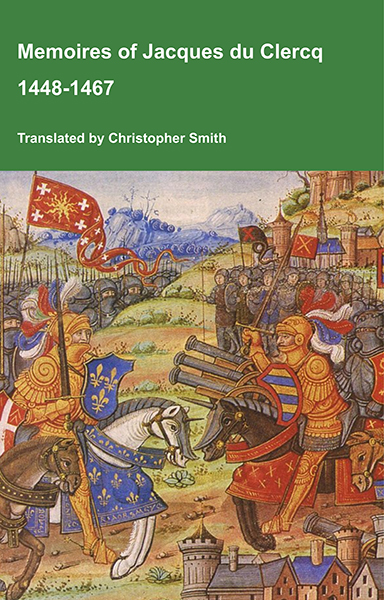
This is a translation of the 'Memoires of Jacques du Clercq', published in 1823 in two volumes, edited by Frederic, Baron de Reissenberg. In his introduction Reissenberg writes: 'Jacques du Clercq tells us that he was born in 1424, and that he was a licentiate in law and a counsellor to Philip the Good, Duke of Burgundy, in the castellany of Douai, Lille, and Orchies. It appears that he established his residence at Arras. In 1446, he married the daughter of Baldwin de la Lacherie, a gentleman who lived in Lille. We read in the fifth book of his Memoirs that his father, also named Jacques du Clercq, had married a lady of the Le Camelin family, from Compiègne. His ancestors, always attached to the counts of Flanders, had constantly served them, whether in their councils or in their armies.' The Memoires cover a period of nineteen years beginning in in 1448, ending in in 1467. It appears that the author had intended to extend the Memoirs beyond that date; no doubt illness or death prevented him from carrying out this plan. As Reissenberg writes the 'merit of this work lies in the simplicity of its narrative, in its tone of good faith, and in a certain air of frankness which naturally wins the reader’s confidence.' Du Clercq ranges from events of national and international importance, including events of the Wars of the Roses in England, to simple, everyday local events such as marriages, robberies, murders, trials and deaths, including that of his own father in Book 5; one of his last entries.
Available at Amazon in eBook and Paperback format.
On 30th December 1604 George Hastings 4th Earl Huntingdon [aged 64] died. His grandson Henry [aged 18] succeeded 5th Earl Huntingdon, 10th Baron Botreaux, 9th Baron Hungerford, 7th Baron Moleyns and 7th Baron Hastings. Elizabeth Stanley Countess Huntingdon [aged 16] by marriage Countess Huntingdon.

On 14th November 1643 Henry Hastings 5th Earl Huntingdon [aged 57] died. His son Ferdinando [aged 35] succeeded 6th Earl Huntingdon, 11th Baron Botreaux, 10th Baron Hungerford, 8th Baron Moleyns and 8th Baron Hastings. Lucy Davies Countess Huntingdon [aged 30] by marriage Countess Huntingdon.
On 13th February 1656 Ferdinando Hastings 6th Earl Huntingdon [aged 48] died. His son Theophilus [aged 5] succeeded 7th Earl Huntingdon, 12th Baron Botreaux, 11th Baron Hungerford, 9th Baron Moleyns and 9th Baron Hastings.

On 30th May 1701 Theophilus Hastings 7th Earl Huntingdon [aged 50] died. His son George [aged 24] succeeded 8th Earl Huntingdon, 13th Baron Botreaux, 12th Baron Hungerford, 10th Baron Moleyns and 10th Baron Hastings. Elizabeth "Lady Betty" Hastings [aged 19] received, after a legal dispute, in 1703, Ledston Hall and £3000 per year.
In 1704 George Hastings 8th Earl Huntingdon [aged 27] died. His half brother Theophilus [aged 7] succeeded 9th Earl Huntingdon, 14th Baron Botreaux, 13th Baron Hungerford, 11th Baron Moleyns and 11th Baron Hastings. His sister Elizabeth "Lady Betty" Hastings [aged 21] inherited the his share of her grandfather John Lewis 1st Baronet's estates.


On 13th October 1746 Theophilus Hastings 9th Earl Huntingdon [aged 49] died. His son Francis [aged 17] succeeded 10th Earl Huntingdon, 15th Baron Botreaux, 14th Baron Hungerford, 12th Baron Moleyns and 12th Baron Hastings.
On 2nd October 1789 Francis Hastings 10th Earl Huntingdon [aged 60] died unmarried at the home of his nephew Francis Rawdon-Hastings 1st Marquess Hastings [aged 34]. His fifth cousin once removed Theophilus [aged 60] de jure 11th Earl Huntingdon although he wasn't aware of the fact. His sister Elizabeth [aged 58] succeeded 16th Baroness Botreaux, 15th Baroness Hungerford, 13th Baroness Moleyns and 13th Baroness Hastings


On 11th April 1808 Elizabeth Hastings Countess Moira [aged 77] died. Her son Francis [aged 53] succeeded 17th Baron Botreaux, 16th Baron Hungerford, 14th Baron Moleyns and 14th Baron Hastings.
On 28th November 1826 Francis Rawdon-Hastings 1st Marquess Hastings [aged 71] died. His son George [aged 18] succeeded 2nd Marquess Hastings, 3rd Earl Moira, 18th Baron Botreaux, 17th Baron Hungerford, 15th Baron Moleyns and 15th Baron Hastings. Barbara Yelverton Marchioness Hastings [aged 16] by marriage Marchioness Hastings.
On 13th January 1844 George Augustus Francis Rawdon-Hastings 2nd Marquess Hastings [aged 35] died. His son Paulyn [aged 11] succeeded 3rd Marquess Hastings, 8th Earl Loudon, 4th Earl Moira, 19th Baron Botreaux, 18th Baron Hungerford, 16th Baron Moleyns and 16th Baron Hastings.
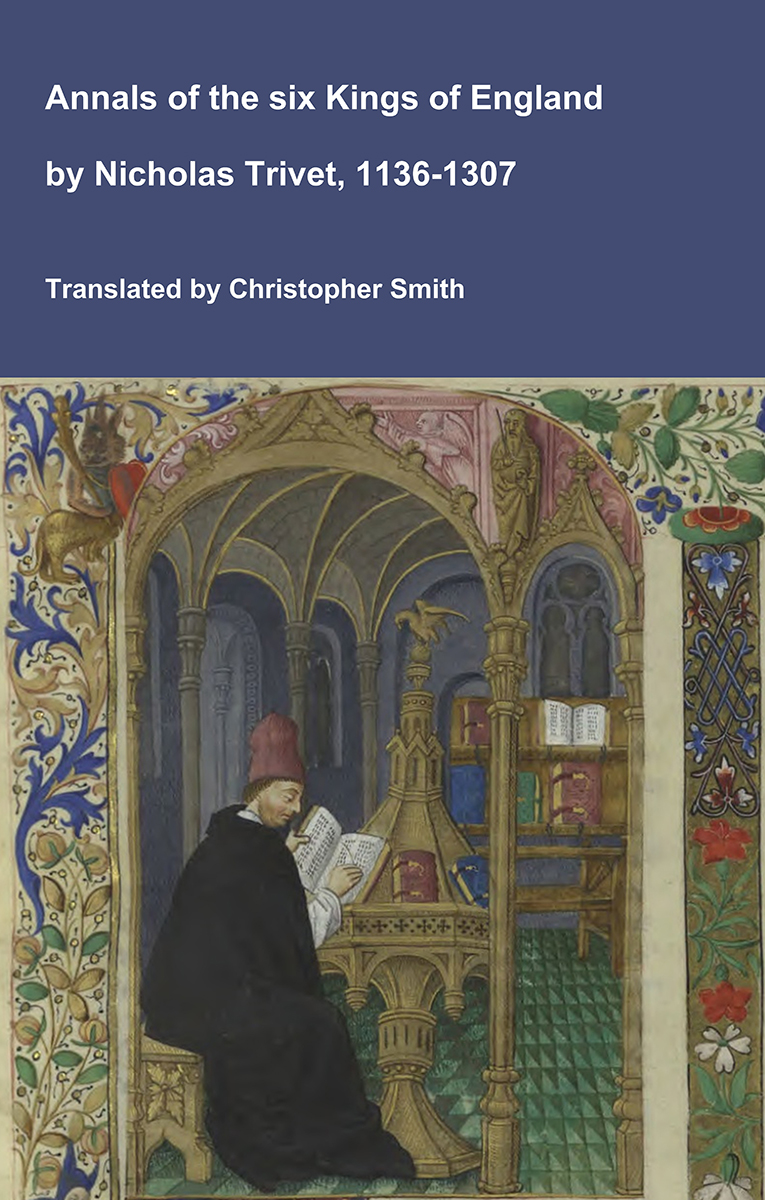
Annals of the six Kings of England by Nicholas Trivet
Translation of the Annals of the Six Kings of England by that traces the rise and rule of the Angevin aka Plantagenet dynasty from the mid-12th to early 14th century. Written by the Dominican scholar Nicholas Trivet, the work offers a vivid account of English history from the reign of King Stephen through to the death of King Edward I, blending political narrative with moral reflection. Covering the reigns of six monarchs—from Stephen to Edward I—the chronicle explores royal authority, rebellion, war, and the shifting balance between crown, church, and nobility. Trivet provides detailed insight into defining moments such as baronial conflicts, Anglo-French rivalry, and the consolidation of royal power under Edward I, whose reign he describes with particular immediacy. The Annals combines careful year-by-year reporting with thoughtful interpretation, presenting history not merely as a sequence of events but as a moral and political lesson. Ideal for readers interested in medieval history, kingship, and the origins of the English state, this chronicle remains a valuable and accessible window into the turbulent world of the Plantagenet kings.
Available at Amazon in eBook and Paperback format.
On 17th January 1851 Paulyn Reginald Serlo Rawdon-Hastings 3rd Marquess Hastings [aged 18] died. His brother Henry [aged 8] succeeded 4th Marquess Hastings, 9th Earl Loudon, 5th Earl Moira, 21st Baron Grey of Ruthyn, 20th Baron Botreaux, 19th Baron Hungerford, 17th Baron Moleyns and 17th Baron Hastings. Florence Cecilia Paget Marchioness Hastings [aged 8] by marriage Marchioness Hastings.


On 10th November 1868 Henry Weysford Charles Plantagenet Rawdon-Hastings 4th Marquess Hastings [aged 26] died. Marquess Hastings and Earl Moira extinct. Baron Botreaux, Baron Hungerford, Baron Hastings, Baron Moleyns and Baron Grey of Ruthyn abeyant. His sister Edith [aged 34] succeeded 10th Countess Loudon.
On 6th November 1871 Edith Maud Rawdon-Hastings 10th Countess Loudon [aged 37] abeyance terminated 21st Baroness Botreaux, 20th Baroness Hungerford, 18th Baroness Hastings, 18th Baroness Moleyns.
On 23rd January 1874 Edith Maud Rawdon-Hastings 10th Countess Loudon [aged 40] died. Her son Charles [aged 19] succeeded 11th Earl Loudon, 22nd Baron Botreaux, 21st Baron Hungerford, 19th Baron Moleyns and 19th Baron Hastings. Alice Elizabeth Fitzalan Howard Countess Loudon by marriage Countess Loudon.
On 17th May 1920 Charles Rawdon-Hastings 11th Earl Loudon [aged 65] died. Baron Botreaux, Baron Hungerford, Baron Moleyns and Baron Hastings abeyant. His niece Edith [aged 37] succeeded 12th Countess Loudon. His brother Gilbert [aged 60] succeeded 3rd Baron Donington of Dongington Park in Leicestershire.
On 7th March 1921 Elizabeth Frances Abney-Hastings Viscountess St Davids [aged 36] abeyance terminated 14th Baroness Strange Knockin, 22nd Baroness Hungerford, 20th Baroness Moleyns and 10th Baroness Mohun of Dunster.
On 12th December 1974 Elizabeth Frances Abney-Hastings Viscountess St Davids [aged 90] died. Her son Jestyn [aged 57] succeeded 15th Baron Strange Knockin, 23rd Baron Hungerford and 21st Baron Moleyns, 11th Baron Mohun of Dunster.
On 10th June 1991 Jestyn Reginald Austin Plantagenet Philipps 2nd Viscount St Davids [aged 74] died. His son Colwyn [aged 52] succeeded 3rd Viscount St Davids of Lydstep Haven Pembrokeshire, 16th Baron Strange Knockin, 24th Baron Hungerford, 22nd Baron Moleyns, 15th Baronet Philips of Picton Castle, 12th Baron Mohun of Dunster.
On 26th April 2009 Colwyn Philipps 3rd Viscount St Davids [aged 70] died. His son Rhodri [aged 42] succeeded 4th Viscount St Davids of Lydstep Haven Pembrokeshire, 17th Baron Strange Knockin, 25th Baron Hungerford, 23rd Baron Moleyns, 16th Baronet Philips of Picton Castle, 13th Baron Mohun of Dunster.
Baron Hungerford of Heytesbury is also in Baronies of England Chronologically, Forfeit Baronies of England.
Summary
8th June 1536. Walter Hungerford 1st Baron Hungerford Heytesbury [aged 33] created.
28th July 1540. Walter Hungerford 1st Baron Hungerford Heytesbury forfeit. See Execution of Thomas Cromwell.
On 8th June 1536 Walter Hungerford 1st Baron Hungerford Heytesbury [aged 33] was created 1st Baron Hungerford of Heytesbury. Elizabeth Hussey Baroness Hungerford [aged 39] by marriage Baroness Hungerford of Heytesbury.
On 28th July 1540 Walter Hungerford 1st Baron Hungerford Heytesbury [aged 37] was beheaded at Tower Hill [Map]. He was attainted; Baron Hungerford of Heytesbury forfeit. He, together with his chaplain, a Wiltshire clergyman named William Bird, Rector of Fittleton and Vicar of Bradford, who was suspected of sympathising with the pilgrims of grace of the north of England, was attainted by act of parliament. Hungerford was charged with employing Bird in his house as chaplain, knowing him to be a traitor; with ordering another chaplain, Hugh Wood, and one Dr. Maudlin to practise conjuring to determine the king's length of life, and his chances of victory over the northern rebels; and finally with committing offences forbidden by the 1533 Buggery Act.