

Parliament Ireland is in Ireland.
In 1590 Thomas Molyneux [aged 59] was appointed Chancellor of the Exchequer of Ireland.
In 1593 Robert Napier [aged 51] was appointed Chief Baron of the Irish Exchequer.
On 4th February 1206 Theobald Walter [aged 41] died at County Wicklow. His son Theobald [aged 6] succeeded 2nd Chief Butler Ireland.
On 19th July 1230 Theobald Butler [aged 30] died at Poitou. He was buried at Arklow Abbey, Arklow, County Wicklow. His son Theobald [aged 6] succeeded 3rd Chief Butler Ireland.
On 26th December 1248 Theobald Butler [aged 24] died. His son Theobald [aged 6] succeeded 4th Chief Butler Ireland.
On 26th September 1285 Theobald Butler [aged 43] died. His son Theobald [aged 16] succeeded 5th Chief Butler Ireland.
Theobald Walter was was appointed the first Chief Butler Ireland.
In 1533 Thomas Luttrell [aged 43] was appointed Chief Justice of the Irish Common Pleas which positin he held for twenty years.
In July 1601 Charles Wilmot 1st Viscount Wilmot [aged 29] was appointed Governor of County Cork.
In September 1602 Charles Wilmot 1st Viscount Wilmot [aged 30] was appointed Governor of County Kerry.
In 1644 Isaac Penington [aged 60] was appointed Governor of the Levant Company which position he held until 1654.
Before 3rd February 1644 John Marlay [aged 54] was appointed Governor of Newcastle upon Tyne, Northumberland [Map]. He defended the city during seven months of siege by the Scots army.
In 1678 John Reresby 2nd Baronet [aged 43] was appointed Governor of Bridlington.
In 1814 Charles Henry Somerset [aged 46] was appointed Governor.
Before 1597 John Chichester was appointed Governor of Antrim.
After 19th February 1625 Edward Chichester 1st Viscount Chichester [aged 57] was appointed Governor of Carrickfergus.
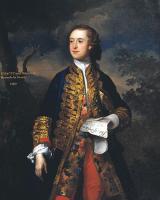
In 1744 Capel Molyneux 3rd Baronet [aged 27] was appointed High Sheriff of Armagh.
In 1733 John Cole 1st Baron Mountflorence [aged 23] was appointed High Sheriff of County Fermanagh.
In 1756 Charles Bingham 1st Earl Lucan [aged 20] was appointed High Sheriff of Mayo.
In 1727 John Stratford 1st Earl Aldborough [aged 28] was appointed High Sheriff of Wexford.
In 1739 John Stratford 1st Earl Aldborough [aged 40] was appointed High Sheriff of Wexford.
In 1736 John Stratford 1st Earl Aldborough [aged 37] was appointed High Sheriff of Wicklow.
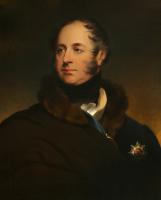
On 2nd October 1831 John Cole 2nd Earl Enniskillen [aged 63] was appointed Lord Lieutenant of County Fermanagh.
In 1726 Francis Bernard [aged 63] was appointed Judge of the Irish Court of Common Pleas.
In 1245 John Fitzgeoffrey [aged 40] was appointed Justicar of Ireland.
In or before 1558 Richard St Lawrence 7th Baron Howth [aged 47] and Catherine Fitzgerald Viscountess Gormanston were married. She by marriage Knight of the Order of St Patrick. She the daughter of Gerald Fitzgerald 9th Earl of Kildare and Elizabeth Grey Countess Kildare. They were sixth cousins. She a great x 5 granddaughter of King Edward III of England.
On 27th April 1810 John Cole 2nd Earl Enniskillen [aged 42] was appointed Knight of the Order of St Patrick.
In 1370 William Skipwith [aged 56] was appointed Lord Chief Justice of Ireland.
In 1372 Robert Assheton was appointed Lord Chief Justice of Ireland.
On 22nd August 1654 Richard Pepys [aged 65] was appointed Lord Chief Justice of Ireland which post he held until 3rd November 1654.
In 1680 William Davys [aged 47] was appointed Lord Chief Justice of Ireland.
After 19th February 1625 Edward Chichester 1st Viscount Chichester [aged 57] was appointed Lord High Admiral Lough Neagh.
In June 1492 James Ormond was appointed Lord High Treasurer of Ireland.
In 1547 James Fitzgerald 13th Earl Desmond was appointed Lord High Treasurer of Ireland.
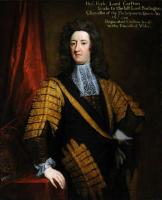
In 1704 Henry Boyle 1st Baron Carleton [aged 34] was appointed Lord Lieutenant of the West Riding of Yorkshire and Lord High Treasurer of Ireland.
In 1st June 1569 Edward Fitton [aged 42] was appointed the first Lord President of Connaught and Thomond arriving in Ireland in Jul 1569.
In 1603 Henry Brouncker Lord President Munster [aged 53] was appointed Lord President of Munster.
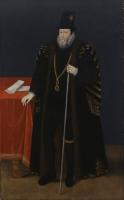
In 1592 William Cecil 1st Baron Burghley [aged 71] was appointed Master Dublin University.
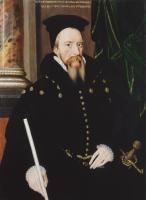

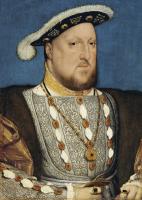
After 1534 Parliament enacted the Treason Act made it treason, punishable by death, to not swear an oath recognising the King Henry VIII [aged 42] as the "... Only Head of the Church of England...".




After 1690 John Temple [aged 57] was appointed Attorney General for Ireland.
In 1771 Edmund Pery 1st Viscount Pery [aged 51] was appointed Speaker of the Irish House of Commons.
In 1776 Capel Molyneux 3rd Baronet [aged 59] was appointed to the Privy Council Ireland.
In 1579 Edward Fitton [aged 31] was appointed Receiver General for Ireland.
In 1724 Francis Bernard [aged 61] was appointed Serjeant-at-law.
In July 1660 John Temple [aged 28] was appointed Solicitor General for Ireland.
In 1711 Francis Bernard [aged 48] was appointed Solicitor General for Ireland which position he held until 1714.