The History of William Marshal, Earl of Chepstow and Pembroke, Regent of England. Book 1 of 2, Lines 1-10152.

The History of William Marshal was commissioned by his son shortly after William’s death in 1219 to celebrate the Marshal’s remarkable life; it is an authentic, contemporary voice. The manuscript was discovered in 1861 by French historian Paul Meyer. Meyer published the manuscript in its original Anglo-French in 1891 in two books. This book is a line by line translation of the first of Meyer’s books; lines 1-10152. Book 1 of the History begins in 1139 and ends in 1194. It describes the events of the Anarchy, the role of William’s father John, John’s marriages, William’s childhood, his role as a hostage at the siege of Newbury, his injury and imprisonment in Poitou where he met Eleanor of Aquitaine and his life as a knight errant. It continues with the accusation against him of an improper relationship with Margaret, wife of Henry the Young King, his exile, and return, the death of Henry the Young King, the rebellion of Richard, the future King Richard I, war with France, the death of King Henry II, and the capture of King Richard, and the rebellion of John, the future King John. It ends with the release of King Richard and the death of John Marshal.

Available at Amazon in eBook and Paperback format.

Bridlington, East Yorkshire, England, British Isles

Bridlington is in East Yorkshire.

Around 1134 Robert Scrope was born to Hugh Scrope [aged 31] at Bridlington.

Around 1267 William Constable [aged 62] died at Bridlington.

Henry Machyn's Diary. 5th July 1557. At Byrlyngton, John Wallys.

Around February 1643, John Hotham [aged 33] was ready to switch to the Royalist side. He considered himself a better commander than Thomas Fairfax 3rd Lord Fairfax [aged 31] and resented being under his command. In February or March 1643, Hotham started negotiating with the William Cavendish 1st Duke Newcastle upon Tyne [aged 50], the Royalist commander in Yorkshire at Bridlington, supposedly about a prisoner exchange. In exchange for surrendering Hull and changing sides, Hotham demanded 20,000 pounds cash, the rank of viscount for his father and the rank of baron for himself.

In 1678 John Reresby 2nd Baronet [aged 43] was appointed Governor of Bridlington.

On 17th May 1698 John Major 1st Baronet was born to John Major and Elizabeth Tennant at Bridlington. He married 1724 Elizabeth Dale and had issue.

On 13th October 1832 Godfrey Bosville Macdonald [aged 56] died at Bridlington.

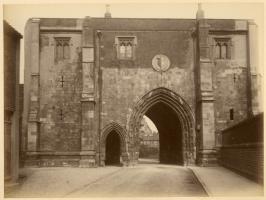
Bayle Gatehouse, Bridlington, East Yorkshire, England, British Isles [Map]

Bridlington Priory, East Yorkshire, England, British Isles [Map]

On 11th March 1404 or 5th May 1404 the remains of John Twenge were translated to a shrine at Bridlington Priory [Map].

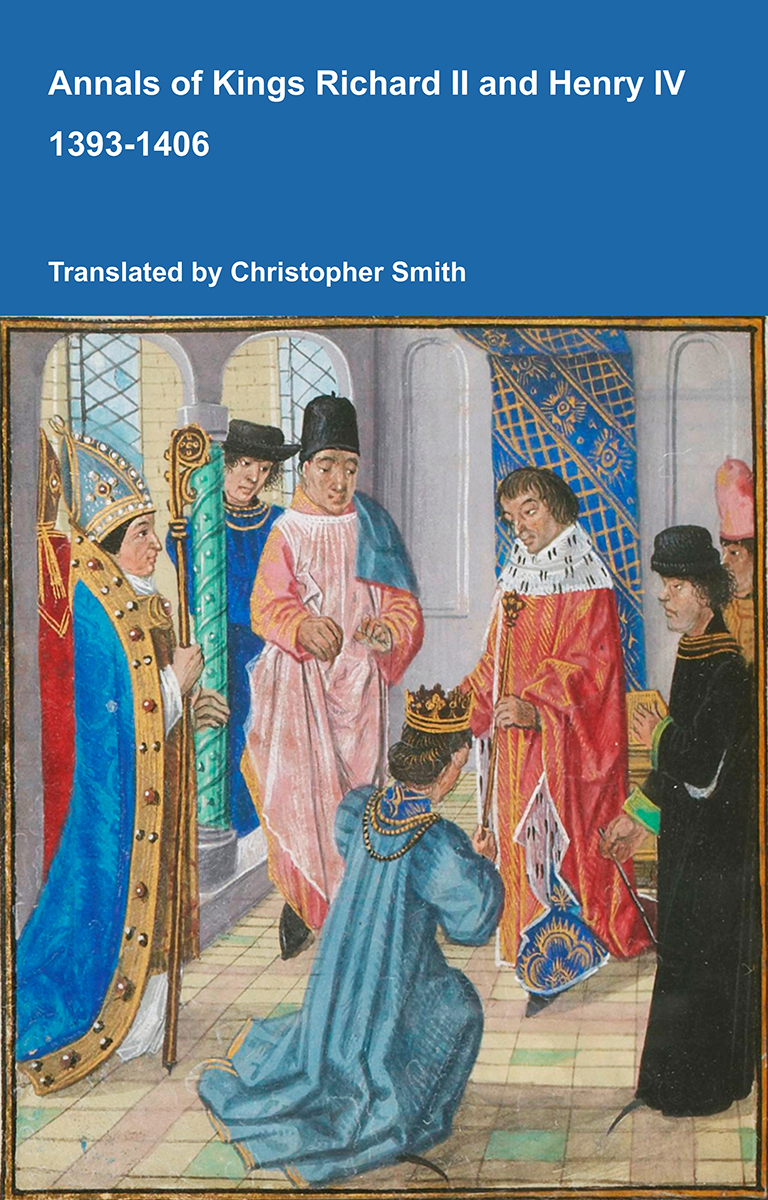
Annals of Kings Richard II and Henry IV. In the same year, on the fifth day of May [1404], after innumerable miracles had already been revealed, wonders for the whole world to admire, the bishops assembled, at the command of the Pope, at the town and priory [Map] of the canons of Bridlington, in the County of [Yorkshire]. The Archbishop of York, the Bishops of Durham and Carlisle, or Lugubalia, and an almost countless multitude of people gathered there to attend the translation of Lord John1, formerly Prior of Bridlington. The venerable body of that most holy man was therefore translated by the ministry of the bishops and placed in a shrine [at Bridlington Priory [Map]], while the Lord renewed the miracles of His saint on that very day, to the saint’s glory. His most holy life and perfect manner of conduct deserve a separate account.

Eodem anno, quinto dus mensis Maii, post innumera præostensa miracula, toti sæculo admiranda, mandato Domini Papæ convenere Præsules ad villam, Prioratumque Canonicorum de Bridelington, in Comitatu [....], Eboracensis Archiepiscopus, et Dunelmensis ac Carleolensis, sive Lugubaliensis, Antistites, et velut infinitus populus, ut Translationi Domini Johannis, quondam Prioris de Bridelingtone, interessent. Translatum est igitur venerabile corpus illius viri sanctissimi, Episcoporum ministerio, et in scrinio collocatum, Domino renovante miracula ipso die ad gloriam Sancti sui. Cujus vita sanctissima, conversatioque perfecta, tractatum exigunt specialem.

Note 1. John Twenge, 1320-1379, elected Prior of Bridlington in 1356 and held the office for life. His magnificent shrine was destroyed in 1537 during the Dissolution of the Monasteries.

In 1537 the shrine of John Twenge at Bridlington Priory [Map] was destroyed during the Dissolution of the Monasteries.