

Maternal Family Tree: Cecily Bulstrode 1515-
Bulstrode Whitelocke was appointed Lord Keeper of the Great Seal.
In 1602 [his father] James Whitelocke [aged 31] and [his mother] Elizabeth Bulstrode [aged 27] were married.
On 6th August 1605 Bulstrode Whitelocke was born to James Whitelocke [aged 34] and Elizabeth Bulstrode [aged 30] at George Croke's House Fleet Street. Bulstrode being his mother's family name.
On 19th August 1605 Bulstrode Whitelocke was baptised at St Dunstan's in the West, Fleet Street [Map].
Around 1617 Bulstrode Whitelocke [aged 11] educated at Eton College [Map].
In 1618 Bulstrode Whitelocke [aged 12] educated at Mechant Taylor's School Manor of the Rose St Lawrence Pountney.
On 8th December 1620 Bulstrode Whitelocke [aged 15] commenced his education at St John's College, Oxford University.
Around 1623 Bulstrode Whitelocke [aged 17] educated at Middle Temple.
In 1626 Bulstrode Whitelocke [aged 20] called to the bar.
In 1631 [his mother] Elizabeth Bulstrode [aged 56] died.
On 22nd June 1632 [his father] James Whitelocke [aged 61] died at Fawley Court, Buckinghamshire [Map].
In or before 1634 Bulstrode Whitelocke [aged 28] and Rebecca Bennett [aged 29] were married.
In or before 1634 [his son] James Whitelocke was born to Bulstrode Whitelocke [aged 28] and [his wife] Rebecca Bennett [aged 29].
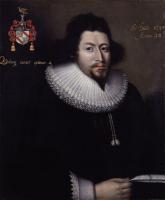
In 1634. Unknown Painter. Portrait of Bulstrode Whitelocke [aged 28].
In 1634 [his wife] Rebecca Bennett [aged 30] died.
After 1634 Bulstrode Whitelocke [aged 28] and Frances Willoughby were married.
In 1643 Bulstrode Whitelocke [aged 37] sent to negotiate with King Charles II of England Scotland and Ireland [aged 12].


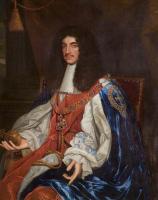
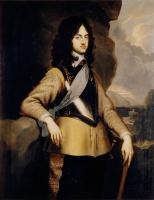


In 1644 Bulstrode Whitelocke [aged 38] sent to negotiate with King Charles II of England Scotland and Ireland [aged 13].
In 1645 Bulstrode Whitelocke [aged 39] was appointed Commissioner at Uxbridge during the Treaty of Uxbridge.
In or before 1649 [his daughter] Elizabeth Whitelocke was born to Bulstrode Whitelocke [aged 43] and [his wife] Frances Willoughby.
In or before 1649 [his daughter] Hester Whitelocke was born to Bulstrode Whitelocke [aged 43] and [his wife] Frances Willoughby.
In or before 1649 [his daughter] Mary Whitelocke was born to Bulstrode Whitelocke [aged 43] and [his wife] Frances Willoughby. She married George Neville and had issue.
In or before 1649 [his daughter] Anne Whitelocke was born to Bulstrode Whitelocke [aged 43] and [his wife] Frances Willoughby. She married in or before 1658 Abraham Hill and had issue.
In 1649 [his wife] Frances Willoughby died.
After 1649 [his daughter] Samuel Whitelocke was born to Bulstrode Whitelocke [aged 43] and [his wife] Mary Carleton.
After 1649 [his daughter] Carleton Whitelocke was born to Bulstrode Whitelocke [aged 43] and [his wife] Mary Carleton.
After 1649 Bulstrode Whitelocke [aged 43] and Mary Carleton were married.

In 1650. Unknown Painter. Portrait of Bulstrode Whitelocke [aged 44].
John Evelyn's Diary. 29th April 1652. We went this afternoon to see the Queen's house at Greenwich, now given by the rebels to Bulstrode Whitelockee [aged 46], one of their unhappy counselors, and keeper of pretended liberties.

In or before 1658 Abraham Hill [aged 24] and [his daughter] Anne Whitelocke [aged 9] were married.
In 1661 [his daughter] Anne Whitelocke [aged 12] died.
On 28th July 1675 Bulstrode Whitelocke [aged 69] died.
Survey London Volume 4 Chelsea Part II. In the account in the Architectural Review (May, 1911) I have summarised the later history of the house as follows:-"After the great house had been occupied during the Commonwealth by the Parliamentary Commissioners, Sir Bulstrode Whitlocke and John Lisle, the second Duke of Buckingham regained possession. Lost to him, through his debts, the house ultimately passed (1674) into the hands of the trustees for George Digby, Earl of Bristol, and his Countess sold it in 1682 to Henry, Marquess of Worcester, afterwards Duke of Beaufort, the house remaining in his family until 1720. It was during this period, about the year 1699, that Kip's beautiful view of the mansion - now called Beaufort House - was published, a priceless record of the property, so ruthlessly defaced and destroyed by Sir Hans Sloane after he purchased it in 1737. Mr. Randall Davies, whom I have followed in the account of the occupants of the house, has printed the interesting conveyance of the property to Sloane, and if its description is carefully collated with the information in Kip's view, one is struck by the wonderful accuracy of the latter. Here is the great house as shown by Thorpe, its lodges and its forecourts, the wharf, with its brick towers east and west, the orchard and 'one garden environed with brick walls … and a terrace on the north end, with a banqueting house on the east end of the terrace,' as well as 'one great garden … extending from the terrace and banqueting house into the highway on the north.' This banqueting house is alike in detail to the sketch of 'a summer house, Chelsea,' in the Smithson collection of seventeenth-century drawings, now in the possession of Colonel Coke. But valuable as is the representation of the great house, the print has much more information to give us. The great park is there shown in all its original beauty; the Duke of Beaufort's stables and yard, since converted into the historic chapel and burying ground of the Moravians is to the west; and nearer the river the beautiful Jacobean house of Sir Arthur Gorges (our sole evidence of its character and design) and the house and gardens of the Earls of Lindsey. And to the east, below the wide area of Dovecote Close, laid out as a huge kitchen garden, are the fine pleasure grounds of Danvers House, which had been destroyed but three years before the drawing was published.".



Father: James Whitelocke
Great x 4 Grandfather: Richard Bulstrode
Great x 3 Grandfather: Edward Bulstrode
Great x 2 Grandfather: George Bulstrode
Great x 1 Grandfather: Thomas Bulstrode
Grandfather: Edward Bulstrode of Hedgerley Bulstrode Buckinghamshire
Mother: Elizabeth Bulstrode
Great x 1 Grandfather: John Croke
Grandmother: Cecily Croke
Great x 3 Grandfather: Thomas Unton
Great x 2 Grandfather: Alexander Unton
Great x 1 Grandmother: Elizabeth Unton
Great x 4 Grandfather: Richard Bulstrode
Great x 3 Grandfather: Edward Bulstrode
Great x 2 Grandmother: Cecily Bulstrode