Battle of Otterburn is in 1380-1389 Peasants' Revolt and Lords Appellant.
On either 5th August 1388 or after 12th August 1388 a Scottish army commanded by John Swinton defeated an English army commanded by Henry "Hotspur" Percy [aged 24] during the Battle of Otterburn at Otterburn [Map]. Henry "Hotspur" Percy and his brother Ralph Percy [aged 29] were captured as was Matthew Redman [aged 60]. The English suffered 1000 killed, 2000 captured. The Scottish 100 killed, 200 captured.
On the Scottish side James Douglas 2nd Earl Douglas [aged 30] was killed. His sister Isabel [aged 28] succeeded Countess Mar.
John Dunbar 1st Earl of Moray [aged 46] fought.
Scotichron Book 14 Chapter 53. Concerning the Battle of Otterburn
For Lord James, Earl of Douglas, had made a promise, as some say, that he would be personally present in that army of the Earl of Fife in the West March. But, by some counsel unknown to me, he was drawn back; and, having gathered his friends and men, and having counted them, he was found to have seven thousand strong fighting men. Trusting in their assistance, and because he was then of a higher spirit than the rest, it seemed to him that he could easily subdue all the northern coasts of England. Making an expedition towards the south, he led his army, burning and laying waste, as far as Newcastle. There the Scots made their assault, and, fighting hand to hand with the townsmen, bore themselves commendably and bravely. For within Newcastle the whole knighthood of Northumberland, from the city of York, was waiting with Lord Henry Percy the younger, son of Henry, Earl of Northumberland, commonly called Henry Hotspur, a most fierce knight and experienced in battles, hoping to discover some advantage to be snatched from the Scots. But when the Earl of Douglas was returning with his men to his own country, the said Henry Percy had the army of the Earl of Fife reconnoitred; but because it was large, he turned himself against the army of the said Earl of Douglas, then encamped at Otterburn in Redesdale. Since he suspected no harm from his enemies, the Earl of Douglas himself, with the Earls of March and Moray, two brothers, and very many other knights and nobles, disarmed, put on gowns and long robes, preparing themselves to dine on the day of Saint Oswald. As they were reclining at table, a certain Scot came up, sitting on a caparisoned horse, crying out in great alarm that all should flee to arms, "because," he said, "the enemy are hastening upon us." At his call they all rose from supper and rushed to the protection of their arms, though they could scarcely arm themselves even in simple fashion.
Then the lord Earl of Douglas betook himself so swiftly to the ordering of the battle that he forgot to fasten on his own armour. Because of this, during the night he was mortally wounded in the face and neck, though it was not known by whom; and in the morning — alas for sorrow — he was found dead, leaving behind him no heir begotten of his own body. He was succeeded in the earldom of Douglas by Archibald Douglas, lord of Galloway. Lord John Dunbar, Earl of Moray, also, because of the suddenness of the battle, forgot his helmet, so that he fought in the field with his head almost bare. And so Lord Henry Percy, surrounded by ten thousand armed men, divided his army into two parts. He himself, together with Lord Ralph, his brother, commanded one part; the other part he entrusted to the knights Sir Maurice Redman and Sir Robert Ogle, to overthrow the pavilions and tents, while he himself hastened to the field. As the cry of the arrival of the English grew louder among the Scots, the common people of the Scots took to flight, and Redman and Ogle pursued them all the more fiercely. But when Percy’s division observed the Scots fleeing towards the baggage — upon whom Redman with his men had suddenly fallen — and took great pleasure at the sight of their flight, thinking that he could win victory without resistance, the Earl of Douglas and his men mounted their horses, concealed among thickets and brambles, and hastened towards the field. For some time they were unseen by the English; then suddenly, bursting out beside the English line with twelve banners spread wide and gleaming in the reflection of the sun shortly before its setting, they dismounted from their horses and attacked the English without fear. The English, however, being three times more numerous than the Scots, opposed them manfully; with lances they charged at one another, and each side strove to overcome the other.
De bello de Ottirburn.
Dominus enim Jacobus comes de Douglas promissum, ut quidam volunt, fecerat, ut in illo exercitu comitis de Fife, apud WestMarchiam personaliter interesset. Sed, nescio quo consilio, retractus, collectis amicis et hominibus suis, ac ipsis recensitis, inventus est habere septem millia validorum bellatorum: quorum aslistentii confisus, et quia alti cordis præ ceteris tunc erat, videbatur fibi de facili posse subigere totas boreales oras Angliæ; et, expeditionem versus Austrum faciens, exercitum suum duxit inflammando et vastando usque ad Novum-castrum. Ibi enim Scoti suum assultum facientes, et cum oppidanis manualiter decertantes, laudabiliter ac viriliter se habuerunt. Infra enim Novum-castrum tota militia Northumbriæ, ab urbe Eboracensi, præstolabantur cum domino Henrico Percy juniore, filio Henrici comitis Northumbriæ, Henry Hatspur vulgariter nuncupato, acerrimo milite et ad prælia experto, exploraturi de Scotis avantagium aucupari. Dum verò comes de Douglas cum suis patriam propriam repeteret, dictus Henricus Percy explorari fecit exercitum comitis de Fife; sed, quia multus erat, convertit se ad exercitum dicti comitis de Douglas, tunc apud Ottirburn in Riddisdale castrametatum. Quum nihil mali de inimicis suspicatus, ipse comes de Douglas cum comitibus Marchiæ et Moraviæ duobus fratribus, et aliis quampluribus militibus et nobilibus, disarmati induerunt se stolis et talaribus robis, in die viz. Sancti Oswaldi cœnatum se disponentes. Discumbentibus igitur llis, supervenit quidam Scotus inphalerato insedens equo, attonitè satis clamitans omnes ad arma confugere, quia super nos, inquit, accelerant inimici. Ad cujus vocem omnes à cœna resurgentes, et ad tuitionem armorum convolantes, vix se simpliciter poterant armis communire.
Tam concito igitur ad ordinationem belli dominus comes de Douglas se contulit, ut oblitus est sua propria arma sibi colligare. Propter quod de nocte lethaliter vulneratus in facie et cervice, nescitur a quibus: unde de mane, proh dolor! mortuus est repertus, non relinquens post se heredem de corpore suo procreatum. Cui successit Archibaldus Douglas dominus Galwidiæ ad comitatum de Douglas. Dominus etiam ohannes de Dunbar comes de Moravia, propter subitationem belli, oblitus est caflidis suæ, ita ut capite quasi nudo pugnavit in campo. Dominus itaque Henricus Percy decem millibus armatorum constipatus, exercitum suum in duo partitus est: uni parti præfuit ipse, et dominus Radulphus frater ejus ; alteram partem commisit dominis Mauritio de Redmane et Roberto Ogil militibus, ad subvertendum pavilliones et tentoria: ipse vero ad campum festinavit. Clamore igitur adventtis Anglicorum inter Scotos adaucto, Scotigenarum communitas fugam arripiunt, quam acriùs insecuti sunt Redmane ct Optl. At ubi pars Percy attendit Scotos qui ad sarcinas erant fugientes, (super quos subitd venit Redmane cum suis) et in visibus fuge quamplurimum delectaretur, putans se fine resistentia victoriam posie obtinere; comes de Douglas cum suis equos ascensi, inter fruteca et dumea contecti, et ad campum properantes, per aliquod tempus ab Anglis invisi, tandem subito juxta aciem Anglorum prorumpentes cum duodecim vexillis oppansis, et ad solis reverberationem effulgentibus, paulo ante ejusdem occasum ab equis descendentes, Anglos imperterriti petierunt. At illi viriliter ex adverso ter plures Scotis numero, lanceis se mutuò impetunt, et alterutros expugnare nituntur.
Froissart Book 13. [5th August 1388 or 19th August 1388] There began a cruel battle and at the first encounter many were overthrown of both parties; and because the Englishmen were a great number and greatly desired to vanguish their enemies, and rested1 and greatly did put aback the Scots, so that the Scots were near discomfited. Then the earl James Douglas, who was young and strong and of great desire to get praise and grace, and was willing to deserve to have it, and cared for no pain nor travail, came forth with his banner and cried, 'Douglas, Douglas!' and sir Henry Percy and sir Ralph his brother, who had great indignation against the earl Douglas because he had won the pennon of their arms at the barriers before Newcastle, came to that part and cried, 'Percy!' Their two banners met and their men: there was a sore fight: the Englishmen were so strong and fought so valiantly that they reculed the Scots back. There were two valiant knights of Scots under the banner of the earl Douglas, called sir Patrick of Hepbourn and sir Patrick his son. They acquitted themselves that day valiantly: the earl's banner had been won, an they had not been: they defended it so valiantly and in the rescuing thereof did such feats of arms, that it was greatly to their recommendation and to their heirs for ever after.
Note 1. In French, 'ilz se arresterent,' without 'and.'
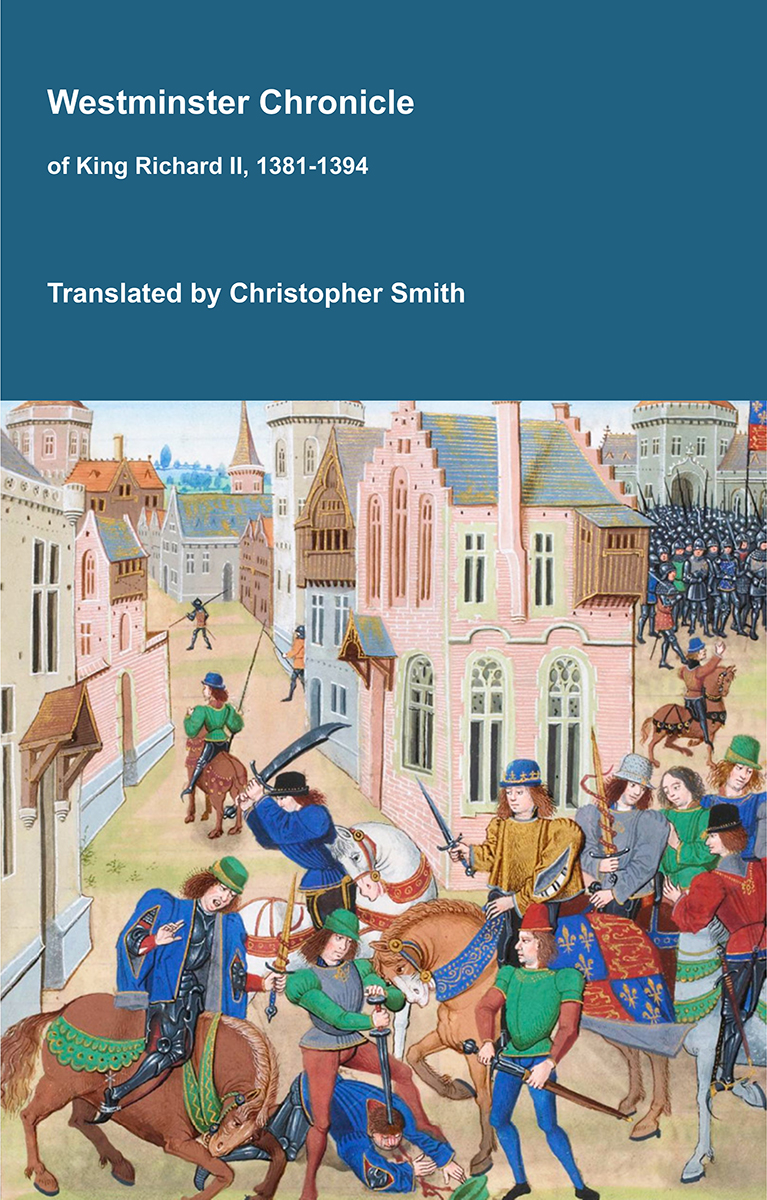 Westminster Chronicle. But Lord Henry Percy [aged 24] rushed upon them incautiously at about the hour of vespers1, while his men were not then properly arrayed for battle. Nevertheless, he bravely killed the Earl of Douglas [deceased] in his tent. The Scots, roused by the cries of those shouting, and who had not laid aside their arms, immediately rushed fiercely upon our men, who had come to the fight scattered and in disorder. Thus, I say, they fought our men so sharply that they captured the said Lord Henry and his brother Ralph there, made a great slaughter of our men, and led away with them as prisoners certain valiant men from among them. And so there, of our men, five hundred and fifty and more perished by the edge of the sword, because the Bishop of Durham did not come to their aid as had been agreed between them. For he was then quite near with a large following of armed men, but because of the darkness of night he refused to approach that place. Instead, he at once went with his men to the town of Newcastle. Indeed, if he had waited there until sunrise, the women would have overwhelmed him with stones because of the death inflicted on their husbands in the aforesaid battle; for if his natural courage had stirred him to boldness, he might perhaps have delivered both them and the prisoners from such a disaster. But why did this misfortune befall our Englishmen then at Otterburn? First, because of the impetuous spirit and excessive boldness of Lord Henry Percy, which caused our men, through haste, to go out to battle without proper order. Secondly, because the night deceived our Englishmen so much that, when they struck a Scot, they in fact carelessly cut down an Englishman, owing to the likeness of a single language. Thirdly, the help and assistance that had been agreed between them and the Bishop of Durham failed them, as has been touched on above. But Lord Matthew Redman did not fight in this way on the other side. For, when he saw the Scots, he bravely attacked them, so that they shamefully turned to flight. He ordered all to be killed without ransom, except only those who could pay one hundred marks for their helmets. He pursued them as far as the borders of Scotland, killing and mortally wounding them, and among others captured Lord James Lindsay, a man of the greatest renown in all Scotland and indeed outstanding in his deeds. He returned to his own people in triumph. There fell of the Scots, on one side and the other, more than five hundred. The Scots who had defeated Lord Henry Percy and his men kept the field until the first hour of the following day, all the while longing to kill the said Lord Henry Percy. But the Earl of Dunbar saved him from death. Then, when they heard of the slaughter of their own men made by Lord Matthew Redman, they immediately returned in haste into Scotland with their prisoners.
Sed dominus Henricus Percy incaute irruit in eos circa horam vesperarum suis indispositis protunc ad pugnam ; tamen comitem de Duglas viriliter in suo tentorio interfecit. Scoti vero ad voces exclamantium excitati, qui sua arma non deposuerunt, in nostros qui passim et inordinate venerant ad conflictum statim irruunt animose, sic, inquam, nostros tam acriter debellarunt quod dictum dominum Henricum et ejus fratrem Radulphum ibidem ceperunt et de nostris magnam stragem fecerunt et ex illis quosdam valentes secum captivos duxerunt, sicque ibidem ex nostris quingenti et |. in ore gladii perierunt et eo amplius, quia episcopus Dunelmensis non venit ad succursum prout inter eos erat condictum. Erat namque tunc satis prope cum magna armatorum sequela sed propter noctis tenebras renuit ad locum illum accedere, immo cum suis mox ad villam Novi castri perrexit, ubi revera si expectasset ortum solis, mulieres illum lapidibus obruerent propter mortem in viris suis inflictam in pugna præfata, quia si eum innata animositas ad audaciam provocasset, tam illos quam captivos ab hujusmodi elade forsitan liberasset. Sed quid, istud infortunium contigit Anglicis nostris protunc apud Otrebourne primo propter impetuosum animum et excessivam audaciam domini Henrici de Percy, quæ causabant nostros propter festinantiam prodire ad bellum sine ordinatione. Secundo quia nox nostros Anglicos delusit in tantum, quando ipsi percuterent Scotum, incaute propter unius linguæ consonantiam profecto Anglicum ceciderunt. Tertio defuit illis auxilium et juvamen secundum quod inter eos et episcopum Dunelmensem fuerat concordatum prout supra est tactum. Sed non sic pugnavit alio latere dominus Mathæus Redeman quia Scotis inspectis viriliter est cos aggressus, sic quod turpiter vertuntun in fugam, jussitque omnes occidi absque redemptione illis solummodo exceptis qui pro cassidibus suis valeant solvere centum marcas. Persecutusque est cos usque ad fines Scotiæ occidendo et letaliter vulnerande cepitque inter alios dominum Jacobum de Lyndissey, virum nominatissimum totius Scotiæ, utique in suis actibus præpollentem, et rediit cum triumpho ad sua ceciderunt de Scotis tam in una parte quam in alia amplius quam quingenti. Scoti vero qui dominun Henricum de Percy et suos vicerunt campum custodientes usque ad horam primam diei sequentis anhelabant semper dictum dominum Henrieum Percy occidere. Sed comes de Dombarriæ a mortis interitu ipsum salvavit. Demum audita strage suorum per dominum Mathæum Redeman facta statim cum festinatione cum suis captivis in Scotiam redierunt.
Note 1. The date of the Battle of Otterburn, also known as the Battle of Chevy Chase, is uncertain. The Westminster Chronicle places the battle after 12th August 1388. The Chronicle of Henry Knighton, however, places the date as the Wednesday immediately before the feast of Saint Lawrence i.e. 5th August. Fordun and Bower's 'Scotichron' also gives the 5th in the form of 'St Oswald's day'. A poem of Thomas Barry, canon of Glasgow, also has the 5th.
Froissart Book 13. Battle of Otterburn. KNIGHTS and squires were of good courage on both parties to fight valiantly: cowards there had no place, but hardiness reigned with goodly feats of arms, for knights and squires were so joined together at hand strokes, that archers had no place of nother party. There the Scots shewed great hardiness and fought merrily with great desire of honour: the Englishmen were three to one: howbeit, I say not but Englishmen did nobly acquit themselves, for ever the Englishmen had rather been slain or taken in the place than to fly. Thus, as I have said, the banners of Douglas and Percy and their men were met each other, envious who should win the honour of that journey. At the beginning the Englishmen were so strong that they reculed back their enemies: then the earl Douglas, who was of great heart and high of enterprise, seeing his men recule back, then to recover the place and to shew knightly valour he took his axe in both his hands, and entered so into the press that he made himself way in such wise, that none durst approach near him, and he was so well armed that he bare well off such strokes as he received1. Thus he went ever forward like a hardy Hector, willing alone to conquer the field and to discomfit his enemies: but at last he was encountered with three spears all at once, the one strake him on the shoulder, the other on the breast and the stroke glinted down to his belly, and the third strake him in the thigh, and sore hurt with all three strokes, so that he was borne perforce to the earth and after that he could not be again relieved. Some of his knights and squires followed him, but not all, for it was night, and no light but by the shining of the moon. The Englishmen knew well they had borne one down to the earth, but they wist not who it was; for if they had known that it had been the earl Douglas, they had been thereof so joyful and so proud that the victory had been theirs. Nor also the Scots knew not of that adventure till the end of the battle; for if they had known it, they should have been so sore despaired and discouraged that they would have fled away. Thus as the earl Douglas was felled to the earth, he was stricken into the head with an axe, and another stroke through the thigh: the Englishmen passed forth and took no heed of him: they thought none otherwise but that they had slain a man of arms. On the other part the earl George de la March and of Dunbar fought right valiantly and gave the Englishmen much ado, and cried, 'Follow Douglas,' and set on the sons of Percy: also earl John of Moray with his banner and men fought valiantly and set fiercely on the Englishmen, and gave them so much to do that they wist not to whom to attend.
Note 1. 'No man was so well armed that he did not fear the great strokes which he gave.'