

Paternal Family Tree: Redman
Matthew Redman served in France and Spain under John of Gaunt 1st Duke Lancaster.
In or before 1328 Matthew Redman was born to Matthew Redman [aged 24] at Levens Hall Levens.
Around 1350 [his son] Richard Redman was born to Matthew Redman [aged 22] and [his future wife] Joan Fitzhenry Baroness Greystoke [aged 17] at Levens Hall Levens. He married Elizabeth Aldeburgh, daughter of William Aldeburgh 1st Baron Aldeburgh Harewood and Elizabeth Lisle Baroness Ferrers Harewood, and had issue.
Before 18th October 1353 William Greystoke 2nd Baron Greystoke [aged 32] and [his future wife] Joan Fitzhenry Baroness Greystoke [aged 20] were married. She by marriage Baroness Greystoke.
After 10th July 1359 Matthew Redman [aged 31] and Joan Fitzhenry Baroness Greystoke [aged 26] were married.
Before April 1360 [his father] Matthew Redman [aged 57] died at Carlisle, Cumberland [Map].
Around 1370 [his son] Matthew Redman died.
In 1370 Matthew Redman [aged 42] was at the Court of the King of Portugal, probably on some diplomatic mission.
In 1377 [his step-son] Ralph Greystoke 3rd Baron Greystoke [aged 23] and Catherine Clifford Baroness Greystoke [aged 8] were married at Brougham Castle [Map]. She by marriage Baroness Greystoke. They were third cousins. He a great x 5 grandson of King Henry "Curtmantle" II of England. She a great x 5 granddaughter of King John of England.
Froissart Book 13. Before 5th August 1388. As at that time the earl of Northumberland and the other lords and knights of that country knew nothing of their coming. When tidings came to Newcastle and to Durham that the Scots were abroad, and that they might well see by the fires and smoke abroad in the country, the earl [aged 46] sent to Newcastle his two sons [Henry "Hotspur" Percy [aged 24] and Ralph Percy [aged 29]] and sent commandment to every man to draw to Newcastle, saying to his sons: 'Ye shall go to Newcastle and all the country shall assemble there, and I shall tarry at Alnwick, which is a passage that they must pass by. If we may enclose them, we shall speed well.' Sir Henry Percy and sir Ralph his brother obeyed their father's commandment and came thither with them of the country. The Scots rode burning and exiling the country, that the smoke thereof came to Newcastle. The Scots came to the gates of Durham and scrimmished there; but they tarried not long but returned, as they had ordained before to do, and that they found by the way took and destroyed it. Between Durham and Newcastle is but twelve leagues English and a good country: there was no town, without it were closed, but it was brent, and they repassed the river of Tyne where they had passed before, and then came before Newcastle and there rested. All the English knights and esquires of the country of York and bishopric of Durham were assembled at Newcastle, and thither came the seneschal of York, sir Ralph Lumley [aged 28], sir Matthew Redman [aged 60], captain of Berwick, sir Robert Ogle [aged 36], sir Thomas Grey, sir Thomas Holton, sir John Felton, sir John Lilleburn, sir Thomas Abingdon, the baron of Hilton, sir John Coppledike and divers other, so that the town was so full of people that they wist not where to lodge.


On either 5th August 1388 or after 12th August 1388 a Scottish army commanded by John Swinton defeated an English army commanded by Henry "Hotspur" Percy [aged 24] during the Battle of Otterburn at Otterburn [Map]. Henry "Hotspur" Percy and his brother Ralph Percy [aged 29] were captured as was Matthew Redman [aged 60]. The English suffered 1000 killed, 2000 captured. The Scottish 100 killed, 200 captured.
On the Scottish side James Douglas 2nd Earl Douglas [aged 30] was killed. His sister Isabel [aged 28] succeeded Countess Mar.
John Dunbar 1st Earl of Moray [aged 46] fought.
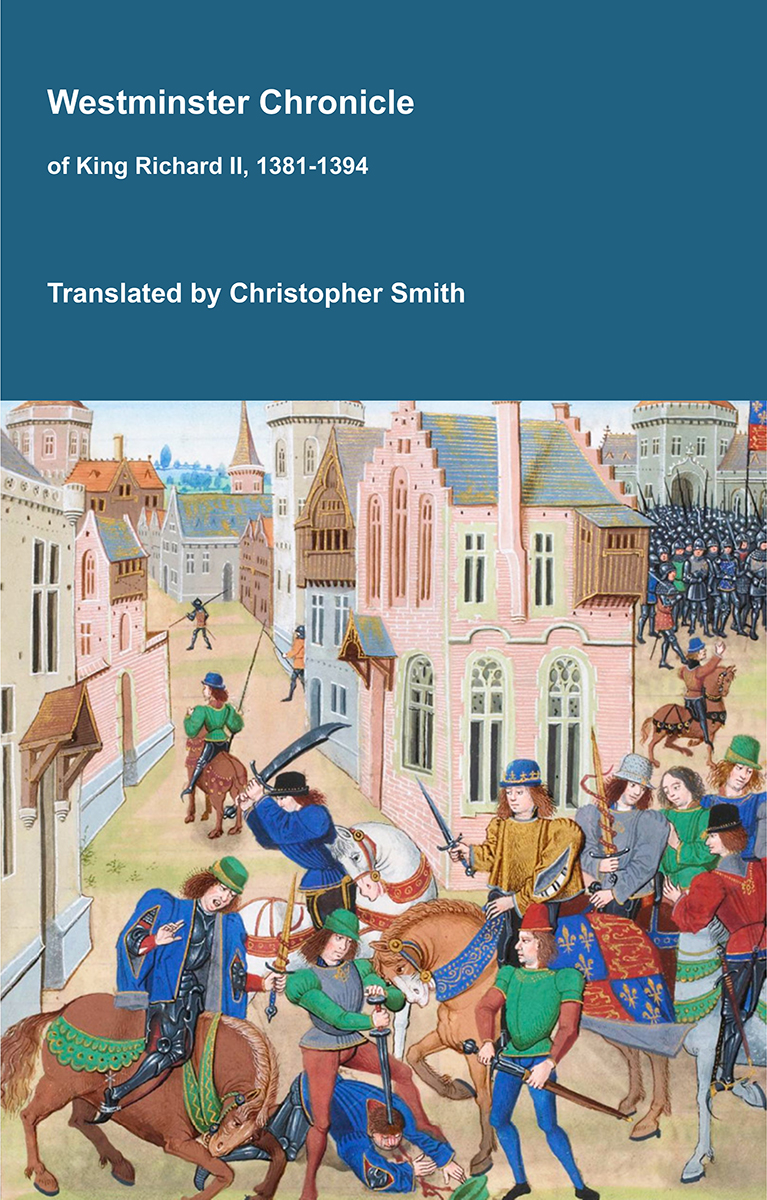 Westminster Chronicle. Also, it was said above in the preceding year how it had been ordained that certain lords who had their inheritances in the northern parts, wherever they might be, should guard those regions from the invasion of enemies. But in truth that ordinance did not proceed effectively. For the northern lords, being more experienced in Scottish wars, wished to have sufficient men and money for the defence of the aforesaid region, and this was denied to them. Therefore the Earl of Nottingham [Thomas Mowbray], the Lord Neville, and the other valiant men of the country entered Scotland on the 25th day of June with 1,500 armed men, and achieved little there, because they very quickly found a greater force prepared against them, which they did not dare attack because of the multitude gathered there. The Scots, caring little or nothing for them, entered England in warlike fashion by another route on the 29th day of June, with about 30,000 fighting men, and devastated the country on every side as far as Tynemouth. They sent word to the prior of that place that he should give them ransom for his cells and other goods situated nearby, otherwise they would consume them with burning and plundering. And this indeed they did, notwithstanding that the king had been forewarned of such things. The Earl of Northumberland, foreseeing how these things might likely turn out for the lords, cautiously withdrew and came to the king, and was made chief of his council. The Earl of Nottingham, when he and his men heard of the damage which the Scots were inflicting on the whole country, went quickly to Berwick and there received himself. But Sir Matthew Redman [aged 61] and Sir Thomas Ogle, on their return, bravely pursued the Scots from behind, and killed and captured two-hundred of them. The Lord Neville also laid waste a certain region in Scotland which had never before been ridden over, and drove off plunder from there to his own strongholds.
Item dictum est supra in præcedente anno quomodo ordinatum fuit quod quidam donini sua patrimonia in partibus borealibus undecumque habentes illas plagas ab invasione hostium custodirent sed profecto illa ordinatio effectualiter non processit. Nam domini boreales Scotica bella magis experti voluerunt habere homines et pecunias sufficientes ad custodiam plagæ prædietæ quodque fuit illis negatum. Igitur comes Notyngham, dominus de Nevyll, et cæteri valentes de patria xxv die Junii cum mille et quingentis armatorum Scotiam intraverunt et parum ibi profecerunt quia majorem potentiam contra eos paratam quantocius invenerunt, quam invadere non audebant propter multitudinem inibi congregatam. Scoti vero parum vel nihil de illis curantes xxix, die Junii circa xxx milia pugnatorum per aliam viam Angliam bellicose intrantes patrias ex omni parte usque Tynemoutlhe vastarunt, mandantes priori dicti loci ut daret eis redemptionem pro cellis et aliis bonis ejus ibi deprope existentibus alias ea consumerent incendiis et rapinis; quod utique fecerunt non obstante quod rex fuerat de hujusmodi præmunitus. Comes vero Northumbriæ providens qualiter istis dominis potuit verisimiliter evenire caute retraxit se et venit ad regem et factus est sui consilii capitalis. Comes quoque de Notyngham cum suis auditis damnis quæ Scoti toti patriæ inferebant festinus accessit ad Berewycum et ibidem se recipiebat. Domini vero Mathæus Redeman et Thomas Ogle in redeundo Scotos & tergo viriliter insequentes ducentos ex eis occiderunt pariter et ceperunt. Dominus etiam de Nevyll quandam patriam in Scotia nunquam per antea equitatam vastavit et prædas inde ad sua præsidia abigebat.
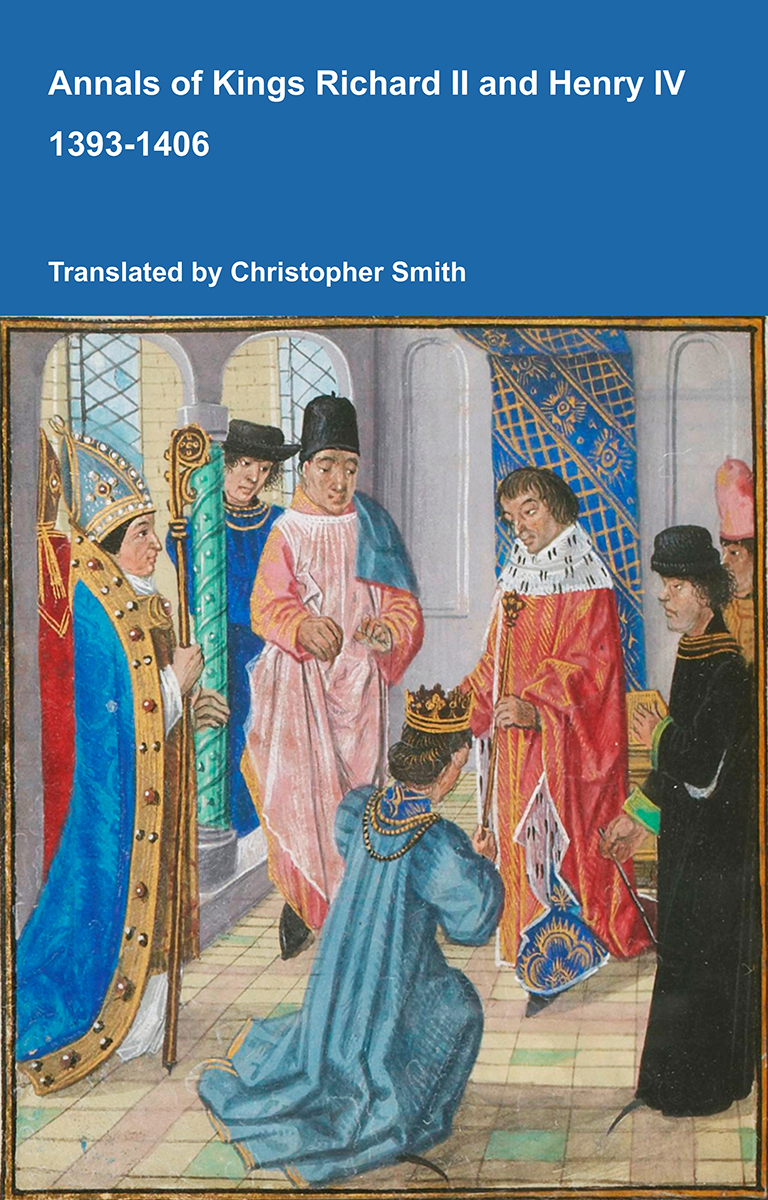
Annals of Kings Richard II and Henry IV 1393-1406
The Annals of Kings Richard II and Henry IV offers a vivid contemporary account of one of the most turbulent periods in late medieval England. Covering the reigns of Richard II and Henry IV, the chronicle records royal ceremonies, political conflict, rebellion, war, taxation, religious controversy, executions, popular unrest and remarkable portents. Its pages include a detailed description of Richard II’s coronation, the fall and deposition of the king, Henry IV’s seizure of the throne, the Percy rebellion, the execution of Archbishop Richard Scrope, the campaigns of Owain Glyndŵr, and England’s relations with Scotland, France, Portugal and Scandinavia. Alongside affairs of state, the annalist preserves reports of miracles, eclipses, prophecies, supernatural events and the experiences of ordinary townspeople, clergy, soldiers and travellers. Written from a monastic perspective, the work combines political observation with moral judgement, presenting victories and disasters as evidence of divine favour or punishment. At once a historical record and a reflection of medieval belief, the Annals provides an invaluable window into the challenges, ceremonies and conflicts of England at the turn of the fifteenth century.
Available at Amazon in eBook and Paperback format.
Before 1390 Matthew Redman [aged 61] was appointed Constable of of Roxburgh Castle.
Before 1390 Matthew Redman [aged 61] died.
On 1st September 1403 [his former wife] Joan Fitzhenry Baroness Greystoke [aged 70] died.
[his son] Matthew Redman was born to Matthew Redman and Joan Fitzhenry Baroness Greystoke.
Grandfather: Matthew Redman
Father: Matthew Redman