

Before 5th November 1851 [his father] Edward Hughes [aged 23] and [his mother] Harriet Foord [aged 25] were married. His brother [his uncle] Arthur Hughes [aged 19] would marry to her younger sister [his aunt] Tryphena Foord [aged 22]. An example of Marriage of Two Sets of Siblings.
On 5th November 1851 Edward Robert Hughes was born to Edward Hughes [aged 23] and Harriet Foord [aged 25] at 29 Wilmington Square, Clerkenwell. His uncle was the painter Arthur Hughes [aged 19].

1871. Edward Robert Hughes [aged 19]. "Evensong".

1872. Edward Robert Hughes [aged 20]. "A Rainy Sunday" aka "Sabbath Morn".

1873. Edward Robert Hughes [aged 21]. Portrait of Caroline Hill.

1873. [his uncle] Arthur Hughes [aged 40]. Portrait of the artists's nephew Edward Robert Hughes [aged 21].

1874. Edward Robert Hughes [aged 22]. Portrait of Gray Hill.

1875. Edward Robert Hughes [aged 23]. "A Young Beauty".

1880. Edward Robert Hughes [aged 28]. "Landscape with Trees".
In 1883 Edward Robert Hughes [aged 31] and Emily Eliza Davies [aged 37] were married.
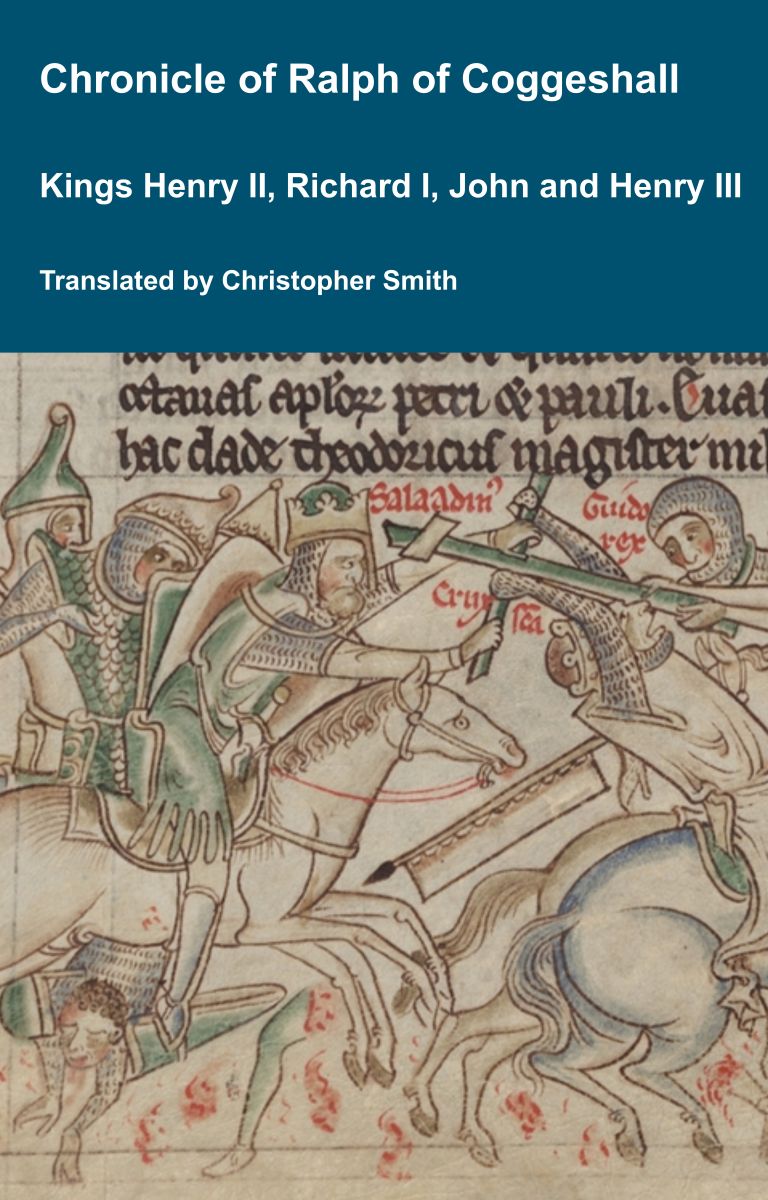
Chronicle of Abbot Ralph of Coggeshall
The Chronicle of Abbot Ralph of Coggeshall (Chronicon Anglicanum) is an indispensable medieval history that brings to life centuries of English and European affairs through the eyes of a learned Cistercian monk. Ralph of Coggeshall, abbot of the Abbey of Coggeshall in Essex in the early 13th century, continued and expanded his community’s chronicle, documenting events from the Norman Conquest of 1066 into the tumultuous reign of King Henry III. Blending eyewitness testimony, careful compilation, and the monastic commitment to record-keeping, this chronicle offers a rare narrative of political intrigue, royal power struggles, and social upheaval in England and beyond. Ralph’s work captures the reigns of pivotal figures such as Richard I and King John, providing invaluable insights into their characters, decisions, and the forces that shaped medieval rule. More than a simple annal, Chronicon Anglicanum conveys the texture of medieval life and governance, making it a rich source for scholars and readers fascinated by English history, monastic authorship, and the shaping of the medieval world.
Available at Amazon in eBook and Paperback format.

1887. Edward Robert Hughes [aged 35]. "Portrait of a Lady". Possibly Florence Jane Helen Wellesley Baroness Nunburnholme [aged 34].

1888 to 1905. William Holman Hunt [aged 60] assisted by Edward Robert Hughes [aged 36]. "Lady of Shalott". Part 3 Stanza 5: "Out flew the web and floated wide; The mirror crack'd from side to side".

1892. Edward Robert Hughes [aged 40]. "Portrait of a Lady". Possibly Lucy Cecilia Dunn-Garnder Countess Scarborough.
Lucy Cecilia Dunn-Garnder Countess Scarborough: she was born to Cecil Mina Dunn-Gardner. In 1887 Robert Ashton and she were married. On 8th April 1899 Aldred Beresford Lumley 10th Earl Scarborough and she were married at Christ Church, Mayfair. She by marriage Countess of Scarborough. He the son of Richard Lumley 9th Earl Scarborough and Adeliza Drummond Countess Scarborough. On 24th December 1931 she died.

1893. Edward Robert Hughes [aged 41]. Portrait of Adele Beach Grant Countess Essex [aged 26].

An Artist's Reminiscences Chapter 8. I was fortunate enough to have some beautiful ladies in my Florentine and Venetian groups. Miss Lisa Stillmann [aged 29] was Fiammetta. Miss Galloway of Manchester was the Paris Bordone lady. Miss Lisa Lehmann [aged 32] was my Beatrice. (Mr. Stock, R.I., the artist, was an admirable Dante.) Mr. W. A. S. Benson was Niccolo Pisano. My wife [Mary Frances Andrews [aged 48]] took the part of Laura. My little daughter was an early Italian angel. My eldest son personated the young Giotto, and I represented Cimabue myself, in the white costume in which Leighton painted him, taken from the fresco of Simone Memmi at Florence.
Sir James Linton was Veronese in my Venetian group, the late Mr. J. H. Mole, R.I., personating Titian. The late Mr. John O'Connor made an excellent Michael Angelo, and Mr. E. R. Hughes [aged 43] presented a lifelike and artistic portrait of the young Raphael.

Around 1895. Edward Robert Hughes [aged 43]. "Oh, What's That in the Hollow?".

1895. Edward Robert Hughes [aged 43]. "Bertuccio's Bride".
Bertuccio uses his inheritance to ransom the body of a man from his murderers, and to free a maiden from robbers. The maiden turns out to be a princess, who makes a contract of betrothal with him before she returns to her kingdom. Bertuccio then meets a mysterious knight, with whom he changes clothes, and goes in quest of his bride. When he is returning home with her, they meet the knight again, and Bertuccio offers to divide with the knight the wedding gifts, in return for the help which the knight provided. However, the knight turns out to be the spirit of the murdered man, whose body he ransomed, and declines the gifts.

1896. Edward Robert Hughes [aged 44]. "Diana's Maidens" aka "A Coward".

1896. Edward Robert Hughes [aged 44]. "The Shrew Katherina".

1896. Edward Robert Hughes [aged 44]. "Summer Fantasy".
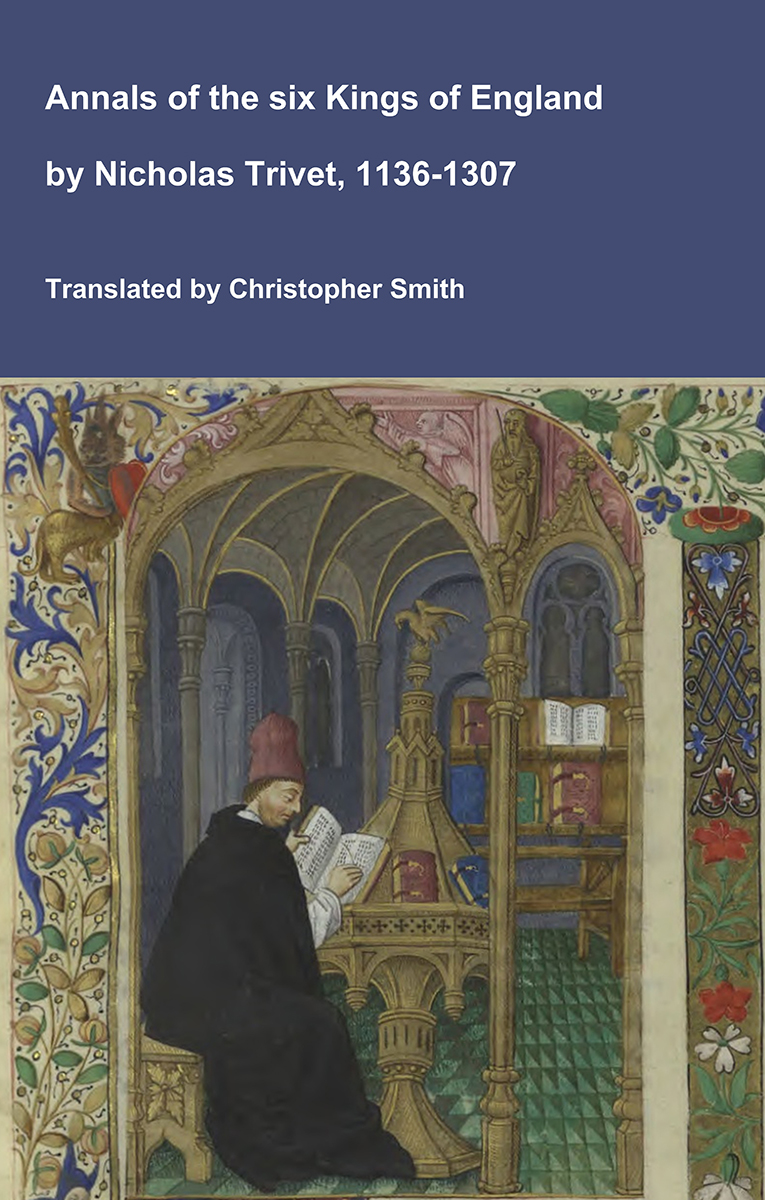
Annals of the six Kings of England by Nicholas Trivet
Translation of the Annals of the Six Kings of England by that traces the rise and rule of the Angevin aka Plantagenet dynasty from the mid-12th to early 14th century. Written by the Dominican scholar Nicholas Trivet, the work offers a vivid account of English history from the reign of King Stephen through to the death of King Edward I, blending political narrative with moral reflection. Covering the reigns of six monarchs—from Stephen to Edward I—the chronicle explores royal authority, rebellion, war, and the shifting balance between crown, church, and nobility. Trivet provides detailed insight into defining moments such as baronial conflicts, Anglo-French rivalry, and the consolidation of royal power under Edward I, whose reign he describes with particular immediacy. The Annals combines careful year-by-year reporting with thoughtful interpretation, presenting history not merely as a sequence of events but as a moral and political lesson. Ideal for readers interested in medieval history, kingship, and the origins of the English state, this chronicle remains a valuable and accessible window into the turbulent world of the Plantagenet kings.
Available at Amazon in eBook and Paperback format.

1898. Edward Robert Hughes [aged 46]. Portrait of Laura Gwendolen Galton [aged 38] and her son Alvery Douglas Frederick Trench-Gascoigne [aged 5].
Laura Gwendolen Galton: Around 1860 she was born to Douglas Strutt Galton. In 1892 Frederick Richard Thomas Trench-Gascoigne and she were married. On 10th July 1949 she died.
Alvery Douglas Frederick Trench-Gascoigne: In 1893 he was born to Frederick Richard Thomas Trench-Gascoigne and Laura Gwendolen Galton.
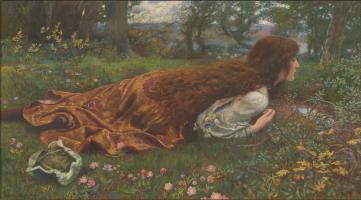
Around 1901. Edward Robert Hughes [aged 49]. "The Princess out of School".

1902. Edward Robert Hughes [aged 50]. "Dream Idyll (A Valkyrie)".

1905. Edward Robert Hughes [aged 53]. "Wings of the Morning".

1905. Edward Robert Hughes [aged 53]. "Midsummer's Eve".

1907. Edward Robert Hughes [aged 55]. "Heart of Snow".

1911. Edward Robert Hughes [aged 59]. "Summer Fantasy".

1912. Edward Robert Hughes [aged 60]. "Night with her Train of Stars".

Before 1914. Edward Robert Hughes [aged 62]. "Day, and Night".

Before 1914. Edward Robert Hughes [aged 62]. "Reverie".
The Deeds of the Dukes of Normandy
The Gesta Normannorum Ducum [The Deeds of the Dukes of Normandy] is a landmark medieval chronicle tracing the rise and fall of the Norman dynasty from its early roots through the pivotal events surrounding the Norman Conquest of England. Originally penned in Latin by the monk William of Jumièges shortly before 1060 and later expanded at the behest of William the Conqueror, the work chronicles the deeds, politics, battles, and leadership of the Norman dukes, especially William’s own claim to the English throne. The narrative combines earlier historical sources with firsthand information and oral testimony to present an authoritative account of Normandy’s transformation from a Viking settlement into one of medieval Europe’s most powerful realms. William’s history emphasizes the legitimacy, military prowess, and governance of the Norman line, framing their expansion, including the conquest of England, as both divinely sanctioned and noble in purpose. Later chroniclers such as Orderic Vitalis and Robert of Torigni continued the history, extending the coverage into the 12th century, providing broader context on ducal rule and its impact. Today this classic work remains a foundational source for understanding Norman identity, medieval statesmanship, and the historical forces that reshaped England and Western Europe between 800AD and 1100AD.
Available at Amazon in eBook and Paperback format.

Before 1914. Edward Robert Hughes [aged 62]. "Idle Tears".

Before 1914. Edward Robert Hughes [aged 62]. "The Valkyrie's Vigil".

Before 1914. Edward Robert Hughes [aged 62]. "The Nymph Callisto".
On 23rd April 1914 Edward Robert Hughes [aged 62] died at his home 3 Romeland after an operation for appendicitis. He was buried at Hatfield Road Cemetery, St Albans. His funeral in St Albans Cathedral [Map] was the largest ever held there, attended by his many friends, fellow artists, and pupils from his life-drawing class in London.


On 8th February 1925 [his former wife] Emily Eliza Davies [aged 79] died. She was buried at Hatfield Road Cemetery, St Albans.
GrandFather: Edward Hughes
Father: Edward Hughes
GrandFather: Robert Foord
Mother: Harriet Foord