

Chronicle of Walter of Guisborough
A canon regular of the Augustinian Guisborough Priory, Yorkshire, formerly known as The Chronicle of Walter of Hemingburgh, describes the period from 1066 to 1346. Before 1274 the Chronicle is based on other works. Thereafter, the Chronicle is original, and a remarkable source for the events of the time. This book provides a translation of the Chronicle from that date. The Latin source for our translation is the 1849 work edited by Hans Claude Hamilton. Hamilton, in his preface, says: 'In the present work we behold perhaps one of the finest samples of our early chronicles, both as regards the value of the events recorded, and the correctness with which they are detailed; Nor will the pleasing style of composition be lightly passed over by those capable of seeing reflected from it the tokens of a vigorous and cultivated mind, and a favourable specimen of the learning and taste of the age in which it was framed.'
Available at Amazon in eBook and Paperback format.
1520-1532 Field of the Cloth of Gold and Anne Boleyn is in 16th Century Events.
On 30th April 1520 a skirmish took place on the High Street Edinburgh in which around five hundred supporters of James Hamilton 1st Earl Arran [aged 45] fought with a similar number of supporters of Archibald Douglas 6th Earl Angus [aged 31], chiefs of Clan Hamilton and Douglas respectively, over who had control over King James V of Scotland [aged 8].
Around eighty of the Hamilton's were killed with the Douglases victorious as a consequence of around eight hundred more supporters arriving under the leadership of Angus' brother William Douglas Prior of Coldingham [aged 27].
John Montgomerie Master of Eglinton [aged 37] was killed.


In June 1520 Henry VIII [aged 28] hosted Field of the Cloth of Gold at Balinghem [Map].
Thomas Grey 2nd Marquess Dorset [aged 42] carried the Sword of State.
Bishop John Stokesley [aged 45] attended as Henry VIII's chaplain.
Edmund Braye 1st Baron Braye [aged 36], Gruffydd ap Rhys ap Thomas Deheubarth [aged 42], Anthony Poyntz [aged 40], William Coffin [aged 25], William "Great" Courtenay [aged 43], Robert Radclyffe 1st Earl of Sussex [aged 37], William Paston [aged 41], William Denys [aged 50], Richard Cecil [aged 25], William Parr 1st Baron Parr of Horton [aged 37], Ralph Neville 4th Earl of Westmoreland [aged 22], John Mordaunt 1st Baron Mordaunt [aged 40], Henry Guildford [aged 31], Marmaduke Constable [aged 40], William Compton [aged 38], William Blount 4th Baron Mountjoy [aged 42], Thomas Cheney [aged 35], Henry Willoughby [aged 69], John Rodney [aged 59], John Marney 2nd Baron Marney [aged 36], William Sidney [aged 38], John de Vere 14th Earl of Oxford [aged 20], John de Vere 15th Earl of Oxford [aged 49], Edmund Walsingham [aged 40], William Skeffington [aged 55] and Thomas West 8th Baron De La Warr 5th Baron West [aged 63] attended.
William Carey [aged 20] jousted.
William Sandys 1st Baron Sandys of the Vyne [aged 50] organised.
Jane Parker Viscountess Rochford [aged 15] attended.
Thomas Brooke 8th Baron Cobham [aged 50], Robert Willoughby 2nd Baron Willoughby 10th Baron Latimer [aged 48], Anthony Wingfield [aged 33], William Scott [aged 61], Thomas Wriothesley [aged 32], Bishop Thomas Ruthall [aged 48], Margaret Dymoke aka Mistress Coffin [aged 20] and Edward Chamberlayne [aged 36] were present.


Letters and Papers Foreign and Domestic Henry VIII 1520. 26 March. [1520] R. O. Rym. XIII. 705. 702. Francis I.
Confirmation of the arrangements made for his meeting with Henry VIII. under the Great Seal. Chatelleraut, 26 March 1519; 6 Francis I. Signed.
Latin.
R. T. 137. 2. Letters indented specifying, in accordance with the treaty of 12 March 1519, the number and rank of the lords, ladies and gentlemen to attend the King and Queen at the interview with Francis I., viz.:—
i. For the King: The cardinal of York, with 300 servants, of whom 12 shall be chaplains and 50 gentlemen, with 50 horses; one archbishop with 70 servants, of whom 5 shall be chaplains and 10 gentlemen, with 30 horses; 2 dukes, each with 70 servants, 5 to be chaplains and 10 gentlemen, with 30 horses. 1 marquis with 56 servants, 4 to be chaplains and 8 gentlemen; 26 horses. 10 earls, each with 42 servants, 3 to be chaplains and 6 gentlemen; 20 horses. 5 bishops, of whom the Bishop of Winchester shall have 56 servants, 4 to be chaplains and 8 gentlemen; 26 horses;—each of the others, 44 servants, 4 to be chaplains and 6 gentlemen; 20 horses. 20 barons, each to have 22 servants, 2 to be chaplains and 2 gentlemen; 12 horses. 4 knights of the order of St. George, each to have 22 servants, 2 to be chaplains and 2 gentlemen; 48 horses. 70 knights, each to have 12 servants, one to be a chaplain; 8 horses. Councillors of the long robe; viz., the King's secretary, the vice-Chancellor, the dean of the Chapel, and the almoner, each to have 12 servants, one a chaplain, and 8 horses. 12 King's chaplains, each with 6 servants and 3 horses. 12 serjeants-at-arms, each with 1 servant and two horses. 200 of the King's guard with 100 horses. 70 grooms of the chamber, with 150 servants and 100 horses among them; 266 officers of the house, with 216 servants and 70 horses; 205 grooms of the stable and of the armories, with 211 horses. The Earl of Essex, being Earl marshal, shall have, beside the number above stated, 130 servants and 100 light horses. Sum total of the King's company, 3,997 persons and 2,087 horses.
ii. For the Queen: 1 duchess, with 4 women, 6 servants and 12 horses; 10 Countesses, with 3 women and 4 servants, and 8 horses each; 12 baronesses, with 2 women, 3 servants and 6 horses each. 20 knights' ladies, with 1 woman, 2 servants and 4 horses each; 14 ladies, with 1 woman, 2 servants and 3 horses each; 6 ladies of the chamber, with 1 servant and 2 horses each; 1 earl, with 42 servants, 3 to be chaplains and 9 gentlemen; horses 20. 3 bishops, to have 44 servants, 4 to be chaplains and 6 gentlemen; horses 60. 4 barons, with 22 servants, 2 to be chaplains and 2 gentlemen; horses 48. 30 knights, with 12 servants, 1 to be a chaplain; horses 240; 6 chaplains with 3 servants and 2 horses each. Grooms 50, officers of the King's chamber, with 20 servants and 30 horses; officers of the King's stable 60, with 70 horses. Sum total of the Queen's company, 1,175 persons and 778 horses.
R. O. Rym. XIII. 710. 3. Names of those appointed to attend the king of England at the Congress.
Commissioners appointed to oversee those who shall accompany the king of France:—The Earl of Essex, Lord Abergavenny, Sir Edward Ponynges, Sir Rob. Wingfield. To give orders to the gentlemen:—Sir Edward Belknapp, Sir Nich. Vaux, Sir John Peche, Sir Maurice Berkeley. To give orders to the foot soldiers:—Sir Weston Browne, Sir Edward Ferrers, Sir Rob. Constable, Sir Ralph Egerton, Sir Thomas Lucy, Sir John Marney. To ride with the king of England at the embracing of the two Kings:—The Legate, archbishop of Canterbury, dukes of Buckingham and Suffolk, marquis of Dorset. Bishops:—Durham, Armagh, Ely, Chester, Rochester, Exeter, Hereford. Earls:—Stafford, Northumberland, Westmoreland [aged 22], Shrewsbury [aged 52], Worcester, Devonshire, Kent, Wiltshire, Derby, Kildare. Barons:—Maltravers, Montagu, Herbert, the grand prior of St. John of England, Roos, Fitzwalter, Hastings, Delavare, Dacres, Ferrers, Cobham, Daubeney, Lumley, Sir Henry Marney, Sir William Sandys, Th. Boleyn [aged 43], Lord Howard.
The servants of the king of England shall march next their King, preceded by the nobles and gentlemen of the Legate, who shall follow the gentlemen of the other lords. The King's guard to follow him in their accustomed places.Fr., pp. 2. Endd.
R. O. Rym. XIII. 713. 4. The names of those who will be with the French king when he meets the king of England.
The king of Navarre; dukes of Alençon, Bourbon, Vendosme and Lorraine; count of Saint Pol; prince de la Roche Suryon; count of Dreux and Rhetel, Sieur Dorval and governor of Champaigne; count of Benon, sieur de la Tremoille, first Chamberlain, admiral of Guyenne and governor of Burgundy; count of Estampes and Caravats, sieur de Boysy, grand master and governor of the Dauphin; Bonnyvet, admiral of France, Lautrec, La Palisse and Chastillon, marshals; count of Guyse, brother of the duke of Lorraine; the bastard of Savoy, count of Villars and Beaufort, governor of Provence; count de Laval; mons. de Chasteaubriant; count of Harcourt; princes of Orange and Tallemont; mons. de Nevers; mons d'Esparrox, lieutenant of Guyenne, and count of Montfort; Mess. de Lescun and Montmorency; le Grand Escuyer; counts de la Chambre, Tonnerre, Brienne, Joigny, Bremie and Mont Reuel; mons. d'Albret. The other knights of the Order.
The king's household, 200 gentlemen; St. Vallier and the grand seneschal of Normandy, captains.
400 archers of the guard, and 4 captains; 100 Swiss, De Florenges, captain; maîtres d'hôtel, pannetiers, valets, &c.; gentlemen of the council and of the finances. The other pensioners will remain in their houses.Francis will bring with him the above company, if the king of England thinks it suitable; but if not, he will diminish it.
These noblemen will only have with them about 200 horses.Fr., pp. 3. Endd.: Noblemen's names that shall accompany the French king at the meeting at Calais.
In June 1520 Arthur Hopton [aged 31] attended Field of the Cloth of Gold.
After June 1520 William Sandys 1st Baron Sandys of the Vyne [aged 50] was created 1st Baron Sandys of The Vyne in Hampshire for having organised the Field of the Cloth of Gold.
Effigy of Sir John Peche. SIR JOHN PECHE, the most splendid amongst the gentlemen who figured in the court of Henry VIII., appears already to have advanced his fortunes in the reign of Henry VII., during Perkin Warbeck's unsuccessful rebellion. In the twelfth of that king's reign we And him amongst the foremost engaged in opposing the Cornish men in Kent, which led to their subsequent defeat on Blackheath. At the coronation of Henry VIII, Stow says, "the king ordained to wait on his person fiftie gentlemen to be speares, every of them to have an archer, a demilance, and a cistrall, and every speare to have three great horses to be attendant on his person; of the which band the earle of Essex was lieutenant, and Sir John Pechie captaine, which ordinance continued not long, the charges were so great; for there were none of them, but they and their horses were apparelled and trapped in cloth of gold, silver, and goldsmith's worke."
In 5th Henry VIII., 1513, we still find Sir John Peche employed in military achievements, accompanying the king as vice governor of the horsemen at the siege and destruction of Therouenne. In 1514 he again passed the sea from England to Calais, and was appointed Lord Deputy of that town; and the same year, in company with other nobles and gentlemen he attended to Paris the Lady Mary, sister to Henry, who was there espoused to the French King. In 1520 Sir John joined the gallant train of Henry, who exhibited at the celebrated Champ de Drap D'Or, a splendor and magnificence never exceeded in the court of any English monarcha. 14th Henry VIII, 1522, Sir John Peche terminated an existence which, as far as it appears connected with his sovereign and public life, seems to have passed in uninterrupted prosperity. The place of his death is not specified, but it is probable he was buried beneath the magnificent tomb erected to his memory at Lullingstone in Kent. Tradition there records the visits of Henry VIII. to Sir John Peche, and the Tilt-yard, the former scene of courtly splendor, is still pointed out in front of the castle gates.
Note a. At the justs and tournays held at the Champ de Drap d'Or, Hail says, Sir John Pechie, with three other knights, attended the king on horseback in his livery, which was white on the right side, and on the left side gold and russet, both hose and garment.

Archaeologia Volume 3 Section XXIV. An historical Description of an ancient Picture in Windsor castle, representing the Interview between king Henry VIII. and the French king Francis I. between Guînes and Ardres, in the year 1520. By Sir Joseph Ayloffe [aged 63], Baronet, V. P. A. S. and F. R. S.
Read at the Society of ANTIQUARIES, March 29, 1770; and a second Time, by Order of the Society, March 7, 1771.
Joseph Ayloffe 6th Baronet: In 1708 he was born to Joseph Ayloffe. Archaeologia Volume 3 Section XLIII. An Account of the Body of King Edward the First, as it appeared on opening his Tomb in the Year 1774. By Sir Joseph Ayloffe, Bart. V. P. S. A. and F. R. S. Read at the Society of Antiquaries, May 12, 1774. On 19th April 1781 he died.

In April 1521 Edward Stafford 3rd Duke of Buckingham [aged 43] was arrested and imprisoned at Tower of London [Map]. He was accused of listening to prophecies of the King's death and intending to kill the King. Thomas Howard 3rd Duke of Norfolk [aged 48] presided at his trial. Thomas Grey 2nd Marquess Dorset [aged 43] and Henry Guildford [aged 32] acted as judges. Thomas Brooke 8th Baron Cobham [aged 51], Anthony Poyntz [aged 41] and Edmund Walsingham [aged 41] as jurors.
On 17th May 1521 Edward Stafford 3rd Duke of Buckingham [aged 43] was beheaded at Tower Hill [Map]. Duke of Buckingham, Earl Stafford and Baron Stafford forfeit.
He was executed for no specific reason other than his having a significant amount of Plantagenet blood and was, therefore, considered a threat by Henry VIII [aged 29]. He was posthumously attainted by Act of Parliament on 31 July 1523, disinheriting his children. He was buried at St Peter's Church, Britford [Map].
Wriothesley's Chronicle [1508-1562]. 17th May 1521. This yeare, on Fridaye before Whitsonday, beinge the 17 day of Maye, Edward Duke of Buckingham [aged 43]a was beheaded at Tower Hill [Map].
Note a. Edward Stafford, Duke of Buckingham, was restored in 1486 by Henry VII. to his honours and estates. He commanded the select guard of Henry VIII [aged 29] in the battle of the Spurs, 1613, but his observation, that the "Field of the Cloth of Gold" entailed ruin on the English nobles, so irritated the King that he determined on his ruin. It is also asserted that the King was jealons of his descent from Thomas of Woodstock and Edward III.
On 4th March 1522, Shrove Tuesday, at Cardinal Wolsey's York Place, a pageant known as Chateau Vert was performed. Believed to be the first public appearance of Anne Bolyen [aged 21] since her return from the French Court, and the first time King Henry VIII [aged 30] had seen her since her childhood. The pageant was part of the Shrovetide celebrations which began on 1st March 1522 and which also celebrated the negotiations between Charles V, Holy Roman Emperor, and King Henry VIII for a joint attack on France, which were to be sealed by the marriage of Charles V [aged 22] and Princess Mary [aged 6], Henry's daughter.


Chronicle of Edward Hall [1496-1548]. 4th March 1522. On Shrove Tuesday at night, the said Cardinal to the King and Ambassadors made another supper, and after supper they came into a great chamber hanged with Arras, and there was a clothe of estate, and many branches, and on every branch thirty-two torchettes of wax, and in the nether end of the same chamber was a castle, in which was a principal Tower, in which was a cresset burning: and two other less Towers stood on every side, warded and embattailed, and on every Tower was a banner, one banner was of three rent hearts, the other was a ladies hand gripping a man's heart, the third banner was a ladies hand turning a man's heart: this castle was kept with ladies of strange names, the first Beautie [aged 25], the second Honor [aged 19], the third Perseveraunce [aged 21], the fourth Kyndnes [aged 23], the fifth Constance [aged 17], the sixte Bounty, the seventh Mercy, and the eight Pity: these eight ladies had Milan gowns of white satin, every Lady had her name embroidered with gold, on their heads cauls, and Milan bonnets of gold, with jewels. Underneath the base fortress of the castle were other eight ladies, whose names were, Danger, Disdain, Jealousy, Unkindness, Scorn, Malebouche, Strangeness, these ladies were tired [attired] like to women of India. Then entered eight lords in clothe of gold caps and all, and great mantel cloaks of blue satin, these lords were named. Amorous, Nobleness, Youth, Attendance, Loyalty, Pleasure, Gentleness, and Liberty, the King [aged 30] was chief of this company, this company was led by one all in crimson satin with burning flames of gold, called Ardent Desire which so moved the Ladies to give over the Castle, but Scorne and Disdain said they would hold the place, then Desire said the ladies should be won and came and encouraged the knights, then the lords ran to the castle, (at which time without was shot a great peal of guns) and the ladies defended the castle with rose water and comfits and the lords threw in dates and oranges, and other fruits made for pleasure but at the last the place was won, but Lady Scorn and her company stubbornly defended them with bows and balls, till they were driven out of the place and fled. Then the lords took the ladies of honour as prisoners by the hands, and brought them down, and danced together very pleasantly, which much pleased the strangers, and when they had danced their fill then all these dis-visored themselves and were known: and then was there a costly banquet, and when all was done, the strangers took their leave of the King and the Cardinal and so departed into Flanders, giving to the King much commendation.
Note. Hall's Chronicle doesn't specify who played each part described - there doesn't appear to be any source for the attribution of the players. It may be entirely an invention of the 2007 TV Series "The Tudors".

The True Chronicles of Jean le Bel Volume 1 Chapters 1-60 1307-1342
The True Chronicles of Jean le Bel offer one of the most vivid and immediate accounts of 14th-century Europe, written by a knight who lived through the events he describes, and experienced some of them first hand. Covering the early decades of the Hundred Years’ War, this remarkable chronicle follows the campaigns of Edward III of England, the politics of France and the Low Countries, and the shifting alliances that shaped medieval warfare. Unlike later historians, Jean le Bel writes with a strong sense of eyewitness authenticity, drawing on personal experience and the testimony of fellow soldiers. His narrative captures not only battles and sieges, but also the realities of military life, diplomacy, and the ideals of chivalry that governed noble society. A key source for Jean Froissart, Le Bel’s chronicle stands on its own as a compelling and insightful work, at once historical record and literary achievement. This translation builds on the 1905 edition published in French by Jules Viard, adding extensive translations from other sources Rymer's Fœdera, the Chronicles of Adam Murimuth, William Nangis, Walter of Guisborough, a Bourgeois of Valenciennes, Geoffrey le Baker of Swinbroke and Richard Lescot to enrich the original text and Viard's notes.
Available at Amazon in eBook and Paperback format.
Letters and Papers Foreign and Domestic Henry VIII 1522. R. O. 2. Copy of the above. Mutilated, pp. 15. 1522. 4 March. R. O. Revels.
Richard Gibson's accounts for Revels held 29 Dec. and 1 Jan. 13 Hen. VIII.
24 yds. black cotton, at 7d. a yard, for lining eight maskeler coats. "Making and translating" eight gowns and hoods, 8d. each. 16 coats and hoods translated from women's garments of the disguising of the 7th and 5th year, at 2s. Carriage, &c., 4s. Nine doz. silk points, at 4d. a doz. Bought by Gibson, 7 "tapets of verdes, wrought tapessary," containing 206¾ "Flemish sticks," at 16d.; 16 yds. of cloth of silver, and 13 yds. of russet velvet, for a sparver for the King; 30 yds. russet sarsnet, at 4s., for the mantle of the sparver. Bought of Eliz. Phelip, 2 lb. 2 oz. silk, at 16d. an oz.; black buckram for lining the sparver, 2 pieces, at 7s. 6d. Of Wm. Botre, mercer, 5 yards crimson satin, at 9s.; 3 ells of Holland cloth, at 10d.; 4 lb. fine carded wool, at 6d., for lining 3 headpieces, 3 collars, 2 pasguards, 1 maindefer and 3 gauntlets, 10s.
Accounts of the preparations for jousts of pleasure held 2 March 13 Hen. VIII.—Bought of John Cumpage, 18 yds. cloth of silver of damask, at 43s. 4d., for covering the King's bard and base; 36 yds. white velvet, at 11s. 8d., for bards and bases for the earl of Devonshire and lord Roos; 25 yds. white damask, at 8s., for covering bard, basecoat, &c., for the master of the Horse. Of John Gun, in Watling Street, 22 yds. of "kooksaell whyght," at 5s., for covering bards and bases for Mr. Anth. Knevet, Mr. Kingston, Mr. Darrell and Mr. Brown, and for lining the King's coat; 18½ yds. yellow satin, at 8s., for bordering the 4 gentlemen's bards and bases; 3 yds. crimson satin, at 9s., for lining a headpiece, a pasguard, a main de fer and 2 gauntlets; 1 yd. white sarsnet, for girdles, 3s. 4d.; 3½ yds. blue satin, at 8s., for embroidering fetters or shackles on the apparel of Sir Nic. Kerrew, master of the King's Horse;½ yd. black velvet, 6s., for letters on the bards and bases; 2 ells of linen cloth, at 12d., for lining under the satin of the King's pieces; 6 pieces of black buckram, at 5s., used by Mortimer, the embroiderer, for straining 6 bards and base coats; 2 lb. of carded wool, 8d., for quilting the lining of the King's pieces; 47 oz. white silk fringe, at 14d., for embroidering 6 bards and brunts; 60 oz. of silk lace, at 14d., for points for the covering of the bards, 6 doz. to each. Bought of Jan Sterre, 6 oz. silk fringe, at 4s. 6d., for the King's bard and brunt. From Eliz. Warcop, 18¾ oz. of tassel fringe, at 14d., for the harness and the saddle of the master of the Horse. From the King's store, 21 yds. cloth of gold of damask, for the King's bard and base, and the apparel of the master of the Horse and the earl of Devonshire.
"Ell moun kewr a naverray (Elle mon cœur a navré [She has wounded my heart]) was in browdyrd with golld." To Wm. Mortimer, embroiderer, for embroidering the King's bard and base and those of the earl of Devenshire, lord Ros, Knevet, Darrell, Kingston and Browne, with "ells" and hearts, £0. 6s. 8d. To the tailor, £5. 2s. To Nicolas Mageor, saddler, covering a steel saddle, 6s 8d.; covering and making a harness, 8s.; 2 double fashioned girths, 3s. 4d.; 2 arming surcingles, 3s. 4d.; 1 pair of arming stirrups, 2s.; a white girth, 12d.; 3 brown girths, 18d. Total, 26s. 1d. "This stuff delivered to the master of the Horse and clerk of the Stable." Carriage from Greenwich to London, 3s. 8d. To Tege of Paul's wharf, for "a great tilted boat with four oars," carrying stuff to Greenwich for a night and a day, 10s.
"Revels for lords," held 4 March 13 Hen. VIII., in the manor of York. The following preparations were made according to directions given to Gibson by "the hy kountrolleler Mr. Sir Harry Gyllforthe:" 6 yds. blue satin at 8s., 41 yds. yellow damask at 8s., for garnishing 8 mantles, with "rolls written with divers words and poyems, that is to wit, on every cloak 42 resuns;" 16 yds. blue velvet at 12s., for buskins; leather and soles, 32s. To the tailor, for making 8 coats of cloth of gold and tinsel, at 4s.; 8 cloaks mantled, and lined with vents, and set with 42 "resuns" each, at 13s. 4d. For writing 344 "resuns," at½d. each; size and "ynd bawdyas" (?) for the letters, 3s. Pots and tools, 3d. Paper for patterns, 5d. Boats to bring the stuff to Westminster to the Cardinal's place, and home again, 3s. 20 doz. hempen points called tresses, for knitting the bards, 3d. a doz.
Expenses of a pageant, for which was made a castle called "the Schatew vert." [1522 Chateau Vert Pageant]—Bought of Thos. Wyllyamson, 14 double quarters at 4d.; 6 single quarters, at 1½d.; 250 plank board, at 2s. 8d. the 100, "which timber, as quarters double, spent and employed on the boos of the pageant, whereon hung all the edifice; the board spent on the stairs in to the haut place set in the window, and spied from the james of the same, and also board and timber for place and standing of the minstrels with vials and other instruments." From an ironmonger at the "gret kondyght" (conduit), 500 fivepenny nails, at 4d. the 100; 700 fourpenny nails, at 3d.; 800 tacks, at 1d.; 500 sixpenny nails, at 5d. From Master Gardener, grocer, 17½ lb. 1 oz. verdigris, at 10d. a lb. From Thos. Bechop, 36 lb. Spanish white, at 1d.; 10 gallons of size, at 3d.; a bowl of pink, 16d.; a bowl of "flurray," 4d.; 5 gallons of vinegar at 3d., for tempering the verdigris; earthen pots and colour pans, 11d.; 8 qrs. of coals, at 4½d., for heating colours and drying the pageant; 3 gross of green tinfoil, at 3s., for the battlements; 1 quire of paper royal, 6d.; 2 reams of green paper, at 2s. 8d., for patterns of the "cryptors," for covering the castle, filling joints and "wynd schaks," &c.;½ bushel of wheat flour for paste, 12d.;½ lb. of bristles, 5d.;½ lb. crossbow thread, 5d.; 2 banners, 18s.
Wages of workmen, from 20 Feb. to 4 March, carpenters and painters 8d. and 6d., and laborers 5d. a day. A barge with 4 oars and a steersman, for 2 days and 2 nights, to carry the pageant, 13s. 4d. Hire of 5 cars from "the Kran in the Ventre" to the Prince's wardrobe, 10d. "The charges of the pageant, £8. 0s. 2d." For the ladies' apparel, 16 garments from the King's store were translated. Bought from Wm. Botre, 24 yds. of fine yellow satin, at 8s., for making 192 "resuns" for the 8 ladies' garments; 8 cauls of Venice gold for the ladies' heads, 8s. each. These things remain with the French queen [aged 25], the countess of Devonshire [aged 19], Mistress Anne Boleyn [aged 21], Mistress Karre [aged 23], Mistress Parker [aged 17], Mistress Browne, Mistress Danet and Mistress [blank]. 8 silk cauls of divers colours, at 2s. 8d.; 3 cauls "lost by the children of my Lord's chapel, by casting down out of the castle;" 5½ yds. black velvet, at 11s., for 4 bonnets which remain with the ladies; 1,000 velvet pins, 10d.
To the woman's tailor, £3. 4s. Pasteboard for the bonnets, 6s. 8d. Reparation of one lady's garment, 2s. Reparation and translating of 18 garments for the maskeller on Monday, 3 March, used by my Lord's gentlemen, 5s. Total, £0. 16s. 4d. Total of this book, £8. 16s. 6d.
Pp. 35, in Gibson's hand, much faded.
In May 1522 Henry VIII [aged 30] met with Charles V Holy Roman Emperor [aged 22] at Dover, Kent [Map]. William Blount 4th Baron Mountjoy [aged 44], William Compton [aged 40], John Marney 2nd Baron Marney [aged 38], William Scott [aged 63] and John de Vere 15th Earl of Oxford [aged 51] were present. Henry VIII Meeting with Charles V Holy Roman Emperor.
Wriothesley's Chronicle [1508-1562]. 5th June 1522. This yeare th' Emperoure Charles [aged 22]b came into England, and was receaved into the cittie of London the Thursdaye before Whit Sundayc at afternoone, the Kinge and he ridinge both together in one liverey; and there were diverse pagents made in divers places of the Cittie; and all the freers, priestes, and clerkes, standinge in copes, with crosses, sensures, and candlesticks, from the bridge foote to the crosse in Cheepe; and all the craftes, with the Majord and Aldermen, standinge in their liveries; and the King, with all the nobles of the realme, brought him to his pallace at Bridewell [Map],e where he continued three dayes, and after went to Greenewichf where was great justs, banquetts, with other goodlye pastymes. And, after, the King conveyed him to the sea side to passe into Spayneg which was his intent
Note b. This was the second visit of the Emperor Charles V to England.
Note c. This woold be June 6, but Holinshed and Stow both say June 6, being Friday.
Note d. Sir John Milborne.
Note e. The Emperor was lodged at the Black Fryars, and all his nobles in the new builded house of Bridewell [Map].— Stow, p. 616.
Note f. This should probably be Windsor, as the Emperor's entertainment at Greenwich was previous to his reception in London.
Note g. He embarked at Southampton [Map] in his great fleet, and in ten days arrived in Spain.
On 1st July 1522 Thomas Howard 2nd Duke of Norfolk [aged 79] was present at Morlaix during the Sacking of Morlaix. Giles Hussey [aged 27] was knighted by Thomas Howard 2nd Duke of Norfolk.
In 1522 Francis Bryan [aged 32] was knighted for his taking part in the Sacking of Morlaix.
On 18th June 1525 Henry Fitzroy [aged 6] was taken by barge to Bridewell Palace [Map] where he was enobled by his father King Henry VIII of England and Ireland [aged 33].
In the morning Henry Fitzroy was created 1st Earl Nottingham.
In the afternoon Henry Fitzroy was created 1st Duke of Richmond and Somerset.
Henry Percy 5th Earl of Northumberland [aged 47] carried the Sword of State. Thomas More [aged 47] read the patents of nobility. Charles Brandon 1st Duke of Suffolk [aged 41], Thomas Grey 2nd Marquess Dorset [aged 47],
Henry Courtenay [aged 29] was created 1st Marquess Exeter. Gertrude Blount Marchioness of Exeter [aged 22] by marriage Marchioness Exeter.
Henry Clifford [aged 32] was created 1st Earl of Cumberland, Warden of the West Marches and Governor of Carlisle Castle.
Thomas Manners [aged 33] was created 1st Earl of Rutland. Eleanor Paston Countess Rutland [aged 30] by marriage Countess of Rutland. He was given the Earldom of Rutland to reflect his descent from Anne York Duchess Exeter sister of the previous Earl of Rutland. At the same time his arms  Manners Arms were augmented with the
  Manners Augmented Arms
Henry Brandon [aged 2] was created 1st Earl Lincoln.
Robert Radclyffe [aged 42] was created 1st Viscount Fitzwalter.
Thomas Boleyn 1st Earl Wiltshire and Ormonde [aged 48] was created 1st Viscount Rochford. Elizabeth Howard Countess of Wiltshire and Ormonde [aged 45] by marriage Viscountess Rochford.
Thomas Howard 3rd Duke of Norfolk [aged 52], William Fitzalan 11th or 18th Earl of Arundel [aged 49] and John de Vere 14th Earl of Oxford [aged 25] attended.


Around 18th June 1525 Henry Clifford 2nd Earl of Cumberland [aged 8] and Eleanor Brandon Countess Cumberland [aged 6] were married at Bridewell Palace [Map]. King Henry VIII of England and Ireland [aged 33] was present. She the daughter of Charles Brandon 1st Duke of Suffolk [aged 41] and Mary Tudor Queen Consort France [aged 29]. He the son of Henry Clifford 1st Earl of Cumberland [aged 32] and Margaret Percy Baroness Clifford [aged 25]. They were half third cousins. He a great x 5 grandson of King Edward III of England. She a granddaughter of King Henry VII of England and Ireland.

On 24th February 1525 [aged 45] was killed during the Battle of Pavia. Robert Stewart 4th Lord Aubigny [aged 55] fought.
Louis II de la Tremoille [aged 64] was killed.
Unknown Painter. Battle of Pavia with the fallen bottom left corner indicated by "Le Duc de Susfoc dit Blance Rose". The 'Duc de Susfoc' i.e Duke of Suffolk, being a reference to the title Duke Suffolk held by his brother Edmund Pole 3rd Duke of Suffolk who was executed in 1513.
Robert Stewart 4th Lord Aubigny: Robert Stewart 4th Lord Aubigny succeeded 4th Lord Aubigny. Robert Stewart 4th Lord Aubigny and Anne Stewart Lady Aubigny were married. She by marriage Lord Aubigny. He the son of John Stewart 1st Earl Lennox and Margaret Montgomerie Countess Lennox. They were second cousins. Around 1470 he was born to John Stewart 1st Earl Lennox and Margaret Montgomerie Countess Lennox. Around April 1544 Robert Stewart 4th Lord Aubigny died.
Louis II de la Tremoille: On 29th September 1460 he was born to Louis I de la Tremoille.
Wriothesley's Chronicle [1508-1562]. 9th March 1525. This yeare, the 9th day of Marche,c tidinges were brought to the Kinge [aged 33] that Francis [aged 30], the French King, was taken prisoner before the cittie Pavie, in Italie, by the Duke of Burbon [aged 35], capteyn of the Emperoures [aged 25] hoste,d and 14,000 French men slayne at the same feild.
And the Archbishop of Yorke [aged 52], cardinall and legatt de latere, songe masse the same tyme in Paules churche [Map], in his "pontificalibus,"e and 11 bishopps and abbotts, with their miters, beinge present, the Duke of Northfolke [aged 52] and the Duke of Suffolke [aged 41], with all the nobles of the realme. And the saide Cardinall grawnted the same to all manner of persons, beinge within the precinct of the churche in the tyme of the masse, plenary remission of their synnes, à pœná et culpá; and, after masse, Te Deum was sunge for the sayde victorie,a the Major,b Aldermen, with the head craftes of the cittie standinge in the bodie of the churche in theyr liveries; and that night great fiers were made in divers places of the cittie, with vessells of wyne at everie fier for the people to drincke.
Note c. Francis I was made prisoner on the 24th February.
Note d. Charles Duke of Bourbon, Constable of France, being persecuted by Francis I for refusing to marry Louisa of Savoy [aged 48], the French King's mother, sought the protection of the Emperor Charles V by whom he was appointed his lieutenant in Italy.
Note e. After Wolsey had been invested by Pope Leo X with the sole legatine power in England, he was wont to say mass on state occasions after the manner of the Pope himself.
Note a. The victory gained by the Imperialists over the French before Pavia so changed the aspect of affairs on the continent that Henry at first entertained a project forinvading France, and asserting his claim to that crown.
Note b. Sir John Allen.


René de Brosse was killed at the Battle of Pavia.
Jean de Waurin's Chronicle of England Volume 6 Books 3-6: The Wars of the Roses
Jean de Waurin was a French Chronicler, from the Artois region, who was born around 1400, and died around 1474. Waurin’s Chronicle of England, Volume 6, covering the period 1450 to 1471, from which we have selected and translated Chapters relating to the Wars of the Roses, provides a vivid, original, contemporary description of key events some of which he witnessed first-hand, some of which he was told by the key people involved with whom Waurin had a personal relationship.
Available at Amazon in eBook and Paperback format.
In 1525, probably around St George's Day, 23rd April 1525, King Henry VIII of England and Ireland [aged 33] created four new Knights of the Garter:
285th. William Fitzalan 11th or 18th Earl of Arundel [aged 49].
286th. Thomas Manners 1st Earl of Rutland [aged 33].
287th. Henry Fitzroy 1st Duke Richmond and Somerset [aged 5].
288th. Ralph Neville 4th Earl of Westmoreland [aged 26].

In 1526, probably around St George's Day, 23rd April 1526, King Henry VIII of England and Ireland [aged 34] created four new Knights of the Garter:
289th. William Blount 4th Baron Mountjoy [aged 48].
290th. William Fitzwilliam 1st Earl of Southampton [aged 36].
291st. Henry Guildford [aged 37].
292nd. King Francis I of France [aged 31].

On 4th September 1526 the Battle of Linlithgow Bridge was fought between supporters of Margaret Tudor Queen Scotland [aged 36], the king's mother, commanded by John Stewart 3rd Earl Lennox [aged 36] and supporters of Archibald Douglas 6th Earl Angus [aged 37] commanded by James Hamilton 1st Earl Arran [aged 51], over who would have control over King James V of Scotland [aged 14] in his minority.
John Stewart 3rd Earl Lennox was killed possibly after surrendering. His son Matthew [aged 9] succeeded 4th Earl Lennox.
William Cunningham 4th Earl Glencairn [aged 33] was captured.
On 6th May 1527 Charles Bourbon III Duke Bourbon [aged 37] was killed during the Sack of Rome.
On 17th October 1529 Cardinal Thomas Wolsey [aged 56] surrendered the Great Seal to Thomas Howard 3rd Duke of Norfolk [aged 56] and Charles Brandon 1st Duke of Suffolk [aged 45].
Letters and Papers Foreign and Domestic Henry VIII 1529. 25th October 1529. Rym. XIV. 349. 6025. Cardinal Wolsey [aged 56].
Memorandum of the surrender of the Great Seal by Cardinal Wolsey, on 17 Oct., to the dukes of Norfolk [aged 56] and Suffolk [aged 45], in his gallery at his house at Westminster, at 6 o'clock p.m., in the presence of Sir William Fitzwilliam [aged 39], John Tayler, and Stephen Gardiner [aged 46]. The same was delivered by Tayler to the King [aged 38] at Windsor [Map], on the 20 Oct., by whom it was taken out and attached to certain documents, in the presence of Tayler and Gardiner, Henry Norris [aged 47], Thomas Heneage [aged 49], Ralph Pexsall, clerk of the Crown, John Croke, John Judd, and Thomas Hall, of the Hanaper.
On the 25th Oct. the seal was delivered by the King at East Greenwich to Sir Thomas More [aged 51], in the presence of Henry Norres and Chr. Hales, Attorney General, in the King's privy chamber; and on the next day, Tuesday, 26 Oct., More took his oath as Chancellor in the Great Hall [Map] at Westminster, in presence of the dukes of Norfolk and Suffolk, Th. marquis of Dorset [aged 52], Henry marquis of Exeter [aged 33], John Earl of Oxford [aged 58], Henry Earl of Northumberland [aged 27], George Earl of Shrewsbury [aged 61], Ralph Earl of Westmoreland [aged 31], John Bishop of Lincoln [aged 56], Cuthbert Bishop of London [aged 55], John Bishop of Bath and Wells, Sir Rob. Radclyf, Viscount Fitzwater [aged 46], Sir Tho. Boleyn, Viscount Rocheforde [aged 52], Sir WilliamSandys, Lord and others.
Close Roll, 21 Henry VIII. m. 19d.
In early December 1529 King Henry VIII of England and Ireland [aged 38] created five Baronies...
On 1st December 1529...
Andrew Windsor 1st Baron Windsor [aged 62] was created 1st Baron Windsor of Stanwell in Buckinghamshire. Elizabeth Blount Baroness Windsor [aged 60] by marriage Baroness Windsor of Stanwell in Buckinghamshire.
John Hussey 1st Baron Hussey of Sleaford [aged 64] was created 1st Baron Hussey of Sleaford. Anne Grey Baroness Hussey Sleaford [aged 39] by marriage Baroness Hussey of Sleaford.
On 2nd December 1529...
Thomas Wentworth 1st Baron Wentworth [aged 28] was created 1st Baron Wentworth. Margaret Fortescue Baroness Wentworth [aged 27] by marriage Baroness Wentworth.
Thomas Burgh 7th Baron Cobham 5th Baron Strabolgi 1st Baron Burgh [aged 41] was created 1st Baron Burgh. Agnes Tyrwhitt Baroness Cobham, Strabolgi and Burgh [aged 48] by marriage Baroness Burgh. This is regarded as a new creation rather than a continuation of the previous creation Baron Burgh since Thomas's father was never summoned to Parliament due to his insanity. Some sources refer to Thomas as the 3rd Baron Burgh.
On 4th December 1529 Edmund Braye 1st Baron Braye [aged 45] was created 1st Baron Braye by writ, which means that it can descend through both male and female lines.


On 8th December 1529 King Henry VIII of England and Ireland [aged 38] created three Earldoms...
Thomas Boleyn 1st Earl Wiltshire and Ormonde [aged 52] was created 1st Earl Wiltshire, 1st Earl Ormonde. Elizabeth Howard Countess of Wiltshire and Ormonde [aged 49] by marriage Countess Wiltshire, Countess Ormonde. His mother [aged 75] was the daughter of the last Earl Ormonde Thomas Butler 7th Earl Ormonde.
George Hastings 1st Earl Huntingdon [aged 42] was created 1st Earl Huntingdon. Anne Stafford Countess Huntingdon [aged 46] by marriage Countess Huntingdon.
Robert Radclyffe 1st Earl of Sussex [aged 46] was created 1st Earl of Sussex. Elizabeth Stafford Countess Sussex [aged 50] by marriage Countess of Sussex.
On 4th November 1530 Cardinal Thomas Wolsey [aged 57] was arrested by Henry Percy 6th Earl of Northumberland [aged 28] and Walter Walsh, a groom of King Henry VIII's privy chamber, at Cawood Castle, North Yorkshire [Map] on a charge of treason.
On 29th November 1530 Cardinal Thomas Wolsey [aged 57] died in Leicester, Leicestershire [Map]. Just before his death he reputedly spoke these words: "I see the matter against me how it is framed. But if I had served God as diligently as I have done the King, he would not have given me over in my grey hairs".
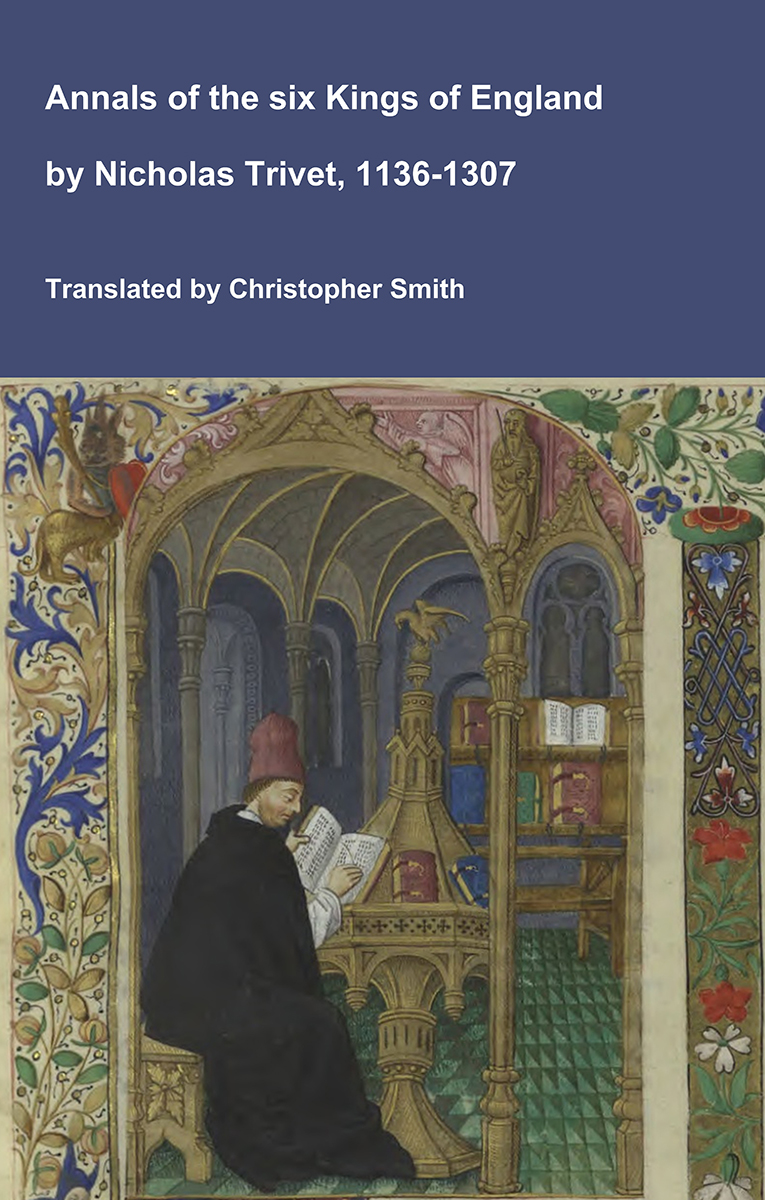
Annals of the six Kings of England by Nicholas Trivet
Translation of the Annals of the Six Kings of England by that traces the rise and rule of the Angevin aka Plantagenet dynasty from the mid-12th to early 14th century. Written by the Dominican scholar Nicholas Trivet, the work offers a vivid account of English history from the reign of King Stephen through to the death of King Edward I, blending political narrative with moral reflection. Covering the reigns of six monarchs—from Stephen to Edward I—the chronicle explores royal authority, rebellion, war, and the shifting balance between crown, church, and nobility. Trivet provides detailed insight into defining moments such as baronial conflicts, Anglo-French rivalry, and the consolidation of royal power under Edward I, whose reign he describes with particular immediacy. The Annals combines careful year-by-year reporting with thoughtful interpretation, presenting history not merely as a sequence of events but as a moral and political lesson. Ideal for readers interested in medieval history, kingship, and the origins of the English state, this chronicle remains a valuable and accessible window into the turbulent world of the Plantagenet kings.
Available at Amazon in eBook and Paperback format.
Chronicle of Edward Hall [1496-1548]. The kyng whiche knew his doynges and priuye conueyaunce, all this yere dissembled the matter to see what he would do at length, till that be saw his proud heart so hyghly exalted that he would be so triumphantly installed without makiug the kyng priuye, yea and in maner in disdayne of the kyng, thought it not mete rior conuenient to suffer him any longer to continue in his malicious and proude purposes and attemptes: wherfore he directed his letters to Henry the vi Erle of Northumberland [aged 28], willing him with all diligence to arrest the Cardinal and to deliuer him to therle of Shrewsbury great Stewarde of the kynges housholde: When the erle had seen the letter, he with a convenient nomber came to the Manor of Cawod [Map] the iiii day of Nouember [1530], and when he was brought to the Cardinal in his chamber, he said to him, my lord I pray you take pacience, for here I arrest you. Arrest me sayd ye Cardinal, yea sayd the erle 1 haue a commaundement so to do: you haue no such power sayd the Cardinal, for I am both a Cardinal and a Legate de Latere and a pere of the College of Rome & ought not to be arrested by any temporal power, for I am not subject to that power, wherfore if you arrest me I will withstand it: well sayd the erle here is the kings Commission (which he shewed him) and therfore 1 charge you to obey, the Cardinal somewhat remembered himselfe and sayd, well my lord, I am content to obey, but although that I by negligence fell into the punishnient of the Premunire and lost by the lawe all my landes and goodes, yet my person was in the kynges proteccion and I was pardoned that offence, wherfore I meruail why I nowe should be arrested & specially consideryng that I am a member of the sea Apostolike on whom no temporal man ought to lay violent handes, wel I see the king lacketh good counsail: wel sayd the erle when I was sworne Warden of the Marches, you your self told me that I might with my staffe arrest all men vnder the degree of a kyng, and now I am more stronger for I haue a comission so to do whiche you haue seen. The Cardinal at length obeyed and was kept in his priuie chamber and his goodes seazed and his officers discharged, and his Phisician called doctor Augustyne was lykewise arrested and brought to the Tower by sir Walter Welshe one of the kynges chamber.
Life of Cardinal Wolsey. 4th November 1530. "Well, well, Master Kingston," quoth he, "I [Cardinal Thomas Wolsey [aged 57]] see the matter against me how it is framed; but if I had served God as diligently as I have done the king, he would not have given me over in my grey hairs. Howbeit this is the just reward that I must receive for my worldly diligence and pains that I have had to do him service I only to satisfy his vain pleasure, not regarding my godly duty. Wherefore I pray you, with all. my heart, to have me most humbly commended unto his royal majesty; beseeching him in my behalf to call to his most gracious remembrance all matters proceeding between him and me from the beginning of the world unto this day, and the progress of the game: and most chiefly in the weighty matter yet depending; (meaning the matter newly began between him and good Queen Katherine) then shall his conscience declare, whether I have offended him or no. He is sure a prince of a royal courage, and hath a princely heart; and rather than he will either miss or want any part of his will or appetite, he will put the loss one half of his realm in danger. For I assure you I have often kneeled before him in his privy chamber on my knees, the space of an hour or two, to persuade him from his will and appetite: but I could never bring to pass to dissuade him therefrom. Therefore, Master Kingston, if it chance hereafter you to be one of his privy counsel, as for your wisdom and other qualities ye are meet to be, I warn you to be well advised and assured what matter ye put in his head, for ye shall never put it out again.
"And say furthermore, that I request his grace, in God's name, that he have a vigilant eye to depress this new pernicious sect of Lutherans, that it do not increase within his dominions through his negligence, in such a sort, as that he shall be fain at length to put harness upon his back to subdue them; as the king of Bohemia did, who had good game, to see his mde commons (then infected with Wickliffe's heresies) to spoil and murder the Spiritual men and religions [?]rerstihs of his realm; the which fled to the king and his nobles for succout against their frantic rage; of whoin thiy could get no help of defence or refuge, bat [they] laughed them to scorri, having good game at their spoil and consumption, not regarding their dttied nor their own defence. And when these erroneous heretics had subdued all the cletgy arid spiritual persons, taking the spoil of their riches, both of churchfes, monasteries, and all other spiritual things, having no more to spoil, [they] caught such a courage of their former liberty that theri they disdained their prince and sovereign lord With all other noble personages, and the head governors of the country, and began to fall in hand with the temporal lords to slay and spoil them, without pity or inercy, most crufelly. Insomuch that the king and other his nobles Were constrained to put harness upon their backs, to resist the ungodly powers of those traitorous heretics, and to defend their lives and liberties, who pitched a field royal against them; in which field these traitors so stoutly encountered, the party of them was so cruel and vehement that in fine they were victors, and slew the king, the lords, and all the gentlemen of the realm, leaving not one person that bare the name or port of a gehtleman alive, or of any person that had any ride or authority in the common weal. By means of which slaughter they have lived ever since in great misery and poverty without a hedd or governor, living all in common like wild beasts abhorred of all Christian nations. Let this be to him an evident example to avoid the like danger, I pray you. Good Master Kingston, there is no trust in routs, or unlawful assemblies of the common people; for when the riotous multitude be assembled, there is among them no mercy or consideration of their bonnden duty; as in the history of King Richard the Second, one of his noble progenitors, which [lived] in that same time of Wickliffe's seditious opinions. Did not the commons, I pray you, rise against the king and the nobles of the realm of England; whereof some they apprehended, whom they without mercy or justice put to death? and did they not fall to spoiling and robbery, to the intent they might bring all things in common; and at this last, without discretion or reverence, spared not hi their rage to take the king's most royal person out of the Tower of London, and carried Him about the city most presumptuously, causing him, for the preservation of his life, to be agreeable to their lewd proclamations? Did not also the traitorous heretic, Sir John Oldcastle, pitch a field against King Henry the Fifth, against whom the king was constrained to encounter in his royal person, to whom God gave the victory? Alas! Master Kingston, if these be not plain precedents, and sufficient persuasions to admonish a prince to be circumspect against the semblable mischief; and if he be so negligent, then will God strike and take from him his power, and diminish his regality, taking from him his prudent counsellors and valiant captains, and leave us in our own hands without his help and aid; and then will ensue mischief upon mischief, inconvenience upon inconvenience, barrenness and scarcity of all things for lack of good order in the commonwealth, to the utter destruction and desolation of this noble realm, from the which mischief God of his tender mercy defend us.
"Master Kingston, farewell. I can no more, but wish all things to have good success. My time draweth on fast. I may not tarry with you. And forget not, I pray you, what I have said and charged you withal: for when I am dead, ye shall peradventure remember my words much better." And even with these words he began to draw his speech at length, and his tongue to fail; his eyes being set in his head, whose sight failed him. Then we began to put him in remembrance of Christ's passion; and sent for the abbot of the place to anneal him, who came with all speed, and ministered unto him all the service to the same belonging; and caused also the guard to stand by, both to hear him talk before his death, and also to witness of the same; and incontinent the clock struck eight, at which time he gave up the ghost, and thus departed he this present life. And calling to our remembrance his words, the day before, how he said that at eight of the clock we should lose our master, one of us looking upon an other, supposing that he prophesied of his departure.
Wriothesley's Chronicle [1508-1562]. 29th November 1530. This yeare, on the even of St. Andrewe,d the Cardinall, Thomas Wolsey [aged 57], died at Leicester, cominge to London to his indictment,e and there is buried in Our Ladies Chappell. Some recken he killed himselfe with purgations.f
Note d. November 29.
Note e. The Cardinal had been arrested by the Earl of Northumberland [aged 28] on a charge of high treason at Cawood [Map], near York, on the 4th of November.
Note f. Wolsey is generally believed to hare died of dysentery at Leicester Abbey [Map], on the third day of his jourmey, about 8 o'clock in the morning of the 29th of November, being in the sixtieth year of his age. He was buried at midnight, without any solemnity, in Our Lady Chapel in the church of that monastery.
Archives of Venice. Nov. 24. [1531] Sanuto Diaries, v. lv. p. 168. 701. Advices from France, received by the French Ambassador in Venice.
On the day of All Saints the King gave most gracious greeting at Compiegne to the Vice-Chancellor (Vice gran Canzelier) of England, who was accompanied by Sir Francis Bryan [aged 41]. On the morrow of All Souls the King went out of mourning for his mother, as did the princes, lords, and gentlemen. The Queen and the King's children did not put themselves into mourning. The Queen of Navarre and the children of the King [of Navarre] wore it from beginning to end, spontaneously. The King chose to have an exact list of all the lords, gentlemen, officials, and servants of his mother, and has provided for all of them, from the highest to the lowest, giving them the same amount of salary as they received from the deceased; placing some in his own household, others with the Dauphin and his brothers, the rest in the household of the Princesses, his daughters. The ladies of his mother's household are placed in that of the Queen, and the maids of honour with his daughters. The act was that of a magnanimous prince, such as he is.
On the 5th instant the Bishop of Bayonne returned to the Court from England, and says that the King, on hearing of the death of the late most illustrious "Madame," made all the English princes and great lords go into mourning; and when the Bishop told this to the Legate, there was present the Emperor's ambassador, who declared that his master had done the like, which is a demonstration of great friendship.
It is said that more than seven weeks ago a mob of from seven to eight thousand women of London went out of the town to seize Boleyn's daughter [aged 30], the sweetheart of the King of England, who was supping at a villa (in una easa di piacere) on a river, the King not being with her; and having received notice of this, she escaped by crossing the river in a boat. The women had intended to kill her; and amongst the mob were many men, disguised as women; nor has any great demonstration been made about this, because it was a thing done by women.
To prevent the exportation of grain from France a proclamation has been issued forbidding all millers, bakers, and usurious wheat merchants, any longer to raise the price of corn. No corn may be sold save at market, and no baker, miller, or corn merchant can purchase it two hours after the close of the market, so that the people may be enabled to buy their supply; and the granaries of Paris are to be inspected by competent and worthy men, who are to acquaint themselves with the number of persons forming the household of each proprietor, whether noblemen, councillors, citizens, or merchants, and the annual amount of grain required for their consumption; which being set apart, they will be bound to take all the rest to market and sell it to the people, by reason of the King's just fear lest the people of Paris lack the means of subsistence.
La Fère, 24th November 1531. Registered by Sanuto 18th Dec.
[Italian.]