


The True Chronicles of Jean le Bel Volume 1 Chapters 1-60 1307-1342
The True Chronicles of Jean le Bel offer one of the most vivid and immediate accounts of 14th-century Europe, written by a knight who lived through the events he describes, and experienced some of them first hand. Covering the early decades of the Hundred Years’ War, this remarkable chronicle follows the campaigns of Edward III of England, the politics of France and the Low Countries, and the shifting alliances that shaped medieval warfare. Unlike later historians, Jean le Bel writes with a strong sense of eyewitness authenticity, drawing on personal experience and the testimony of fellow soldiers. His narrative captures not only battles and sieges, but also the realities of military life, diplomacy, and the ideals of chivalry that governed noble society. A key source for Jean Froissart, Le Bel’s chronicle stands on its own as a compelling and insightful work, at once historical record and literary achievement. This translation builds on the 1905 edition published in French by Jules Viard, adding extensive translations from other sources Rymer's Fœdera, the Chronicles of Adam Murimuth, William Nangis, Walter of Guisborough, a Bourgeois of Valenciennes, Geoffrey le Baker of Swinbroke and Richard Lescot to enrich the original text and Viard's notes.
Available at Amazon in eBook and Paperback format.
Paternal Family Tree: Daubigny
Maternal Family Tree: Katherine Swynford aka Roet Duchess Lancaster 1350-1403
1429 English Coronation of Henry VI
1457 John Neville married Isabel Ingaldsthorpe
1461 Second Battle of St Albans
1461 King Edward IV leaves London
On 12th January 1412 [his father] John Mowbray 2nd Duke of Norfolk [aged 20] and [his mother] Katherine Neville Duchess Norfolk [aged 12] were married. She the daughter of [his grandfather] Ralph Neville 1st Earl of Westmoreland [aged 48] and [his grandmother] Joan Beaufort Countess of Westmoreland [aged 33]. He the son of Thomas Mowbray 1st Duke of Norfolk and Elizabeth Fitzalan Duchess Norfolk [aged 46]. They were fourth cousins. He a great x 3 grandson of King Edward I of England. She a great granddaughter of King Edward III of England.
On 12th September 1415 John Mowbray 3rd Duke of Norfolk was born to John Mowbray 2nd Duke of Norfolk [aged 23] and Katherine Neville Duchess Norfolk [aged 15]. He a great x 2 grandson of King Edward III of England.
In June 1425 [his father] John Mowbray 2nd Duke of Norfolk [aged 33] was restored 2nd Duke Norfolk by Parliament. [his mother] Katherine Neville Duchess Norfolk [aged 25] by marriage Duchess Norfolk.
On 8th July 1425 [his grandmother] Elizabeth Fitzalan Duchess Norfolk [aged 59] died at Wighill. She was buried at St Michael's Church, Hoveringham. Her son [his father] John Mowbray 2nd Duke of Norfolk [aged 33] inherited her estates including Framlingham Castle, Suffolk [Map].
On 6th November 1429 King Henry VI of England and II of France [aged 7] was crowned VI King of England by Cardinal Henry Beaufort [aged 54] at Westminster Abbey [Map]. Richard Beauchamp 13th Earl Warwick [aged 47] carried the child King. John Mowbray 3rd Duke of Norfolk [aged 14] attended. [his step-father] John Beaumont 1st Viscount Beaumont [aged 20] was knighted.
On 19th October 1432 [his father] John Mowbray 2nd Duke of Norfolk [aged 40] died at Epworth. His son John [aged 17] succeeded 3rd Duke Norfolk, 6th Earl Norfolk, 4th Earl Nottingham, 9th Baron Mowbray, 10th Baron Segrave and Earl Marshal.
Before 1437 [his step-father] Thomas Strangeways [aged 41] and [his mother] Katherine Neville Duchess Norfolk [aged 36] were married. She the daughter of [his grandfather] Ralph Neville 1st Earl of Westmoreland and [his grandmother] Joan Beaufort Countess of Westmoreland [aged 57].
Chronicle of Gregory. 30th April 1439. And the laste day of Aprylle deyde the Erle of Warwyke [aged 57] at Roone [Map]. Ande the same year the Cardynalle Archebyschoppe of Yorke [aged 59], the Byschoppe of Northewyche [aged 51], the Byschoppe of Syn Davys and many othyr docters, and the Duke of Northefolke [aged 23], the [his future brother-in-law] Erle of Stafford [aged 36], the lord Bowcer, and the Lord Hungerforde [aged 39], with a grete mayny, wente unto Calys; and they hadde the Duke of Orlyaunce [aged 44] with them for to trete of pes by twyne Ingelonde and Fraunce. And there mette with them the grete lordys of Fraunce, that is to wyte, of spyrytualle and temporalle, the Archebyschoppe of Raynys [aged 59], whythe many moo byschoppys, the Erle of Wendon [aged 63], a the Bastarde of Orlyaunce [aged 36], and many othyr lordys of Fraunce; and thedyr come the Byschoppe of Spayne and of Colayne, and many moo othyr dyvers contreys that com fro the Counselle of Basylle.
In October 1441 [his step-father] John Beaumont 1st Viscount Beaumont [aged 32] and [his mother] Katherine Neville Duchess Norfolk [aged 41] were married. She by marriage Viscountess Beaumont. She the daughter of [his grandfather] Ralph Neville 1st Earl of Westmoreland and [his grandmother] Joan Beaufort Countess of Westmoreland. They were fourth cousins. He a great x 5 grandson of King Henry III of England. She a great granddaughter of King Edward III of England.
Before 18th October 1444 John Mowbray 3rd Duke of Norfolk [aged 29] and Eleanor Bourchier Duchess Norfolk [aged 27] were married. She by marriage Duchess Norfolk. She the daughter of William Bourchier 1st Count of Eu and Anne of Gloucester Plantagenet Countess Eu and Stafford. He the son of John Mowbray 2nd Duke of Norfolk and Katherine Neville Duchess Norfolk [aged 44]. They were second cousin once removed. He a great x 2 grandson of King Edward III of England. She a great granddaughter of King Edward III of England.
On 18th October 1444 [his son] John Mowbray 4th Duke of Norfolk was born to John Mowbray 3rd Duke of Norfolk [aged 29] and [his wife] Eleanor Bourchier Duchess Norfolk [aged 27]. He a great x 2 grandson of King Edward III of England. Coefficient of inbreeding 2.08%. He married before 10th December 1472 his fourth cousin Elizabeth Talbot Duchess Norfolk, daughter of John "Old Talbot" Talbot 1st Earl of Shrewsbury and Margaret Beauchamp Countess Shrewsbury and Waterford, and had issue.
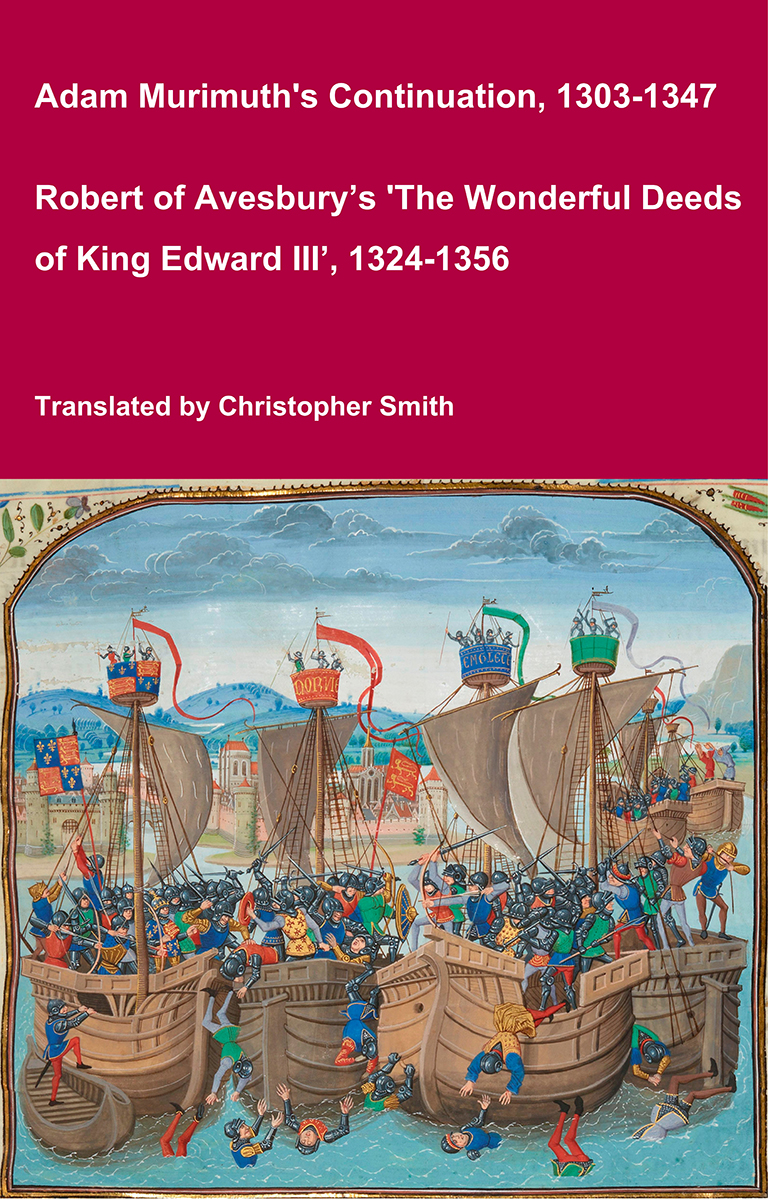
Adam Murimuth's Continuation and Robert of Avesbury’s 'The Wonderful Deeds of King Edward III'
This volume brings together two of the most important contemporary chronicles for the reign of Edward III and the opening phases of the Hundred Years’ War. Written in Latin by English clerical observers, these texts provide a vivid and authoritative window into the political, diplomatic, and military history of fourteenth-century England and its continental ambitions. Adam Murimuth Continuatio's Chronicarum continues an earlier chronicle into the mid-fourteenth century, offering concise but valuable notices on royal policy, foreign relations, and ecclesiastical affairs. Its annalistic structure makes it especially useful for establishing chronology and tracing the development of events year by year. Complementing it, Robert of Avesbury’s De gestis mirabilibus regis Edwardi tertii is a rich documentary chronicle preserving letters, treaties, and official records alongside narrative passages. It is an indispensable source for understanding Edward III’s claim to the French crown, the conduct of war, and the mechanisms of medieval diplomacy. Together, these works offer scholars, students, and enthusiasts a reliable and unembellished account of a transformative period in English and European history. Essential for anyone interested in medieval chronicles, the Hundred Years’ War, or the reign of Edward III.
Available at Amazon in eBook and Paperback format.
Chronicle of Gregory. 1450. Ande in the ende of the said same year Rychard [aged 38], the Duke of Yorke, come to the said Parlymentt, for the said Duke was before banyschyd for certayne yerys, whythe a notabylle felyschippe of fensabylle men, and the Duke of Northefolke [aged 34] whythe a grete multytude of defensabylle men. And every lord whythe her retynowe welle harnysyd and welle be-sene; and every lord hadde his bagge a-pon his harnys, and her mayny also, that they might ben knowe by her baggys and levereys.
In 1451 John Mowbray 3rd Duke of Norfolk [aged 35] was appointed 170th Knight of the Garter by King Henry VI of England and II of France [aged 29].
On 6th November 1453 Anne Bardolf Baroness Cobham Sternborough [aged 64] died. [his half-brother] William Beaumont 2nd Viscount Beaumont [aged 15] was restored 6th Baron Bardolf of Wormegay in Norfolk.
In April 1454 [his brother-in-law] Cardinal Thomas Bourchier [aged 36] was appointed Archbishop of Canterbury.
Before 1456 [his brother-in-law] John Lovell 8th Baron Lovel 5th Baron Holand [aged 22] and [his half-sister] Joan Beaumont Baroness Lovel [aged 20] were married. She by marriage Baroness Lovel of Titchmarsh. She the daughter of [his step-father] John Beaumont 1st Viscount Beaumont [aged 46] and [his mother] Katherine Neville Duchess Norfolk [aged 55]. They were second cousin once removed. She a great x 2 granddaughter of King Edward III of England.
On 25th April 1457 John Neville 1st Marquess Montagu [aged 26] and Isabel Ingaldsthorpe [aged 16] were married by [his brother-in-law] Cardinal Thomas Bourchier [aged 39] at Canterbury Cathedral [Map]. She the heir of her father Edmund Ingaldsthorpe who had died the previous year. Eight manors were settled on them in jointure. He the son of [his uncle] Richard Neville Earl Salisbury [aged 57] and Alice Montagu 5th Countess of Salisbury [aged 50]. They were second cousin once removed. He a great x 2 grandson of King Edward III of England. She a great x 5 granddaughter of King Edward I of England.
In 1460 a petition noted "The Nevilles state that Isabel was found to be Ingoldisthorpe's daughter and heir. When they requested livery of the estates from the chancellor in Chancery, he refused on the grounds that the king had granted the marriage and wardship to the queen [aged 29]. The Nevilles disputed this as Isabel was 14, and not a minor at common law. John Neville made recognizances in £1,000 to the queen on the understanding that if it was found that such a grant to the queen was not available, then she would not take any money from Neville. The Nevilles are unable to have a day in their law, and the queen has still levied part of the £1,000, and they are forced to sue a special livery at great expense. They request that the recognizances by annulled, and that women of the age of 14 when their ancestors die should have no problem of obtaining livery of their lands and tenements." See National Archives UK John Nevyll (Neville), knight; Isabel Neville, wife of John Neville, knight. SC 8/28/1398 1460.
On 17th February 1461 the Lancastrian army defeated the Yorkist army at Second Battle of St Albans and rescued King Henry VI of England and II of France [aged 39]. The Lancastrian army was commanded by Henry Holland 3rd Duke Exeter [aged 30] and included Henry Percy 3rd Earl of Northumberland [aged 39], John Mowbray 3rd Duke of Norfolk [aged 45], [his brother-in-law] Henry Grey 4th or 7th Baron Grey of Codnor [aged 26], Henry Roos and Richard Welles 7th Baron Welles, Baron Willoughby [aged 33].
Thomas Ros 9th Baron Ros Helmsley [aged 33], William Tailboys 7th Baron Kyme [aged 46], John Talbot 3rd Earl of Shrewsbury [aged 12] and Thomas Tresham [aged 41] were knighted.
The Yorkist army included Richard "Kingmaker" Neville Earl Warwick, 6th Earl Salisbury [aged 32], William Fitzalan 9th or 16th Earl of Arundel [aged 43], John Wenlock 1st Baron Wenlock [aged 61] and Henry Bourchier 2nd Count of Eu 1st Earl Essex [aged 57]. John Neville 1st Marquess Montagu [aged 30] was captured. Robert Poynings [aged 42] and James Luttrell [aged 34] were killed.
John Grey [aged 29] was killed fighting for Lancaster. A death that was to have far reaching consequences; his widow Elizabeth Woodville Queen Consort England [aged 24] subsequently married King Edward IV of England [aged 18].
During the battle William Bonville 1st Baron Bonville [aged 68] and Thomas Kyriell [aged 65] were assigned to the protection of the King Henry VI. After the battle both were beheaded against all decent laws of battle.
William Bonville 1st Baron Bonville was beheaded. His great granddaughter Cecily succeeded 2nd Baroness Bonville.
Thomas Kyriell was beheaded.
William Cotton [aged 21] was killed.
Chronicle of Gregory. Ande the xvij day nexte folowynge Kyng Harry [aged 39] roode to Synt Albonys [Map], and the Duke of Northefolke [aged 45] with hym, the Erle of Warwycke [aged 32], the Erle of Arundelle [aged 43], the Lord Bouser [aged 30], the Lord Bonvyle [aged 68], with many grete lordys, knyghtys, and squyers, and commyns of an C [Hundred] Ml men. And there they hadde a grete batayle whythe the Quene [aged 30], for she come ever on fro the jornaye of Wackefylde tylle sche come to Synt Albonys, with alle the lordys a fore said; and her mayny and every lord is men bare her lordys leverey, that every man mighte knowe his owne feleschippe by his lyverey. And be-syde alle that, every man and lord bare the Pryncys [aged 7] levery, that was a bende of crymesyn and blacke with esteryge is fetherys. The substance that gate that fylde were howseholde men and feyd men. I wene there were not v Mlmen that fought in the Quenys party, for [t]emoste parte of Northeryn men fledde a-way, and some were take and spoylyd out of her harnysse by the way as they fledde. And some of them robbyd evyr as they yede, a petyffulle thynge hit is to hyre hit. But the day before that batayle there was a jornay at Dunstapyl [Map]; but the kyngys mayny lackyd good gydyng, for some were but newe men of warre, for the chevyste captayne was a boucher of the same towne; and there were the kyngys mayny ovyr throughe only by the Northeryn men. And son aftyr the bocher, for schame of his sympylle gydynge and loste of the men, the nombyr of viij C, for very sorowe as it is said, hynge him selfe; and some men said that it was for loste of his goode, but dede he ys-God knowythe the trought.
And in the myddys of the batayle King Harry wente unto his Quene and for-soke alle his lordys, ande truste better to her party thenne unto his owne lordys. And then thoroughe grete labur the Duke of Northefolke and the Erle of Warwycke a schapyd a-waye; the Byschoppe of Exceter [aged 29], that tyme Chaunceler of Ingelond, and brother unto the Erle of Warwycke, the Lord Bouser, whythe many othyr knyghtys, squyers, and comyns fledde, and many men slayne in bothe partys. And the Lord Bonevyle was be-heddyd, the common sayynge that his longage causyd him to dye. The Prynce was jugge is owne sylfe. Ande ther was slayne that manly knyght Syr Thomas Keryel [aged 65]. The nomber of ded men was xxxv C an moo [t]at were slayne. The lordys in Kyng Harrys party pycchyd a fylde and fortefyd it full stronge, and lyke unwyse men brake her raye and fyld and toke a-nothyr, and or that they were alle sette a buskyd to batayle, the Quenys parte was at hond whythe them in towne of Synt Albonys [Map], and then alle [t]yng was to seke and out of ordyr, for her pryckyers come not home to bryng no tydyng howe ny that the Quene was, save one come and sayd that she was ix myle of. And ar the goners and borgeners couthe levylle her gonnys they were besely fyghtyng, and many a gynne of wer was ordaynyd that stode in lytylle a-vayle or nought; for the burgeners hadde suche instrumentys that wolde schute bothe pellettys of ledde and arowys of an elle of lenghthe with vj fetherys, iij in myddys and iij at the othyr ende, with a grete mighty hedde of yryn at the othyr ende, and wylde fyre with alle. Alle thes iij thyngys they might schute welle and esely at onys, but in tyme of nede they couthe not schut not one of thes, but the fyre turnyd backe a-pon them that wold schute this iij thyngys. Also they hadde nettys made of grete cordys of iiij fethem of lengthe and of iiij fote brode, lyke unto an haye, and at every ij knott there was an nayl stondyng uppe ryght, that there couthe no man passe ovyr it by lyckely hode but he shulde be hurte. Alle so they hadde pavysse bore as a dore i-made with a staffe foldynge uppe and downe to sette the pavys where the lykyd, and loupys with schyttyng wyndowys to schute out at, they stondyng by hynde [t]e pavys, and the pavys as full of iijdnayle aftyr ordyr as they might stonde. And whenn her schotte was spende and done they caste the pavysse by-fore hem, then there might noo man come unto them ovyr the pavysse for the naylys that stode up-ryghte, but yf he wolde myschyffe him sylfe. Alle so they hadde a thynge made lyke unto a latysse full of naylys as the net was, but hit wolde be mevyd as a man wolde; a man might bryse it to-gedyr that the lengythe wolde be more then ij yerdys long, and yf he wolde he might hale it a brode, then hit wolde be iiij square. And that servyd to lye at gappys there at horsemen wolde entyr yn, and many a caltrappe. And as the substaunce of men of worschyppe that wylle not glose nor cory favyl for no parcyallyte, they cowthe not undyrstond that alle this ordenaunce dyd any goode or harme but yf it were a mong us in owre parte with Kyng Harry. There fore it is moche lefte, and men take them to mallys of ledde, bowys, swyrdys, gleyvys, and axys. As for speremen they ben good to ryde be-fore the foote men and ete and drynke uppe her vetayle, and many moo suche prety thyngys they doo, holde me excusyd thoughe I say the beste, for in the fote men is alle the tryste.
Chronicle of Gregory. The xiij day of Marche [1461] the King, owre newe King Edwarde [aged 18], toke his jornaye unto the Northe, and the Duke of Northefolke [aged 45] with hym. The Erle of Warwycke [aged 32] and the Lord Fauconbrygge [aged 32], with many knyghtes, squyers, and comyns, to the nombyr of iic Mlmen.
On 29th March 1461 the Battle of Towton was a decisive victory for King Edward IV of England [aged 18] bringing to an end the first war of the Wars of the Roses. Said to be the bloodiest battle on English soil 28000 were killed mainly during the rout that followed the battle.
The Yorkist army was commanded by King Edward IV of England with John Mowbray 3rd Duke of Norfolk [aged 45], [his uncle] William Neville 1st Earl Kent [aged 56], William Hastings 1st Baron Hastings [aged 30] (knighted), Walter Blount 1st Baron Mountjoy [aged 45], [his brother-in-law] Henry Bourchier 2nd Count of Eu 1st Earl Essex [aged 57], John Scrope 5th Baron Scrope of Bolton [aged 23] and John Wenlock 1st Baron Wenlock [aged 61].
The Lancastrian army suffered significant casualties including Richard Percy [aged 35], Ralph Bigod Lord Morley [aged 50], John Bigod [aged 28], Robert Cromwell [aged 71], Ralph Eure [aged 49], John Neville 1st Baron Neville of Raby [aged 51], John Beaumont [aged 33], Thomas Dethick [aged 61], Everard Simon Digby, William Plumpton [aged 25] and William Welles [aged 51] who were killed.
Henry Percy 3rd Earl of Northumberland [aged 39] was killed. Earl of Northumberland, Baron Percy of Alnwick, Baron Percy of Topcliffe forfeit.
Ralph Dacre 1st Baron Dacre Gilsland [aged 49] was killed. He was buried at the nearby Saxton church where his chest tomb is extant. Baron Dacre Gilsland extinct.
Lionel Welles 6th Baron Welles [aged 55] was killed. His son Richard [aged 33] succeeded 7th Baron Welles.
The Lancastrian army was commanded by Henry Beaufort 2nd or 3rd Duke of Somerset [aged 25], Henry Holland 3rd Duke Exeter [aged 30], Henry Percy 3rd Earl of Northumberland and Andrew Trollope.
Henry Holland 3rd Duke Exeter was attainted after the battle; Duke Exeter, Earl Huntingdon forfeit.
Those who fought for the Lancaster included William Tailboys 7th Baron Kyme [aged 46], William Plumpton, John Sutton 1st Baron Dudley [aged 60], William Norreys [aged 20], Thomas Grey 1st Baron Grey of Richemont [aged 43], Robert Hungerford 3rd Baron Hungerford 1st Baron Moleyns [aged 30], John Talbot 3rd Earl of Shrewsbury [aged 12], Richard Welles 7th Baron Welles, Baron Willoughby, Richard Woodville 1st Earl Rivers [aged 56], James Butler 1st Earl Wiltshire 5th Earl Ormonde [aged 40], John Butler 6th Earl Ormonde [aged 39], [his half-brother] William Beaumont 2nd Viscount Beaumont [aged 22], Henry Roos and Thomas Tresham [aged 41]. Cardinal John Morton [aged 41] were captured.
John Heron of Ford Castle Northumberland [aged 45], Robert Dethick [aged 86], Andrew Trollope and his son David Trollope were killed.
Chronicle of St Albans by Abbot John Whethamstede [-1465]. [29th March 1461] Trusting thus in the Lord God and placing all the confidence of his expedition in the Lord Himself, he had the Lord aiding him no less than Theodosius the Great had once had, when he was about to engage in battle against Eugenius and Arbogast. For just as for them, due to the hope and faith they held in the Lord, the Lord Himself was present, and caused such a great wind to blow directly into the face of the enemy while they were fighting hand-to-hand, that it reverberated and reflected back, not only their entire volley of missiles or arrows, but also so confused and weakened the leaders, that one of them, namely Arbogast, fell in battle, while the other, namely Eugenius, fleeing from the field, brought about his own demise; similarly, and almost in all respects, because of the trust held in the Lord, the Lord Himself was also present, and gave him power against his enemies, and such grace, that the wind which previously blew in his face, as soon as he was about to fight against the enemy, turned in the opposite direction in such a way that it slowed down and blunted the entire enemy barrage, causing it to do no harm, or very little, to him or his, and inflict no injury. And thus, with his entire barrage nullified, annulled, and frustrated, later, when they reached axes and hatchets, knives and mallets, and other larger instruments, a very fierce battle ensued on both sides, especially on the Prince's side, indeed, a most atrocious one.
Trusting thus in the Lord God and placing all the confidence of his expedition in the Lord Himself, he had the Lord aiding him no less than Theodosius the Great had once had, when he was about to engage in battle against Eugenius and Arbogast. For just as for them, due to the hope and faith they held in the Lord, the Lord Himself was present, and caused such a great wind to blow directly into the face of the enemy while they were fighting hand-to-hand, that it reverberated and reflected back, not only their entire volley of missiles or arrows, but also so confused and weakened the leaders, that one of them, namely Arbogast, fell in battle, while the other, namely Eugenius, fleeing from the field, brought about his own demise; similarly, and almost in all respects, because of the trust held in the Lord, the Lord Himself was also present, and gave him power against his enemies, and such grace, that the wind which previously blew in his face, as soon as he was about to fight against the enemy, turned in the opposite direction in such a way that it slowed down and blunted the entire enemy barrage, causing it to do no harm, or very little, to him or his, and inflict no injury. And thus, with his entire barrage nullified, annulled, and frustrated, later, when they reached axes and hatchets, knives and mallets, and other larger instruments, a very fierce battle ensued on both sides, especially on the Prince's side, indeed, a most atrocious one.
For here you could see another Achilles, the Duke of Norfolk [aged 45], with his soldiers advancing, and there, the young Hector, the Earl of Warwick, engaging with his recruits. And just like that, a second Achilles, [his uncle] Lord de Fauconberg [aged 56], with his citizens, rushing upon the enemies and striking them down. Although, as the poet writes, they didn't depict the fall of Troy so swiftly, they did portray, and continued to paint, the entire royal road from the battlefield almost to the walls of the city of York, a distance of about six miles, with crimson blood. Even though the Lord sent down blood from the heavens, saturating it with an excessive and almost miraculous new colour. For they themselves were valiant military leaders, and not unjustly to be compared to the aforementioned leaders. For at the beginning of the war, when these roaring Northerners were bending and releasing their bows to shoot straight in the dark, the leaders themselves forced them first, because they did not want to keep the covenant of the Lord, nor walk in His law, which dictates that the elder son should always be preferred to the younger son in hereditary right, as the other sons of Ephraim, turning their back on their inheritance on the day of battle. Later, because it was a generation further corrupt and exasperating, a generation, namely, such that it did not direct its heart with the Lord, nor was its spirit believed with Him, they rushed upon them with such force and effort that they forced them, and pressed them so tightly, that they could not flee from their presence, except as young lambs usually flee from the jaws of wolves, or fly from the talons of hawks, their wings trembling, like doves. Their leaders and captains, as many as they had in the field, either fell to the ground with their standards and banners, or fled to hiding places where they could conceal themselves from the edge of the sword.
Sicque in Domino Deo confisus, in ipsoque Domino totam fiduciam suæ expeditionis ponens, non secus ipsum Dominum auxiliantem habuit, quam dudum habuerat Theodosius Magnus, dum contra Eugenium et Arbogasten bellum commissurus erat. Quemadmodum etenim illi, propter spem et fidem in Domino habitas, affuit ipse Dominus, et tam grandem ventum turbineum in facie hostium, dum pugnarent cominus, inflare fecit, ut reverberaret, et repercuteret, omnimodam nedum jaculationem, sive sagittationem, suam, ac destrueret; immo etiam, taliter ipsos confunderet duces, et infirmaret, ut unus illorum, scilicet, Arbogastes, in bello caderet, alter vero, scilicet, Eugenius, e campo fugiens, sibi ipsi interitum procuraret; sic similiter, et quasi per omnia, propter fiduciam in Domino habitam, affuit etiam ipse Dominus, deditque illi contra inimicos potentiam, ac itaque gratiam talem, ut ventum, quem prius in facie flantem habuit, statim ut pugnaturus esset contra hostem, suscepit versum taliter in contrarium, ut totam hostilem sagittationem retardaret, et retunderet, causaretque ut nullum, vel paucum, faceret sibi aut suis damnum, læsuramve inferret. Sicque cassata, annullata, et frustrata, tota sagittatione sua, posterius, cum perventum esset ad secures et ascias, ad sicas et malleolos, ad aliaque instrumenta grandiora, facta erat ex utraque parte, et præcipue ex parte Principis, pugna atrox valde, immo, atrocissima.
Nam hic videre poteras Aacidem alterum, Ducem, videlicet, Northfolchiæ, cum suis militibus tendere, illic novellum Hectorem, Comitem, scilicet, Warwyci, cum suis tironibus se ingerere, isthic vero Achillem secundum, Dominum, videlicet, de Facunbrigge, cum suis Quiritibus, irruere in hostes, ac eos prosternere; quod, licet, ut scribit Poeta, nequaquam fluido depingerent Pergama tota mero, pingebant tamen, et depingebant, non aliter, totam viam regiam a campo præliationis, usque pene ad mœnia urbis Eboracensis, per spatium quasi sex milliarium, cruore rubro, quametsi Dominus sanguinem de cœlo demitteret, intingeretque novo colore nimio, ac plusquam prodigiose rubricaret. Erant enim ipsi duces milites strenuissimi, nec immerito ducibus jam dictis comparandi. Nam in principio belli, dum isti bobinantes Boreales intendebant et immittebant suos arcus, ut sagittarent in obscuro rectos corde, coegerunt eos ipsi duces primo, quia noluerunt custodire testamentum Domini, nec ambulare in lege ejus, quæ dictat filium seniorem filio juniori in jure semper hæreditario anteferri, velut alteros filios Ephraim, suum convertere dorsum in die belli Posterius vero, quia erat ulterius generatio prava et exasperans, generatio, videlicet, talis, que nec direxit cor suum cum Domino, nec creditus erat cum ipso spiritus ejus, ideo cum tanto impetu et conatu irruerunt in eos, ut cogerent ipsos, et coangustarent, non aliter a facie eorum fugere, quam discurrere solent a lupi faucibus pavitantes oviculæ, aut evolare ab accipitris unguibus, alis trepidantibus, columbellæ. Duces eorum, et capitaneos, quotquot in campo habebant sibi obvios, vel in terram, una cum suis signis et vexillis, prostraverant, vel ad latibula fugere, quibus possent ab ore gladii se occulere, compellebant.
Nam hic videre poteras Aacidem alterum, Ducem, videlicet, Northfolchiæ, cum suis militibus tendere, illic novellum Hectorem, Comitem, scilicet, Warwyci, cum suis tironibus se ingerere, isthic vero Achillem secundum, Dominum, videlicet, de Facunbrigge, cum suis Quiritibus, irruere in hostes, ac eos prosternere; quod, licet, ut scribit Poeta, nequaquam fluido depingerent Pergama tota mero, pingebant tamen, et depingebant, non aliter, totam viam regiam a campo præliationis, usque pene ad mœnia urbis Eboracensis, per spatium quasi sex milliarium, cruore rubro, quametsi Dominus sanguinem de cœlo demitteret, intingeretque novo colore nimio, ac plusquam prodigiose rubricaret. Erant enim ipsi duces milites strenuissimi, nec immerito ducibus jam dictis comparandi. Nam in principio belli, dum isti bobinantes Boreales intendebant et immittebant suos arcus, ut sagittarent in obscuro rectos corde, coegerunt eos ipsi duces primo, quia noluerunt custodire testamentum Domini, nec ambulare in lege ejus, quæ dictat filium seniorem filio juniori in jure semper hæreditario anteferri, velut alteros filios Ephraim, suum convertere dorsum in die belli Posterius vero, quia erat ulterius generatio prava et exasperans, generatio, videlicet, talis, que nec direxit cor suum cum Domino, nec creditus erat cum ipso spiritus ejus, ideo cum tanto impetu et conatu irruerunt in eos, ut cogerent ipsos, et coangustarent, non aliter a facie eorum fugere, quam discurrere solent a lupi faucibus pavitantes oviculæ, aut evolare ab accipitris unguibus, alis trepidantibus, columbellæ. Duces eorum, et capitaneos, quotquot in campo habebant sibi obvios, vel in terram, una cum suis signis et vexillis, prostraverant, vel ad latibula fugere, quibus possent ab ore gladii se occulere, compellebant.
Chronicle of William of Worcester. 29th March 1461 ... and on the following day [29th March 1461], a most grievous battle was fought between Edward [aged 18] and his lords, namely the Duke of Norfolk [aged 45], the Earl of Warwick [aged 32], [his uncle] Lord Fauconberg [aged 56], etc., and Henry VI with his lords, where King Henry lost the field, resulting in the destruction of his entire faction, and he fled with his followers; wherein the Earl of Northumberland [aged 39], Lord Clifford [deceased], Andrew Trollope, and many other lords, knights, squires, and gentlemen perished, some in battle and some in flight, totalling over nine thousand men in all.
et die sequenti commissum est gravissimum prœlium inter Edwardum cum suis dominis, scilicet, duce Norfolchiæ, comite Warwici, domino Facunbrygge, etc., et inter Henricum VI. cum suis dominis, ubi rex Henricus perdidit campum in destructionem totius suæ partis, et fugit cum suis; ubi comes Northumbriæ, dominus Clifford, Andreas Trollop, et multi alii domini, milites, armigeri et generosi occubuerunt, quidam in prœlio et quidam fugiendo, ultra ix. m. hominum in toto.
On 28th June 1461 King Edward IV of England [aged 19] was crowned IV King of England. Duke York, Earl March, Earl of Ulster, Earl Cambridge, Baron Mortimer of Wigmore merged with the Crown. [his brother-in-law] Cardinal Thomas Bourchier [aged 43] was assisted by Archbishop William Booth [aged 73] at Westminster Abbey [Map].
On 31st October 1461 King Edward IV of England [aged 19] created his brother Richard [aged 9] 1st Duke Gloucester. [his brother-in-law] Henry Bourchier [aged 57] was created 1st Earl Essex. Isabel of York [aged 52] by marriage Countess Essex. [his uncle] William Neville [aged 56] was created 1st Earl Kent. Joan Fauconberg [aged 55] by marriage Countess Kent.
Chronicle of Robert Fabyan [-1512]. 4th September 1461. This yere, beynge the later ende of the first yere of Edwarde the iiii. & the begynnyng of this mayers yere, yt is to say, ye iiii. daye of Septebre, a parlyamet was begunne at Westmynster. And upon yemorow folowinge dyed lohn duke of Norfolke [aged 45], the which hadde ben a specyall ayder of the kyng.
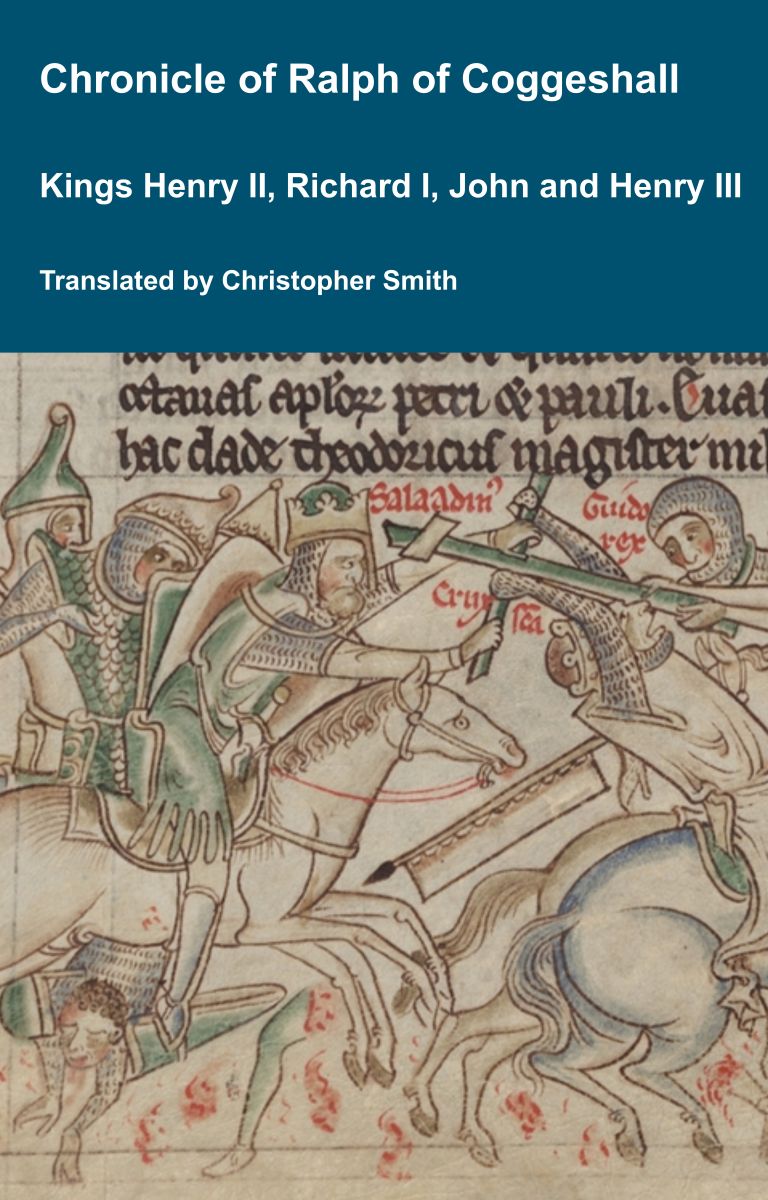
Chronicle of Abbot Ralph of Coggeshall
The Chronicle of Abbot Ralph of Coggeshall (Chronicon Anglicanum) is an indispensable medieval history that brings to life centuries of English and European affairs through the eyes of a learned Cistercian monk. Ralph of Coggeshall, abbot of the Abbey of Coggeshall in Essex in the early 13th century, continued and expanded his community’s chronicle, documenting events from the Norman Conquest of 1066 into the tumultuous reign of King Henry III. Blending eyewitness testimony, careful compilation, and the monastic commitment to record-keeping, this chronicle offers a rare narrative of political intrigue, royal power struggles, and social upheaval in England and beyond. Ralph’s work captures the reigns of pivotal figures such as Richard I and King John, providing invaluable insights into their characters, decisions, and the forces that shaped medieval rule. More than a simple annal, Chronicon Anglicanum conveys the texture of medieval life and governance, making it a rich source for scholars and readers fascinated by English history, monastic authorship, and the shaping of the medieval world.
Available at Amazon in eBook and Paperback format.
On 6th November 1461 John Mowbray 3rd Duke of Norfolk [aged 46] died. He was buried at Thetford Priory, Norfolk [Map]. His son John [aged 17] succeeded 4th Duke Norfolk, 7th Earl Norfolk, 5th Earl Nottingham, 10th Baron Mowbray, 11th Baron Segrave and Earl Marshal.
In January 1465 [his step-father] John Woodville [aged 20] and [his mother] Katherine Neville Duchess Norfolk [aged 65] were married. Described as a 'Diabolical Marriage' by opponents of the Woodvilles. He being nineteen, she sixty-five. His first wife, her fourth husband. Regarded as an example of the Woodville family increasing their wealth and power. See Woodville Marriages The difference in their ages was 45 years; she, unusually, being older than him. She the daughter of [his grandfather] Ralph Neville 1st Earl of Westmoreland and [his grandmother] Joan Beaufort Countess of Westmoreland. He the son of Richard Woodville 1st Earl Rivers [aged 60] and Jacquetta of Luxemburg Duchess Bedford [aged 50]. They were fifth cousin once removed. She a great granddaughter of King Edward III of England.
In November 1474 [his former wife] Eleanor Bourchier Duchess Norfolk [aged 57] died.
King Edward III of England 1312-1377
John of Gaunt 1st Duke Lancaster 1340-1399
Ralph Neville 1st Earl of Westmoreland 1364-1425
Joan Beaufort Countess of Westmoreland 1379-1440
John Neville 3rd Baron Neville of Raby 1337-1388
Maud Percy Baroness Neville Raby
Eleanor Plantagenet Countess Arundel and Surrey 1318-1372
Richard Fitzalan 3rd or 10th Earl of Arundel 8th Earl of Surrey 1306-1376
Kings Wessex: Great x 12 Grand Son of King Edmund "Ironside" I of England
Kings Gwynedd: Great x 9 Grand Son of Owain "Great" King Gwynedd
Kings Seisyllwg: Great x 15 Grand Son of Hywel "Dda aka Good" King Seisyllwg King Deheubarth
Kings Powys: Great x 10 Grand Son of Maredudd ap Bleddyn King Powys
Kings Godwinson: Great x 12 Grand Son of King Harold II of England
Kings England: Great x 2 Grand Son of King Edward III of England
Kings Scotland: Great x 11 Grand Son of King Duncan I of Scotland
Kings Franks: Great x 18 Grand Son of Charles "Charlemagne aka Great" King of the Franks King Lombardy Holy Roman Emperor
Kings France: Great x 13 Grand Son of Hugh I King of the Franks
Kings Duke Aquitaine: Great x 16 Grand Son of Ranulf I Duke Aquitaine
Great x 4 Grandfather: Roger Mowbray 1st Baron Mowbray  2 x Great Grand Son of King Henry "Curtmantle" II of England
Great x 3 Grandfather: John Mowbray 2nd Baron Mowbray 3 x Great Grand Son of King Henry "Curtmantle" II of England
Great x 4 Grandmother: Rohese Clare Baroness Mowbray  4 x Great Grand Daughter of King Henry I "Beauclerc" England
Great x 2 Grandfather: John Mowbray 3rd Baron Mowbray 4 x Great Grand Son of King Henry "Curtmantle" II of England
Great x 4 Grandfather: William de Braose 2nd Baron de Braose 10th Baron Bramber  2 x Great Grand Son of King John of England
Great x 3 Grandmother: Aline de Braose Baroness Mowbray 3 x Great Grand Daughter of King John of England
Great x 1 Grandfather: John Mowbray 4th Baron Mowbray Baron Segrave 2 x Great Grand Son of King Henry III of England
Great x 4 Grandfather: Edmund "Crouchback" Plantagenet 1st Earl of Leicester 1st Earl Lancaster  Son of King Henry III of England
Great x 3 Grandfather: Henry Plantagenet 3rd Earl of Leicester 3rd Earl Lancaster Grand Son of King Henry III of England
Great x 4 Grandmother: Blanche Capet Queen Navarre  2 x Great Grand Daughter of King Henry "Curtmantle" II of England
Great x 2 Grandmother: Joan Plantagenet Baroness Mowbray  Great Grand Daughter of King Henry III of England
Great x 4 Grandfather: Patrick Chaworth 
Great x 3 Grandmother: Maud Chaworth
Great x 4 Grandmother: Isabella Beauchamp 
GrandFather: Thomas Mowbray 1st Duke of Norfolk 2 x Great Grand Son of King Edward I of England
Great x 4 Grandfather: John Segrave 2nd Baron Segrave 
Great x 3 Grandfather: Stephen Segrave 3rd Baron Segrave
Great x 4 Grandmother: Christiana Plessey Baroness Segrave
Great x 2 Grandfather: John Segrave 4th Baron Segrave 5 x Great Grand Son of King John of England
Great x 4 Grandfather: Richard Fitzalan 1st or 8th Earl of Arundel  3 x Great Grand Son of King John of England
Great x 3 Grandmother: Alice Fitzalan Baroness Segrave 4 x Great Grand Daughter of King John of England
Great x 4 Grandmother: Alice Saluzzo Countess Arundel  6 x Great Grand Daughter of King William "Conqueror" I of England
Great x 1 Grandmother: Elizabeth Segrave 5th Baroness Segrave Baroness Mowbray Great Grand Daughter of King Edward I of England
Great x 4 Grandfather: King Edward I of England Son of King Henry III of England
Great x 3 Grandfather: Thomas of Brotherton 1st Earl Norfolk Son of King Edward I of England
Great x 4 Grandmother: Margaret of France Queen Consort England 3 x Great Grand Daughter of King Henry "Curtmantle" II of England
Great x 2 Grandmother: Margaret Plantagenet 1st Duchess of Norfolk Grand Daughter of King Edward I of England
Great x 4 Grandfather: Roger Hales
Great x 3 Grandmother: Alice Hales Countess Norfolk
Father: John Mowbray 2nd Duke of Norfolk 3 x Great Grand Son of King Edward I of England
Great x 4 Grandfather: Richard Fitzalan 1st or 8th Earl of Arundel 3 x Great Grand Son of King John of England
Great x 3 Grandfather: Edmund Fitzalan 2nd or 9th Earl of Arundel 4 x Great Grand Son of King John of England
Great x 4 Grandmother: Alice Saluzzo Countess Arundel 6 x Great Grand Daughter of King William "Conqueror" I of England
Great x 2 Grandfather: Richard Fitzalan 3rd or 10th Earl of Arundel 8th Earl of Surrey 5 x Great Grand Son of King John of England
Great x 4 Grandfather: William Warenne
Great x 3 Grandmother: Alice Warenne Countess Arundel
Great x 4 Grandmother: Joan Vere 
Great x 1 Grandfather: Richard Fitzalan 9th Earl of Surrey 4th or 11th Earl of Arundel 2 x Great Grand Son of King Henry III of England
Great x 4 Grandfather: Edmund "Crouchback" Plantagenet 1st Earl of Leicester 1st Earl Lancaster Son of King Henry III of England
Great x 3 Grandfather: Henry Plantagenet 3rd Earl of Leicester 3rd Earl Lancaster Grand Son of King Henry III of England
Great x 4 Grandmother: Blanche Capet Queen Navarre 2 x Great Grand Daughter of King Henry "Curtmantle" II of England
Great x 2 Grandmother: Eleanor Plantagenet Countess Arundel and Surrey Great Grand Daughter of King Henry III of England
Great x 4 Grandfather: Patrick Chaworth
Great x 3 Grandmother: Maud Chaworth
Great x 4 Grandmother: Isabella Beauchamp
GrandMother: Elizabeth Fitzalan Duchess Norfolk 2 x Great Grand Daughter of King Edward I of England
Great x 4 Grandfather: Humphrey Bohun 3rd Earl Hereford 2nd Earl Essex 
Great x 3 Grandfather: Humphrey Bohun 4th Earl Hereford 3rd Earl Essex
Great x 4 Grandmother: Maud Fiennes Countess Essex and Hereford 
Great x 2 Grandfather: William Bohun 1st Earl of Northampton Grand Son of King Edward I of England
Great x 4 Grandfather: King Edward I of England Son of King Henry III of England
Great x 3 Grandmother: Princess Elizabeth of Rhuddlan Countess Essex, Hereford and Holland Daughter of King Edward I of England
Great x 4 Grandmother: Eleanor of Castile Queen Consort England 2 x Great Grand Daughter of King Henry "Curtmantle" II of England
Great x 1 Grandmother: Elizabeth Bohun Countess Arundel and Surrey Great Grand Daughter of King Edward I of England
Great x 4 Grandfather: Gunselin Badlesmere 
Great x 3 Grandfather: Bartholomew Badlesmere 1st Baron Badlesmere
Great x 4 Grandmother: Joan Fitzbernard
Great x 2 Grandmother: Elizabeth Badlesmere Countess Northampton 4 x Great Grand Daughter of King Henry "Curtmantle" II of England
Great x 4 Grandfather: Thomas de Clare 4 x Great Grand Son of King Henry I "Beauclerc" England
Great x 3 Grandmother: Margaret Clare Baroness Badlesmere 3 x Great Grand Daughter of King Henry "Curtmantle" II of England
Great x 4 Grandmother: Juliana Fitzgerald  2 x Great Grand Daughter of King Henry "Curtmantle" II of England
John Mowbray 3rd Duke of Norfolk 2 x Great Grand Son of King Edward III of England
Great x 4 Grandfather: Robert Neville 
Great x 3 Grandfather: Ralph Neville 1st Baron Neville of Raby
Great x 2 Grandfather: Ralph Neville 2nd Baron Neville of Raby 8 x Great Grand Son of King Henry I "Beauclerc" England
Great x 4 Grandfather: Robert Fitzroger 5th Baron Warkworth 
Great x 3 Grandmother: Euphemia Clavering Baroness Neville Raby  7 x Great Grand Daughter of King Henry I "Beauclerc" England
Great x 4 Grandmother: Margaret Zouche Baroness Warkworth  6 x Great Grand Daughter of King Henry I "Beauclerc" England
Great x 1 Grandfather: John Neville 3rd Baron Neville of Raby 4 x Great Grand Son of King Henry "Curtmantle" II of England
Great x 4 Grandfather: James Audley 
Great x 3 Grandfather: Hugh Audley 1st Baron Audley of Stratton Audley 2 x Great Grand Son of King Henry "Curtmantle" II of England
Great x 4 Grandmother: Ela Longespée Great Grand Daughter of King Henry "Curtmantle" II of England
Great x 2 Grandmother: Alice Audley Baroness Greystoke and Neville 3 x Great Grand Daughter of King Henry "Curtmantle" II of England
Great x 4 Grandfather: Edmund Mortimer 2nd Baron Mortimer of Wigmore  2 x Great Grand Son of King John of England
Great x 3 Grandmother: Iseult Mortimer 3 x Great Grand Daughter of King John of England
Great x 4 Grandmother: Margaret Fiennes 4 x Great Grand Daughter of King Henry "Curtmantle" II of England
GrandFather: Ralph Neville 1st Earl of Westmoreland 5 x Great Grand Son of King Henry "Curtmantle" II of England
Great x 4 Grandfather: Henry Percy 7th Baron Percy Topcliffe
Great x 3 Grandfather: Henry Percy 9th and 1st Baron Percy
Great x 4 Grandmother: Eleanor Warenne Baroness Percy Topcliffe
Great x 2 Grandfather: Henry Percy 10th and 2nd Baron Percy 5 x Great Grand Son of King John of England
Great x 4 Grandfather: Richard Fitzalan 1st or 8th Earl of Arundel 3 x Great Grand Son of King John of England
Great x 3 Grandmother: Eleanor Fitzalan Baroness Percy 4 x Great Grand Daughter of King John of England
Great x 4 Grandmother: Alice Saluzzo Countess Arundel 6 x Great Grand Daughter of King William "Conqueror" I of England
Great x 1 Grandmother: Maud Percy Baroness Neville Raby 5 x Great Grand Daughter of King Henry "Curtmantle" II of England
Great x 4 Grandfather: Roger Clifford 
Great x 3 Grandfather: Robert Clifford 1st Baron Clifford 6 x Great Grand Son of King Henry I "Beauclerc" England
Great x 4 Grandmother: Isabella Vipont 5 x Great Grand Daughter of King Henry I "Beauclerc" England
Great x 2 Grandmother: Idonia Clifford Baroness Percy 4 x Great Grand Daughter of King Henry "Curtmantle" II of England
Great x 4 Grandfather: Thomas de Clare 4 x Great Grand Son of King Henry I "Beauclerc" England
Great x 3 Grandmother: Maud Clare Baroness Clifford Baroness Welles 3 x Great Grand Daughter of King Henry "Curtmantle" II of England
Great x 4 Grandmother: Juliana Fitzgerald 2 x Great Grand Daughter of King Henry "Curtmantle" II of England
Mother: Katherine Neville Duchess Norfolk Great Grand Daughter of King Edward III of England
Great x 4 Grandfather: King Edward I of England Son of King Henry III of England
Great x 3 Grandfather: King Edward II of England Son of King Edward I of England
Great x 4 Grandmother: Eleanor of Castile Queen Consort England 2 x Great Grand Daughter of King Henry "Curtmantle" II of England
Great x 2 Grandfather: King Edward III of England Son of King Edward II of England
Great x 4 Grandfather: King Philip IV of France 3 x Great Grand Son of King Henry "Curtmantle" II of England
Great x 3 Grandmother: Isabella of France Queen Consort England 4 x Great Grand Daughter of King Henry "Curtmantle" II of England
Great x 4 Grandmother: Joan Blois I Queen Navarre  3 x Great Grand Daughter of King Henry "Curtmantle" II of England
Great x 1 Grandfather: John of Gaunt 1st Duke Lancaster Son of King Edward III of England
Great x 4 Grandfather: John of Avesnes II Count Hainaut II Count Holland 3 x Great Grand Son of King Stephen I England
Great x 3 Grandfather: William of Avesnes I Count Hainaut III Count Avesnes III Count Holland II Count Zeeland 4 x Great Grand Son of King Stephen I England
Great x 4 Grandmother: Philippa Luxemburg Countess Hainaut and Holland  5 x Great Grand Daughter of King William "Conqueror" I of England
Great x 2 Grandmother: Philippa of Hainaut Queen Consort England 5 x Great Grand Daughter of King Stephen I England
Great x 4 Grandfather: Charles Valois I Count Valois 3 x Great Grand Son of King Henry "Curtmantle" II of England
Great x 3 Grandmother: Joan Valois Countess Zeeland Holland Avesnes and Hainaut 4 x Great Grand Daughter of King Henry "Curtmantle" II of England
Great x 4 Grandmother: Margaret Capet Countess Valois 3 x Great Grand Daughter of King Henry "Curtmantle" II of England
GrandMother: Joan Beaufort Countess of Westmoreland  Grand Daughter of King Edward III of England
Great x 2 Grandfather: Giles "Payne" Roet 
Great x 1 Grandmother: Katherine Swynford aka Roet Duchess Lancaster