Rutlandshire is in North-Central England.
On 12th December 1897 Tom Cecil Noel was born to Gerard Cecil Noel of Cottesmore [aged 33] and Madeline Edith Clifton [aged 30] at Ashwell, Rutlandshire. He was educated at Eton College [Map]. Coefficient of inbreeding 6.25%.
In 1834 John Henry Fludyer 4th Baronet [aged 31] was appointed Rector of St Mary the Virgin's Church, Ayston and Thisleton which livings were in the gift of his father George Fludyer [aged 72].
On 10th April 1889 Augusta Borough [aged 80] died. She has a mural memorial at St Mary the Virgin's Church, Ayston.
In 1896 John Henry Fludyer 4th Baronet [aged 93] died. He was buried at St Mary the Virgin's Church, Ayston. His son Arthur [aged 51] succeeded 5th Baronet Fludyer.
On 27th January 1922 Arthur John Fludyer 5th Baronet [aged 77] died. He was buried at St Mary the Virgin's Church, Ayston where he has a mural memorial. Baronet Fludyer extinct.
On 6th December 1867 Henry Cecil Lowther [aged 77] died at Barleythorpe Hall, Rutlandshire.
On 26th April 1865 Emily Eglantine Balfour [aged 23] died at Burley-on-the-Hill, Rutlandshire.
John Evelyn's Diary. 14th August 1654. Now we were come to Cottsmore, a pretty seat belonging to Mr. Heath, son of the late Lord Chief Justice of that name. Here, after dinner, parting with the company that conducted us thus far, I passed that evening by Belvoir Castle [Map], built on a round mount at the point of a long ridge of hills, which affords a stately prospect, and is famous for its strenuous resistance in the late civil war.
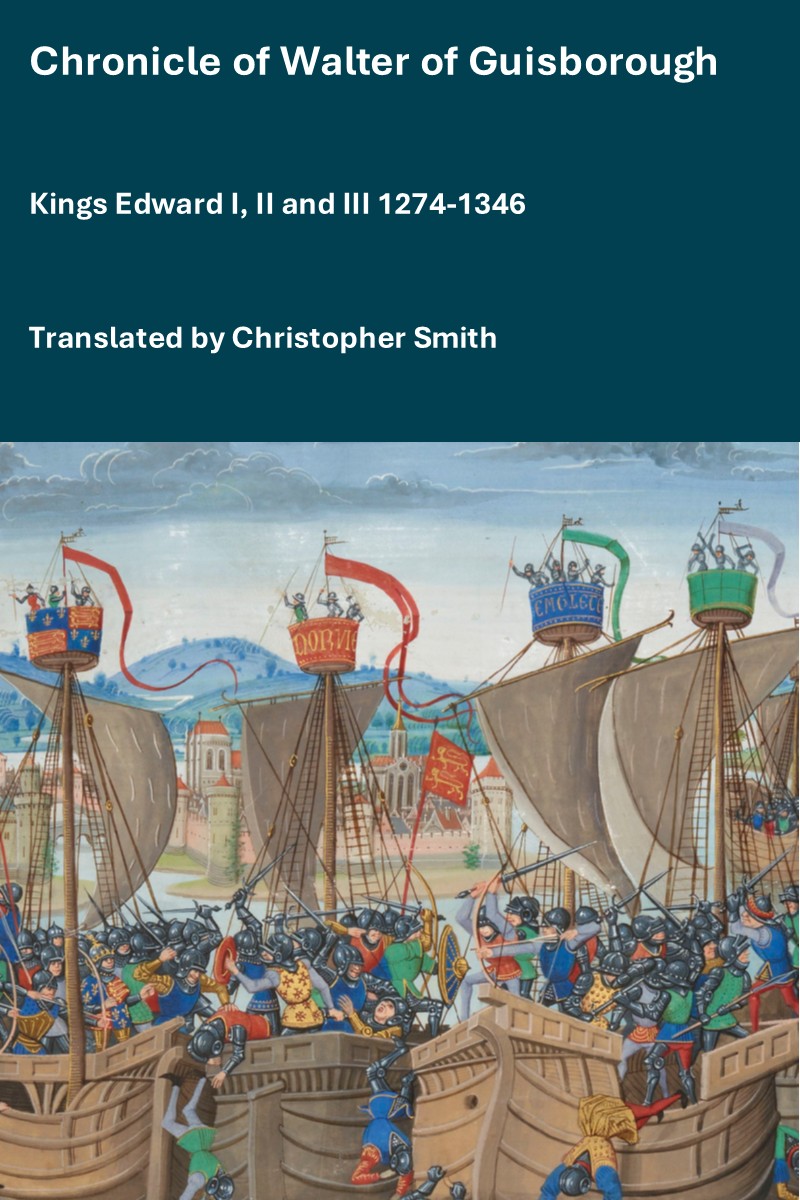
Chronicle of Walter of Guisborough. In the same year died Sir Robert de Brus [aged 60] the fifth, soon after Easter [4th March 1304], while he was on the road towards Annandale, and he was buried in the monastery of Holm [Map].1 In the same year died John, Earl of Warenne [aged 73], an old man, and was buried at Lewes after Christmas. In the same year died that valiant knight Sir William Latimer [aged 61], on the vigil of Saint Nicholas [5th December 1304], who had exercised his knighthood in many lands, and he was buried at Empingham.2
Eodem anno obiit dominus Robertus de Brus quintus, cito post Pascha, cum esset in via versus Vallem Anandiæ, sepultusque est in monasterio de Holme. Eodem anno obiit comes de Warenna Johannes, homo senex, sepultusque est apud Lews post Natale Domini. Eodem anno obiit strenuus ille miles dominus Willelmus Latimer in vigilia Sancti Nicholai, qui suam militiam in multis terris exercuerat, sepultusque est apud Hempingham.
Note 1. Holme Cultram Abbey, Cumberland [Map].
Note 2. Empingham, Rutlandshire.
Calendar Inquitisitions Port Mortem Volume 7 Edward III 691. 691. Giles, Son And Heir of Bartholomew De Badelesmere.
Writ to the escheator to take the proof of age of the said Giles, whose lands and tenements are in the wardship of H(enry) bishop of Lincoln, and who was born at Markettesoverton, co. Rutland, and was baptized in the church there, 7 November, 9 Edward III.
RUTLAND
Proof of age, 14 November [1335], 9 Edward III.
Richard de Sancto Lico, knight, aged 50 years, says that the said Giles, who was born in the manor of Hameldone, co. Rutland, and was baptized in the parish church of St. Andrew [Map] there, was, on the feast of St. Luke last, 21 years of age; and this he knows, because he was present when John de Drokenesforde, then bishop of Bath and Wells, baptized him; and Sir Robert de Watevile, knight, and Giles le Faukener, esquire of the aforesaid Bartholomew, were godfathers of the said Giles, and Lady Margery de Harington, then lady of Glaston, was his godmother.
John de Witlesbury, knight, aged 50 years and more, says that the said Giles was 21 years of age on the above feast, and this he knows, because his own son John was born on the very day when the said Giles was born at Hameldon and baptized in the church there, and his said son was 21 years of age on the above feast (last).
John de Boyvile, knight, aged 40 years and more, says the like, and knows it because he has a charter made on the same day, and from that day 21 years have elapsed.
John de Weyvile, aged 50 years, says the like, and knows it because he was there with his lady, Lady Margery de Haringtone, who was godmother of the said Giles, and wrote the day of his birth in a memorandum, which he still has.
John Basset, aged 50 years and more, says the like, and knows it because he has a son, who was born on the same day as the said Giles, and he was 21 years of age on the said feast of St. Luke (last).
William de la Hide, of Egelton, aged 50 years, says the like, and knows it because he espoused Alice his wife on the day the said Giles was born, from which day 21 years had elapsed on the feast of St. Luke (last).
Thomas Flemmyng, of Egelton, aged 50 years and more, says the like, and knows it because he was present when the said Giles was baptized, and the parish chaplain wrote the day of birth in the missal.
William de Sancto Petro, of Okham, aged 60 years, says the like, and knows it because [he has] a quit-claim of William de Okham, made on the day on which the said Giles was born, and by its date he knows the age of the said Giles.
William de Ryhale, of Okham, aged 50 years, says the like, and knows it because he was (stetit) then with Sir Bartholomew de Badelesmere, when the said Giles was born, and he has the day of his birth written in a calendar.
Robert de Nevile, of Berudon, aged 50 years and more, says the like, and knows it by the death of Walter his brother, who died on the day on which the said Giles was born.
Henry bishop of Lincoln [aged 46] being warned to be present did not appear in person or by any other.
Margaret Clifford Baroness Mauley died at Hambleton, Rutlandshire.
Chronicle of Abbot Ralph of Coggeshall
The Chronicle of Abbot Ralph of Coggeshall (Chronicon Anglicanum) is an indispensable medieval history that brings to life centuries of English and European affairs through the eyes of a learned Cistercian monk. Ralph of Coggeshall, abbot of the Abbey of Coggeshall in Essex in the early 13th century, continued and expanded his community’s chronicle, documenting events from the Norman Conquest of 1066 into the tumultuous reign of King Henry III. Blending eyewitness testimony, careful compilation, and the monastic commitment to record-keeping, this chronicle offers a rare narrative of political intrigue, royal power struggles, and social upheaval in England and beyond. Ralph’s work captures the reigns of pivotal figures such as Richard I and King John, providing invaluable insights into their characters, decisions, and the forces that shaped medieval rule. More than a simple annal, Chronicon Anglicanum conveys the texture of medieval life and governance, making it a rich source for scholars and readers fascinated by English history, monastic authorship, and the shaping of the medieval world.
Available at Amazon in eBook and Paperback format.
On or before 18th October 1314, the day he was baptised at St Andrew's Church, Hambleton [Map], Giles Badlesmere 2nd Baron Badlesmere was born to Bartholomew Badlesmere 1st Baron Badlesmere [aged 39] and Margaret Clare Baroness Badlesmere [aged 27]. He a great x 4 grandson of King Henry "Curtmantle" II of England. He married 1328 Elizabeth Montagu Baroness Badlesmere and Despencer, daughter of William Montagu 1st Earl Salisbury and Catherine Grandison Countess of Salisbury.
Calendar Inquitisitions Port Mortem Volume 7 Edward III 691. 691. Giles, Son And Heir of Bartholomew De Badelesmere.
Writ to the escheator to take the proof of age of the said Giles, whose lands and tenements are in the wardship of H(enry) bishop of Lincoln, and who was born at Markettesoverton, co. Rutland, and was baptized in the church there, 7 November, 9 Edward III.
RUTLAND
Proof of age, 14 November [1335], 9 Edward III.
Richard de Sancto Lico, knight, aged 50 years, says that the said Giles, who was born in the manor of Hameldone, co. Rutland, and was baptized in the parish church of St. Andrew [Map] there, was, on the feast of St. Luke last, 21 years of age; and this he knows, because he was present when John de Drokenesforde, then bishop of Bath and Wells, baptized him; and Sir Robert de Watevile, knight, and Giles le Faukener, esquire of the aforesaid Bartholomew, were godfathers of the said Giles, and Lady Margery de Harington, then lady of Glaston, was his godmother.
John de Witlesbury, knight, aged 50 years and more, says that the said Giles was 21 years of age on the above feast, and this he knows, because his own son John was born on the very day when the said Giles was born at Hameldon and baptized in the church there, and his said son was 21 years of age on the above feast (last).
John de Boyvile, knight, aged 40 years and more, says the like, and knows it because he has a charter made on the same day, and from that day 21 years have elapsed.
John de Weyvile, aged 50 years, says the like, and knows it because he was there with his lady, Lady Margery de Haringtone, who was godmother of the said Giles, and wrote the day of his birth in a memorandum, which he still has.
John Basset, aged 50 years and more, says the like, and knows it because he has a son, who was born on the same day as the said Giles, and he was 21 years of age on the said feast of St. Luke (last).
William de la Hide, of Egelton, aged 50 years, says the like, and knows it because he espoused Alice his wife on the day the said Giles was born, from which day 21 years had elapsed on the feast of St. Luke (last).
Thomas Flemmyng, of Egelton, aged 50 years and more, says the like, and knows it because he was present when the said Giles was baptized, and the parish chaplain wrote the day of birth in the missal.
William de Sancto Petro, of Okham, aged 60 years, says the like, and knows it because [he has] a quit-claim of William de Okham, made on the day on which the said Giles was born, and by its date he knows the age of the said Giles.
William de Ryhale, of Okham, aged 50 years, says the like, and knows it because he was (stetit) then with Sir Bartholomew de Badelesmere, when the said Giles was born, and he has the day of his birth written in a calendar.
Robert de Nevile, of Berudon, aged 50 years and more, says the like, and knows it by the death of Walter his brother, who died on the day on which the said Giles was born.
Henry bishop of Lincoln [aged 46] being warned to be present did not appear in person or by any other.
On 16th January 1795 Gilbert John Heathcote 1st Baron Aveland was born to Gilbert Heathcote 4th Baronet [aged 21] and Catherine Sophia Manners Lady Heathcote at Normanton Hall, Rutlandshire. He married 8th October 1827 his sixth cousin Clementina Drummond Willoughby 24th Baroness Willoughby of Eresby Baroness Aveland, daughter of Peter Drummond Burrell 2nd Baron Gwydyr 22nd Baron Willoughby and Clementina Sarah Drummond Baroness Gwydyr and Willoughby, and had issue.
In 1616 Anne Keilway Baroness Harington [aged 62] bequeathed to Oakham, Rutlandshire Parish Library around 200 religious works in Latin and Greek devoted to theology, history, ecclesiastical and canon law intended for the use of the Vicar and local clergy. It is one of the earliest known parochial libraries. The books were bound in leather tooled with the Harington
Harrington Arms knot in gilt, with the Latin ex libris
On 15th September 1649 Titus Oates was born to Samuel Oates [aged 39] in Oakham, Rutlandshire.
John Evelyn's Diary. 14th August 1654. I took a journey into the Northern parts, riding through Oakham, a pretty town in Rutlandshire, famous for the tenure of the Barons (Ferrers), who hold it by taking off a shoe from every nobleman's horse that passes with his lord through the street, unless redeemed with a certain piece of money. In token of this, are several gilded shoes nailed up on the castle gate, which seems to have been large and fair. Hence, we went by Brook, a very sweet seat and park of the old Lady Camden's. Next, by Burleigh House, belonging to the Duke of Buckingham, and worthily reckoned among the noblest seats in England, situate on the brow of a hill, built à la moderne near a park walled in, and a fine wood at the descent.
On 24th January 1859 Mary Penelope Noel [aged 28] died at Oakham, Rutlandshire.
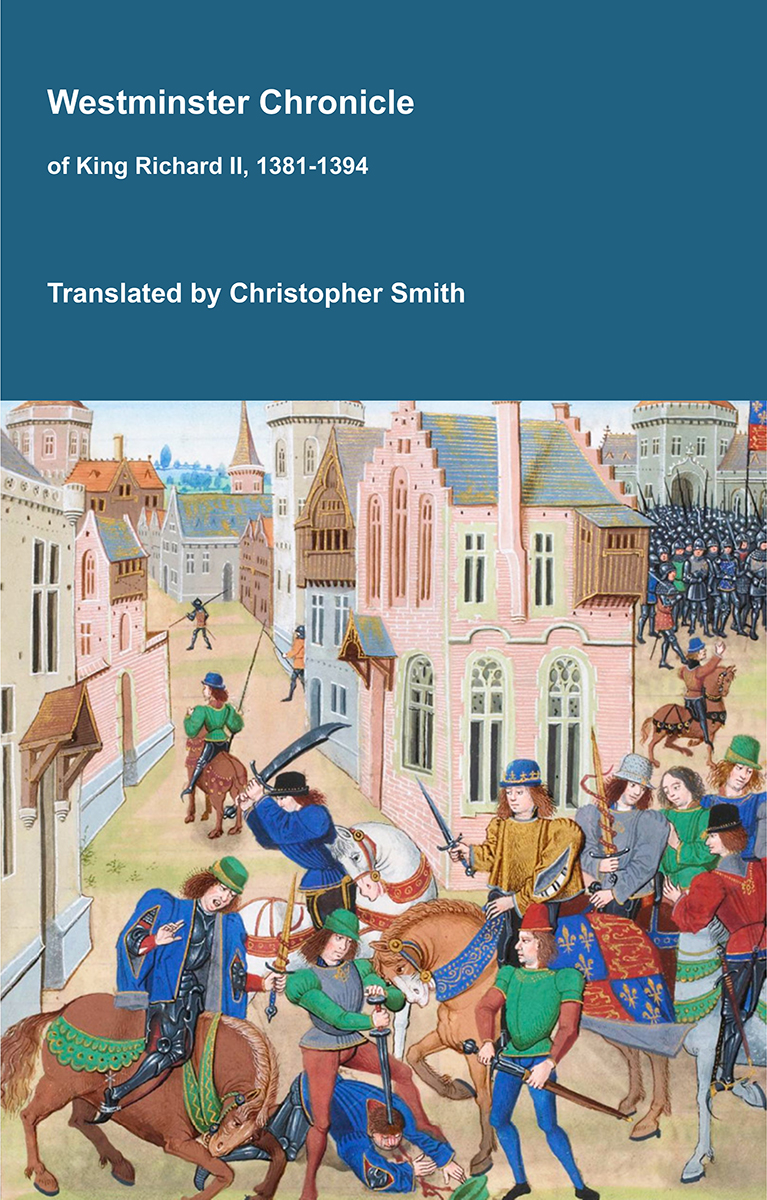
Westminster Chronicle. Also in this Parliament they raised many matters concerning craftsmen, labourers, and various servants: namely, that all and each of these should henceforth serve anyone who offered the better wage for their crafts and services than they had previously provided, as was touched upon above in the Parliament held at Cambridge. But because they did not at the same time fairly regulate the prices of the goods by which those men lived, they did not in the least achieve their intended effect. Also, shortly before the end of the month of February, Lord Richard Metford received papal letters concerning the bishopric of Chichester, and soon afterwards he was consecrated bishop. Also, in this Parliament, Lord John Holland [aged 38], Earl of Huntingdon, was made chamberlain of the lord king, and Lord Thomas Percy [aged 47] was made his sub-chamberlain. Also, at the end of this Parliament, the Duke of Lancaster, by the lord king and with the assent of the whole Parliament, was raised to be Duke of Aquitaine, rendering nothing for it. And Lord Edward [aged 17], son and heir of the Duke of York, was made Earl of Rutland; the king also granted him the castle of Oakham [Map], with all its appurtenances.
Item in isto parliamento plura his moverunt, seilicet de artificibus, de operariis et de diversis servientibus quatinus ut omnes isti et singuli meliori foro cuicunque servirent de eorum artificiis et servitiis deinceps quam antea impenderunt, ut tactum est supra in parliamento tento apud Cantebrigiam ; sed quia positiones rerum venalium quibus ipsi viverent minus æque taxarunt ad suum effectum minime pervenerunt. Item parum ante finem mensis Februarii dominus Ricardus Meteford recepit litteras papales super episcopatum Cicestrensem et cito post in episcopum consecratus est. Item in isto parliamento dominus Johannes Holand, comes Huntyngdon, factus est camerarius domini regis et ejus subcamerarius dominus Thomas Percy effectus est. Item in fine istius parliamenti dux Lancastriæ per dominum regem et assensu totius parliamenti in ducem Aquitaniæ nihil inde reddendo erectus est. Et dominus [Edwardus] filius et heres ducis Eboraci factus est comes Rotelandiæ cui etiam rex contulit castellum de Okeham cum suis pertinentiis universis.
In 1598 Anthony Markham of Sedgebrook [aged 21] and Bridget Harrington [aged 19] were married at Church of St Mary Magdalene and St Andrew, Ridlington [Map] by Rector Thomas Gibson.
On 2nd February 1614 James Harrington 1st Baronet [aged 72] died. He was buried at Church of St Mary Magdalene and St Andrew, Ridlington [Map]. His son Edward succeeded 2nd Baronet Harington of Ridlington in Rutlandshire.
In 1197 Aliva Quincy was born to Saer Quincy 1st Earl Winchester [aged 27] and Margaret Beaumont Countess Winchester at Ryall, Rutlandshire. She married Hugh Despencer and had issue.
This is a translation of the 'Memoires of Jacques du Clercq', published in 1823 in two volumes, edited by Frederic, Baron de Reissenberg. In his introduction Reissenberg writes: 'Jacques du Clercq tells us that he was born in 1424, and that he was a licentiate in law and a counsellor to Philip the Good, Duke of Burgundy, in the castellany of Douai, Lille, and Orchies. It appears that he established his residence at Arras. In 1446, he married the daughter of Baldwin de la Lacherie, a gentleman who lived in Lille. We read in the fifth book of his Memoirs that his father, also named Jacques du Clercq, had married a lady of the Le Camelin family, from Compiègne. His ancestors, always attached to the counts of Flanders, had constantly served them, whether in their councils or in their armies.' The Memoires cover a period of nineteen years beginning in in 1448, ending in in 1467. It appears that the author had intended to extend the Memoirs beyond that date; no doubt illness or death prevented him from carrying out this plan. As Reissenberg writes the 'merit of this work lies in the simplicity of its narrative, in its tone of good faith, and in a certain air of frankness which naturally wins the reader’s confidence.' Du Clercq ranges from events of national and international importance, including events of the Wars of the Roses in England, to simple, everyday local events such as marriages, robberies, murders, trials and deaths, including that of his own father in Book 5; one of his last entries.
Available at Amazon in eBook and Paperback format.
In 1197 Hugh Despencer was born to Thomas Despencer [aged 28] and Recuara Harcourt [aged 35] at Ryall, Rutlandshire. He married Aliva Quincy, daughter of Saer Quincy 1st Earl Winchester and Margaret Beaumont Countess Winchester, and had issue.
In 1254 Philip Despencer was born to Hugh Despencer [aged 30] and Aline Basset [aged 33] at Ryall, Rutlandshire. He a great x 4 grandson of King Henry I "Beauclerc" England.
In 1358 Anne Despencer Baroness Marshal and Morley was born to Edward Despencer 1st Baron Despencer, Baron Burghesh [aged 22] and Elizabeth Burghesh 3rd Baron Burghesh [aged 16] at Ryall, Rutlandshire. She a great x 3 granddaughter of King Edward I of England. She married 1. 1st December 1376 her third cousin Hugh Hastings and had issue 2. before 21st October 1390 her fourth cousin once removed Thomas Morley 5th Baron Marshal 4th Baron Morley, son of William Morley 4th Baron Marshal 3rd Baron Morley and Cecily Bardolf Baroness Marshal and Morley.
On 24th March 1335 Edward Despencer 1st Baron Despencer, Baron Burghesh was born to Edward Despencer [aged 25] and Anne Ferrers [aged 36] at Essendine Ryall, Rutlandshire. He a great x 2 grandson of King Edward I of England. Coefficient of inbreeding 1.78%. He married before 1373 his half fourth cousin once removed Elizabeth Burghesh 3rd Baron Burghesh, daughter of Bartholomew "The Younger" Burghesh 2nd Baron Burghesh and Cecily Weyland, and had issue.
St John the Evangelist's Church, Ryall. The first church was built in 1108 and was believed to roughly occupy the site of today's nave with a small chancel. It was quickly rebuilt very early in the thirteenth century, thus having an Early English core and tower. The north aisle was added at this time, and the south aisle shortly after.
Before 22nd March 1849 Reverend Henry Chaplin [aged 59] was Vicar of St John the Evangelist's Church, Ryall.
In 1832 Clementia Heathcote was born to Gilbert John Heathcote 1st Baron Aveland [aged 36] and Clementina Drummond Willoughby 24th Baroness Willoughby of Eresby Baroness Aveland [aged 22] at Stretton, Rutlandshire. She married 5th April 1869 Vice-Admiral George Tryon and had issue.
John Evelyn's Diary. 7th August 1654. Went to Uppingham [Map], the shire town of Rutland, pretty and well built of stone, which is a rarity in that part of England, where most of the rural parishes are but of mud; and the people living as wretchedly as in the most impoverished parts of France, which they much resemble, being idle and sluttish. The country (especially Leicestershire) much in common; the gentry free drinkers.
A History of the County of Leicestershire: Volume 5 Gartree Hundred: Horninghold. Horninghold [Map] lies seven miles north-east of Market Harborough [Map] and four miles south-west of Uppingham [Map]. The parish, which is 1,217 a. in area, extends over the Middle Lias clays which underlie the hills on the borders of Rutland. The soil is chiefly clay and largely devoted to pasture. The road from Hallaton to Uppingham [Map], on which the village stands, crosses the parish from west to east; it is joined at the east end of the village by a road from Great Easton. There are two field tracks, one to Blaston, and one which crosses the road from Hallaton to Allexton and continues to Keythorpe.
Before the Conquest Horninghold [Map] was one of a group of estates apparently held by four thegns, Osulf, Osmund, Roulf, and Levrick. In 1086 the vill was said to be held by Robert de Todeni, lord of Belvoir, though it may have been given before this date to Robert's priory of Belvoir, which had been founded in 1076. At the beginning of the 12th century it was farmed by William D'Aubigny. Horninghold formed part of the original endowment of the priory and remained in its possession until the Dissolution. It was confirmed to the priory at various times during the Middle Ages.
Note A. the Dissolution the manor [Map] passed to the Crown, and in 1545 Henry VIII licensed Edward Elrington and Humphrey Metcalfe, to whom he had previously sold it, to alienate the manor and the rest of the former priory's property in the parish to John Beaumont and Henry Alycock. There was a lease of the manor outstanding for 41 years from 1531 which had been made by Belvoir Priory to Anthony Bewell, the priory's bailiff. On Beaumont's forfeiture the manor once more passed to the Crown, and in 1553 it was purchased for £566 by Edward Griffin, the Attorney-General, whose family owned the nearby manor of Gumley. In 1590 William Turpin of Knaptoft, whose father had owned land in Horninghold, purchased the manor from Edward Griffin's heir. Turpin was knighted in 1603 and died in 1617; his widow held the manor until her death about the end of 1633, and was succeeded by her daughter Elizabeth, who married Sir John Pretyman of Loddington [aged 64].
The estate was settled upon their eldest son John and his wife Margaret on their marriage in 1649. John Pretyman died in 1658 leaving his widow as owner of the estate, which she brought to her second husband Sir John Heath, the second son of Sir Robert Heath of Brasted Place (Kent) and M.P. for Clitheroe (Lancs.) from 1661 to 1679. She died in 1676 and the available evidence suggests that Horninghold manor did not descend to her daughter and heir. It appears to have been sold by Heath to Sir Edward Hungerford [aged 43], who was in possession by 1676 and presented to the living. Thereafter the manorial descent is lost. Sir Edward Hungerford died in 1711, but it is by no means certain that he could or would have retained the manor of Horninghold for more than a few years, for his extravagance was notorious and he is said to have disposed of more than thirty manors during his lifetime.