

Cross is in Charges.
 Aylesbury Arms. Azure, a Cross argent. Source.
 Portugal Arms. Argent, in Cross azure each charged with ten plates. Source.
 Portugal 1385 Arms. Argent, in Cross azure each charged with five plates in saltire charged with ten golden triple-towered castles and four fleur de lys in cross vert, Source.
 Vesci Arms. Or, a Cross sable. Source.
Cross Crosslet. A cross with equal length arms with the ends of each arm crossed.
 Beauchamp Arms. Gules a fess or between six cross crosslets or.
 Darcy Arms. Azure semée of cross crosslets argent, three cinquefoils of the last. Source.
William of Worcester's Chronicle of England
William of Worcester, born around 1415, and died around 1482 was secretary to John Fastolf, the renowned soldier of the Hundred Years War, during which time he collected documents, letters, and wrote a record of events. Following their return to England in 1440 William was witness to major events. Twice in his chronicle he uses the first person: 1. when writing about the murder of Thomas, 7th Baron Scales, in 1460, he writes '… and I saw him lying naked in the cemetery near the porch of the church of St. Mary Overie in Southwark …' and 2. describing King Edward IV's entry into London in 1461 he writes '… proclaimed that all the people themselves were to recognize and acknowledge Edward as king. I was present and heard this, and immediately went down with them into the city'. William’s Chronicle is rich in detail. It is the source of much information about the Wars of the Roses, including the term 'Diabolical Marriage' to describe the marriage of Queen Elizabeth Woodville’s brother John’s marriage to Katherine, Dowager Duchess of Norfolk, he aged twenty, she sixty-five or more, and the story about a paper crown being placed in mockery on the severed head of Richard, 3rd Duke of York.
Available at Amazon in eBook and Paperback format.
 De La Warr Arms. Gules a lion rampant argent cross crosslets.
 Walpole Arms. Or a fess between two chevrons sable three cross crosslets of the field. Source.
 Baron Annaly Arms. Argent, on a chevron engrailed gules, between three roses of the last, a cross crosslet or. Source.
 Bourchier Arms. Argent, argent a cross engrailed gules between four water bougets sable. Source.
 Mohun Arms. Or a cross engrailed sable.
 Paget Arms. Sable, on a cross engrailed between four eagles displayed argent, five lions passant guardant of the field. Source.
 Peyton Arms. Sable, a cross engrailed or a mullet in the first quarter argent.
 Ufford Arms. Sable, a cross engrailed or. Source.
 Bigod Arms. Or a cross gules. Source.
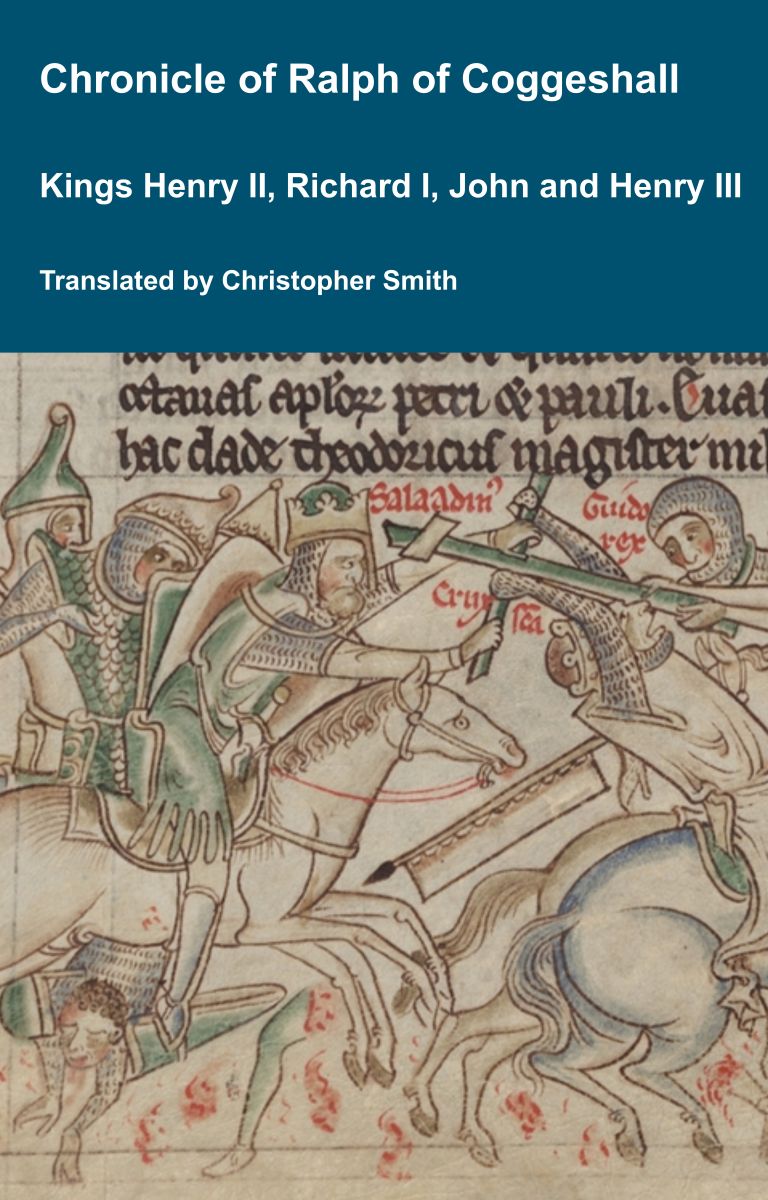
Chronicle of Abbot Ralph of Coggeshall
The Chronicle of Abbot Ralph of Coggeshall (Chronicon Anglicanum) is an indispensable medieval history that brings to life centuries of English and European affairs through the eyes of a learned Cistercian monk. Ralph of Coggeshall, abbot of the Abbey of Coggeshall in Essex in the early 13th century, continued and expanded his community’s chronicle, documenting events from the Norman Conquest of 1066 into the tumultuous reign of King Henry III. Blending eyewitness testimony, careful compilation, and the monastic commitment to record-keeping, this chronicle offers a rare narrative of political intrigue, royal power struggles, and social upheaval in England and beyond. Ralph’s work captures the reigns of pivotal figures such as Richard I and King John, providing invaluable insights into their characters, decisions, and the forces that shaped medieval rule. More than a simple annal, Chronicon Anglicanum conveys the texture of medieval life and governance, making it a rich source for scholars and readers fascinated by English history, monastic authorship, and the shaping of the medieval world.
Available at Amazon in eBook and Paperback format.
 Burgh Arms. Or a cross gules. Source.
 Churchill Arms. Sable a lion rampant argent a canton of the last a cross gules. Source.
 Villiers Arms. Argent, on a cross gules five escallops. Source.
 Beke Arms. Gules, a cross recerclée argent. Sometimes a cross moline. Source.
 Bentinck Arms. Azure a cross moline argent. Source.
 Bruyn Arms. Azure, a cross moline or. Appears to be the same as
  Molyneux Arms.
NO IMAGE. Argent, a cross moline sable.
Molyneux Arms. Azure a cross moline or. Source.
 Ughtred Arms. Gules, a cross moline or. Source.
 Lascelles Arms. Sable a cross patoncé within a Bordure or. Source.
Beke Arms. Gules, a cross recerclée argent. Sometimes a cross moline. Source.


.svg)
.svg)
.svg)


#/media/File:Arms_Nelson_(of_Mawdesley,_Lancs).svg)


.svg)
