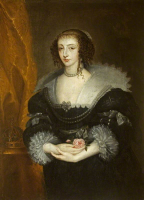
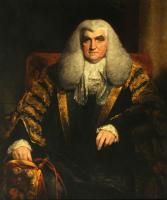
Chief Justice of the Common Pleas is in Common Pleas.
Between 1327 and 1337, intermittently, William de Herle was appointed Chief Justice of the Common Pleas.
On 3rd September 1329 John Stonor [aged 48] was appointed Chief Justice of the Common Pleas which office he held until 2nd March 1331.
On 7th July 1335 John Stonor [aged 54] was appointed Chief Justice of the Common Pleas for a second time. He held the office until 30th November 1341.
On 9th May 1342 John Stonor [aged 61] was appointed Chief Justice of the Common Pleas for a third time. He held the office until 22nd February 1354.
On 23rd April 1520 Robert Brudenell [aged 59] was appointed Chief Justice of the Common Pleas.
On 22nd November 1530 Robert Norwich was appointed Chief Justice of the Common Pleas.
In 1545 Edward Montagu [aged 60] was appointed Chief Justice of the Common Pleas.
On 23rd August 1553 Richard Morgan was appointed Chief Justice of the Common Pleas.
On 8th October 1554 Robert Broke was appointed Chief Justice of the Common Pleas.
This is a translation of the 'Memoires of Jacques du Clercq', published in 1823 in two volumes, edited by Frederic, Baron de Reissenberg. In his introduction Reissenberg writes: 'Jacques du Clercq tells us that he was born in 1424, and that he was a licentiate in law and a counsellor to Philip the Good, Duke of Burgundy, in the castellany of Douai, Lille, and Orchies. It appears that he established his residence at Arras. In 1446, he married the daughter of Baldwin de la Lacherie, a gentleman who lived in Lille. We read in the fifth book of his Memoirs that his father, also named Jacques du Clercq, had married a lady of the Le Camelin family, from Compiègne. His ancestors, always attached to the counts of Flanders, had constantly served them, whether in their councils or in their armies.' The Memoires cover a period of nineteen years beginning in in 1448, ending in in 1467. It appears that the author had intended to extend the Memoirs beyond that date; no doubt illness or death prevented him from carrying out this plan. As Reissenberg writes the 'merit of this work lies in the simplicity of its narrative, in its tone of good faith, and in a certain air of frankness which naturally wins the reader’s confidence.' Du Clercq ranges from events of national and international importance, including events of the Wars of the Roses in England, to simple, everyday local events such as marriages, robberies, murders, trials and deaths, including that of his own father in Book 5; one of his last entries.
Available at Amazon in eBook and Paperback format.
In January 1559 James Dyer [aged 49] was appointed Chief Justice of the Common Pleas.
On 5th October 1588 Anthony Browne was appointed Chief Justice of the Common Pleas.
On 28th November 1626 Thomas Richardson [aged 57] succeeded Sir Henry Hobart as Chief Justice of the Common Pleas, after a vacancy of nearly a year.
In 1631 Robert Heath [aged 55] was appointed Chief Justice of the Common Pleas which post he held until Sep 1634.
In January 1640 John Bankes [aged 51] was appointed Chief Justice of the Common Pleas.
The Manuscripts of His Grace the Duke of Rutland 1640. 4th January 1640. Savoy.
F. Lord Willoughby to his uncle, the Earl of Rutland [aged 60], at Belvoir Castle [Map].
When we ate your venison my wife and I drank your health and my Lady's and did not forget little Mr. George, whom, I am glad to hear, grows towards a man. "There hath beene a marriage at the court betweene one of my Lord of Corcke [aged 73] sonnse [aged 21] and my Lady Elizabeth Feelding, about which there is a greate stur, for it seemes he did not prove eoe rite as a man should be to goo about such a business. For the report goese that his manly part had lost something in his former serviocesse, and beside that he was soe full of severall disceases ... as that it was tould the Queene [aged 30], whoe sent for my Lady Elizabeth, and tould her that she must desier her not to lett her husband lye with her that night, whoe put of, modilestly making little answere, but she seemed so lothe to understand the Queene, as that she tould her she must command her not to come in a pair of sheets with him, and tould her the reasons; soe as that he is gone out of the way some say into France, others thinks he is in London under cower. It was discovered by his sister [aged 30] Mr. Goring's [aged 31] wife, to whom he had imparted his grevancess, and she had plotted it soe, to make an excuse for him, that he should falie downe stares that day, and she would come and take him up, and soe he should complane how he had breused himselfe and strained his back with the fale, that he should be soe ill he was not fitt to goe to bed to his wife that night. But could not keepe her counsel but must tell her husband Jorge Goring, and he presently ran and tould the Queene, and soe it was discovered and then it was presently in every buddy's mouth.".
My Lord Keeper is so ill that the physicians think he cannot recover. My Lord Chief Justice Bramstone is talked of to be Lord Keeper, and Bishop Wren [aged 54]. It is known to be between those two. My Lord Finch [aged 12] will be Chief Justice of the King's Bench and the Attorney General to be Chief Justice of the Common Pleas. Signet.
On 23rd May 1668 John Vaughan of Transgoed [aged 64] was appointed Chief Justice of the Common Pleas. He won lasting fame for his important decision in Bushell's Case, that juries were not to be fined for returning a verdict against the direction of the judge.
On 6th April 1687 Robert Wright [aged 53] was appointed Chief Justice of the Common Pleas.
In 1724 Thomas Wyndham 1st Baron Wyndham [aged 42] was appointed Chief Justice of the Common Pleas.
In 1799 John Scott 1st Earl Eldon [aged 47] was appointed Chief Justice of the Common Pleas.
In November 1873 John Duke Coleridge 1st Baron Coleridge [aged 52] was appointed Chief Justice of the Common Pleas.