

Paternal Family Tree: Green
Henry Green of Drayton, Northamptonshire and Maud Maudit were married.
Around 1347 Henry Green of Drayton, Northamptonshire was born to Henry Green and Katherine Drayton.
In or before 1365 [his brother-in-law] William Zouche 3rd Baron Zouche Harringworth [aged 13] and [his sister] Agnes Greene Baroness Zouche Harringworth [aged 23] were married. She by marriage Baroness Zouche Harringworth. They were second cousin once removed.
On 6th August 1369 [his father] Henry Green died at Boughton, Northamptonshire. He was buried at Church of St John the Baptist, Boughton. Henry Green of Drayton, Northamptonshire [aged 22] inherited at Drayton House, Northamptonshire [Map].
In 1380 Henry Green of Drayton, Northamptonshire [aged 33] was elected MP Huntingdonshire.
In 1391 [his sister] Agnes Greene Baroness Zouche Harringworth [aged 50] died.
In 1394 Henry Green of Drayton, Northamptonshire [aged 47] was elected MP Northamptonshire.
Before September 1397 Henry Green of Drayton, Northamptonshire [aged 50] was elected MP Northamptonshire.
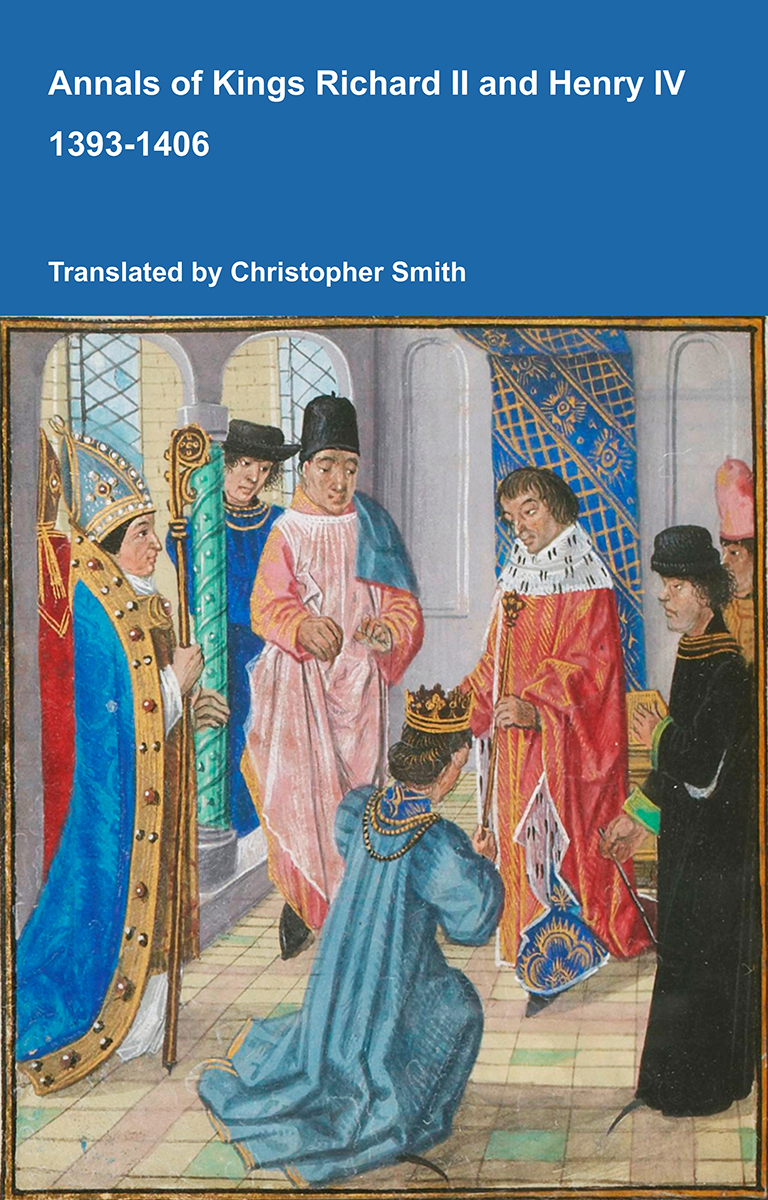 Annals of Kings Richard II and Henry IV. The King had erected a very large building in the Palace of Westminster, which occupied almost the whole space of the palace. In it an extremely high throne was prepared for him, with a spacious place for all the estates of the realm; a place was specially assigned for the appellants on one side, and on the other side a place was assigned for the accused to make their answers. A separate place was provided for the knights of Parliament, who had not been elected by the community, as custom requires, but by the royal will. Their leader was Sir John Bussy [aged 47], a most cruel man, excessively ambitious, and greedy for another’s property; a man who, for earthly substance or for the attainment of honours, thought little of abandoning faith and conscience. Yet he was full of worldly prudence and cunning, and surpassed in eloquence all the knights of his rank; for this reason the King appointed him Speaker of the present Parliament. Associated with him, by the King’s connivance, were several others, who proposed to say or request nothing except what would please the royal will; and, on the other hand, whatever they were ordered on the King’s behalf to propose, request, and extort by insistent clamours, they were ready to do. But the chief of these were Sir Thomas [Henry] Green [aged 50]1 and Sir William Bagot, in no way unlike John Bushy in vices or sins.
Erexit autem Rex quamdam domum amplissimam in Palatio Westmonasterii, quæ pene totum spatium Palatii occupavit; in qua sibi thronus parabatur altissimus, et pro cunctis regni statibus locus largus, atque pro appellantibus in uno latere locus specialiter deputatus, et in alio latere locus reis pro responsis assignatus; seorsum vero pro militibus Parliamenti, qui non fuerunt electi per communitatem, prout mos exigit, sed per regiam voluntatem. Quorum primicerius fuit Dominus Johannes Bushi, vir crudelissimus, ambitiosus supra modum, atque rei alienæ cupidus; et qui, pro terrena substantia vel consequendis honoribus, fidem et conscientiam deserere parvipendit. Erat tamen sæculari prudentia plenus, et astutia, pollens eloquentin super cunctos ejus fortunæ milites; unde Rex constituit eum Prolocutorem præsentis Parliamenti. Associatique sibi fuere, Regis conniventia, plures alii, qui nihil dicere vel petere proponebant, nisi quod placeret Sregiæ voluntati; et e contra, quiequid jussum foret eis ex parte Regis, proponere, petere, et importunis clamoribus extorquere, parati fuerunt. Sed horum præcipui fuerunt Dominus Thomas Grene et Dominus Willelmus Bagot, in nullo dispares Johannis Buschi in vitiis aut peccatis.
Note 1. Throughout the text the Chronicler refers to Henry Green as Thomas. Henceforward we have adopted Henry.
Around September 1397 Henry Green of Drayton, Northamptonshire [aged 50] was elected MP Wiltshire.

On 7th July 1399 Edmund of Langley 1st Duke of York [aged 58] appointed William Scrope 1st Earl Wiltshire [aged 49], Henry Green of Drayton, Northamptonshire [aged 52] and John Bussy [aged 49] to protect Kent against invasion by Henry Bolingbroke Earl of Derby [aged 32].
On 28th July 1399 William Scrope 1st Earl Wiltshire [aged 49], Henry Green of Drayton, Northamptonshire [aged 52] and John Bussy [aged 49] were captured at Bristol Castle, Gloucestershire [Map].
On 29th July 1399 William Scrope 1st Earl Wiltshire [aged 49], Henry Green of Drayton, Northamptonshire [aged 52] and John Bussy [aged 49] were beheaded at Bristol Castle, Gloucestershire [Map]. Earl Wiltshire forfeit.
The True Chronicles of Jean le Bel Volume 2 Chapters 61-109 1342-1361
The Chronicle of Jean le Bel, Volume 2 continues one of the most important fourteenth-century accounts of the early Hundred Years’ War. Written by the Liège chronicler Jean le Bel, this vivid narrative follows the fortunes of Edward III, Jean II of France, the Black Prince, the great nobles of France and England, and the soldiers, captains and companies who shaped the conflict. This volume covers some of the most dramatic events of the period, including the battles of Crécy and Poitiers, the siege and capture of Calais, the captivity of King John, the rise of the Jacquerie, the turmoil in Paris under Étienne Marcel and Charles of Navarre, the devastation caused by the free companies, Edward III’s great campaign of 1359–1360, and the negotiations leading to the Treaty of Brétigny. Jean le Bel’s chronicle is especially valuable for its lively detail, its interest in chivalry, warfare, politics and reputation, and its influence on later chroniclers, most famously Froissart. This English translation presents the text in clear, readable British English while preserving the force and character of the original narrative. The translation includes extensive notes to help the reader better understand Jean le Bel's text. Volume 2 also includes translated appendices drawn from royal and administrative records, many from the English Record Office, which illuminate Edward III’s campaigns in Brittany, the siege and occupation of Calais, naval preparations, military finance, appointments, safe conducts and related affairs.
Available at Amazon in eBook and Paperback format.
Annals of Kings Richard II and Henry IV. When the Duke of Lancaster came to Bristol with his uncle, the Duke of York, the Earl of Northumberland, Henry, the son of the said Earl, and almost countless other lords and commoners, he sent to the keeper of the castle, Lord Peter Courtenay, whom the Duke of York had some time before appointed keeper there, ordering him to surrender the castle together with the aforementioned persons. He, however, resisted as much as he could, until the Duke of York, by the authority of his commission, ordered him to surrender the castle. The castle was surrendered, and permission was given for everyone to depart freely, except for three persons, namely William le Scrope [aged 49], John Bussy [aged 49], and Henry Green [aged 52]. These men were seized and committed to close custody in the evening, and in the morning [of 29th July 1399] were beheaded. For the lords were urged to pass such a sudden sentence upon them by the persistent clamour of the commons, who would have torn them to pieces if they could have done so in any way, and also by the news which came that day of the King’s landing in Wales, he having come from Ireland with a large army. They did not think it safe to carry these men about alive while such pressing anxiety remained. And therefore, as has been said, at the insistent demand of the people, they received the sorrowful sentence, while all the middling people of the realm rejoiced that so quickly, and so graciously, as it seemed to them, they were being freed from their most bitter enemies.
Cum enim Dux Lancastriæ, cum patruo suo, Duce Eboraci, Comiteque Northumbriæ, et Henrico, filio dicti Comitis, aliisque velut innumeris dominis et communibus, Bristolliam venisset, misit ad custodem Castri, Dominum Petrum Courtenay, quem ibi dudum [Dux]: Eboraci custodem constituerat, ut Castrum [cum] personis redderet prænotatis. Ille vero, quantum poterat, renitebatur; donee Dux Eboraci, auctoritate suæ commissionis, ut Castrum redderet demandasset. Redditum est Castrum, et facultas data cuilibet recedendi libere, exceptis personis tribus, videlicet, Willelmi Le Scrop, Johannis Bussy, et Thomæ Grene; hii namque capti sunt, et custodiæ forti commissi vespere, et mane decapitati. Urgebat nempe dominos ad ferendum in eos tam repentinam sententiam clamor importunus communitatis, quæ voluisset eos in frusta decerpsisse, si quomodolibet potuisset; et nova quæ eo die venerunt de Regis applicatione in Walliam, qui cum exercitu de Hibernia venerat numeroso; quos non reputabant tutum vivos cireumducere, dum instaret tanta sollicitudo; et idcirco, ut præfertur, ad plebis importunam instantiam, tristem exceperunt sententiam, lætantibus cunetis regni mediocribus, quod tam cito, tam gratiose, prout eis videbatur, de infestissimis liberabantur hostibus.
[his son] Ralph Green was born to Henry Green of Drayton, Northamptonshire and Maud Maudit.
[his daughter] Eleanor Green was born to Henry Green of Drayton, Northamptonshire and Maud Maudit.
[his father] Henry Green and [his mother] Katherine Drayton were married.
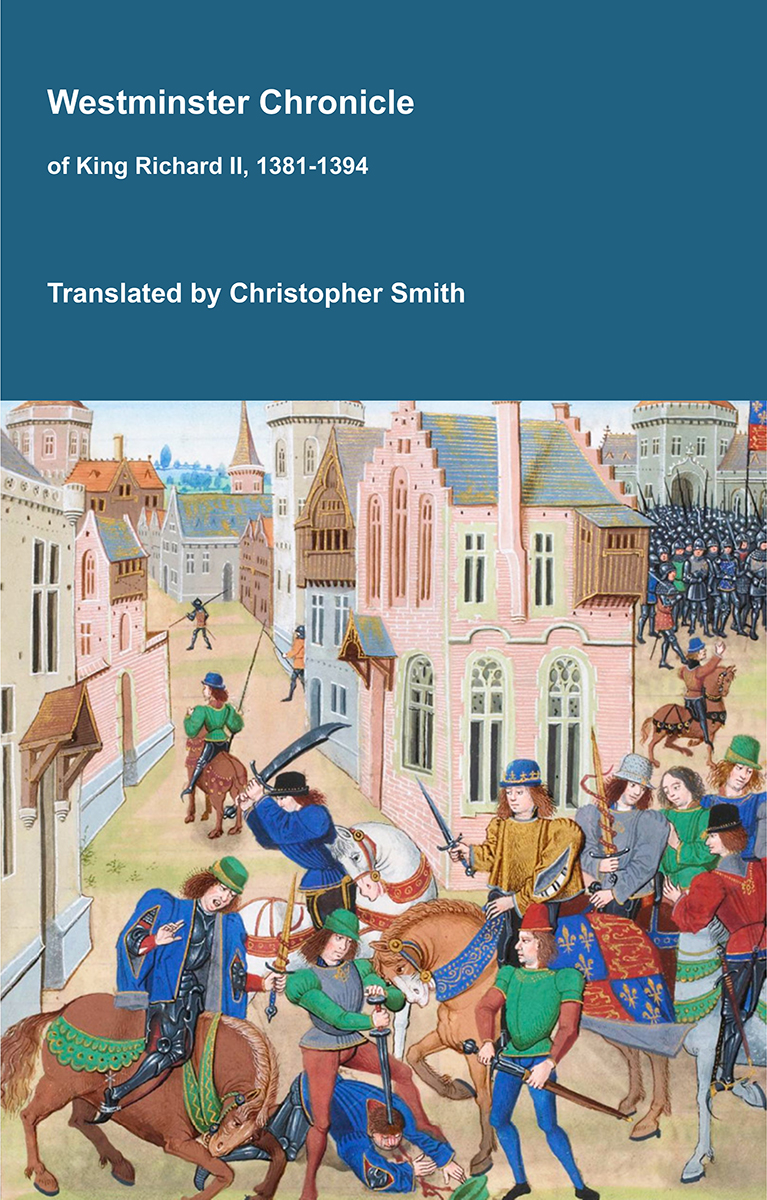 Westminster Chronicle. There were then present both the steward, Lord John Montagu, and the chamberlain, Sir Simon Burley. Taking the aforesaid friar, they handed him over to the keeper of Salisbury Castle to be guarded. But before they reached the gate of the royal lodging, Lord John Holland1 met them with other knights2, declaring that he would make him acknowledge the man who had induced him to proclaim such things. And so, taking him in the presence of the said officers, they brought him into the chamber appointed for him. A rope was thrown over a beam of that chamber, the hands of the aforesaid friar were bound behind his back, and they drew him upwards by the rope. They hung from his feet a stone weighing as much as two modii3 of wheat, and thus made him hang suspended in the air, with such punishment and torment. At last they came to him, ordering him to confess who had advised him to utter such things. But he, like a servant of Christ, patiently endured all the aforesaid things inflicted upon him, asserting that they were labouring in vain in this matter. Because of this, falling into greater madness, they wickedly drove him about through parts of the aforesaid house, now lowering him and now raising him, afflicting his poor little body with various bruises.4
Erant tunc præsentes tam seneschallus dominus J. de Monte Acuto quam camerarius dominus S. de Burle, qui accipientes fratrem prædictum tradiderunt ipsum custodi castri Sarum ad custodiendum, sed antequam pervenerunt ad portam regii mansionis occurrit eis Dominus J. de Holand cum aliis militibus protestans quod faceret eum recognoscere illum qui induxit eum talia prædicare, et sic in præsentia dictorum ofliciariorum ipsum assumentes in decretam sibi cameram adduxerunt; ac misso fune ultra trabem illius cameræ manus prædicti fratris post terga ligabant et ipsum per funem sursum trahebant, lapidemque ponderis duorum modiorum frumenti ad ejus pedes appendebant, et sic eum mobiliter in aere cum tali pœna et tormento pendere fecerunt. Tandem venerunt ad eum imperantes ut fateretur quis consuluit eum talia pronuntiare. Sed ille velut Christi servus omnia prædicta sibi imposita patienter sustinuit, asserens illos in vanum circa hujusmodi laborare. Propter quod illi in majorem insaniam prolapsi ipsum per partes domus prædictæ nequiter impellebant, nunc ipsum deprimendo et nunc elevando non modicum ipsius corpuseulum variis contusionibus affligebant.
Note 1. John Holland, 1352-1400, maternal half-brother of King Richard II. Married in 1386 Elizabeth of Lancaster, daughter of John of Gaunt. He was created Earl of Huntingdon in 1388 and Duke of Exeter in 1397. He was executed in 1400 for his part in the Epiphany Rising following the accession of King Henry IV.
Note 2. Names in margin: "P. Courteneye, J. Holand, S. Burley, W. Elmham, T. Marreus [probably Thomas Marny], H. Green".
2. Names in margin: "P. Courteneye. J. Holand. S. Burle. W. Elmham. T. Marreus. H. Grene."
Note 3. A 'modii' is a Roman and medieval measure of dry capacity, around seven kilograms of wheat.
Note 4. At the foot of page 142 is added: "On that same day on which the friar had accused the duke of Lancaster concerning the proclamation, by the consent of the whole parliament, a solemn procession was to be held, with a Mass for the state of the universal Church and for the prosperity of the king and kingdom. For this reason the bishops and others of the clergy waited continually for the king in the cemetery of the cathedral church until after the ninth hour had passed. But on that day, because of the king’s delay, the Mass and procession were omitted. On this account the duke of Lancaster came to the king. When the friar saw him, he said to the king, "Behold, that wicked traitor is here. Rush upon him and deprive him of life, otherwise he will kill you in future." The duke stood stunned at these words. But after he had learnt of the things which the friar was proclaiming about him, recovering his spirit, he began to excuse himself before the king concerning the charges laid against him, so much so that the king held him excused. The king, filled with fury, ordered the friar to be killed. But the duke earnestly begged that this should not be done, and by his prayer the king, according to some, ceased and was calmed towards the aforesaid friar."
At the foot of page 142 is added: "Illo quoque die quo frater ducem Lancastriæ de predicatione accusaverat de consensu totius parliamenti solemnis processio haberetur cum una missa pro statu universalis ecclesiæ et prosperitate regis et regni. Unde episcopi et alii de clero usque post lapsum horæ nonæ in cimiterio cathedralis ecclesiæ regem jugiter expectabant. Sed eo die propter tardationem regis missa et processio fuerunt omissæ. Qua de causa dux Lancastriæ ad regem accessit quem videns frater dixit regi. 'Ecce adest ille nequam proditor, irrue in eum et prives eum vita, alioquin in posterum interficiet te.' Dux vero ad hæc stabat stupefactus ; sed postquam innotuit sibi de his quæ frater de illo prædicabat resumpto spiritu cœpit se coram rege de sibi impositis excusare in tantum quod rex eum pro excusato habebat. Rex vero repletus furore fratrem jussit occidi; at dux ne ita fieret obnixe rogavit, cujus prece rex destitit mitigatus versus fratrem prædictum, secundum quosdam."
Kings Gwynedd: Great x 12 Grand Son of Maredudd ab Owain King Deheubarth King Powys King Gwynedd
Kings Seisyllwg: Great x 14 Grand Son of Hywel "Dda aka Good" King Seisyllwg King Deheubarth
Kings Powys: Great x 12 Grand Son of Maredudd ab Owain King Deheubarth King Powys King Gwynedd
Kings France: Great x 11 Grand Son of Hugh I King of the Franks
Kings Duke Aquitaine: Great x 15 Grand Son of Ranulf I Duke Aquitaine
Grandfather: Thomas Green 
Father: Henry Green 10 x Great Grandson of Hugh I King of the Franks
Great x 3 Grandfather: Alain Zouche 
Great x 2 Grandfather: Roger Zouche
Great x 3 Grandmother: Adelicia Belmeis
Great x 1 Grandfather: Eudo Zouche
Great x 2 Grandmother: Margaret Bisset
Grandmother: Lucy Zouche 9 x Great Granddaughter of Hugh I King of the Franks
Great x 4 Grandfather: William Cantilupe Baron 
Great x 3 Grandfather: William Cantilupe
Great x 2 Grandfather: William Cantilupe
Great x 1 Grandmother: Millicent Cantilupe 8 x Great Granddaughter of Hugh I King of the Franks
Great x 4 Grandfather: Reginald de Braose 8th Baron Abergavenny 6th Baron Bramber  6 x Great Grandson of Maredudd ab Owain King Deheubarth King Powys King Gwynedd
Great x 3 Grandfather: William de Braose 9th Baron Abergavenny 7th Baron Bramber 7 x Great Grandson of Maredudd ab Owain King Deheubarth King Powys King Gwynedd
Great x 4 Grandmother: Graecia Briwere
Great x 2 Grandmother: Eva de Braose 7 x Great Granddaughter of Hugh I King of the Franks
Great x 4 Grandfather: William Marshal 1st Earl Pembroke 
Great x 3 Grandmother: Eva Marshal 6 x Great Granddaughter of Hugh I King of the Franks
Great x 4 Grandmother: Isabel Clare Countess Pembroke  5 x Great Granddaughter of Hugh I King of the Franks
Henry Green of Drayton, Northamptonshire 11 x Great Grandson of Hugh I King of the Franks
Grandfather: Simon or John Drayton
Mother: Katherine Drayton