

Prime Minister is in Offices of Parliament.
John Evelyn's Diary. 10th September 1677. His lady [aged 43] (being one of the Brederode's daughters, grandchild to a natural son of Henry Frederick, Prince of Orange) [Note. Evelyn confused here. Elisabeth Nassau Beverweert Countess Arlington was the daughter of Louis Nassau Beverweert who was the illegitimate son of Prince Maurice I of Orange. Frederick Henry Orange Nassau II Prince Orange was the younger brother of Prince Maurice I of Orange.] is a good-natured and obliging woman. They love fine things, and to live easily, pompously, and hospitably; but, with so vast expense, as plunges my Lord [aged 59] into debts exceedingly. My Lord himself is given into no expensive vice but building, and to have all things rich, polite, and princely. He never plays, but reads much, having the Latin, French, and Spanish tongues in perfection. He has traveled much, and is the best bred and courtly person his Majesty [aged 47] has about him, so as the public Ministers more frequent him than any of the rest of the nobility. While he was Secretary of State and Prime Minister, he had gotten vastly, but spent it as hastily, even before he had established a fund to maintain his greatness; and now beginning to decline in favour (the Duke being no great friend of his), he knows not how to retrench. He was son of a Doctor of Laws, whom I have seen, and, being sent from Westminster School [Map] to Oxford, with intention to be a divine, and parson of Arlington, a village near Brentford, when Master of Arts the Rebellion falling out, he followed the King's Army, and receiving an HONORABLE WOUND IN THE FACE, grew into favor, and was advanced from a mean fortune, at his Majesty's Restoration, to be an Earl and Knight of the Garter, Lord Chamberlain of the Household, and first favorite for a long time, during which the King married his natural son, the Duke of Grafton [aged 13], to his only daughter [aged 9] and heiress, as before mentioned, worthy for her beauty and virtue of the greatest prince in Christendom. My Lord is, besides this, a prudent and understanding person in business, and speaks well; unfortunate yet in those he has advanced, most of them proving ungrateful. The many obligations and civilities I have received from this noble gentleman, extracts from me this character, and I am sorry he is in no better circumstances.
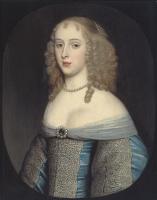
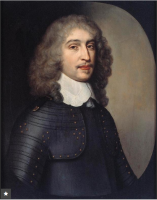
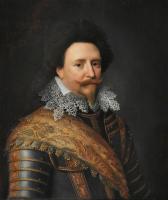
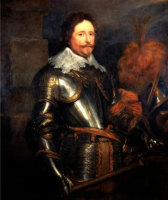


On 16th February 1742 Spencer Compton 1st Earl Wilmington [aged 69] was appointed Prime Minister.
On 27th August 1743 Henry Pelham [aged 48] was elected Prime Minister.
On 16th April 1763 George Granville [aged 50] was appointed Prime Minister.
In 1766 William "The Elder" Pitt 1st Earl Chatham [aged 57] was appointed Prime Minister.
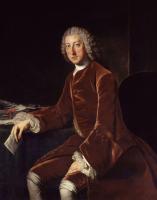

In 1768 Augustus Henry Fitzroy 3rd Duke Grafton [aged 32] was appointed Prime Minister.
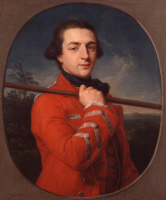


In 1770 Frederick North 2nd Earl Guildford [aged 37] was appointed Prime Minister.
On 31st March 1807 William Cavendish-Bentinck 3rd Duke Portland [aged 68] was appointed Prime Minister.


In 1809 Spencer Perceval [aged 46] was appointed Prime Minister.
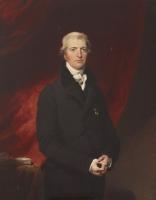
On 11th May 1812 Spencer Perceval [aged 49] was assassinated at House of Commons. Robert Jenkinson 2nd Earl Liverpool [aged 41] was appointed Prime Minister.
At 5:15 pm, on the evening of 11 May 1812, Perceval was on his way to attend the inquiry into the Orders in Council. As he entered the lobby of the House of Commons, a man stepped forward, drew a pistol and shot him in the chest. The assassin, John Bellingham, was a merchant who believed he had been unjustly imprisoned in Russia and was entitled to compensation from the government, but all his petitions had been rejected.
Perceval left a widow and twelve children aged between three and twenty. Parliament voted to settle £50,000 on Perceval's children, with additional annuities for his widow and eldest son.
On 18th May 1812 John Bellingham was hanged at Newgate Prison, London [Map]. René Martin Pillet says...
This unfortunate man had presented several memorials, and had repeatedly demanded audience, but they had given him no answer. Driven to despair, he presented himself at the door of the house of commons, waited for the prime minister, Mr. Percival, and shot him. He was seized, confessed the crime, was tried, condemned to be hung, and executed a few days after. At the time of execution an immense crowd filled the public square, and these expressions were heard on every side: Farewell poor man, you owe satisfaction to the offended laws of your country, but God bless you! you have rendered an important service to your country, you have taught ministers that they should do justice, and grant audience when it is asked of them.
A subscription was opened for the widow and children, and a handsome sum was raised. Their fortune was ten times greater than they could ever have expected in any other situation.

In August 1827 Frederick John Robinson 1st Earl Ripon [aged 44] was appointed Prime Minister.
In November 1830 Charles Grey 2nd Earl Grey [aged 66] was appointed Prime Minister.

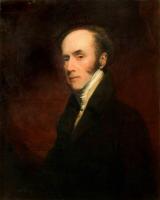
On 18th April 1835 William Lamb 2nd Viscount Melbourne [aged 56] was appointed Prime Minister.
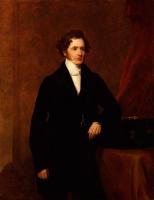
On 23rd February 1852 Edward Smith-Stanley 14th Earl of Derby [aged 52] was appointed Prime Minister.
On 20th February 1858 Edward Smith-Stanley 14th Earl of Derby [aged 58] was appointed Prime Minister.
On 29th June 1865 John Russell 1st Earl Russell [aged 72] was appointed Prime Minister.


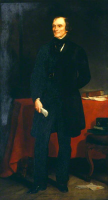
On 28th June 1866 Edward Smith-Stanley 14th Earl of Derby [aged 67] was appointed Prime Minister.
In February 1868 Benjamin Disraeli Earl Beaconsfield [aged 63] was appointed Prime Minister.
In 1874 Benjamin Disraeli Earl Beaconsfield [aged 69] was appointed Prime Minister.
On 23rd June 1885 Robert Gascoyne-Cecil 3rd Marquess Salisbury [aged 55] was appointed Prime Minister.
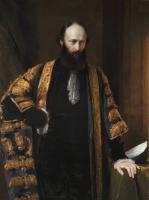
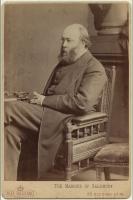
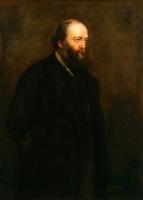
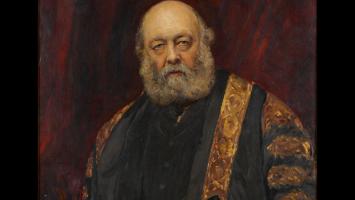
On 25th July 1886 Robert Gascoyne-Cecil 3rd Marquess Salisbury [aged 56] was appointed Prime Minister.
On 25th June 1895 Robert Gascoyne-Cecil 3rd Marquess Salisbury [aged 65] was appointed Prime Minister.