The History of William Marshal, Earl of Chepstow and Pembroke, Regent of England. Book 1 of 2, Lines 1-10152.

The History of William Marshal was commissioned by his son shortly after William’s death in 1219 to celebrate the Marshal’s remarkable life; it is an authentic, contemporary voice. The manuscript was discovered in 1861 by French historian Paul Meyer. Meyer published the manuscript in its original Anglo-French in 1891 in two books. This book is a line by line translation of the first of Meyer’s books; lines 1-10152. Book 1 of the History begins in 1139 and ends in 1194. It describes the events of the Anarchy, the role of William’s father John, John’s marriages, William’s childhood, his role as a hostage at the siege of Newbury, his injury and imprisonment in Poitou where he met Eleanor of Aquitaine and his life as a knight errant. It continues with the accusation against him of an improper relationship with Margaret, wife of Henry the Young King, his exile, and return, the death of Henry the Young King, the rebellion of Richard, the future King Richard I, war with France, the death of King Henry II, and the capture of King Richard, and the rebellion of John, the future King John. It ends with the release of King Richard and the death of John Marshal.

Available at Amazon in eBook and Paperback format.

Bishop Thomas Cobham 1268-1327

Paternal Family Tree: Cobham

Around 1268 Bishop Thomas Cobham was born to John Cobham [aged 27] and Joan Septvans.

Before July 1285 [his brother] Henry Cobham 1st Baron Cobham [aged 25] and [his sister-in-law] Maud Moreville [aged 21] were married.

In 1298 [his mother] Joan Septvans died.

In March 1300 [his father] John Cobham [aged 59] died at Cobham, Kent.

On 8th January 1313 [his brother] Henry Cobham 1st Baron Cobham [aged 53] was created 1st Baron Cobham.

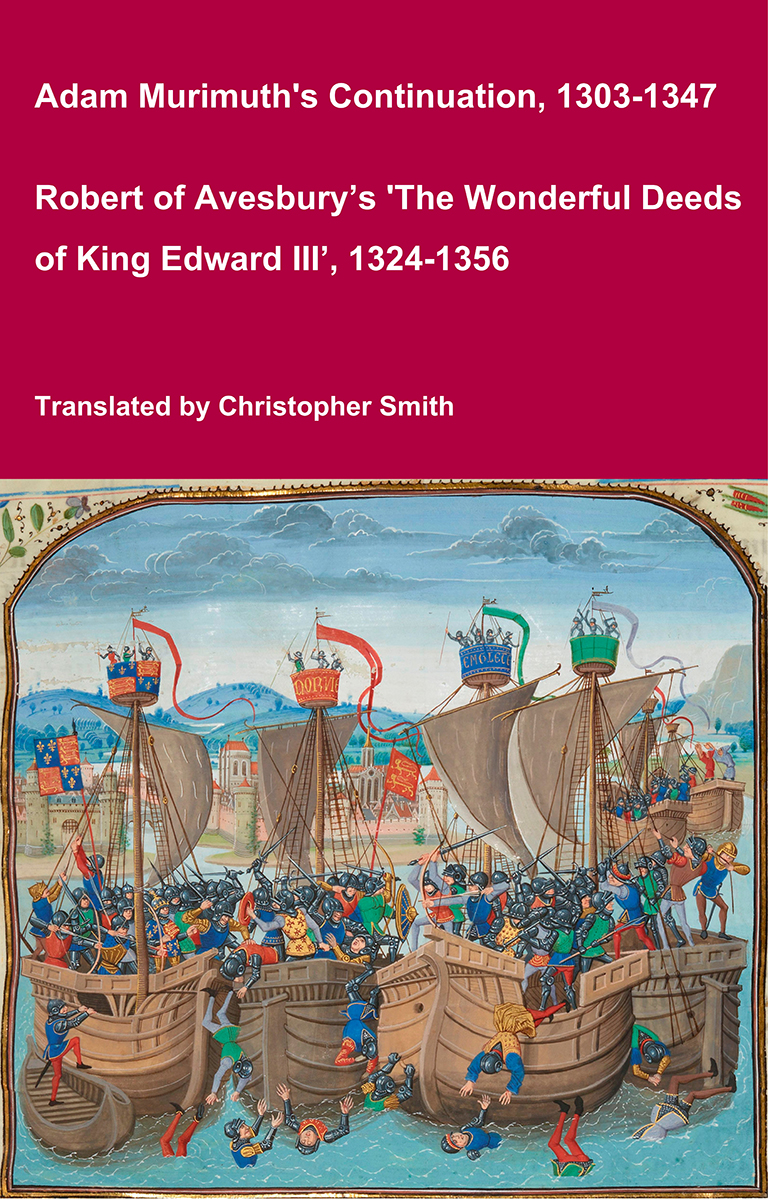
Adam Murimuth Continuation. In this year, on the twelfth day of the month of May, in the year of our Lord 1313, Archbishop Robert of Winchelsea [deceased] died, and Master Thomas de Cobham [aged 45], who was then in France on affairs of the kingdom, was unanimously elected in his place. Nevertheless, the king asked Pope Clement that Lord Walter Reynolds, bishop of Worcester, should be transferred to the church of Canterbury. This was done on the first day of October in the following year, namely in the year of our Lord 1313. Immediately afterwards he gave the bishopric of Worcester to Lord Walter de Maidstone, a man indeed widely spoken against in England for dishonourable conduct and life, and secretly familiar with the pope in an unseemly way. He remained in that bishopric only a short time. Later Pope John gave the bishopric of Worcester to the said Master Thomas de Cobham, who, because of the shame of his voluntary rejection from the church of Canterbury, remained for a long time at the Roman Curia, as will appear below.

Hoc anno, XIJ die mensis Maii, anno Domini MCCCXIII, obiit archiepiscopus Robertus de Wynchelse et fuit concorditer electus magister Thomas de Cobham, exsistens in Francia pro regni negotiis. Et tamen rex rogavit papam Clementem pro domino Waltero Reginaldi, episcopo W ygorniensi, ut ipsum transferret ad ecclesiam Cantuariensem; quod et factum fuit primo die Octobris in anno sequenti, scilicet anno Domini MCCCXIII, et statim dedit episcopatum Wygorniensem domino Waltero de Manestone, viro utique diffamato in Anglia de inhonesta conversatione et vita, et papæ ex inhonesta familiaritate secreto, qui modico tempore postmodum in episcopatu duravit Et postes papa Johannes dedit ipsum episcopatum Wygorniensem dicto magistro Thome de Cobham, qui propter verecundiam voluntariæ repulsionis suæ ab ecclesia Cantuariensi diu in Romana curia morabatur, sicut inferius apparebit.

Click to read more ...

Annales Paulini. In the year of our Lord 1313, and in the sixth year of the reign of King Edward, on the fifth day before the Ides [11th] of May, a Friday, Sir Robert de Winchelsey [deceased], Archbishop of Canterbury, died at Otford in Kent, and on the seventeenth day before the Kalends of June [16th May] he was buried at Canterbury. Master Thomas de Cobham [aged 45], canon of St Paul's Cathedral in London and professor of sacred theology, was elected archbishop. He was a man of great goodness and generosity, who had most distinguishedly and incomparably taken his degree in three faculties, and had taught at three universities, namely arts at Paris, canon law at Oxford, and theology at Cambridge. While the see of Canterbury was vacant, the king's justices in eyre sat in Kent, and because they were not to hold their pleas there during harvest time, the men of Kent gave the king 300 pounds sterling.

Anno Domini MCCCXIII, et anno regni regis Edwardi vito, V idus Maii et die Veneris, obiit dominus Robertus de Wynchelse archiepiscopus Cantuariensis apud Otteforde in Cantia; et XVII kalendas Junii sepultus fuit apud Cantuariam. Et electus fuit in archiepiscopum magister Thomas de Cobeham, canonicus in ecclesia Sancti Pauli Londoniensis, sacræ Theologiæ professor, vir magnæ bonitatis et liberalitatis, qui in tribus facultatibus nobilissime et incomparabiliter inceperat, et rexerat in tribus universitatibus, Parisius videlicet de artibus, Oxoniæ de decretis, et apud Cantebruggiam de Theologia. Vacante sede Cantuariensi, justitiarii domini regis de itinere sederunt in Cantia; et, pro eo quod non deberent ibidem tenere placita sua tempore messis, dederunt homines regi ccc. libras sterlingorum.

Annales Paulini. In the year of our Lord 1314, and in the seventh year of the reign of King Edward, the dominical letter being F, on the thirteenth day before the Kalends of March [17th February 1314], namely a Sunday, Sir Walter Reynolds, formerly Bishop of Worcester, upon whom the pope had conferred the archbishopric of Canterbury at the request of the lord king, Master Thomas de Cobham [aged 46], the archbishop-elect, having been rejected, was enthroned at Canterbury in the presence of the lord king and many magnates. In the same year, on Passion Sunday, which fell on the ninth day before the Kalends of April [24th March], Master Gilbert de Segrave [aged 48], Bishop of London, was enthroned, and on the same day, as though its founder, he laid the first stones of the new shrine of St Erkenwald.

Anno Domini MCCCXIIII, et anno regni regis Edwardi VII; litera Dominicalis F. XIII kalendas Martii, videlicet die Dominica, dominus Walterus Reginaldi, quondam episcopus Wygorniensis, cui dominus papa archiepiscopatum Cantuariensem ad rogatum domini regis contulerat, magistro Thoma de Cobeham electo repulso, intronizatus fuit apud Cantuariam, domino rege præsente et magnatibus multis. Eodem anno, Dominica in Passione, quæ fuit Segrave IX kalendas Aprilis, intronizatus fuit magister Gilbertus de Segrave episcopus Londoniensis, et eodem die posuit primos lapides novi feretri Sancti Erkenwaldi quasi fundator.

Annales Paulini. In the same year, the lord pope conferred the bishopric of Worcester upon Master Thomas de Cobham [aged 49], who had been elected Archbishop of Canterbury, and the bishopric of Hereford upon Master Adam de Hereford [Orleton], and both were consecrated at the papal court.

Eodem anno dominus papa contulit magistro Thomæ de Cobeham electo Cantuariensi, episcopatum Wigorniensem, et magistro Adæ de Herfordia episcopatum Herfordensem, et ambo consecrati fuerunt in curia.

On 31st March 1317 Bishop Thomas Cobham [aged 49] was appointed Bishop of Worcester.

On 22nd May 1317 Bishop Thomas Cobham [aged 49] was consecrated Bishop of Worcester.

Annales Paulini. In the same year, Master Thomas de Cobham [aged 49], Bishop of Worcester, returning from the papal court, came to England on the feast of St Martin [11th November 1317]. In the same year, on the Thursday before the feast of St Katherine [24th November], Sir William de Melton, Archbishop of York, who had been consecrated at the Roman Curia, returned to England. Passing through the midst of Kent and through the City of London with his cross raised and carried before him, he came to St Martin le Grand, where he lodged. Because of this, the whole City was placed under interdict by the Archbishop of Canterbury for the entire time that he remained there. Seeing this, on the following Sunday [27th November], at daybreak, he secretly departed. On that same Sunday, Sir Luca Fieschi, cardinal, celebrated Mass in St Paul's Cathedral and proclaimed a bull sent by the lord pope to the King of England and Robert Bruce concerning the making of a truce between them or the restoration of peace, in the presence of the Archbishop of Canterbury and many other bishops and magnates. On the following day, the same archbishop, together with the other bishops, dressed in their pontifical vestments, solemnly excommunicated all those who obstructed or broke the peace of the kingdom, and all those who presumed to seize or carry away ecclesiastical goods against the will of their rectors.

Eodem anno magister Thomas de Cobeham, episcopus Wygorniæ, revertens de curia, venit in Angliam die Sancti Martini. Eodem anno, die Jovis in vigilia Sanctæ Katerinæ, dominus Willelmus de Melthone, archiepiscopus Eboracensis consecratus in curia Romana, reversus est in Angliam, et veniens per medium Cantiæ et civitatem Londoniæ cruce sua erecta et ante eum portata, usque ad Sanctum Martinum magnum, ubi hospitabatur; ob quam causam tota civitas fuit interdicta per archiepiscopum Cantuariensem, toto tempore quo moram traxit ibidem. Quo viso, die Dominica proxima, in aurora diei, clam discessit. Quo etiam die Dominica dominus Lucas de Fliske Cardinal cardinalis celebravit missam in ecclesia Sancti Pauli, et pronuntiavit bullam missam a domino papa ad regem Angliæ et Robertum de Brus pro treuga inter ipsos capienda vel pace reformanda, archiepiscopo Cantuariensi et multis aliis episcopis et magnatibus præsentibus. Et in crastino idem archiepiscopus, cum aliis episcopis, pontificalibus induti, sollempniter excommunicaverunt omnes impedientes et infringentes pacem regni, et omnes illos qui bona ecclesiastica contra voluntatem rectorum capere vel asportare præsumpserint.

Click to read more ...

Annales Paulini. In the same year, on the fifteenth day before the Kalends of October [17th September 1319], the clerks of the king's Exchequer left London for York with twenty-one carts carrying the rolls and Domesday Book. In the same year, on the Sunday following the feast of St Michael [30th September], Stephen de Gravesend, Bishop of London, was enthroned in St Paul's Cathedral in London. On the feast of the Apostles Simon and Jude [28th October], Thomas de Cobham [aged 51], Bishop of Worcester, was enthroned at Worcester.

Eodem anno, XV kalendas Octobres, clerici de scaccario regis recesserunt de Lundoniis versus Eboracum, cum XXI carectis portantibus rotulos et Domesday. Eodem anno, die Dominica in crastino Sancti Michaelis, Stephanus de Gravesende episcopus Lundoniensis intronizatus fuit in ecclesia Sancti Pauli Lundoniis. Et in festo apostolorum Symonis et Judæ Thomas de Cobeham episcopus Wygorniensis intronizatus fuit apud Wigorniam.

On 14th April 1322 Bartholomew Badlesmere 1st Baron Badlesmere [aged 46] was tried by [his brother] Henry Cobham 1st Baron Cobham [aged 62] at Canterbury, Kent [Map].

Sentenced to death Bartholomew Badlesmere 1st Baron Badlesmere was drawn for three miles behind a horse to Blean, Canterbury, where he held property, where he was beheaded. His head was displayed on the Burgh Gate, Canterbury and the rest of his body left hanging at Blean, Canterbury. He was buried at Whitefriars. His nephew Henry Burghesh's [aged 30] lands were also seized. These were restored around 1326.

Annales Paulini. In the same year, on the seventh day before the Kalends of September [26th August 1327], Master Thomas de Cobham [aged 59], Bishop of Worcester, ended his days at Hartlebury.

Eodem anno, vii kalendas Septembris, magister Thoinas de Cobeham, episcopus Wygorniensis, apud Hertleberge diem suum clausit extremum.

On 27th August 1327 Bishop Thomas Cobham [aged 59] died.

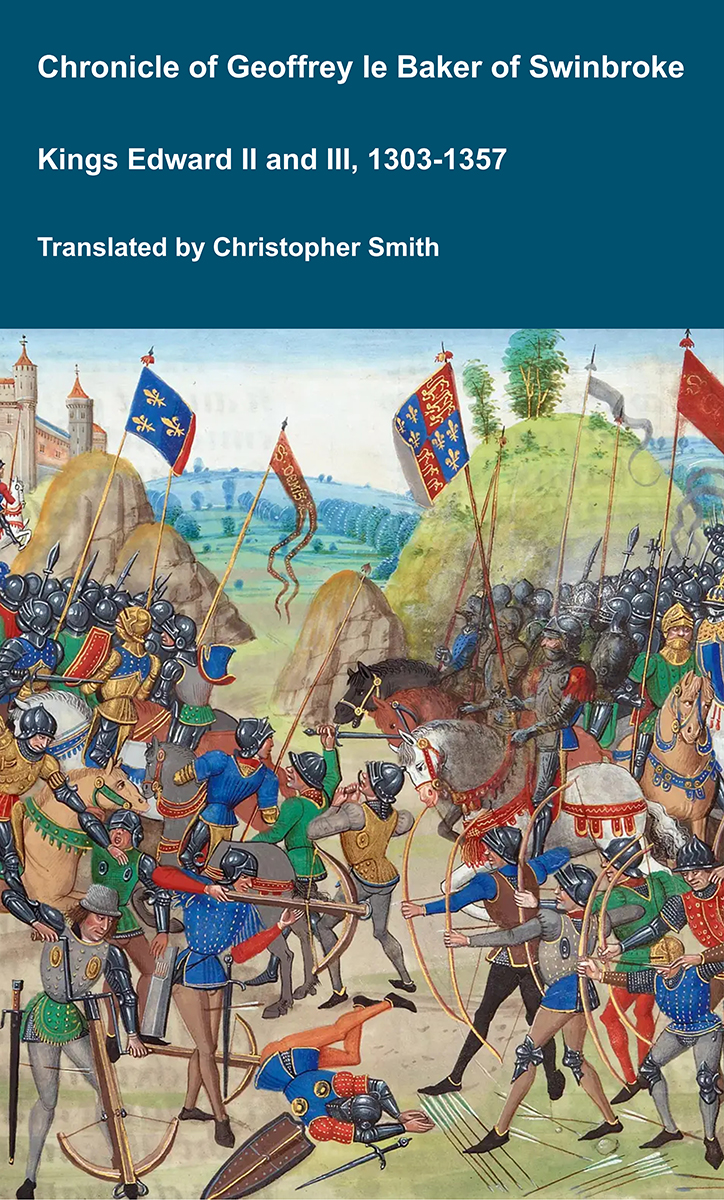
Chronicle of Geoffrey le Baker of Swinbroke. In this year, in the month of November, Walter,1 Archbishop of Canterbury, died, and he was succeeded by Master Simon de Mepham, a doctor of theology, through a canonical election. In this same year, Master Thomas de Cobham2, Bishop of Worcester, also died; and he was succeeded by papal provision by Adam Orleton, formerly Bishop of Hereford, who had gone to the papal court on behalf of his own affairs and those of the king's mother. Likewise, the pope provided the Church of Hereford with Master Thomas de Charlton, who was then present at the court.

Hoc anno, mense Novembris, obiit Walterus Cantuariensis archiepiscopus, cui successit per eleccionem canonicam magister Symon de Mepham, doctor in theologia. Hoc anno moriebatur magister Thomas de Cobham episcopus Wigorniensis; cui successit per provisionem pape Adam Torltoine, prius episcopus Herefordensis, ad curiam pro negociis propriis et matris regis profectus. Item papa providit ecclesie Herefordensi de magistro Thoma de Charletone, tunc in curia presente.

Note 1. Archbishop Walter Reynolds died on 16th November 1327.

Note 2. Thomas de Cobham, Bishop of Worcester, died on 27th August 1327.

[his father] John Cobham and [his mother] Joan Septvans were married.

Ancestors of Bishop Thomas Cobham 1268-1327

Grandfather: John Cobham

Father: John Cobham

Grandmother: Maude Joan Fitzbenedict

Bishop Thomas Cobham

Grandfather: Robert Septvans

Mother: Joan Septvans