

Flintshire, North East Wales is in North East Wales.
The Itinerary of Archbishop Baldwin through Wales: Book 2 Chapter 10. Many persons in the morning having been persuaded to dedicate themselves to the service of Christ, we proceeded from Ruthlan to the small cathedral church of Lanelwy;167 from whence (the archbishop having celebrated mass) we continued our journey through a country rich in minerals of silver, where money is sought in the bowels of the earth, to the little cell of Basinwerk,168 where we passed the night. The following day we traversed a long quicksand, and not without some degree of apprehension, leaving the woody district of Coleshulle,169 or hill of coal, on our right hand, where Henry II., who in our time, actuated by youthful and indiscreet ardour, made a hostile irruption into Wales, and presuming to pass through that narrow and woody defile, experienced a signal defeat, and a very heavy loss of men.170 The aforesaid king invaded Wales three times with an army; first, North Wales at the above-mentioned place; secondly, South Wales, by the sea-coast of Glamorgan and Goer, penetrating as far as Caermarddin and Pencadair, and returning by Ellennith and Melenith; and thirdly, the country of Powys, near Oswaldestree; but in all these expeditions the king was unsuccessful, because he placed no confidence in the prudent and well-informed chieftains of the country, but was principally advised by people remote from the marches, and ignorant of the manners and customs of the natives. In every expedition, as the artificer is to be trusted in his trade, so the advice of those people should be consulted, who, by a long residence in the country, are become conversant with the manners and customs of the natives; and to whom it is of high importance that the power of the hostile nation, with whom, by a long and continued warfare, they have contracted an implacable enmity and hatred, should be weakened or destroyed, as we have set forth in our Vaticinal History.
Note 167. Saint Asaph, in size, though not in revenues, may deserve the epithet of "paupercula" attached to it by Giraldus. From its situation near the banks of the river Elwy, it derived the name of Llanelwy, or the church upon the Elwy.
Note 168. Leaving Llanelwy, or St. Asaph, the archbishop proceeded to the little cell of Basinwerk, where he and his attendants passed the night. It is situated at a short distance from Holywell, on a gentle eminence above a valley, watered by the copious springs that issue from St. Winefred's well, and on the borders of a marsh, which extends towards the coast of Cheshire.
Note 169. Coleshill is a township in Holywell parish, Flintshire, which gives name to a hundred, and was so called from its abundance of fossil fuel. Pennant, vol. i. p. 42.
Note 170. The three military expeditions of king Henry into Wales, here mentioned, were A.D. 1157, the first expedition into North Wales; A.D. 1162, the second expedition into South Wales; A.D. 1165, the third expedition into North Wales. In the first, the king was obliged to retreat with considerable loss, and the king's standard-bearer, Henry de Essex, was accused of having in a cowardly manner abandoned the royal standard and led to a serious disaster.
Around March 1212 Dafydd ap Llewellyn Prince of Wales was born to Llewellyn "The Great" Aberffraw and Joan Plantagenet at Castell Hen Blas Coleshill Bagillt. He married 1230 Isabella "Lady of Snowdon" Braose Princess Wales.
In 821 King Coenwulf of Mercia died at Basingwerk, Flintshire. He was buried at Winchcombe Abbey. Coelwulf King Mercia King East Anglia King of Kent succeeded King Mercia, King East Anglia, King of Kent.
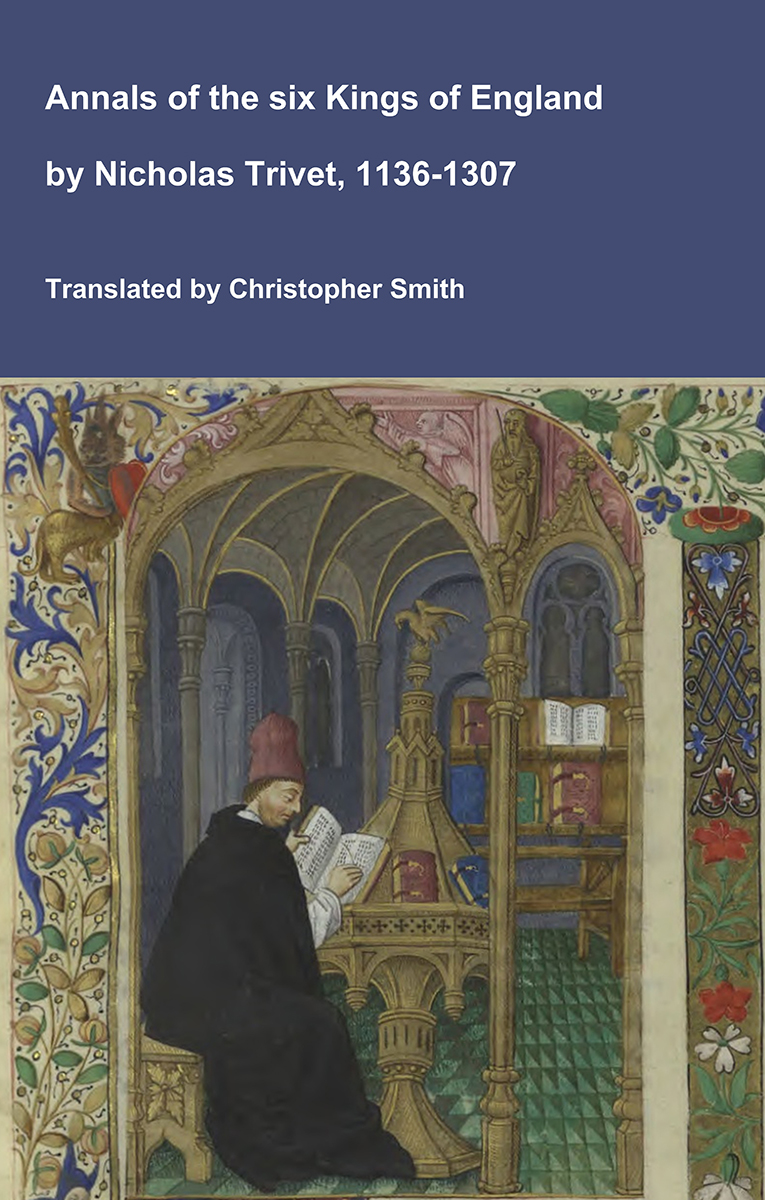 Annals of Six Kings of England by Nicholas Trivet. Thierry, count of Flanders, setting out on a journey to Jerusalem with his wife, left his son Philip, together with the whole land, in the care of Henry, king of England. Around the feast of Saint John the Baptist [24th June 1157], the king, having prepared an expedition, suppressed the uprising of the rebellious Welsh; and he strengthened two castles on the borders of Wales, Rhuddlan and Basingwerk, and between them built a house for the Knights of the Temple. In the month of September a son was born to the king, whom he named Richard. In this same year Thomas became the king's chancellor in London. The Saracens, entering Spain, captured the city of Almería after putting to flight King Alfonso V, who soon afterward died from the shame and grief of his flight. In the same year, when the truce between Baldwin, king of Jerusalem, and the king of Aleppo had been broken because of plunder which King Baldwin had rashly taken from the Saracens, the city of Abilene, formerly called Caesarea Philippi, was besieged and was captured and completely destroyed by the Saracens, except for its principal fortress. King Baldwin, surrounded by ambush, scarcely escaped, and a very great slaughter was inflicted upon the Christians.
Terricus, comes Flandriæ, cum uxore sua, iter Ierosolymitanum arripiens, Philippum filium suum, cum tota terra, in manu regis Anglorum Henrici dimisit. Circa festum sancti Joannis Baptistæ, rex præparata expeditione Wallensium insurgentium tumultum compressit; firmavitque in finibus Walliæ duo castra, Rovelenc et Basyngwerc, et inter illa construxit Templi militibus domum unam. Mense Septembri natus est regi filius, quem Ricardum vocavit. Hoc anno Thomas, Londonii, cancellarius regis efficitur. Saraceni, Hispaniam ingressi, ceperunt Almariam civitatem, fugato rege Alphonso quinto, qui cito post obiit ex fugæ suæ verecundia et dolore. Eodem anno ruptis induciis, quæ erant inter Baldewinum regem Jerusalem et regem Halapiæ, propter prædam quam rex Baldewinus a Saracenis ceperat inconsulte, obsessa est civitas Abilina, quæ olim dicta fuit Cæsarea Philippi, et a Saracenis capta et destructa totaliter, præter ejus munitionem principalem. Rex Baldewinus, insidiis circumventus, vix evasit; illataque est strages maxima Christianis.
On 24th September 1677 Thomas Hanmer 4th Baronet was born to William Hamner and Peregrina North at Bettisfield Hall, Flintshire sometime between 10 and 11PM. He married 1. 1698 Isabella Bennet Duchess Grafton, daughter of Henry Bennet 1st Earl Arlington and Elisabeth Nassau Beverweert Countess Arlington 2. 1725 Elizabeth Folkes Lady Hamner.

Around 1544 Elizabeth Ravenscroft was born to Thomas Ravenscroft of Bretton and Katherine Grosvenor in Bretton. She married 1576 Thomas Egerton 1st Viscount Brackley and had issue.
Construction of Caergwrle Castle, Flintshire in 1277, after King Edward I of England gave the lordship of Hope to Dafydd ap Gruffydd as reward for his service in the wars against the Welsh which concluded earlier that year.

1795. John Ingleby. "South aspect of Caergwrle Castle".
In 1667 Bishop John Wynne was born to Humphrey Wynne and Elizabeth Wynne at Maes-y-coed, Caerwys. He married 1720 Anne Pugh and had issue.
Castles built by the Welsh for the Welsh include Dolbadarn Castle, Dolforwyn Castle, Dolwyddelan Castle, Dryslwyn Castle, Ewloe Castle, Castell Dinas Brân, Castell y Bere, Carreg Cennen Castle and Arnold Arnaullt Castle.
A Tour of Wales by Thomas Pennant Volume 1. The road from hence is remarkably picturesque, along a little valley, bounded on one side by hanging woods, beneath which the stream hurries towards the sea, unless where interrupted by the frequent manufactories. Its origin is discovered at the foot of a steep hill, beneath the town of Holywell or Treffynnony to which it gave the name. The spring boils with vast impetuosity out of a rock; and is received into a beautiful polygonal well, covered with a rich arch supported by pillars. The roof is most exquisitely carved in stone. Immediately over the fountain is the legend of St. Wenefrede on a pendent projection, with the arms of England at the bottom. Numbers of fine ribs secure the arch, whose intersections are coupled with sculpture.
Some are mere works of fancy; grotesque figures of animals: but the rest allude chiefly to the Stanley family. This building, and the chapel over it, rose from the piety of that great house, which left these memorials of its benefactions: there are besides some marks of the illustrious donors; for example, the profile of Margaret, mother to Henry VII., and that of her husband the earl of Derby cut on the same stone.
The compliments to the Stanlies, are very frequent. The wolf's head is the arms of the earls of Chester: it is inclosed in a garter, in respect to Sir William Stanley, knight of that order, who had been chamberlain of that city, and justiciary of North Wales. The tun with the plant issuing out of it, is a rebus, the arms of his wife Elizabeth Hopton, allusive to her name. This proves, that the building was erected before 1495, in which year Sir William lost his head. The other badges of the same house are the stag's head; the eagle's leg; and the three legs, the arms of the isle of Man.


The Huntingdon Peerage Chapter IX Ferdinando Sixth Earl of Huntingdon. FERDINANDO, sixth Earl of Huntingdon, heir and successor of Henry the fifth Earl, was born at Ashby, January 11th, 1608. In March, 1627, he was returned to serve in Parliament for the county of Leicester, and two years after was joined with his father in the Lieutenancy of the counties of Leicester and Rutland. By indenture, dated May, 1638, he and his brother Henry, in consideration of the sum of 4,50l. granted, to John Earl of Bridgewater and Thomas Davies, a moiety of the rectory of Mould, otherwise Mouldesdale, in Flintshire. On the 13th of November, 1641, his father being then still living, he had summons to Parliament amongst the barons of the realm; and in 1643 he succeeded to the family honours. He married Lucy, daughter and sole heir to Sir John Davys, of Englefield, Berks, Knt. (Premier Serjeant at Law to James the First, and Charles the First, as also Solicitor, and afterwards Attorney General in Ireland, and finally Lord Chief Justice of the King's Bench,) by his wife Lady Eleanor, youngest daughter of George Lord Audley, Earl of Castlehaven, and, settling at Donnington Park, had by her four sons; Henry, John, Ferdinando, and Theophilus, born after the decease of his three brothers; and likewise six daughters, Alice, Eleanor, both of whom died young; Elizabeth, married to Sir James Laughan, of Cottesbroke, in Nottinghamshire, Bart, being his second wife, and dying without issue; Lucy, who died unmarried; Mary, espoused to Sir William Joliffe, of Caverswell Castle in Staffordshire, Knt.; and lastly Christiana.
In 1297 Roger de Montalt 1st Baron Montalt died at Mold Castle, Flintshire. Baron Montalt extinct. His brother inherited Castle Rising Castle. His brother Robert de Montalt 1st Baron Montalt was created Baron Montalt in 1299.
Patent Rolls. 3rd September 1664. Penley. Grant to the kiug's servitor Thomas Witham, chancellor of the Exchequer, of the custody of the body of Catharine Metcalf, late the wife of Edmund Metcalf, who has been an idiot from her birth, and of all her lands and tenements in the county of York and in Kingeston on Hull, to hold during her idiotcy without rendering anything to the king but finding a competent sustenance for her and supporting all charges. By K.
The River Dee rises at Lake Bala from where it flows under Pont Fawr, Denbighshire, past Crogen, Denbighshire, Cynwyd, Denbighshire, Corwen, Denbighshire, Carrog, Denbighshire, Llangollen, under the Pontcysyllte Aqueduct, under Overton Bridge, and Bangor-on-Dee Bridge, past Holt Castle to Chester, Cheshire after which it flows past Queensferry, Flintshire and Flint Castle before joining the Irish Sea.
