Denbighshire is in North East Wales.
On 22nd November 1828 Charlotte Fitzroy Viscountess Dungannon [aged 61] died at Brynkinalt.
On 11th August 1862 Arthur Hill-Trevor 3rd Viscount Dungannon [aged 63] died. Viscount Dungannon extinct. Arthur Edwin Hill aka Hill-Trevor 1st Baron Trevor [aged 42] inherited his estates including those at Brynkinalt, and changed his surname from Hill to Hill-Trevor.
The River Dee rises at Lake Bala [Map] from where it flows under Pont Fawr, Denbighshire [Map], past Crogen, Denbighshire [Map], Cynwyd, Denbighshire [Map], Corwen, Denbighshire [Map], Carrog, Denbighshire [Map], Llangollen [Map], under the Pontcysyllte Aqueduct [Map], under Overton Bridge [Map], and Bangor-on-Dee Bridge [Map], past Holt Castle [Map] to Chester, Cheshire [Map] after which it flows past Queensferry, Flintshire [Map] and Flint Castle [Map] before joining the Irish Sea.
The River Clwyd rises 8km north-west Corwen, Denbighshire [Map] from where it flows past Ruthin Castle [Map], Denbigh [Map], St Asaph [Map] to Rhuddlan Castle [Map], from where the remaining 4km were canalised when the castle wads constructed, entering the Irish Sea at Rhyl [Map].
The River Dee rises at Lake Bala [Map] from where it flows under Pont Fawr, Denbighshire [Map], past Crogen, Denbighshire [Map], Cynwyd, Denbighshire [Map], Corwen, Denbighshire [Map], Carrog, Denbighshire [Map], Llangollen [Map], under the Pontcysyllte Aqueduct [Map], under Overton Bridge [Map], and Bangor-on-Dee Bridge [Map], past Holt Castle [Map] to Chester, Cheshire [Map] after which it flows past Queensferry, Flintshire [Map] and Flint Castle [Map] before joining the Irish Sea.
Around 1470 David Myddelton [aged 20] was Receiver of Denbigh.
Wales Illustrated North Wales. Denbigh.
Abbot John Whethamstede’s Chronicle of the Abbey of St Albans
Abbot John Whethamstede's Register aka Chronicle of his second term at the Abbey of St Albans, 1451-1461, is a remarkable text that describes his first-hand experience of the beginning of the Wars of the Roses including the First and Second Battles of St Albans, 1455 and 1461, respectively, their cause, and their consequences, not least on the Abbey itself. His text also includes Loveday, Blore Heath, Northampton, the Act of Accord, Wakefield, and Towton, and ends with the Coronation of King Edward IV. In addition to the events of the Wars of the Roses, Abbot John, or his scribes who wrote the Chronicle, include details in the life of the Abbey such as charters, letters, land exchanges, visits by legates, and disputes, which provide a rich insight into the day-to-day life of the Abbey, and the challenges faced by its Abbot.
Available at Amazon in eBook and Paperback format.
Parliament Rolls Richard II. 26. William Montague, Earl of Salisbury, submitted a petition in parliament, the tenor of which follows:
To our lord the king his liege William Montague, Earl of Salisbury, prays: whereas the most noble King Edward [III], your grandfather, by his letters patent gave and granted to William Montague, Earl of Salisbury and father of the said supplicant, whose heir he is, and to the heirs issuing from his body, with the clause of warranty of the said very noble King Edward [III] and his heirs, the castle, town and honour of Denbigh, and the cantreds of Rhos, Rhufiniog, and Cymeirch and the commote of Dinmael with their appurtenances in Wales, as plainly appears from the said letters patent: which castle, town, and honour, cantreds and commote, with their appurtenances, Roger Mortimer, late Earl of March, by the name of the land of Denbigh, in Trinity term, in the twenty-eighth year of the reign of the said most noble King Edward [III] [18 June 1354-9 July 1354], before William Shareshull and his fellow justices assigned to hold the pleas before the said very noble King Edward [III], against the aforesaid supplicant, by erroneous judgment, recovered by a writ of scire facias, founded on a judgment given in the parliament held at Westminster on the Monday after the feast of St Mark the Evangelist in the twenty-eighth year of the reign of the said very noble King Edward [III], for the aforesaid Roger, on a petition showed by him to the said very noble King Edward [III] then, in the name of Roger Mortimer of Wigmore, son and heir of Edmund Mortimer, son and heir of Roger Mortimer; in which record and judgment on the said writ of scire facias there are patent errors.
May it please you of your gracious lordship to cause the full record to be brought before you, with all attachments to the same concerning the said writ of scire facias, in the present parliament, that they may be inspected and examined for error, and to forewarn Roger Mortimer, Earl of March, cousin and heir of the aforesaid Roger son of Edmund, and others who are to be forewarned in the matter, to be before you at the next parliament to hear the said errors; and if they know of anything to say wherefor the aforesaid judgment on the said writ of scire facias should not be reversed, and the aforesaid supplicant restored to his said possession with the issues and profits in the meantime since the said loss, and also to do right and justice to the parties in the aforesaid manner. Whereupon, the said petition having been read before the king and lords of parliament, the king ordered Sir Walter Clopton, his chief justice, to bring before the king and lords in parliament the record of which the said petition made mention above. Which record, on the king's command, was later brought to parliament before the king and lords, and there it was read in part, and certain errors therein were pointed out and alleged by the said Earl of Salisbury. Whereupon the king, by the assent and advice of the lords of parliament, the justices of the king there present, granted and ordered that the said earl have a writ of scire facias on the matter of the said petition, returnable at the next parliament, as the same petition mentions.
On 18th August 1538 Bishop Robert Parfew aka Warton received the surrender of the Carmelites at Denbigh Friary.
On 9th July 1559 John "Wynn" ap Maredudd died. Maurice Wynn [aged 39] inherited Gwydir Castle [Map].
On 18th August 1580 Maurice Wynn [aged 60] died. John Wynn 1st Baronet [aged 27] inherited Gwydir Castle [Map].
Documentary evidence states that Farndon aka Holt Bridge [Map] was built in 1339 by St Werburgh's Abbey in Chester. Originally it had ten arches, with a large gate tower on the fifth arch from the English side. The tower was demolished to road level in 1770 and at some time two of the arches on the Welsh side were lost.
1793. John Ingleby [aged 44]. "Holt Bridge [Map]".
The Welsh Castles and Towns of Edward I comprise a number of castles, some with associated planned towns, commissioned as a means of containing the Welsh. They included, from east to west, Flint Castle [Map], Rhuddlan [Map], Conwy Castle [Map], Beaumaris Castle [Map], Caernarfon Castle [Map], Harlech Castle [Map] and Aberystwyth Castle [Map]. Those not on the coast include Chirk Castle [Map], Denbigh Castle and Town Walls [Map] and Builth Castle [Map]. Arguably, Holt Castle [Map] and Criccieth Castle [Map] should be included.
The River Dee rises at Lake Bala [Map] from where it flows under Pont Fawr, Denbighshire [Map], past Crogen, Denbighshire [Map], Cynwyd, Denbighshire [Map], Corwen, Denbighshire [Map], Carrog, Denbighshire [Map], Llangollen [Map], under the Pontcysyllte Aqueduct [Map], under Overton Bridge [Map], and Bangor-on-Dee Bridge [Map], past Holt Castle [Map] to Chester, Cheshire [Map] after which it flows past Queensferry, Flintshire [Map] and Flint Castle [Map] before joining the Irish Sea.
Annals of King Richard II. Meanwhile the Duke of Gloucester turned aside to his own estates, and gathered his retinue both to defend himself and to come to the aid of his brother, if need should arise. The Earl of Arundel, however, in his castle of Holt [Map], surrounded by a great number of armed men, meanwhile awaited the outcome of the affair, for the defence of the said lords, or perhaps for the easier suppression of the aforesaid sedition. Yet an accusation of treason against the said lords was carried to him. This, however, seemed incredible to men of sound wisdom, because of the closeness of his blood, his goodwill, and his former loyalty.
Dux interim Gloucestriæ ad sua divertit, et ad se defendendum, et suo fratri, si necesse foret, suceurrendum, suam retinentiam congregavit. Comes vero Arundeliæ in suo castro de Holt, magno armatorum numero stipatus, rei eventum interim expectavit, ad dictorum dominorum defensionem, seu faciliorem forsitan sedationem seditionis prænotatam. Delatus tamen erga dictos dominos de eorum proditione extitit; quod tamen, ob sanguinis sui propinquitatem, et benevolentiam, et fidelitatem pristinam, sane sapientibus incredibile fuit.
Paston Letters Volume 4 532. 1st November 1462. John Paston, Junior, To His Father1
To my ryth reverent and worchepfull fadyr, John Paston, be thys delyveryd in hast.
Ryth reverent and worchepfull fadyr, I recomand me on to yow, beseechyng yow lowly of your blyssyng. Plesyt you to have knowlage that my Lord2 is purposyd to send for my Lady, and is lyke to kepe his Crystmas here in Walys, for the Kyng hathe desyered hym to do the same. Wherfor I beseche yow that [ye] wole wychesave to send me sume mony by the berer herof; for, in good feythe, as it is not on knowyng to yow that I had but ij. noblys in my purse, whyche that Rychard Call took me by your comandement, when I departyd from yow owt of Norwyche. The berer herof schuld bye me a gowne with pert of the mony, if it plese yow to delyver hym as myche mony as he may bye it with; for I have but on gowne at Framyngham and an other here, and that is my levere gowne, and we must were hem every day for the mor part, and one gowne withowt change wyll sone be done.
As for tydyngs, my Lord of Warwyk yed forward in to Scotland as on Saterday [30th October 1462] last past with xx.ml. [20,000] men; and Syr Wylliam Tunstale is tak with the garyson of Bamborowth, and is lyke to be hedyd, and by the menys of Sir Rychard Tunstale3 is owne brodyr.
As sone as I here any more tydyngys, I schall send hem yow by the grace of God, who have yow in Hys kepyng. Wretyn in hast, at the Castle of the Holte [Map], upon Halowmas Daye.
Your sone and lowly servaunt,
J. Paston, Junior.
Note 1. [From Fenn, i. 266.] In the month of October 1462, as we learn from Chronicle of England by William of Worcester, Margaret of Anjou came out of France, whither she had fled in spring, with a force of 2000 men, landed on the coast of Northumberland, and laid siege to Bamborough, which she took and placed in the keeping of the Duke of Somerset.
Note 2. The Duke of Norfolk.
Note 3. Sir Richard Tunstal was on Queen Margaret's side, while his brother William, it seems, was on that of King Edward.
Westminster Chronicle of King Richard II, 1381-1394
The Westminster Chronicle is one of the most vivid and important narrative sources for the reign of Richard II. Written by an anonymous chronicler closely connected with Westminster Abbey, it covers the years 1381 to 1394, from the Peasants’ Revolt to the political tensions, court ceremonies, diplomatic negotiations, royal progresses, and public crises of Richard’s later reign. Rich in detail the chronicle records major events such as the conflicts between the King and Lords Appellant, King and the City of London, negotiations with France and Scotland, the death and funeral of Queen Anne of Bohemia, the illness of Charles VI of France, and the changing fortunes of leading nobles including John of Gaunt, Thomas of Gloucester, Robert de Vere, and the Earl of Arundel. The Chronicle offers readers a remarkable window into late fourteenth-century England, combining political observation, courtly spectacle, urban drama, ecclesiastical affairs, and moral judgement. It is an essential source for anyone interested in medieval monarchy, London, Westminster, and the troubled reign of Richard II.
Available at Amazon in eBook and Paperback format.
Chronicle of Gregory. December 1463. Ande this same year a-boute Crystysmas that fals Duke of Somersett [aged 27], without any leve of the kyng, stale out of Walys [Map] with a prevy mayny towarde the Newecastelle [Map], for he and his men were confeteryde for to have be-trayde the said Newecastelle [Map]. And in [t]ewey thedyrwarde he was aspyde, and lyke to have ben takyn be syde Dereham in his bedde. Notwithstondynge he a schapyde a-way in his schyrt and barefote, and ij of his men were take. And they toke with them that fals dukys caskette and his harneys. And whenn that his men knew that he was aschapyd, and his fals treson aspyde, his men stale from the Newecastelle [Map] as very fals traytourys, and some of them were take and loste her heddys for her labur, &c.
In 1466 the Lancastrian Richard Turnstall led the garrison of Harlech Castle [Map] in a raid on Wrexham. The rebels captured Holt Castle [Map]. John "Butcher of England" Tiptoft 1st Earl of Worcester [aged 38] was sent to suppress the rebellion.
Close Rolls Edward IV Edward V Richard III 1476-1485. 16th May 1483. King Richard III of England [aged 30]. Westminster Palace [Map]. Grant for life to the king's servant Henry Duke of Buckingham [aged 28], of the offices of chief justice and chamberlain in South and North Wales, constable of the castles and counties of Kermerdyn and Cardigan, the castles of Abrustwith, co Cardigan, and Denevour in South Wales, the castle and town of Tonebigh, co. Pembroke, the castle and lordship of Kylgarvan in South Wales, the castle and town of Llan Stepham in South Wales, the lordship of Wallewynscastell in South Wales, the lordship of Westhaverford in South Wales, constable, steward, and receiver of the castle, lordshiop and manor of Uske, the castle and lordship of Carlion, the castle, lordship and manor of Dynas, the castle and a moiety of the lordship of Ewyas Lacy [Map], the castles, lordships and manors of Belth,Clifford, Radnore, Melenyth, Montgomery, Dynbigh, Elvell and Narberth, the castle, lordship and manors of Wygmore [Map] and Holt [Map] in the marches of Wales, and the lordship and manor of Bromfield [Map] in the same marches, steward and receiver of the lordships and manors of Norton, Knyghton, Raydor, Guerthrenyon, Comotoyder, Glasbury, Weryfreton, Cherbury, Terthic, Halcetur, Kadewyn, Newton, Kyry in the marches.
In 954 Rhodri ap Hywel King Deheubarth and Edwin ap Hywel King Deheubarth defeated the sons of Idwal at the Battle of Llanwrst at Llanrwst, Clywd.
Wales Illustrated North Wales. Llanrwst Bridge [Map] And Church.
Llanrwst is a small town, pleasantly situated on the river Conway, in Denbighshire, and though but a small place, it monopolises the chief trade of the surrounding district. The bridge [Llanrwst Bridge, Clywd [Map]] is considered the principal object worthy of notice, having been built after a design by the celebrated Inigo Jones, who is said to have been a native of the place, and who also furnished the design for the chapel, adjoining the church. Though not magnificent, the bridge is certainly a handsome structure, and displays somewhat of the genius of its farfamed architect. It was built by an order from the privy council, in the 9th year of Charles the first; the expense, estimated at one thousand pounds, being conjointly defrayed by the counties it connects — Caernarvon and Denbigh. It consists of three arches, the central one the largest, measuring nearly sixty feet in the span; — it is asserted that this bridge is formed upon such nice principles, that when a person pushes against the large stone placed over the middle arch, the whole fabric may be felt to vibrate. The scenery, both above and below, is enchanting; gratifying the sight with the finest objects, grouped in endless variety. The hills and woods, which line both margins of the river, are enlivened by the busy display of small vessels on its surface, going to and from Triefrew, a village about two miles down, and the highest point to which the tide flows; or with still more diminutive coracles, fishing for salmon and smelts. Less extended than the vale of Clwyd, and wider than that of Llangollen, the vale of Llanrwst has often been admired, as exhibiting the most variegated assemblage of beauty; it has been the subject of eulogium of that competent judge, both of the sublime and beautiful, Mr. Burke, who pronounced it, "the most charming spot he had seen in Wales." This place was famous for the manufacture of Welsh harps; but in 1810, the harp makers had become extinct, no one carrying on that business, and the instrument becoming scarce, rose in price; those, by the best makers, fetching twenty-five guineas.
The River Conwy rises on the on the Migneint moor where a number of small streams flow into Llyn Conwy [Map] from where it flows more or less north through Betws-y-Coed [Map], under Llanrwst Bridge, Clywd [Map] past Conwy Castle [Map] where it joins the Irish Sea.
The River Dee rises at Lake Bala [Map] from where it flows under Pont Fawr, Denbighshire [Map], past Crogen, Denbighshire [Map], Cynwyd, Denbighshire [Map], Corwen, Denbighshire [Map], Carrog, Denbighshire [Map], Llangollen [Map], under the Pontcysyllte Aqueduct [Map], under Overton Bridge [Map], and Bangor-on-Dee Bridge [Map], past Holt Castle [Map] to Chester, Cheshire [Map] after which it flows past Queensferry, Flintshire [Map] and Flint Castle [Map] before joining the Irish Sea.
On 15th September 1890 Caroline Rainier [aged 82] died at Rhyl [Map].
On 19th June 1878 Peter Ellis Eyton [aged 50] died at Rhyl Hospital. He was buried at St Saeran's Church, Llanynys [Map].
Rhyl Advertiser 29 Jun 1878. FUNERAL OF P. ELLIS EYTON [deceased], ESQ.,M.P.
The funeral of the late member for the Flint Boroughs took place on Saturday last. It was not generally known that it was a public one, the invitations being given to only a few, or no doubt the attendance would have been much larger. The cortege was announced to leave the Hydropathic Establishment at 11 o'clock in the morning, but it was nearly 12 o'clock before it started. The following was the order of the procession A deputation from the Rhyl Foresters Club. Rev. J. Thomas and Dr. Lloyd. Friends, three deep J. A. Hughes, Esq.,Wrexham, Chairman of the Flintshire and Denbighshire Law Association; M. D, Roberts, Esq., Rhyl, Hon See., of ditto. The mace-bearer, with mace (draped in crape) of the Flint Corporation. Alderman Dyson (deputy-mayor). Jas. L. Muspratt, Esq., J.P., H. Taylor, Esq., (town clerk), Alderderman Ishmael Jones (representing the Corporation of Flint) and E. K. Muspratt, Esq. Three bearers THE BODY Three bearers.
First Mourning Coach: Mrs Charles Vincent Baines, Esq. Mrs Baines, and Adam Eyton. Esq.
Second Mourning Coach: Richard Jones, Esq., (the deceased London agent), Peter Browne, Esq., C.C., Mr Bithel (law clerk), and Mr Snowdon (valet).
The Carriage of J. Roberts. Esq., Bryngwenallt, containing Mr Roberts, W. R. Williams, Esq., &c. The Carriage of Lewis Morgau, Esq., containing Mr Morgan, and the Rev. G. A. Butterton, D.D., J.P.
The Carriage of Vincent Baines, Esq.
Among the invited were Thomas Winston, Esq., W. Pryce Jones, Esq., J.P., Mr Roberts, solicitor, Bangor, Major Penn, &c. There were also in the procession W. E. Smalley, Esq., S. Roose, Esq., M Plunket, Esq., Messrs Commissioners James Davies. Abel Jones, J. Griffiths, William Reynolds, M, Mr John Divine, Mr Owen Edwards, Mr Williams Gas Office, &c.
The interment took place at Llanynys Church, near Ruthin, the friends following the deceased as far as the boundary of the township the hearse and mourning coaches proceeded by road through Denbigh, at the latter place the carriages of Dr. Pierce, T. Gold Edwards, Esq., and J. Roberts, Esq., Geinas, joined the procession. The burial service was read by the Rev. E. Mathew Jones, of Llanrhaiadr, who officiated in the place of the vicar.
The coffin was of polished oak with brass mountings, covered with a magnificent velvet pall; the coffin was made by Mr W. Evans, Wellington Road, and on the lid of it was a magnificent breast-plate bearing the following inscription "P. Ellis Eyton, M.P. Died June 19th, 1878. Aged 52 years." The undertaker was Mr Parry, draper, Tottenham Buildings, High Street, Rhyl, and in the discharge of his duties gave every satisfaction. Upon the coffin were floral crosses and wreaths, two of the latter from the Winter Gardens, worked by Dickenson, the head gardener; one was also placed on the coffin at Trefnaut by Mrs Lewis, of the Vicarage.
The River Clwyd rises 8km north-west Corwen, Denbighshire [Map] from where it flows past Ruthin Castle [Map], Denbigh [Map], St Asaph [Map] to Rhuddlan Castle [Map], from where the remaining 4km were canalised when the castle wads constructed, entering the Irish Sea at Rhyl [Map].
On 1929 Joseph Crosland Graham [aged 62] and Violet Kathleen Brinkley [aged 33] were married at St Asaph [Map]. His son Alan Crosland Graham [aged 32] and her mother Evelyn Everard Hutton [aged 69] were witnesses, and possibly her sister Maud Agatha Brinkley. Her father was deceased before the 1901 Census. The difference in their ages was 28 years.
In 1860 Evelyn Everard Hutton was born to Thomas Hutton and Maria Georgina Everard at Cefn St Asaph. She married 3rd March 1892 Charles Michael Edgeworth Brinkley and had issue.
Tremeirchion, Denbighshire was previously known as Lleweni.
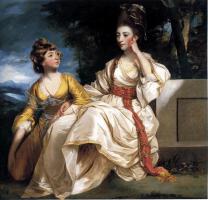
On 2nd May 1821 Hester Lynch Salusbury [aged 81] died at 10 Sion Row, Clifton of complications after a fall. She was buried with her second husband Gabriel Mario Piozzi at the Church of Corpus Christi, Tremeirchion [Map].
Hester Lynch Piozzi. "Doctor Johnson's Mrs Thrale". Born 1741. Died 1821. Witty. Vivacious and Charming. In an Age of Genius She Ever Held a Foremost Place This Tablet is Erected by Orlando Butler Fellowes Grand-Son of Sir James Fellowes. The Intimate Friend of Mrs. Piozzi and her Executor. Assisted by Subscriptions. 28th April 1909.
Anne Boleyn. Her Life as told by Lancelot de Carle's 1536 Letter.
In 1536, two weeks after the execution of Anne Boleyn, her brother George and four others, Lancelot du Carle, wrote an extraordinary letter that described Anne's life, and her trial and execution, to which he was a witness. This book presents a new translation of that letter, with additional material from other contemporary sources such as Letters, Hall's and Wriothesley's Chronicles, the pamphlets of Wynkyn the Worde, the Memorial of George Constantyne, the Portuguese Letter and the Baga de Secrets, all of which are provided in Appendices.
Available at Amazon in eBook and Paperback format.
Gabriel Mario Piozzi was buried at Church of Corpus Christi, Tremeirchion [Map].