

Caernarfon Castle is in Caernarfon [Map], Castles in Carnarfonshire.
The Welsh Castles and Towns of Edward I comprise a number of castles, some with associated planned towns, commissioned as a means of containing the Welsh. They included, from east to west, Flint Castle [Map], Rhuddlan [Map], Conwy Castle [Map], Beaumaris Castle [Map], Caernarfon Castle [Map], Harlech Castle [Map] and Aberystwyth Castle [Map]. Those not on the coast include Chirk Castle [Map], Denbigh Castle and Town Walls [Map] and Builth Castle [Map]. Arguably, Holt Castle [Map] and Criccieth Castle [Map] should be included.
On 25th April 1284 King Edward II of England was born to King Edward I of England [aged 44] and Eleanor of Castile Queen Consort England [aged 43] at Caernarfon Castle [Map]. He married 28th January 1308 his second cousin once removed Isabella of France Queen Consort England, daughter of King Philip IV of France and Joan Blois I Queen Navarre, and had issue.
Annals of Dunstable. In the same year a son was born to the lord king, on the feast of Saint Mark [25th April 1284], at Caernarfon [Map], and he was called Edward.
Eodem anno natus est domino regi filius, die Sancti Marci apud Kanarvan, et vocatus est Edwardus.
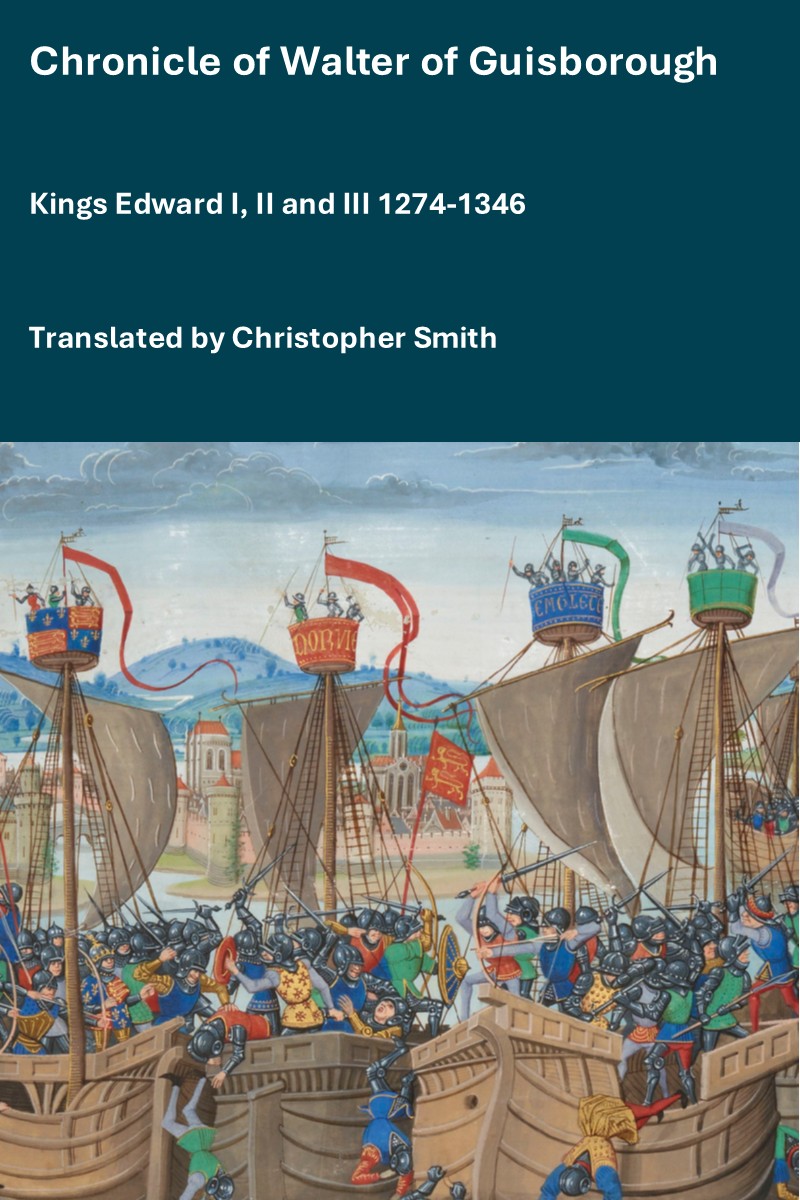 Chronicle of Walter of Guisborough. In the same year, around the Feast of Saint Michael [29th September 1294], the Welsh began to rebel. For they had gathered and agreed among themselves that on that very day of Saint Michael they would all rise up together against the king and take his castles. And so they did: on that same day, almost without warning, they seized many castles, including the castle of Caernarfon [Map], which our king had previously constructed at great expense. They demolished its walls and slaughtered the king's officials; the English who were able fled, and many were cut down by the sword, for these events occurred suddenly. The leaders of this rebellion claimed to be descended, by name, from the blood of Prince Llywelyn, and therefore said they were bound to revive the name of prince.
Eodem anno circa festum sancti Michaelis Wallenses rebellare cœperunt. Convenerant enim et statuerant inter se quod in ipso die sancti Michaelis omnes unanimiter insurgerent contra regem, et castra ejus dirimerent, feceruntque sic, et eodem die quasi ex improviso ceperunt castella multa, ceperuntque castrum de Carnarvan quod rex noster dudum sumptuosissime construxerat, demolientes muros et ministros regis trucidantes, fugeruntque Anglici qui poterant, et multi absorpti sunt in ore gladii eo quod subito facta sunt hæc. Istius autem sediduo, nominatim de sanguine principis Leulini se descendisse dicebant, et ideo nomen principis suscitare debere.
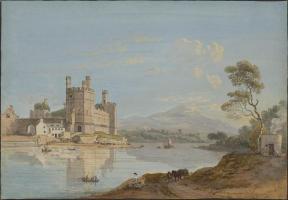
Around 1775. Paul Sandby [aged 44]. "Caernarfon Castle [Map]".
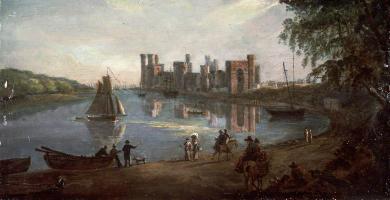
Around 1775. Paul Sandby [aged 44]. "Caernarfon Castle [Map]".

Around 1780. Joseph Farington [aged 32]. Caernarfon Castle [Map].

12th July 1790. John Warwick Smith [aged 40]. "General view of the town & castle of Caernarvon [Map] from Tut Hill".

1795-1802. Thomas Girtin [aged 19]. Caernarfon Castle [Map].

The True Chronicles of Jean le Bel Volume 1 Chapters 1-60 1307-1342
The True Chronicles of Jean le Bel offer one of the most vivid and immediate accounts of 14th-century Europe, written by a knight who lived through the events he describes, and experienced some of them first hand. Covering the early decades of the Hundred Years’ War, this remarkable chronicle follows the campaigns of Edward III of England, the politics of France and the Low Countries, and the shifting alliances that shaped medieval warfare. Unlike later historians, Jean le Bel writes with a strong sense of eyewitness authenticity, drawing on personal experience and the testimony of fellow soldiers. His narrative captures not only battles and sieges, but also the realities of military life, diplomacy, and the ideals of chivalry that governed noble society. A key source for Jean Froissart, Le Bel’s chronicle stands on its own as a compelling and insightful work, at once historical record and literary achievement. This translation builds on the 1905 edition published in French by Jules Viard, adding extensive translations from other sources Rymer's Fœdera, the Chronicles of Adam Murimuth, William Nangis, Walter of Guisborough, a Bourgeois of Valenciennes, Geoffrey le Baker of Swinbroke and Richard Lescot to enrich the original text and Viard's notes.
Available at Amazon in eBook and Paperback format.
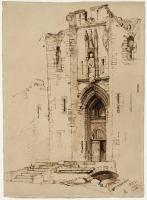
1833. William James Müller [aged 20]. "Gateway of Caernarfon Castle [Map]".
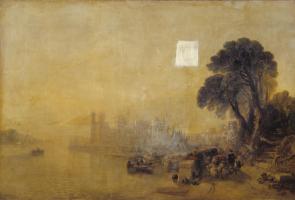
1837. William James Müller [aged 24]. "Caernarfon Castle [Map]".
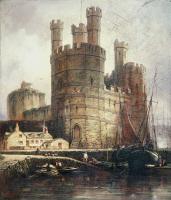
1872. William Pitt [aged 54]. Eagle Tower, Caernarfon Castle [Map].
In 1911 William Goscombe John [aged 50] was knighted during the investiture of Edward, Prince of Wales [aged 16] at Caernarfon Castle [Map].