Paternal Family Tree: Aberffraw
On 11th July 1238 Dafydd ap Gruffudd Aberffraw Prince of Wales was born to Gruffydd ap Llewellyn Aberffraw [aged 40] and Senana ferch Caradog [aged 40]. He a great grandson of King John of England.
On 1st March 1244 [his father] Gruffydd ap Llewellyn Aberffraw [aged 46] died at Tower of London [Map].
In June 12551 [his half-brother] Llywelyn "Last" ap Gruffudd [aged 22] defeated his brothers Owain "The Red" Aberffraw [aged 23] and Dafydd ap Gruffudd Aberffraw Prince of Wales [aged 16] during the Battle of Bryn Derwin. Owain "The Red" Aberffraw and Dafydd ap Gruffudd Aberffraw Prince of Wales were both imprisoned.
In or before 1257 William Marshal [aged 42] and [his future wife] Elizabeth Ferrers [aged 16] were married. The difference in their ages was 26 years. She the daughter of William Ferrers 5th Earl of Derby and Margaret Quincy Countess Derby.
In 1263 [his mother] Senana ferch Caradog [aged 65] died. She was buried in Llanfaes Priory Bangor.
After 1265 Dafydd ap Gruffudd Aberffraw Prince of Wales [aged 26] and Elizabeth Ferrers [aged 25] were married. She the daughter of William Ferrers 5th Earl of Derby and Margaret Quincy Countess Derby. They were half fifth cousins. He a great grandson of King John of England. She a great x 4 granddaughter of King Henry I "Beauclerc" England.
Around 1267 [his son] Llewellyn ap Dafydd Aberffraw was born to Dafydd ap Gruffudd Aberffraw Prince of Wales [aged 28]. He a great x 2 grandson of King John of England.
Before 8th September 1267 Roger Leybourne [aged 52] and [his sister-in-law] Eleanor Ferrers Countess Winchester [aged 31] were married. The difference in their ages was 21 years. She the daughter of William Ferrers 5th Earl of Derby and Sibyl Marshal [aged 66].
On 26th June 1269 [his brother-in-law] Robert Ferrers 6th Earl of Derby [aged 30] and Eleanor Bohun Countess Derby [aged 26] were married. She by marriage Countess Derby. He the son of William Ferrers 5th Earl of Derby and Margaret Quincy Countess Derby. They were third cousin once removed. He a great x 4 grandson of King Henry I "Beauclerc" England.
On 16th October 1274 [his sister-in-law] Eleanor Ferrers Countess Winchester [aged 38] died.
Around 1275 [his son] Owain ap Dafydd Aberffraw was born to Dafydd ap Gruffudd Aberffraw Prince of Wales [aged 36]. He a great x 2 grandson of King John of England.
Construction of Caergwrle Castle, Flintshire [Map] in 1277, after King Edward I of England gave the lordship of Hope to Dafydd ap Gruffydd [aged 38] as reward for his service in the wars against the Welsh which concluded earlier that year.
Before 24th September 1277 [his step-son] John Marshal [aged 20] and Hawise Unknown were married.
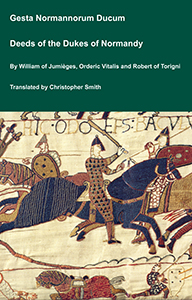
The Deeds of the Dukes of Normandy
The Gesta Normannorum Ducum [The Deeds of the Dukes of Normandy] is a landmark medieval chronicle tracing the rise and fall of the Norman dynasty from its early roots through the pivotal events surrounding the Norman Conquest of England. Originally penned in Latin by the monk William of Jumièges shortly before 1060 and later expanded at the behest of William the Conqueror, the work chronicles the deeds, politics, battles, and leadership of the Norman dukes, especially William’s own claim to the English throne. The narrative combines earlier historical sources with firsthand information and oral testimony to present an authoritative account of Normandy’s transformation from a Viking settlement into one of medieval Europe’s most powerful realms. William’s history emphasizes the legitimacy, military prowess, and governance of the Norman line, framing their expansion, including the conquest of England, as both divinely sanctioned and noble in purpose. Later chroniclers such as Orderic Vitalis and Robert of Torigni continued the history, extending the coverage into the 12th century, providing broader context on ducal rule and its impact. Today this classic work remains a foundational source for understanding Norman identity, medieval statesmanship, and the historical forces that reshaped England and Western Europe between 800AD and 1100AD.
Available at Amazon in eBook and Paperback format.
Before 27th April 1279 [his brother-in-law] Robert Ferrers 6th Earl of Derby [aged 40] died. Earl Derby extinct. He was buried at St Thomas' Priory, Stafford [Map].
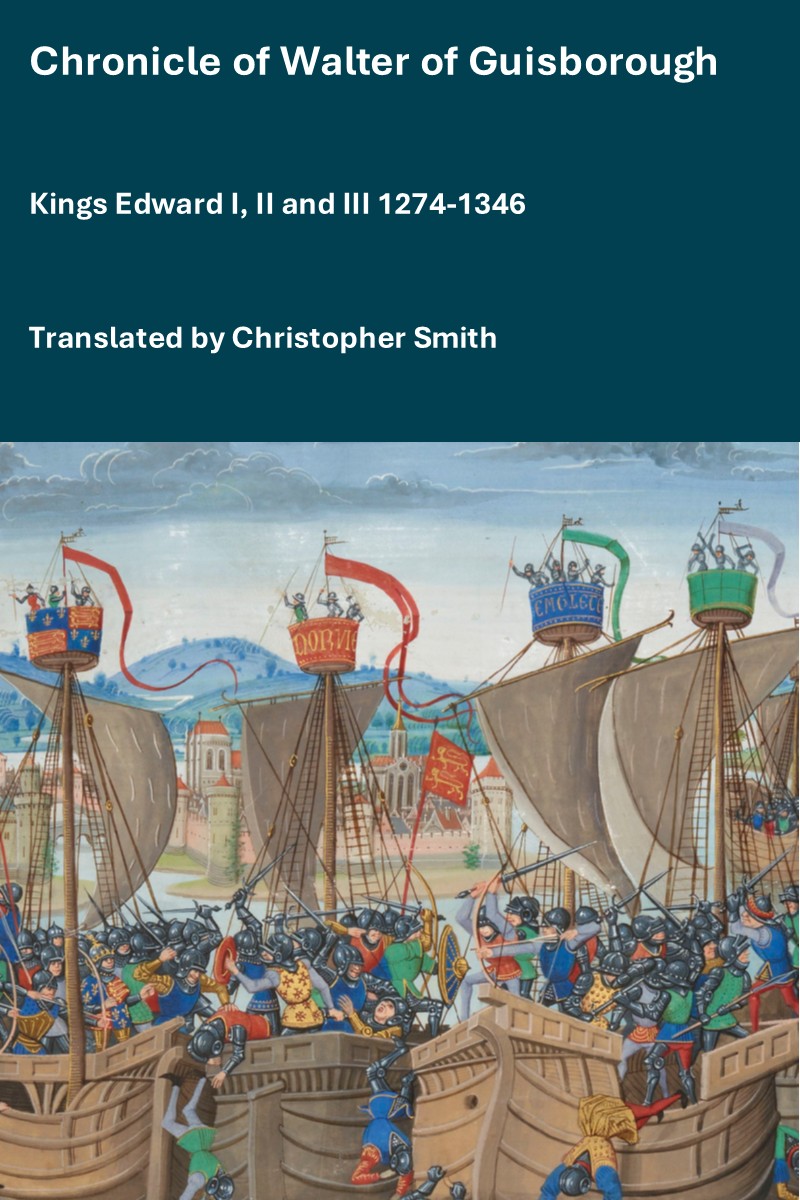
Chronicle of Walter of Guisborough. In the year of our Lord 1282, David [aged 43], brother of Llywelyn, Prince of Wales, who in the first two Welsh wars had fought bravely for the King of England against his own brother Llywelyn, and whom the king had rewarded with various gifts and many possessions in England, even giving him a beloved kinswoman in marriage1, was reconciled with his brother Llywelyn. However, Llywelyn told him that he would never fully trust him or offer true friendship unless he became as much an enemy to the King of England as he had once been his faithful friend. They then, like Herod and Pilate, entered into a pact and formed a strong conspiracy. Together they rose up against the anointed of the Lord, the innocent English. They captured Lord Roger de Clifford at Flint Castle [Map], whom the King of England had placed in command there, and imprisoned him in harsh conditions. Then they laid waste with fire and sword, destroying whatever they could of the kings or the English peoples possessions. These acts began during the holy season of the Passion of the Lord. When the king heard of this, as a devout Christian, he sent word to the spiritual fathers, the archbishops and bishops within the faith of Christ. He earnestly requested that those evildoers, along with their accomplices and supporters, who, out of hatred for the peace and tranquillity of Holy Church and the realm of Wales, had committed plunder, murder, arson, and many grave offenses, be declared excommunicated2 publicly and solemnly in every diocese throughout his realm. The king believed and added that their rebellion and wickedness could be more effectively suppressed by the secular arm, with the aid of the spiritual sword, which is known to assist in such cases.
Anno Domini MCCLXXXII David, frater Leulini principis Walliæ, qui in duabus primis guerris Walliæ regi Angliæ contra Leulinum fratrem suum strenue militaverat, utpote quem donis variis et possessionibus multis rex ipse ditaverat in Anglia, et caram consanguineam suam eidem copulaverat in uxorem, cum fratre suo Leulino concordatus est. Cui tamen intulit ipse Leulinus quod nunquam ipsius veram consequeretur amicitiam nisi regi Angliæ in tantum efficeretur inimicus in quantum dudum fuerat verus amicus: et sic Herodis et Pilati inita concordia et facta conjuratione valida insurrexerunt in christos Domini Anglos innocentes, ceperuntque ad castrum de Flynt dominum Rogerum de Clyfford, quem rex Angliæ ibidem præfecerat, et taken pritetro carceri tradiderunt; deinde vastantes igne et gladio quicquid ipsius regis vel Anglorum contingere potuerunt. Et hæc quidem incepta sunt in tempore sancto infra passionem Domini sanctam. Quod cum audisset rex, misit, tanquam filius catholicus, ad patres spirituales archiepiscopos et episcopos in fide Christiana, rogans ut ipsos malefactores et eorum complices et fautores qui, tranquillitati et paci ecclesiæ sanctæ et Wales laid regni sui invidentes, deprædationes, homicidia, interdict. incendia, et multa enormia perpetrarunt, propter quæ in canonem latæ sententiæ ipso facto dinoscuntur incidisse, ab universis et singulis subditis suis per universas dioeceses publice et solemniter denunciari facerent excommunicatos: credidit enim, et adjecit, quod eorum rebellio et malitia mediante juvamine gladii spiritualis, qui in hujusmodi casu juvare dinoscitur, per brachium seculare facilius reprimerentur.
Note 1. David married [his wife] Elizabeth Ferrers [aged 42] sometime after 1265. 4 x Great Grand Daughter of King Henry I "Beauclerc" England; she and King Edward I were fourth cousins once-removed.
Note 2. The King's letter to the Archbishop of Canterbury, desiring a sentence of excommunication against the Welsh rebels, is dated at Devizes on the 28th of March, 1282. Rot. Wall. 1 Edward I m. 10, d. in Turr. Lond.; Rymer, Fœdera, 1.603.
On 4th December 1282 [his step-son] John Marshal [aged 25] died.
On 11th December 1282 an English force including John Giffard 1st Baron Giffard Brimpsfield [aged 50], Gruffydd ap Gwenwynwyn Mathrafal Prince Powys Wenwynwyn [aged 71] and Owen de la Pole Mathrafal 1st Lord Powis [aged 25] defeated a Welsh force at Builth Wells [Map] during the Battle of Orewin Bridge. The Welsh leader [his half-brother] Llywelyn "Last" ap Gruffudd [aged 49] was killed effectively bringing to an end the independence of Wales. His brother Dafydd [aged 44] succeeded Prince of Wales.
In January 1283 King Edward I surrounded Dafydd's [aged 44] base of Snowdonia with a massive army. Dafydd initially operated from Dolwyddelan [Map]. Dafydd moved down to Castell y Bere [Map]. In April, Castell y Bere was besieged by over 3,000 men, and the small Welsh garrisonsurrendered on 25th April 1283. Dafydd escaped the siege and moved north to Dolbadarn Castle [Map]. In May 1283, he was forced to move again, this time to the mountains above the Welsh royal home in Abergwyngregyn.
Annals of Dunstable. In the same year David [aged 44], brother of Llywelyn, prince of Wales, was captured by the king's men, namely on the twenty-first day of June; and his legitimate son was taken with him. And he was imprisoned by order of the lord king. Many indeed of his supporters came to peace; and afterwards the lord king arranged all the province of Wales to his will, without any contradiction whatsoever. David's wife [Elizabeth Ferrers [aged 43]] also, who was the daughter of the Earl of Ferrers, was likewise taken and imprisoned. Of this there is more on the other side of the leaf.
Eodem anno David, germanus Leulini, principis mention of Walliæ, captus est per gentem domini regis; videlicet vicesimo-primo die Junii; et filius suus legitimus captus est cum eo. Et, inprisonatus est de mandato domini regis. Multi vero ex fautoribus ejus venerunt ad pacem; et postea dominus rex de tota provincia Walliæ ad placitum suum ordinavit sine contradictione qualicunque. Uxor etiam ipsius David, quæ fuit filia comitis de Ferares, alias capta est et inprisonata. De hoc plus ex altera parte folii.
On 22nd June 1283 Dafydd ap Gruffudd Aberffraw Prince of Wales [aged 44] and [his son] Owain ap Dafydd Aberffraw [aged 8] were captured at Bera Mawr, Bangor. Dafydd, seriously wounded in the struggle, was brought to King Edward's [aged 44] camp at Rhuddlan [Map] that same night. Dafydd was taken from there to Chester, Cheshire [Map] and then on to Shrewsbury, Shropshire [Map]. Dafydd and Dafydd's wife Elizabeth de Ferrers [aged 43], their daughter Gwladys, infant niece Gwenllian ferch Llywelyn [aged 1], and Dafydd's six illegitimate daughters were also taken prisoner at the same time.
On 3rd October 1283 Dafydd ap Gruffudd Aberffraw Prince of Wales [aged 45] was hanged, drawn and quartered at Shrewsbury, Shropshire [Map]. The first prominent person known to have suffered being hanged, drawn and quartered. Dafydd was dragged through the streets of Shrewsbury, Shropshire [Map] attached to a horse's tail, then hanged alive, revived, then disembowelled and his entrails burned before him for "his sacrilege in committing his crimes in the week of Christ's passion", and then his body cut into four-quarters "for plotting the king's death". Geoffrey of Shrewsbury was paid 20 shillings for carrying out the act.
Annals of Dunstable. And on the feast of Saint Alban [22nd June 1283] next following, the aforesaid David [aged 44], hiding on a certain mountain with a few men, was captured through the treachery of one of his own, and bound in irons was kept in the safest custody until the following feast of Saint Michael [29th June 1283]. His wife [Elizabeth Ferrers [aged 43]] also was likewise taken and kept safely. On the said feast of Saint Michael, the said David, by the judgment of all the baronage of England, received four sentences in this manner:
1. Because he had been a traitor to his lord the king, who had made him a knight, he was drawn by horses at a slow pace to the place of execution.
2. Because he had committed the homicide of Fulk Trigald and of other English nobles, he was hanged alive.
3. Because he did this in the time of the Lord's Passion, for that blasphemy his entrails were burned with fire.
4. Because in many places of England he had plotted the death of his lord the king, he was cut limb from limb [on 3rd October 1283], and his members sent through the regions of England for the terror of evil-doers.
But his head was fixed upon the Tower of London on a very high stake, facing the sea. And this likewise was done in the eleventh year of the aforesaid lord King Edward's reign.
Et die Sancti Albani proximo subsequenti, prædictus David in quodam monte latitans cum paucis, captus est per proditionem cujusdam ex suis, et ferro vinctus tutissime servabatur usque ad sequens festum Sancti Michaelis. Uxor etiam sua similiter capta est et salvo custodita. In predicto festo Sancti Michaelis, dictus David per totum barnagium Angliæ quatuor judicia suscepit in hune modum.
1. Quia proditor fuit domini regis, qui eum militem fecerat; tractus est equis lento passu ad locum suspendii.
2. Quia homicidium fecerat Fulconis Trigald, et aliorum nobilium Angliæ; suspensus est vivus.
3. Quia illud fecit tempore Dominicæ Passionis; propter blasphemiam viscera ejus incendio sunt cremata.
4. Quia in pluribus locis Angliæ mortem domini regis fuerat machinatus; membratim est partitus, et per climata Angliæ ad terrorem malignantium destinatus.
Caput autem ejus in Turri Londoniæ super palum altissimam est affixum, versus mare; et hoc similiter factum est anno undecimo prædicti domini regis Edwardi durante.
Chronicle of Walter of Guisborough. David [aged 45], fleeing from the scene of his brother's death, hid in the woods and marshes for nearly a year. At last, he was captured on the eve of the feast of Saint Maurice [22nd September 1283] and brought to the king. In a parliament held at Shrewsbury after the feast of Saint Michael, he was judged as a deceiver, traitor, thief, and murderer. He was drawn, hanged, and then quartered1, and his four limbs were sent to four parts of England as a perpetual reminder of the event. His head was taken to London, and placed alongside the head of his brother Llywelyn, both erected high on the royal tower. In the same year, during the Welsh war, the king was granted a thirtieth tax from the common people and a twentieth from the clergy, by way of assistance.
David autem, a prædicta cæde as fugiens, in moris et mariscis latitabat fere per annum, tandem vero captus in vigilia Sancti Mauritii ad regem adductus est, et in parliamento de Solopesbire, quod tenuit rex post festum Sancti Michaelis, tanquam seductor et proditor furque et homicida judicatus, tractus est et suspensus, et postea membratim divisus, et quatuor ejus membra in quatuor partes Angliæ missa sunt in memoriam rei perpetue. Caput autem ejus Londoniis delatum est, et cum capite fratris sui Leulini in sublime erectum in turri regia. Eodem anno, durante guerra Walliæ, dabatur regi tricesima a communi populo et vicesima a clero, auxilii nomine.
Note 1. David was executed on 3rd October 1283.
Chronicle of William Rishanger. 3rd October 1283. After the Feast of Saint Michael, the Parliament of Shrewsbury was held; in which David [aged 45], having been judicially condemned by judges appointed for this purpose, was dragged and hanged, his entrails burned, his body beheaded, and divided into four parts. These parts were hung in the more prominent cities of England, and his head was placed on a pike in London, as a warning to similar traitors.
Post festum Sancti Michaelis, habitum est Parliamentum Salopiæ; in quo per deputatos ad hoc Justiciarios David judicialiter condemnatus, tractus et suspensus est, visceribusque combustis, corpus capite truncatum, et in quatuor partes est divisum. Quibus in civitatibus Angliæ nobilioribus suspensis, caput Londoniis super palum fixum est, ad terrorem consimilium proditorum.
Before 30th September 1283 Simon Montagu 1st Baron Montagu [aged 33] was summoned to the parliament which met on 30 September 1283 at Shrewsbury for the trial of Dafydd ap Gruffudd Aberffraw Prince of Wales [aged 45], brother of [his half-brother] Llywelyn "Last" ap Gruffudd.
On 30th September 1283 Dafydd ap Gruffudd Aberffraw Prince of Wales [aged 45] was sentenced to death. He was the first person known to have been tried and executed for what from that time onwards would be described as high treason against the King.
Around June 1297 [his former wife] Elizabeth Ferrers [aged 57] died.
Adam Murimuth's Continuation and Robert of Avesbury’s 'The Wonderful Deeds of King Edward III'
This volume brings together two of the most important contemporary chronicles for the reign of Edward III and the opening phases of the Hundred Years’ War. Written in Latin by English clerical observers, these texts provide a vivid and authoritative window into the political, diplomatic, and military history of fourteenth-century England and its continental ambitions. Adam Murimuth Continuatio's Chronicarum continues an earlier chronicle into the mid-fourteenth century, offering concise but valuable notices on royal policy, foreign relations, and ecclesiastical affairs. Its annalistic structure makes it especially useful for establishing chronology and tracing the development of events year by year. Complementing it, Robert of Avesbury’s De gestis mirabilibus regis Edwardi tertii is a rich documentary chronicle preserving letters, treaties, and official records alongside narrative passages. It is an indispensable source for understanding Edward III’s claim to the French crown, the conduct of war, and the mechanisms of medieval diplomacy. Together, these works offer scholars, students, and enthusiasts a reliable and unembellished account of a transformative period in English and European history. Essential for anyone interested in medieval chronicles, the Hundred Years’ War, or the reign of Edward III.
Available at Amazon in eBook and Paperback format.
[his father] Gruffydd ap Llewellyn Aberffraw and [his mother] Senana ferch Caradog were married. They were second cousin once removed. He a grandson of King John of England.
[his daughter] Gladys ferch Dafydd Aberffraw was born to Dafydd ap Gruffudd Aberffraw Prince of Wales. She a great x 2 granddaughter of King John of England.
Kings Wessex: Great x 7 Grand Son of King Edmund "Ironside" I of England
Kings Gwynedd: Great x 2 Grand Son of Owain "Great" King Gwynedd
Kings Seisyllwg: Great x 8 Grand Son of Hywel "Dda aka Good" King Seisyllwg King Deheubarth
Kings Powys: Great x 3 Grand Son of Maredudd ap Bleddyn King Powys
Kings England: Great Grand Son of King John of England
Kings Scotland: Great x 5 Grand Son of King Malcolm III of Scotland
Kings France: Great x 8 Grand Son of Hugh I King of the Franks
Kings Duke Aquitaine: Great x 11 Grand Son of Ranulf I Duke Aquitaine
Great x 4 Grandfather: Cynan ab Iago King Gwynedd 2 x Great Grandson of Idwal ap Anaward "Foel aka Bald" King Gwynedd
Great x 3 Grandfather: King Gruffudd ap Cynan of Gwynedd son of Cynan ab Iago King Gwynedd
Great x 4 Grandmother: Ragnaillt Unknown Queen Consort Gwynedd
Great x 2 Grandfather: Owain "Great" King Gwynedd son of King Gruffudd ap Cynan of Gwynedd
Great x 4 Grandfather: Owain ab Edwin 3 x Great Grandson of Hywel "Dda aka Good" King Seisyllwg King Deheubarth
Great x 3 Grandmother: Angharad Queen Consort Gwynedd 4 x Great Granddaughter of Hywel "Dda aka Good" King Seisyllwg King Deheubarth
Great x 1 Grandfather: Iorwerth "Drwyndwn aka Flat Nosed" Aberffraw son of Owain "Great" King Gwynedd
Great x 4 Grandfather: Trahaearn ap Caradog
Great x 3 Grandfather: Llywarch ap Trahaearn Lord of Cydewain
Great x 2 Grandmother: Gwladus Unknown Queen Consort Gwynedd
Grandfather: Llewellyn "The Great" Aberffraw Grandson of Owain "Great" King Gwynedd
Great x 4 Grandfather: Bleddyn ap Cynfyn King Gwynedd King Powys Grandson of Maredudd ab Owain King Deheubarth King Powys King Gwynedd
Great x 3 Grandfather: Maredudd ap Bleddyn King Powys son of Bleddyn ap Cynfyn King Gwynedd King Powys
Great x 2 Grandfather: Madog ap Maredudd Mathrafal Prince Powys son of Maredudd ap Bleddyn King Powys
Great x 1 Grandmother: Marared ferch Madog Mathrafal Granddaughter of King Gruffudd ap Cynan of Gwynedd
Great x 4 Grandfather: Cynan ab Iago King Gwynedd 2 x Great Grandson of Idwal ap Anaward "Foel aka Bald" King Gwynedd
Great x 3 Grandfather: King Gruffudd ap Cynan of Gwynedd son of Cynan ab Iago King Gwynedd
Great x 4 Grandmother: Ragnaillt Unknown Queen Consort Gwynedd
Great x 2 Grandmother: Susanna Aberffraw daughter of King Gruffudd ap Cynan of Gwynedd
Great x 4 Grandfather: Owain ab Edwin 3 x Great Grandson of Hywel "Dda aka Good" King Seisyllwg King Deheubarth
Great x 3 Grandmother: Angharad Queen Consort Gwynedd 4 x Great Granddaughter of Hywel "Dda aka Good" King Seisyllwg King Deheubarth
Father: Gruffydd ap Llewellyn Aberffraw Grandson of King John of England
Great x 4 Grandfather: Fulk "Young" King Jerusalem
9 x Great Grandson of Charles "Charlemagne aka Great" King of the Franks King Lombardy Holy Roman Emperor
Great x 3 Grandfather: Geoffrey Plantagenet Duke Normandy
9 x Great Grandson of Charles "Charlemagne aka Great" King of the Franks King Lombardy Holy Roman Emperor
Great x 4 Grandmother: Ermengarde of Maine Countess of Anjou 8 x Great Granddaughter of Charles "Charlemagne aka Great" King of the Franks King Lombardy Holy Roman Emperor
Great x 2 Grandfather: King Henry "Curtmantle" II of England
Grandson of King Henry I "Beauclerc" England
Great x 4 Grandfather: King Henry I "Beauclerc" England
son of King William "Conqueror" I of England
Great x 3 Grandmother: Empress Matilda
daughter of King Henry I "Beauclerc" England
Great x 4 Grandmother: Edith aka Matilda Dunkeld Queen Consort England
daughter of King Malcolm III of Scotland
Great x 1 Grandfather: King John of England
son of King Henry "Curtmantle" II of England
Great x 4 Grandfather: William "Troubadour" Poitiers IX Duke Aquitaine 2 x Great Grandson of Hugh I King of the Franks
Great x 3 Grandfather: William "Saint" Poitiers X Duke Aquitaine 3 x Great Grandson of Hugh I King of the Franks
Great x 4 Grandmother: Philippa Rouerge Duchess Aquitaine
Great x 2 Grandmother: Eleanor of Aquitaine Queen Consort Franks and England 4 x Great Granddaughter of Hugh I King of the Franks
Great x 4 Grandfather: Aimery Chatellerault Viscount Châtellerault
Great x 3 Grandmother: Aenor Chatellerault Duchess Aquitaine
Great x 4 Grandmother: Dangereuse Ile Bouchard Viscountess Chatellerault
Grandmother: Joan Plantagenet
daughter of King John of England
Great x 4 Grandfather: Fulk "Young" King Jerusalem
9 x Great Grandson of Charles "Charlemagne aka Great" King of the Franks King Lombardy Holy Roman Emperor
Great x 3 Grandfather: Geoffrey Plantagenet Duke Normandy
9 x Great Grandson of Charles "Charlemagne aka Great" King of the Franks King Lombardy Holy Roman Emperor
Great x 4 Grandmother: Ermengarde of Maine Countess of Anjou 8 x Great Granddaughter of Charles "Charlemagne aka Great" King of the Franks King Lombardy Holy Roman Emperor
Great x 2 Grandfather: Hamelin Warenne Earl of Surrey
10 x Great Grandson of Charles "Charlemagne aka Great" King of the Franks King Lombardy Holy Roman Emperor
Great x 3 Grandmother: Mistress Unknown
Great x 1 Grandmother: Adela Plantagenet
5 x Great Granddaughter of Hugh I King of the Franks
Great x 4 Grandfather: William Warenne 2nd Earl of Surrey
Great x 3 Grandfather: William Warenne 3rd Earl of Surrey
3 x Great Grandson of Hugh I King of the Franks
Great x 4 Grandmother: Elizabeth Capet Countess Leicester, Meulan and Surrey
2 x Great Granddaughter of Hugh I King of the Franks
Great x 2 Grandmother: Isabella Warenne Countess Boulogne 4th Countess of Surrey
4 x Great Granddaughter of Hugh I King of the Franks
Great x 4 Grandfather: William "Talvas" Montgomery III Count Ponthieu 4 x Great Grandson of Hugh I King of the Franks
Great x 3 Grandmother: Adela Montgomery Countess of Salisbury and Surrey 4 x Great Granddaughter of Hugh I King of the Franks
Great x 4 Grandmother: Helie Burgundy Countess Ponthieu
3 x Great Granddaughter of Hugh I King of the Franks
Dafydd ap Gruffudd Aberffraw Prince of Wales Great Grandson of King John of England
Great x 4 Grandfather: King Gruffudd ap Cynan of Gwynedd son of Cynan ab Iago King Gwynedd
Great x 3 Grandfather: Owain "Great" King Gwynedd son of King Gruffudd ap Cynan of Gwynedd
Great x 4 Grandmother: Angharad Queen Consort Gwynedd 4 x Great Granddaughter of Hywel "Dda aka Good" King Seisyllwg King Deheubarth
Great x 2 Grandfather: Rhodri Aberffraw son of Owain "Great" King Gwynedd
Great x 4 Grandfather: Goronwy Unknown 4 x Great Grandson of Hywel "Dda aka Good" King Seisyllwg King Deheubarth
Great x 3 Grandmother: Cristin ferch Goronwy Unknown Queen Consort Gwynedd 5 x Great Granddaughter of Hywel "Dda aka Good" King Seisyllwg King Deheubarth
Great x 1 Grandfather: Thomas Lord Aberffraw Grandson of Owain "Great" King Gwynedd
Grandfather: Caradog ap Thomas Great Grandson of Owain "Great" King Gwynedd
Mother: Senana ferch Caradog 2 x Great Granddaughter of Owain "Great" King Gwynedd