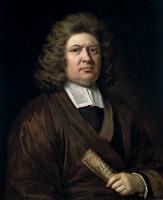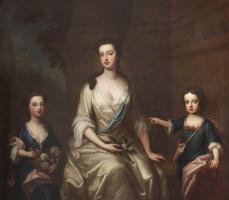
Prebendary is in Lords Spritual England.
In 1661 Archbishop John Dolben [aged 36] was appointed Prebendary London.
In 1449 Archbishop Lawrence Booth [aged 29] was appointed Prebendary St Paul's Cathedral.
In 1545 Dean William May was appointed Prebendary St Paul's Cathedral.
In 1676 Thomas Gale [aged 41] was appointed Prebendary St Paul's Cathedral.
John Evelyn's Diary. 15th March 1684. At Whitehall [Map] preached Mr. Henry Godolphin [aged 35], a prebend of St. Paules, and brother to my deare friend Sydnie [aged 38], on 55 Isaiah 7. I dined at the Lord Keeper's [aged 46], and brought to him Sir John Chardin [aged 40], who shewed him his accurate draughts of his travells in Persia.
On 26th June 1888 Bishop John Wogan Festing [aged 50] was appointed Prebendary of Brondesbury in St Paul's Cathedral.
On 30th March 1663 Robert South [aged 28] was appointed Prebendary Westminster Abbey.
John Evelyn's Diary. 9th August 1675. Dr. Sprat [aged 40], prebend of Westminster, and Chaplain to the Duke of Buckingham [aged 47], preached on the 3d Epistle of Jude, showing what the primitive faith was, how near it and how excellent that of the Church of England, also the danger of departing from it.
In 1679 Richard Annesley 3rd Baron Altham [aged 24] was appointed Prebendary Westminster Abbey.
On 4th October 1806 Bishop Joseph Allen [aged 36] was appointed Prebendary Westminster Abbey.
The History of William Marshal was commissioned by his son shortly after William’s death in 1219 to celebrate the Marshal’s remarkable life; it is an authentic, contemporary voice. The manuscript was discovered in 1861 by French historian Paul Meyer. Meyer published the manuscript in its original Anglo-French in 1891 in two books. This book is a line by line translation of the first of Meyer’s books; lines 1-10152. Book 1 of the History begins in 1139 and ends in 1194. It describes the events of the Anarchy, the role of William’s father John, John’s marriages, William’s childhood, his role as a hostage at the siege of Newbury, his injury and imprisonment in Poitou where he met Eleanor of Aquitaine and his life as a knight errant. It continues with the accusation against him of an improper relationship with Margaret, wife of Henry the Young King, his exile, and return, the death of Henry the Young King, the rebellion of Richard, the future King Richard I, war with France, the death of King Henry II, and the capture of King Richard, and the rebellion of John, the future King John. It ends with the release of King Richard and the death of John Marshal.
Available at Amazon in eBook and Paperback format.
In 1595 Charles Fotherby [aged 46] was appointed Archdeacon of Canterbury and Prebendary of Canterbury.
In 1596 Bishop Martin Fortherby [aged 36] was appointed Prebendary of Canterbury.
In 1670 Archbishop John Tillotson [aged 39] was appointed Prebendary of Canterbury.
On 30th November 1799 Charles Henry Hall [aged 36] was appointed Prebendary of the second stall of Christ Church Cathedral, Oxford [Map].
In December 1624 Bishop John Cosins [aged 30] was appointed Prebendary of Durham.
In 1768 Reverend Newton Ogle [aged 42] was appointed Prebendary of Durham of the 7th stall which office he held until his death in 1804.
Around 1441 Charles Hervey was appointed Prebendary of Ely Cathedral.
In 1725 George Baker [aged 38] was appointed Prebendary of Exeter Cathedral which office he held for life.
On 5th May 1748 Charles Lyttelton [aged 34] was appointed Prebendary of Exeter Cathedral.
In 1798 Charles Henry Hall [aged 35] was appointed Bampton lecturer and Prebendary of Exeter Cathedral.
In 1694 Reverend John Clutton was appointed Prebendary of Hereford Cathedral.
In 1505 Bishop Thomas Ruthall [aged 33] was appointed Prebendary of Lincoln Cathedral.
In 1660 Bishop Thomas Sprat [aged 25] was appointed Prebendary of Lincoln Cathedral.
Before 6th February 1737 Edward Fane [aged 63] was appointed Prebendary of Lincoln Cathedral.
Before 1755 Henry Best [aged 23] was appointed Prebendary of Lincoln Cathedral.
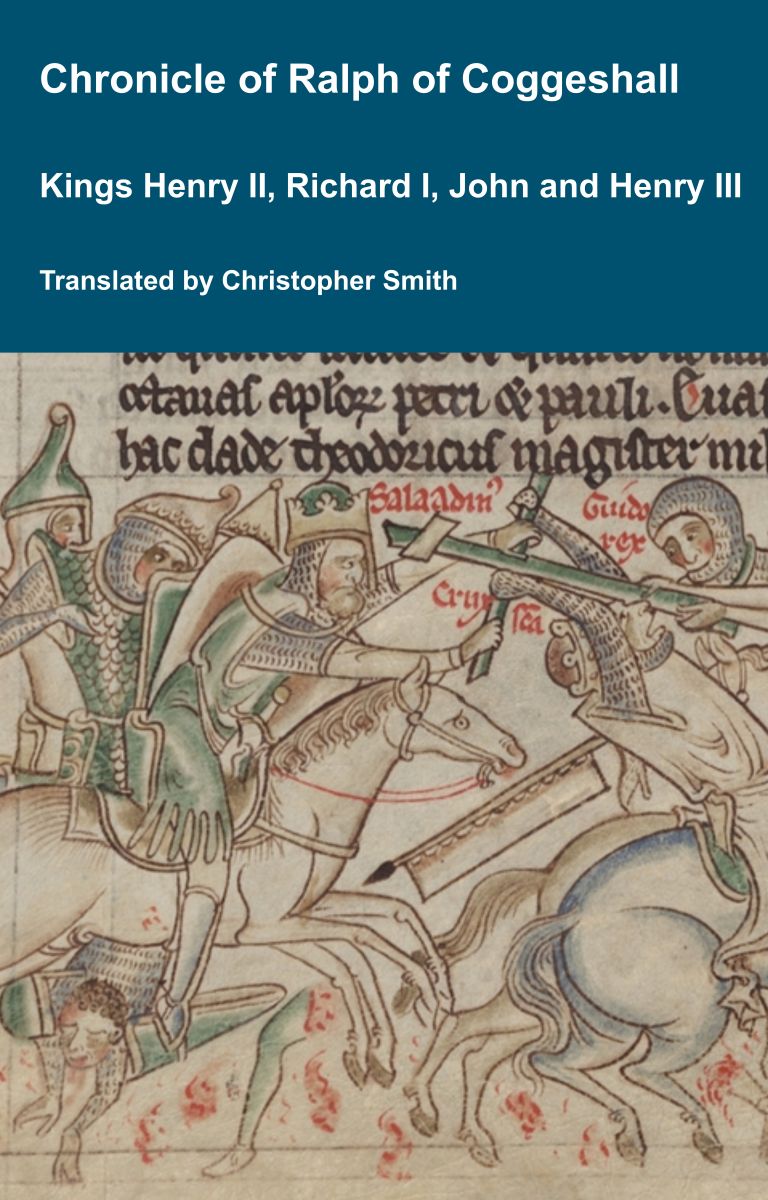
Annals of the six Kings of England by Nicholas Trivet
Translation of the Annals of the Six Kings of England by that traces the rise and rule of the Angevin aka Plantagenet dynasty from the mid-12th to early 14th century. Written by the Dominican scholar Nicholas Trivet, the work offers a vivid account of English history from the reign of King Stephen through to the death of King Edward I, blending political narrative with moral reflection. Covering the reigns of six monarchs—from Stephen to Edward I—the chronicle explores royal authority, rebellion, war, and the shifting balance between crown, church, and nobility. Trivet provides detailed insight into defining moments such as baronial conflicts, Anglo-French rivalry, and the consolidation of royal power under Edward I, whose reign he describes with particular immediacy. The Annals combines careful year-by-year reporting with thoughtful interpretation, presenting history not merely as a sequence of events but as a moral and political lesson. Ideal for readers interested in medieval history, kingship, and the origins of the English state, this chronicle remains a valuable and accessible window into the turbulent world of the Plantagenet kings.
Available at Amazon in eBook and Paperback format.
Before 1782 Henry Best [aged 50] was appointed Prebendary of Lincoln Cathedral.
In 1870 Bishop John Wordsworth [aged 27] was appointed Prebendary of Lincoln Cathedral.
In 1517 Bishop Richard Sampson was appointed Prebendary of Newbald.
On 27th September 1815 Prebendary Joseph Parsons [aged 53] was appointed Prebendary of Peterborough Cathedral.
In 1502 Bishop Thomas Ruthall [aged 30] was appointed Prebendary of Wells Cathedral.
On 25th March 1848 Harry Mengden Scarth [aged 33] was appointed Prebendary of Wells Cathedral.
Patent Rolls. On 10th July 1461. Westminster Palace [Map]. Ratification for life of the estate of Master Robert Stillyngton [aged 41], king's clerk as deacon of the king's free chapel of St Martin le Grand, London, archdeacon of Colchester in the cathedral of London and of Taunton in the cathedral of Wells, prebendary of Wetewang in the cathedral of York, Marther (possibly typo since 'Martha' unknown) in the cathedral of St Davids and the prebend which John Luca lately had in the king's free chapel of St Stephen within his palace of Wesminster, and person of the church of Aysshebury, in the diocese of Salisbury.
In 1696 Bishop Welbore Ellis [aged 45] was appointed Prebendary of Winchester.
Before 18th August 1825 Charles Augustus North [aged 40] was appointed Prebendary of Winchester.
Before 1835 William Garnier was appointed Prebendary of Winchester.
On 30th August 1808 Bishop John Jenkinson [aged 26] was appointed Prebendary of Worcester Cathedral.
Westminster Chronicle of King Richard II, 1381-1394
The Westminster Chronicle is one of the most vivid and important narrative sources for the reign of Richard II. Written by an anonymous chronicler closely connected with Westminster Abbey, it covers the years 1381 to 1394, from the Peasants’ Revolt to the political tensions, court ceremonies, diplomatic negotiations, royal progresses, and public crises of Richard’s later reign. Rich in detail the chronicle records major events such as the conflicts between the King and Lords Appellant, King and the City of London, negotiations with France and Scotland, the death and funeral of Queen Anne of Bohemia, the illness of Charles VI of France, and the changing fortunes of leading nobles including John of Gaunt, Thomas of Gloucester, Robert de Vere, and the Earl of Arundel. The Chronicle offers readers a remarkable window into late fourteenth-century England, combining political observation, courtly spectacle, urban drama, ecclesiastical affairs, and moral judgement. It is an essential source for anyone interested in medieval monarchy, London, Westminster, and the troubled reign of Richard II.
Available at Amazon in eBook and Paperback format.
In 1396 Nicholas Slake was appointed Prebendary of York.
In 1779 Charles Wheler 7th Baronet [aged 48] was appointed Prebendary of York which office he held until his death in 1821.