Richard Drake 1535-1603

In 1535 Richard Drake was born to John Drake.

In 1558 [his father] John Drake died.

In 1572 Richard Drake [aged 37] was elected MP Castle Rising.

In 1572 Richard Drake [aged 37] was elected MP Morpeth.

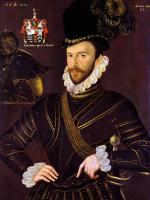
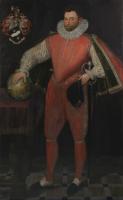
Around 1577 George Gower [aged 37]. Portrait of Richard Drake [aged 42]. The heraldic escutcheon shows seven quarters as follows:

1: Drake of Ash Arms. Drake of Ash in the parish of Musbury, Devon.

2: Argent, on a chief gules three cinquefoils of the first; Billet of Ash.

3: Gules, on a fess argent two mullets sable; Hamton of Rockbere and Ash.

4: Ermine, on a chief indented sable three crosslets fitchee or; Orwey of Orwey and Ash.

5: Barry of seven argent and sable.

6: Azure, six lions rampant argent crowned Gules, 3, 2, 1; Forde of Forde.

7: Argent, two chevrons sable (Esse/Ash of Ash); Esse or Ash of Ash.

In 1583 Richard Drake [aged 48] leased the manor of Woking, Surrey from Charles Howard 1st Earl Nottingham [aged 47].

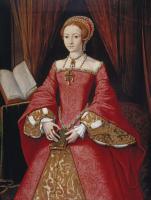
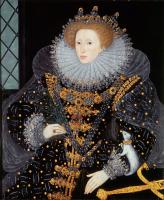
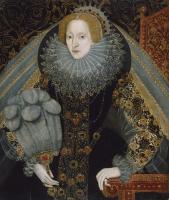
In 1584 Richard Drake [aged 49] was appointed Groom of the Privy Chamber to Queen Elizabeth I of England and Ireland [aged 50].

In 1589 Richard Drake [aged 54] was appointed Surveyor of Game in Woking Park.

In 1590 Richard Drake [aged 55] was appointed Steward of the Manor of Woking.

Around 1591 Richard Drake [aged 56] was appointed Justice of the Peace Surrey.

The Deeds of the Dukes of Normandy

The Gesta Normannorum Ducum [The Deeds of the Dukes of Normandy] is a landmark medieval chronicle tracing the rise and fall of the Norman dynasty from its early roots through the pivotal events surrounding the Norman Conquest of England. Originally penned in Latin by the monk William of Jumièges shortly before 1060 and later expanded at the behest of William the Conqueror, the work chronicles the deeds, politics, battles, and leadership of the Norman dukes, especially William’s own claim to the English throne. The narrative combines earlier historical sources with firsthand information and oral testimony to present an authoritative account of Normandy’s transformation from a Viking settlement into one of medieval Europe’s most powerful realms. William’s history emphasizes the legitimacy, military prowess, and governance of the Norman line, framing their expansion, including the conquest of England, as both divinely sanctioned and noble in purpose. Later chroniclers such as Orderic Vitalis and Robert of Torigni continued the history, extending the coverage into the 12th century, providing broader context on ducal rule and its impact. Today this classic work remains a foundational source for understanding Norman identity, medieval statesmanship, and the historical forces that reshaped England and Western Europe between 800AD and 1100AD.

Available at Amazon in eBook and Paperback format.

In 1602 Richard Drake [aged 67] was granted the residue of the moneys still owing to her from Sir Francis Drake's voyage of 1585-86.

On 31st January 1603 the will of Richard Drake [aged 68] was proved. He asked to be buried in St George's Church Esher, Surrey. He appointed his son Francis Drake as his executor. He left his widow [his future wife] Ursula Stafford [aged 50] the lease on the manor of Walton on Thames, Surrey, as well as a house on Fetter Lane and his coach and horses.

On 31st May 1603 Richard Drake [aged 68] made his will.

Before 11th July 1603 Richard Drake [aged 68] and Ursula Stafford [aged 50] were married.

On 11th July 1603 Richard Drake [aged 68] died.